Lead acid Battery
CN → US| HS编码 | 关税税率 | 原产国 | 目的国 | 文档 |
|---|---|---|---|---|
| 8507208091 | 38.5% | CN | US | 官方文档 |
| 8507100090 | 38.5% | CN | US | 官方文档 |
| 8548000000 | 35.0% | CN | US | 官方文档 |
| 8548000000 | 35.0% | CN | US | 官方文档 |
商品图片
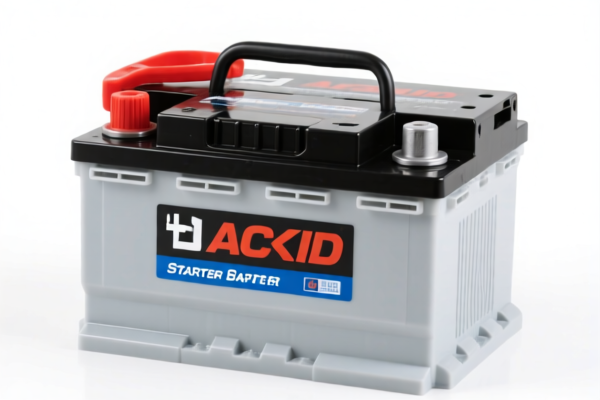
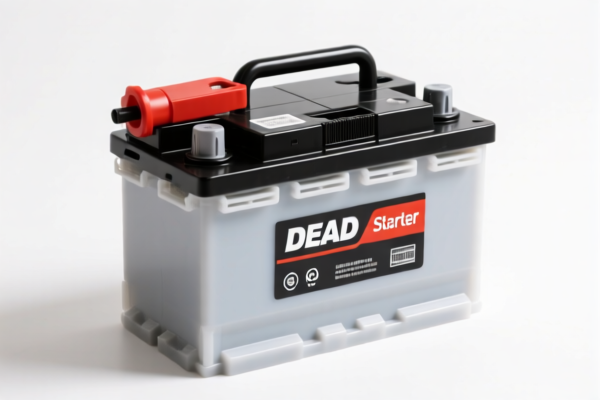
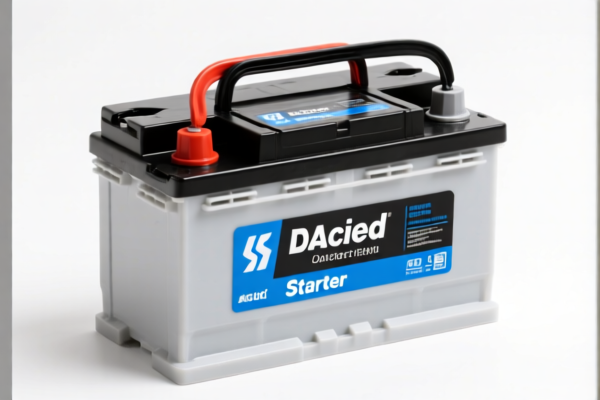
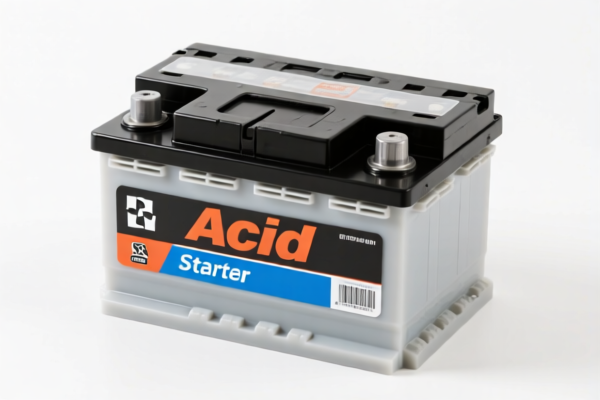
AI分析
🔋 Lead Acid Batteries (铅酸蓄电池)
🌐 HS Code Reference & Customs Clearance Guide | 2026 Latest Tariff Analysis | Professional Clearance Strategy
📌 I. Product Definition & Classification: Do You Really Know "Lead Acid Batteries"?
Lead-acid batteries are one of the most mature energy storage technologies in the world, widely used in automotive starting, power supply, and industrial applications. In international trade, they are strictly distinguished by their application and construction.
Key Distinction Points: * Automotive Starting Batteries (LSBA): Specifically designed to start internal combustion engines (ICE). These enjoy 0% additional tariffs under current US trade policies. * Other Lead-Acid Batteries: Including deep-cycle batteries, stationary storage, or industrial backup power. These are subject to high additional tariffs (25%-28.5%).
⚠️ Critical Warning:
- If the battery is marked "For Starting Piston Engines" → It falls under 8507.10.00.90 (0% Total Tax).
- If it is "Other" (e.g., for solar, UPS, golf carts, or general electrical machinery) → It falls under 8507.20.80.91 (28.5% Total Tax).
- Do not confuse "Electrical Parts of Machinery" (8548.00) with the battery itself unless it is a non-functional component/part explicitly defined as such.
📦 II. HS Code Classification Details (2026 Latest Tariff Authority Comparison)
| HS Code | Product Description | Applicable Scenario | Additional Tariff Status |
|---|---|---|---|
8507.10.00.90 |
Lead-acid storage batteries, of a kind used for starting piston engines (Other) |
Car batteries, truck batteries, motorcycle batteries. Must be explicitly for ICE starting. | ✅ 0% (No additional tax) |
8507.20.80.91 |
Other lead-acid storage batteries (Other) |
Deep-cycle batteries, industrial storage, UPS backup, forklift batteries, solar storage. | ❌ 28.5% (0% Base + 28.5% Total) |
8548.00.00.00 |
Electrical parts of machinery or apparatus, not specified or included elsewhere | Note: This code is for specific electrical parts/components not elsewhere classified. If you are importing complete lead-acid batteries, this code is generally incorrect and may trigger customs audits. | ⚠️ 25% (0% Base + 25% Additional) |
🔍 Important Clarification on Data Source:
The provided data indicates that8548.00.00.00(Electrical parts) carries a 25.0% total tax. However, for complete batteries, the primary classification should be 8507. If the item is strictly a "part" of a battery system (like a separator or internal plate assembly) not elsewhere specified,8548might apply, but for finished cells or batteries, 8507 is the correct heading.
For the purpose of this guide, we focus on the two main battery classifications provided in the data: 8507.10 and 8507.20.
💰 III. 2026 Latest Tariff Rate Breakdown (Including Base & Additional Taxes)
✅ Applicable Country: United States (US)
✅ Country of Origin: China (CN)
✅ Effective Date: Current Trade Policy (Section 301)
🎯 1. 8507.10.00.90 – Lead-Acid Batteries for Starting Piston Engines
| Item | Content |
|---|---|
| Base Tariff | 0.0% (Ad Valorem) |
| Additional Tax (Section 301) | 0.0% (Exempted from 25% surcharge) |
| Total Tax Rate | 0.0% |
| Calculation Basis | CIF Value × 0% = $0 |
| Legal Basis | HTSUS 8507.10.00 |
📌 Explanation:
- Automotive starting batteries are exempt from the 25% Section 301 additional duties currently imposed on many Chinese goods.
- This is a highly advantageous classification. Ensure the product is clearly labeled and documented as "For Starting Engines" to avoid misclassification into the 28.5% bracket.
🎯 2. 8507.20.80.91 – Other Lead-Acid Storage Batteries (Non-Starting)
| Item | Content |
|---|---|
| Base Tariff | 3.5% (Ad Valorem) |
| Additional Tax (Section 301) | 25.0% |
| Total Tax Rate | 28.5% |
| Calculation Basis | CIF Value × 28.5% |
| Legal Basis | HTSUS 8507.20.80.91 |
📌 Explanation:
- "Other" refers to batteries not used for starting piston engines. This includes deep-cycle, traction, stationary, and industrial batteries.
- The 25% additional duty is applied on top of the 3.5% base duty.
- Example: For a shipment with a CIF value of $10,000, the total duty paid would be $2,850.
🎯 3. 8548.00.00.00 – Electrical Parts (If Applicable)
| Item | Content |
|---|---|
| Base Tariff | 0.0% |
| Additional Tax (Section 301) | 25.0% |
| Total Tax Rate | 25.0% |
| Calculation Basis | CIF Value × 25.0% |
| Legal Basis | HTSUS 8548.00.00.00 |
⚠️ Caution:
- This code is for parts not elsewhere specified. If you are importing complete batteries, do not use this code unless advised by a customs broker. Misclassification can lead to penalties, back-taxes, and cargo detention.
🛠️ IV. Customs Clearance Practical Advice (Real-World Pitfall Avoidance)
✅ 1. Preparation Checklist (Non-Negotiable)
| Document | Required | Description |
|---|---|---|
| ✅ Commercial Invoice | ✔️ | Must explicitly state "Lead-Acid Battery, Type: Starting/Deep-Cycle, Voltage: 12V, Capacity: XXX Ah, For: [Use Case]" |
| ✅ Battery Safety Data Sheet (SDS) | ✔️ | Required for hazardous material handling. Lead-acid batteries are classified as UN 2794 (non-spillable) or UN 2800 (spillable). |
| ✅ Certificate of Origin | ✔️ | To verify origin and apply correct tariff rates. |
| ✅ Manufacturer Declaration | ✔️ | Confirming whether the battery is for "starting engines" or "other uses." |
| ✅ Filing Documentation | ✔️ | Ensure proper HS Code filing in ACE (Automated Commercial Environment). |
✅ 2. Declaration Tips (Critical Keywords)
🔥 "Clear Usage, Clear Code, Avoid 28.5%!"
| Scenario | Correct Declaration | Incorrect Declaration | Result |
|---|---|---|---|
| Car Battery | 8507.10.00.90 – "Lead-acid battery for starting piston engines" |
"Electrical Battery" or "Energy Storage" | ⚠️ Risk of audit; if deemed "other," taxed at 28.5% |
| Solar/Golf Cart Battery | 8507.20.80.91 – "Deep-cycle lead-acid battery" |
"Automotive Battery" | ❌ Fraudulent misclassification; heavy penalties |
| Battery Part (e.g., Plate) | 8548.00.00.00 – "Electrical part of machinery" |
"Battery" | ✅ Correct if it's a non-functional part |
✅ 3. Special Cases & Handling
| Case | Handling Advice |
|---|---|
| UN 2794 (Non-Spillable) | Common for automotive batteries. Must be packed in non-deteriorating containers. No DOT hazmat placarding required if properly packaged. |
| UN 2800 (Spillable) | Requires strict hazmat compliance, placarding, and specialized freight handling. Higher shipping costs. |
| BOP (Bill of Entry) | Ensure the "Use" field matches the HS Code. If declared as "for starting," customs may request proof (e.g., vehicle integration). |
| Recycled Lead Content | Some countries offer tax benefits for batteries with high recycled content. Check local regulations. |
🌍 V. Global Market Comparison (2026 Latest)
| Country/Region | Recommended HS Code | Total Tax (China Origin) | Key Certification | Notes |
|---|---|---|---|---|
| 🇺🇸 USA | 8507.10.00.90 (Starting) |
0% | UN 2794/2800 Compliance | "Other" batteries (8507.20) face 28.5% |
| 🇺🇸 USA | 8507.20.80.91 (Other) |
28.5% | UN 2794/2800 Compliance | High duty burden; consider supply chain diversification |
| 🇪🇺 EU | 8507.10 / 8507.20 |
0% (Most) | CE, RoHS, WEEE | No Section 301 equivalent; lower trade barriers |
| 🇨🇳 China | 8507.10 / 8507.20 |
Varies (Import Duty) | CCC (if applicable) | Export from China may have different VAT refunds |
| 🇲🇽 Mexico | 8507.10 / 8507.20 |
Varies | NOM Certification | Nearshoring advantage for US-bound goods |
📌 Conclusion:
- US Market: The distinction between "Starting" (0%) and "Other" (28.5%) is critical.
- EU Market: More favorable, with no additional punitive tariffs, but strict environmental regulations (WEEE/RoHS).
- Strategy: If your product is a deep-cycle battery, consider exporting via a non-Chinese origin (e.g., Vietnam, Thailand) to avoid US Section 301 duties, if feasible.
📌 VI. Common Mistakes & Pitfalls (Lessons Learned)
❌ Mistake 1: Declaring a deep-cycle solar battery as an "automotive starting battery" to avoid the 28.5% tax.
👉 Consequence: Customs audit, seizure of goods, and heavy fines. Proof of use (e.g., installation photos, customer invoices) will be requested.
❌ Mistake 2: Using 8548.00.00.00 for complete batteries.
👉 Consequence: Misclassification. Customs may reject the entry or reclassify to 8507.20.80.91 and charge the difference + penalties.
❌ Mistake 3: Ignoring UN Classifications.
👉 Consequence: Carrier refusal to accept shipment, storage fees, and delays.
❌ Mistake 4: Vague Description ("Battery").
👉 Consequence: Customs cannot determine the correct HS Code, leading to manual examination and delays.
✅ Correct Practice:
"12V 100Ah Deep-Cycle Lead-Acid Battery, Non-Spillable, UN 2794, for Solar Energy Storage System, Model XYZ, Made in China"
🎯 VII. Conclusion: Precision Classification Saves Money!
🎯 Remember the Golden Rule:
🔹 "Starting Engine? 0%. Other Use? 28.5%."
🔹 "Be Specific! 'Battery' is not enough. State Voltage, Capacity, and Use."
🔹 "UN 2794 vs. UN 2800? Pack Correctly!"
📌 Pro Tip:
If your battery is for non-starting applications, evaluate the Total Landed Cost with the 28.5% duty. It may be more profitable to:
1. Re-engineer the product for automotive starting applications (if technically feasible).
2. Relocate production to a country not subject to Section 301 tariffs (e.g., Vietnam, Mexico).
3. Apply for a Product-Specific Exclusion (if available for your specific HTS code).
📣 Immediate Action:
📞 Consult a licensed customs broker.
📄 Prepare detailed product specs and usage declarations.
🚀 Ensure UN 2794/2800 compliance for smooth logistics.
✨ Accurate Classification is the First Step to Profitable Trade!
💼 Every dollar saved on duty is a dollar added to your margin!
用户评价
关于 HS 编码归类
协调制度(HS)是由世界海关组织(WCO)制定的国际贸易商品分类标准。全球 200 多个国家采用 HS 系统作为海关关税、贸易统计和进出口监管的基础。
每个 HS 编码遵循以下层级结构:
- 章(2 位)——商品大类(例如:第 84 章:机器和机械设备)
- 品目(4 位)——章内的更具体分类
- 子目(6 位)——国际通用细分,所有 WCO 成员国统一使用
- 本国细分(8-10 位)——各国自行扩展的细分编码,如美国 HTSUS 10 位编码
正确的 HS 编码归类对于顺利通关、准确缴纳关税和遵守贸易法规至关重要。错误归类可能导致海关延误、多缴关税或罚款。
从CN进口到US时,适用的关税税率可能包括:
- 最惠国(MFN)税率——适用于 WTO 成员国的标准关税税率
- 普通税率——适用于无贸易协定国家
- 贸易救济关税——附加关税,如 301 条款(反倾销)、232 条款(国家安全)或反补贴税
本页内容仅供参考。如需正式归类,请咨询当地海关或持牌报关代理。