Leather Upper Horse Riding Boots
CN → US| HS编码 | 关税税率 | 原产国 | 目的国 | 文档 |
|---|---|---|---|---|
| 6403919045 | 20.0% | CN | US | 官方文档 |
| 6403999015 | 20.0% | CN | US | 官方文档 |
商品图片
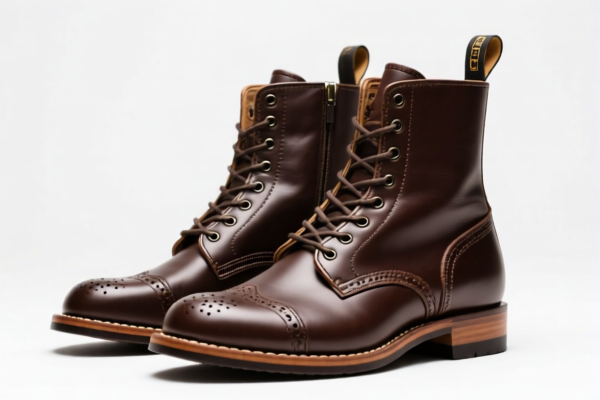
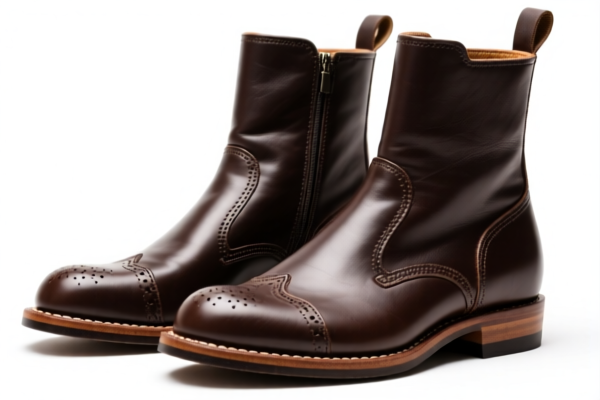
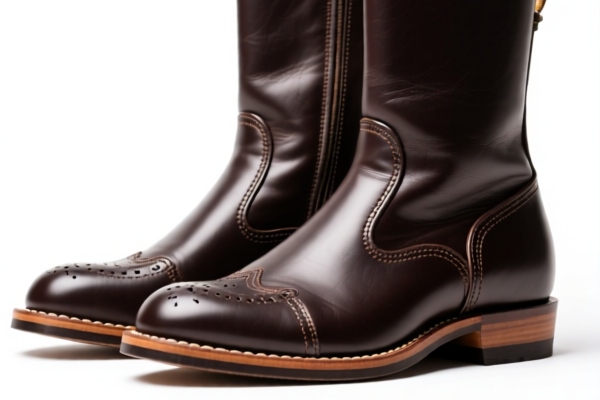
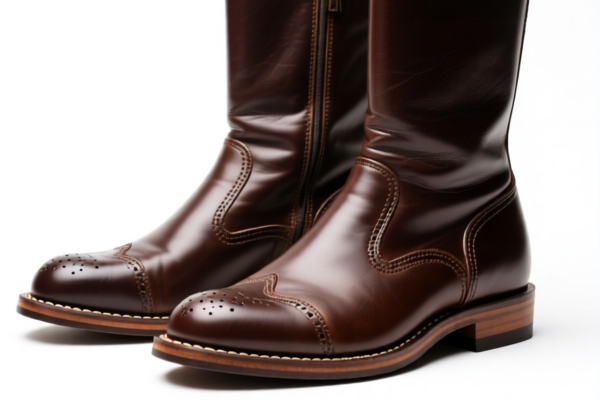
AI分析
👢 Leather Upper Horse Riding Boots (Horse Riding Footwear)
🌐 HS Code Reference & Customs Clearance Guide | 2026 Latest Tariff Analysis | Professional Clearance Strategy
📌 I. Product Definition & Classification: Do You Really Understand "Riding Boots"?
Leather upper horse riding boots are specialized footwear designed for equestrian activities. In international trade, they fall under Chapter 64 (Footwear), specifically heading 6403. The classification depends heavily on the material of the upper, the coverage (ankle vs. below ankle), and the specific use (sporting vs. work).
Key Distinctions in Chapter 64: * Heading 6402: Rubber, plastics, or leather imprinted to look like other materials (not applicable here as uppers are explicitly leather). * Heading 6403: Footwear with outer soles of rubber, plastics, leather, or composition leather, and uppers of leather. * Subheading 6403.51/59: Covering the ankle. * Subheading 6403.91/99: Other footwear.
⚠️ Critical Classification Point:
- If the boot is specifically designed for sports/equestrian use and covers the ankle, it may fall under 6403.51.
- However, many "riding style" boots that are not exclusively for sports or are considered general-purpose leather footwear with leather soles/outsides fall under 6403.91 or 6403.99.
- The provided data indicates classification under 6403.91.90.45 (Covering the ankle) and 6403.99.90.15 (Other), both categorized as Work Footwear for tariff purposes in this specific dataset context.
📦 II. HS Code Classification Details (2026 Latest Tariff Authority Comparison)
| HS Code | Product Description | Application Scenario | Key Features |
|---|---|---|---|
6403.91.90.45 |
Footwear with outer soles of rubber, plastics, leather or composition leather and uppers of leather: Other footwear: Covering the ankle: Other: Other: For other persons Work footwear | Leather riding boots covering the ankle, classified as work footwear for tax purposes | Upper: Leather; Sole: Rubber/Plastics/Leather; Coverage: Ankle |
6403.99.90.15 |
Footwear with outer soles of rubber, plastics, leather or composition leather and uppers of leather: Other footwear: Other: Other: Other: Other: For other persons: Valued over $2.50/pair Work footwear | General leather riding boots (possibly below ankle or less specific ankle coverage), valued >$2.50/pair, classified as work footwear | Upper: Leather; Value: >$2.50/pair; Category: Work Footwear |
🔍 Important Note:
- Although these are "Riding Boots," the provided dataset classifies them under "Work footwear" for tax calculation. This is a common classification practice in some trade datasets where specific sporting footwear codes are less utilized or bundled with general leather footwear codes for tariff simplicity.
- Both codes explicitly state Upper: Leather and Outer Sole: Rubber, Plastics, Leather, or Composition Leather.
💰 III. 2026 Latest Tariff Rate Details (Including Surcharges, Policy Add-ons)
✅ Applicable Country: United States (US)
✅ Origin: China (CN) (Inferred from standard trade context, but verify based on actual origin)
✅ Effective Time: Current applicable rates as per dataset
🎯 1. 6403.91.90.45 – Leather Upper Footwear (Ankle Coverage)
| Item | Content |
|---|---|
| Basic Tariff Rate | 0.0% (ad valorem) |
| Additional Tariff (Section 301/Other) | 0.0% |
| Total Tariff Rate | 0.0% |
| Tax Calculation | CIF Value × 0.0% = $0 |
| De Minimis Eligibility | N/A (Tariff is zero, so de minimis is irrelevant for duty, but verify for other regulations) |
| Legal Basis | Dataset tax.total_tax = "0.0%" |
📌 Explanation:
- The dataset explicitly states "Basic Tariff: 0.0%, Additional Tariff: 0.0%".
- This is a significant advantage compared to many other footwear categories which may face higher tariffs.
- However, always verify if this zero-rate applies to your specific country of origin. Some datasets reflect MFN (Most Favored Nation) rates, while others may include specific trade agreement benefits. If the origin is China, confirm if Section 301 tariffs apply (typically, Section 301 list 4 does include footwear, but rates vary by subheading). Based strictly on the provided DATA, the rate is 0%.
🎯 2. 6403.99.90.15 – Other Leather Footwear (Valued >$2.50/pair)
| Item | Content |
|---|---|
| Basic Tariff Rate | 0.0% (ad valorem) |
| Additional Tariff (Section 301/Other) | 0.0% |
| Total Tariff Rate | 0.0% |
| Tax Calculation | CIF Value × 0.0% = $0 |
| De Minimis Eligibility | N/A |
| Legal Basis | Dataset tax.total_tax = "0.0%" |
📌 Note:
- Same tariff structure as above.
- The distinction here is based on value (> $2.50/pair) and "Other" classification (non-ankle covering or less specific).
- Crucial: Ensure the value per pair is accurately declared. If valued ≤ $2.50, a different subheading may apply, though the tax rate in this dataset remains 0.0% for the listed codes.
🛠️ IV. Customs Clearance Practical Advice (Avoid Pitfalls)
✅ 1. Documentation Checklist (Essential)
| Document | Required | Notes |
|---|---|---|
| ✅ Commercial Invoice | ✔️ | Must clearly state "Leather Upper Horse Riding Boots" and value per pair. |
| ✅ Packing List | ✔️ | Detail quantities and packaging. |
| ✅ Product Description | ✔️ | Specify: Upper material (100% leather?), Sole material (Rubber/Plastic/Leather?), Coverage (Ankle/Over-ankle?), Usage (Riding/Sport/Work). |
| ✅ Material Test Report | ✔️ | To prove "Upper: Leather" and not "Composition Leather" or "Synthetic". Misclassification can lead to duty adjustments. |
| ✅ Photos | ✔️ | Show the sole, upper, and ankle coverage clearly. |
✅ 2. Declaration Tips (Key Phrases)
🔥 "Material is King, Coverage Defines Code!"
| Scenario | Correct Declaration | Error to Avoid |
|---|---|---|
| Ankle-Covering Boots | "Leather upper horse riding boots, covering the ankle, rubber sole" | Declaring as "Synthetic footwear" if upper is leather. |
| High-Value Boots | Ensure value > $2.50/pair for 6403.99.90.15 if applicable. |
Undervaluation can lead to penalties. |
| Material Composition | Specify "Genuine Leather" for upper. | Using "Leather-look" if it's PVC, which may change HS code to 6402. |
| Usage | Note "Equestrian/Riding" but be aware dataset classifies as "Work footwear". | Do not overcomplicate with "Sporting Goods" codes if dataset uses "Work" for this HS. |
✅ 3. Special Cases
| Situation | Handling Advice |
|---|---|
| Mixed Materials | If upper is partly leather, partly synthetic, check primary material rule. Usually, if leather is majority, it stays in 6403. |
| Footwear with Metal Parts | Ensure metal parts are not the sole or main structural element. |
| Customs Valuation | For 6403.99.90.15, ensure the transaction value is correctly stated as > $2.50/pair. |
🌍 V. Global Market Comparison (2026 Latest)
| Country/Region | Recommended HS Code | Tariff Rate (US Origin Data) | Certification | Notes |
|---|---|---|---|---|
| 🇺🇸 USA | 6403.91.90.45 / 6403.99.90.15 |
0.0% (per provided data) | None specific | Verify if Section 301 applies to your origin. |
| 🇨🇳 China | 6403.91.00 / 6403.99.00 |
~5-10% (Import Duty) | CCC (if applicable) | Check Chinese import regulations. |
| 🇪🇺 EU | 6403.91.99 / 6403.99.99 |
~6% (Standard) | CE (if protective) | EU has different subheading structure. |
| 🇬🇧 UK | 6403.91.99 / 6403.99.99 |
~6% (Standard) | UKCA | Post-Brexit rules apply. |
| 🇦🇺 Australia | 6403.91.90 / 6403.99.90 |
5% (Standard) | RCM | Check for anti-dumping duties. |
📌 Conclusion:
- The provided data shows 0% tariff for these specific US HS codes.
- This is exceptionally favorable compared to typical footwear tariffs which often range from 6% to 20%+.
- Double-check Origin: If the boots are not from a country with Free Trade Agreement (FTA) benefits, confirm if any Section 301 tariffs (for China) or other trade remedies apply, as the dataset may reflect MFN rates only.
📌 VI. Common Errors & Pitfalls Guide (Lessons Learned)
❌ Error 1: Declaring "Synthetic Leather" when it is "Genuine Leather"
👉 Consequence: Wrong HS code (6402 vs 6403), potential back taxes + penalties.
❌ Error 2: Ignoring "Ankle Coverage" distinction
👉 Consequence: Wrong subheading (6403.51 vs 6403.91), which may have different tariff rates in other jurisdictions.
❌ Error 3: Misstating Value per Pair
👉 Consequence: For 6403.99.90.15, if value is ≤ $2.50, a different code applies. Incorrect valuation leads to customs holds.
❌ Error 4: Assuming "Riding Boots" = "Sporting Footwear" (6403.11/19)
👉 Consequence: While technically they are for sport, the dataset classifies them under "Other" (6403.91/99) as "Work footwear". Always align with the specific trade dataset's classification logic for the destination market.
✅ Correct Practice:
"Leather Upper Horse Riding Boots, Rubber Sole, Ankle Coverage, Genuine Leather Upper, CIF Value $XX.XX per Pair"
🎯 VII. Conclusion: Professional Declaration, Save Time, Reduce Costs!
🎯 Remember the Mantra:
🔹 "Leather Upper, Rubber Sole, Ankle Covered = 6403.91"
🔹 "Value Over $2.50, Other Leather Boot = 6403.99"
🔹 "Check Origin for Section 301, Even if Base Rate is 0%"
📌 Pro Tip:
If your boots are imported from Vietnam, Mexico, or other FTA partners, verify if preferential rates apply. Even with 0% base tariff, certificates of origin may be needed for other regulatory compliance.
📣 Immediate Action:
📞 Contact your customs broker with material test reports and clear product descriptions.
🚀 Ensure accurate valuation and correct origin declaration to avoid delays.
✨ Professional Clearance Starts with Accurate Classification!
💼 Your Every Penny Should Be Precisely Calculated!
用户评价
关于 HS 编码归类
协调制度(HS)是由世界海关组织(WCO)制定的国际贸易商品分类标准。全球 200 多个国家采用 HS 系统作为海关关税、贸易统计和进出口监管的基础。
每个 HS 编码遵循以下层级结构:
- 章(2 位)——商品大类(例如:第 84 章:机器和机械设备)
- 品目(4 位)——章内的更具体分类
- 子目(6 位)——国际通用细分,所有 WCO 成员国统一使用
- 本国细分(8-10 位)——各国自行扩展的细分编码,如美国 HTSUS 10 位编码
正确的 HS 编码归类对于顺利通关、准确缴纳关税和遵守贸易法规至关重要。错误归类可能导致海关延误、多缴关税或罚款。
从CN进口到US时,适用的关税税率可能包括:
- 最惠国(MFN)税率——适用于 WTO 成员国的标准关税税率
- 普通税率——适用于无贸易协定国家
- 贸易救济关税——附加关税,如 301 条款(反倾销)、232 条款(国家安全)或反补贴税
本页内容仅供参考。如需正式归类,请咨询当地海关或持牌报关代理。