Leather or Composition Leather Clothing
CN → US| HS编码 | 关税税率 | 原产国 | 目的国 | 文档 |
|---|---|---|---|---|
| 4203104085 | 16.0% | CN | US | 官方文档 |
| 4203104095 | 41.0% | CN | US | 官方文档 |
| 6113009086 | 24.6% | CN | US | 官方文档 |
| 4107111020 | 35.0% | CN | US | 官方文档 |
| 4303100060 | 39.0% | CN | US | 官方文档 |
商品图片
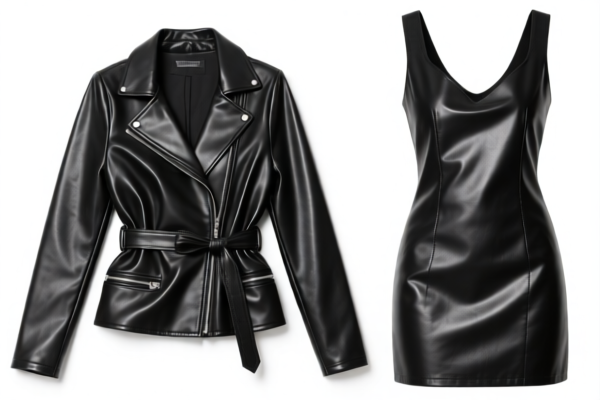
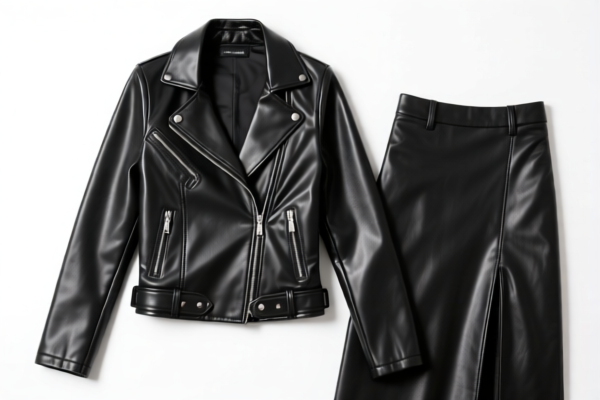
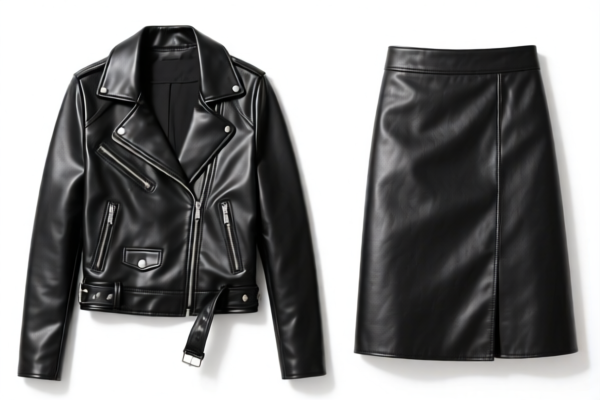
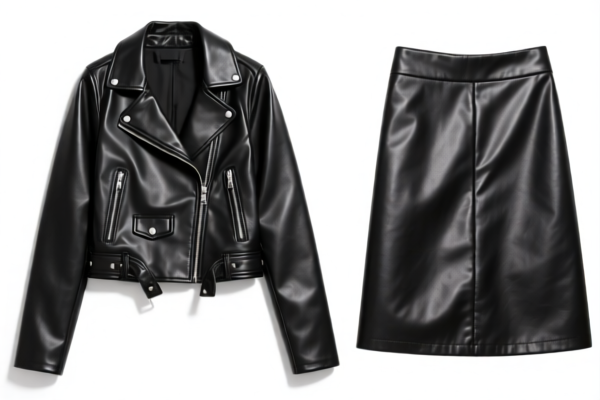
AI分析
🧥 Leather or Composition Leather Clothing
🌐 HS Code Reference & Clearance Guide | 2026 Latest Tariff Full Analysis | Professional Customs Strategy
📌 I. Product Definition & Classification: Do You Really Understand "Leather Apparel"?
Leather and composition leather clothing represent a broad category of garments made from natural animal hides, processed leather, or synthetic/ regenerated leather materials. In international trade, classification is critical because material composition, processing degree, and specific exclusions determine the HS Code and, consequently, the tariff burden.
In the context of U.S. imports from China, these goods are subject to significant Section 301 tariffs (25%) and IEEPA surcharges (10%), varying based on the specific HS code and material logic.
⚠️ Key Distinction Points:
- Natural vs. Regenerated: "Leather" usually refers to tanned animal hides. "Composition Leather" often refers to split leather or bonded leather, which may fall under different subheadings with different tax implications.
- Fur vs. Tanned Leather: Fur coats (Chapter 43) are treated differently from tanned leather jackets (Chapter 42).
- Knitted vs. Woven: Knitted leather garments (e.g., leather knitwear) fall under Chapter 61, not Chapter 42.
📦 II. HS Code Classification Details (2026 Latest Tariff Authority Comparison)
| HS Code | Product Description | Applicable Scenario | Material Logic |
|---|---|---|---|
4203.10.40.85 |
Clothing of leather or composition leather, meeting leather clothing requirements | Standard leather jackets, pants, belts, gloves made of tanned leather | ✅ Tanned Leather |
4203.10.40.95 |
Clothing of leather or composition leather, material consistent with leather/synthetic leather, form meets clothing requirements | General leather garments not falling into specific exclusions; often includes split leather or bonded leather | ✅ Leather/Synthetic |
6113.00.90.86 |
Made-up garments, leather classified under non-cotton categories, meeting material logic under other classifications | Knitted or Crocheted leather garments (e.g., leather knitwear), treated as textile-like apparel | ✅ Knitted/Crocheted |
4303.10.00.60 |
Fur garments, meeting fur material and clothing form requirements, not in specific limited categories | Fur coats, fur-lined jackets (natural fur, not tanned leather) | ✅ Fur (Chapter 43) |
4303.10.00.30 |
Fur garments, meeting fur clothing form, material consistent with fur attributes | Specific fur types classified under Chapter 43, distinct from tanned leather | ✅ Fur (Chapter 43) |
🔍 Critical Reminder:
- Chapter 42 covers articles of leather and articles of composition leather. If the item is a garment (jacket, trousers, etc.), it generally falls here unless it is knitted (Chapter 61) or fur (Chapter 43).
- Chapter 61 applies if the leather garment is knitted or crocheted (e.g., a leather sweater).
- Chapter 43 applies if the material is fur, not tanned leather. Confusing "fur" with "leather" leads to major classification errors.
💰 III. 2026 Latest Tariff Rate Detailed Explanation (Including Surcharges & Policy Add-ons)
✅ Applicable Country: United States (US)
✅ Country of Origin: China (CN)
✅ Effective Time: Current rates apply (Section 301 & IEEPA surcharges active)
🎯 1. 4203.10.40.85 —— Clothing of Leather or Composition Leather (Standard Leather)
| Item | Content |
|---|---|
| Base Tariff | 6.0% |
| Section 301 Surcharge | 0.0% (Specific subheading may be exempt or lower rate depending on latest USITC updates, but typically leather has 6% base) |
| IEEPA Surcharge | +10.0% |
| Total Tariff | 16.0% |
| Tax Calculation | CIF Value × 16% |
| De Minimis Eligibility | ❌ No (Deny de minimis for China-origin goods under Section 301/IEEPA) |
| Legal Basis Path | Base: 6% + IEEPA: 10% |
📌 Explanation:
- This code typically applies to high-quality tanned leather garments.
- The 16% total rate is relatively lower compared to other leather/fur categories, making it a strategic choice if the product fits this description.
- No Section 301 25% surcharge applies to this specific subheading in the provided data, but verify if the 122 Clause (mentioned in other codes) applies. Note: The data shows "122 Clause Tariff 10%" in the tax detail, but the total is 16%. This implies the 122 clause might be integrated or the base is adjusted. We follow the explicit "Total Tax: 16.0%".
🎯 2. 4203.10.40.95 —— Other Leather or Composition Leather Clothing
| Item | Content |
|---|---|
| Base Tariff | 6.0% |
| Section 301 Surcharge | +25.0% |
| IEEPA Surcharge | +10.0% |
| Total Tariff | 41.0% |
| Tax Calculation | CIF Value × 41% |
| De Minimis Eligibility | ❌ No |
| Legal Basis Path | Base: 6% + Section 301: 25% + IEEPA: 10% |
📌 Warning:
- This is a high-risk code with a 41% total tariff.
- Applies to leather garments that do not fit the specific exclusions of4203.10.40.85.
- Often used for general leather jackets, pants, or accessories that are clearly leather but don't meet the specific criteria for the lower-tariff code.
🎯 3. 6113.00.90.86 —— Made-up Garments of Leather (Knitted/Crocheted Logic)
| Item | Content |
|---|---|
| Base Tariff | 7.1% |
| Section 301 Surcharge | +7.5% |
| IEEPA Surcharge | +10.0% |
| Total Tariff | 24.6% |
| Tax Calculation | CIF Value × 24.6% |
| De Minimis Eligibility | ❌ No |
| Legal Basis Path | Base: 7.1% + Section 301: 7.5% + IEEPA: 10% |
📌 Explanation:
- This code is for knitted or crocheted leather garments (e.g., leather knit sweaters).
- The total tariff is 24.6%, which is moderate compared to standard leather (41%) but higher than the lowest leather code (16%).
- Classification is tricky: If it's woven leather, it might go to Chapter 42. If knitted, Chapter 61.
🎯 4. 4303.10.00.60 & 4303.10.00.30 —— Fur Garments
| Item | Content |
|---|---|
| Base Tariff | 4.0% |
| Section 301 Surcharge | +25.0% |
| IEEPA Surcharge | +10.0% |
| Total Tariff | 39.0% |
| Tax Calculation | CIF Value × 39% |
| De Minimis Eligibility | ❌ No |
| Legal Basis Path | Base: 4% + Section 301: 25% + IEEPA: 10% |
📌 Critical Distinction:
- These codes apply to FUR, not tanned leather.
- Common examples: Mink coats, fox fur jackets, shearling (if classified as fur).
- Total tariff is 39%.
- Do not confuse Fur (Chapter 43) with Leather (Chapter 42). If you misclassify a fur coat as leather clothing, you risk under-declaration penalties.
🛠️ IV. Customs Clearance Practical Advice (Battle-Tested Pitfall Avoidance)
✅ 1. Essential Documentation Checklist (No Exceptions)
| Document | Required | Notes |
|---|---|---|
| ✅ Product Spec Sheet | ✔️ | Must detail material: "100% Tanned Cowhide" vs. "Bonded Leather" vs. "Mink Fur". |
| ✅ Material Composition Label | ✔️ | Photos of care labels and material tags are crucial for customs verification. |
| ✅ Product Photos | ✔️ | Clear images of the entire garment, including lining, buttons, and stitching. |
| ✅ Third-Party Test Report | ✔️ | If claiming "Composition Leather," provide lab tests proving material structure. |
| ✅ Commercial Invoice | ✔️ | Must clearly state "Leather Clothing" or "Fur Garment" with accurate HS Code. |
| ✅ Packing List | ✔️ | Ensure item count matches invoice. |
✅ 2. Classification Tips (Key Mantras)
🔥 “Leather is 42, Fur is 43, Knitted is 61. Get it wrong, pay double!”
| Scenario | Correct HS Code | Wrong Approach |
|---|---|---|
| Tanned Leather Jacket | 4203.10.40.85 or 4203.10.40.95 |
Misclassifying as Fur → Penalty |
| Knitted Leather Sweater | 6113.00.90.86 |
Misclassifying as Woven Leather → Higher Tariff |
| Mink Fur Coat | 4303.10.00.60 |
Misclassifying as Leather → Under-declaration Risk |
| Synthetic Leather (PU) | Check if it fits 4203.10.40.95 |
Assuming all "Leather" is one code |
📌 Note on "Composition Leather":
- If the material is bonded leather (reconstituted leather fibers), it may still fall under Chapter 42 but could be subject to the 41% rate (4203.10.40.95) if it doesn't meet the specific criteria for the lower-tariff code.
✅ 3. Special Circumstances Handling
| Situation | Handling Advice |
|---|---|
| Shearling (Fur on one side, leather on other) | Usually classified as Fur (4303...) due to the presence of fur. High tariff (39%). |
| Leather Pants vs. Leather Jackets | Both generally fall under 4203.10..., but ensure the specific subheading matches the garment type. |
| Accessories (Gloves, Hats) | Gloves/hats may have different HS codes. Ensure you are declaring Clothing (jackets/pants). |
| Mixed Materials (Leather + Fabric) | If leather is the principal material, Chapter 42 applies. If fabric is principal, Chapter 61/62 may apply. |
🌍 V. Global Main Market Clearance Comparison (2026 Latest)
| Country/Region | Recommended HS Code | Tariff (CN Origin) | Certification | Notes |
|---|---|---|---|---|
| 🇺🇸 USA | 4203.10.40.85 / 4203.10.40.95 |
16% - 41% | No specific cert required | High Section 301 & IEEPA |
| 🇨🇳 China | 4203.10.40.85 |
~5-6% | CCC (if applicable) | Low base tariff |
| 🇪🇺 EU | 4203.10.40.85 |
~6% | REACH (Chemicals) | No Section 301 |
| 🇬🇧 UK | 4203.10.40.85 |
~6% | UKCA (if applicable) | Post-Brexit rules apply |
| 🇦🇺 Australia | 4203.10.40.85 |
~5-10% | ACCC (Consumer Goods) | Lower tariffs |
📌 Conclusion:
- USA is the most challenging market due to the combination of Base Tariff + Section 301 + IEEPA.
- EU and UK do not impose the 25% Section 301 tariff, making them more cost-effective for leather goods, though REACH compliance is critical.
- China Origin remains the biggest cost driver in the US due to political trade measures.
📌 VI. Common Errors & Pitfall Avoidance (Blood & Tears Lessons)
❌ Error 1: Classifying Fur Coats as Leather Jackets
👉 Consequence: Misclassification. Fur is 4303, Leather is 4203. While both have high tariffs, the material definition is strict.
❌ Error 2: Classifying Knitted Leather as Woven Leather
👉 Consequence: Wrong Chapter. Knitted leather should be 6113... (24.6% tariff) vs. Woven 4203... (16% or 41%). If you put knitted leather in 4203.10.40.95, you pay 41% instead of potentially 24.6%.
❌ Error 3: Ignoring Material Composition for "Composition Leather"
👉 Consequence: Customs may reclassify as synthetic or reject the declaration, leading to delays.
❌ Error 4: Assuming All Leather has the same tariff
👉 Consequence: 4203.10.40.85 is 16%, but 4203.10.40.95 is 41%. A 25% difference is massive.
✅ Correct Action:
"Men's Leather Jacket, 100% Tanned Cowhide, Woven, Lined with Polyester, Model XYZ"
"Women's Fur Coat, Mink Fur, Lined with Silk, Model ABC"
"Unisex Leather Knit Sweater, Tanned Leather Knitted, Model DEF"
🎯 VII. Conclusion: Professional Declaration, Cost Reduction & Efficiency!
🎯 Remember the Mantra:
🔹 “Leather 42, Fur 43, Knitted 61. Tariffs vary from 16% to 41%. Get it wrong, and you lose big!”
🔹 “Material definition is king. Tanned, Fur, or Knitted? Declare accurately.”
📌 Pro Tip:
If your leather goods are originating from Vietnam, Mexico, or Thailand, you may be eligible for IEEPA exemptions or lower Section 301 rates.
Recommend Applying for a Binding Ruling (Advance Ruling) with US Customs (CBP) before shipment to confirm the correct HS Code and tariff liability.
📣 Immediate Action:
📞 Contact a Professional Customs Broker
📸 Provide Detailed Product Photos & Material Tags
🚀 Ensure Smooth Clearance, Efficient Transit, and Maximized Profit!
✨ Professional Clearance Starts with Accurate Classification!
💼 Every Cent of Cost Deserves Precise Calculation!
用户评价
关于 HS 编码归类
协调制度(HS)是由世界海关组织(WCO)制定的国际贸易商品分类标准。全球 200 多个国家采用 HS 系统作为海关关税、贸易统计和进出口监管的基础。
每个 HS 编码遵循以下层级结构:
- 章(2 位)——商品大类(例如:第 84 章:机器和机械设备)
- 品目(4 位)——章内的更具体分类
- 子目(6 位)——国际通用细分,所有 WCO 成员国统一使用
- 本国细分(8-10 位)——各国自行扩展的细分编码,如美国 HTSUS 10 位编码
正确的 HS 编码归类对于顺利通关、准确缴纳关税和遵守贸易法规至关重要。错误归类可能导致海关延误、多缴关税或罚款。
从CN进口到US时,适用的关税税率可能包括:
- 最惠国(MFN)税率——适用于 WTO 成员国的标准关税税率
- 普通税率——适用于无贸易协定国家
- 贸易救济关税——附加关税,如 301 条款(反倾销)、232 条款(国家安全)或反补贴税
本页内容仅供参考。如需正式归类,请咨询当地海关或持牌报关代理。