Letter Paper Notebook
CN → US| HS编码 | 关税税率 | 原产国 | 目的国 | 文档 |
|---|---|---|---|---|
| 4820102060 | 35.0% | CN | US | 官方文档 |
| 4820102010 | 35.0% | CN | US | 官方文档 |
| 4901990093 | 17.5% | CN | US | 官方文档 |
| 4820102010 | 35.0% | CN | US | 官方文档 |
| 4820102060 | 35.0% | CN | US | 官方文档 |
商品图片

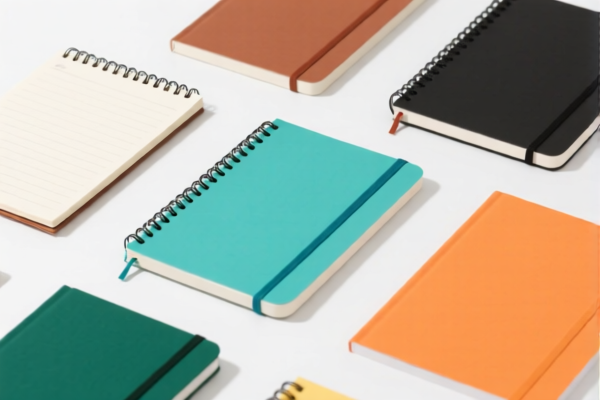


AI分析
📓 Letter Paper Notebook (Standard A4 Size Notebooks)
🌐 HS Code Reference & Customs Clearance Guide | 2026 Latest Tariff Analysis | Professional Clearance Strategy
📌 I. Product Definition & Classification: What Exactly is a "Letter Paper Notebook"?
A "Letter Paper Notebook" refers to paper-bound stationery items specifically formatted to hold standard "Letter" size paper (8.5" x 11" or 216mm x 279mm). In international trade, these are not merely "notebooks" but are strictly categorized under Register Books, Account Books, Order Books, Receipt Books, etc.
Key Distinction in Classification: * Notebooks (Logbooks/Account Books): If the notebook contains ruled lines, accounting columns, or specific functional layouts (e.g., expense trackers, meeting logs) → HS Code 4820. * Printed Publications: If the notebook is purely blank or contains printed content exceeding 49 pages acting as a book/manuscript → HS Code 4901.
⚠️ Critical Differentiator:
- If it is a blank or ruled notebook intended for writing (not a printed book with significant text content) → Classified under Chapter 48 (Paper Products).
- If it is a printed book, manual, or instructional guide >49 pages → Classified under Chapter 49 (Printed Books).
📦 II. HS Code Classification Details (2026 Latest Tariff Authority)
| HS Code | Product Description | Applicable Scenario | Page Count/Format |
|---|---|---|---|
4820.10.20.60 |
Paper notebooks, consistent with the category of registers, account books, etc., made of paper. | Standard Letter-size notebooks, ruled paper, non-specialized format. | ≤ 49 pages usually, or functional layout. |
4820.10.20.10 |
Paper portable notebooks, meeting paper material requirements and notebook usage definition. | Portable Letter-size notebooks, travel journals, general writing pads. | Functional writing surface. |
4901.99.00.93 |
Paper printed items, consistent with printed periodicals/books comprising 49 or more pages. | Printed workbooks, instructional manuals, or decorative notebooks with extensive printed content. | ≥ 49 pages. |
🔍 Key Reminder:
- Most commercial "Letter Paper Notebooks" sold as blank or ruled stationery fall under 4820.
- If the item is marketed as a "Workbook" with exercises, text, or educational content >49 pages, it may shift to 4901.
- Do not misdeclare a simple notebook as a "book" (4901) to avoid duty scrutiny, nor a complex printed manual as a "notebook" (4820) to evade higher taxes.
💰 III. 2026 Latest Tariff Rate Breakdown (Including Additional Taxes & Policy Surcharges)
✅ Applicable Country: United States (US)
✅ Origin: China (CN)
✅ Effective Date: November 10, 2025 onwards (including subsequent imports)
🎯 1. 4820.10.20.60 & 4820.10.20.10 —— Paper Notebooks (General)
| Item | Content |
|---|---|
| Base Duty Rate | 0% (ad valorem) |
| USITC Additional Duty | +25% (Under Section 301) |
| IEEPA Additional Duty | +10% (Targeting China/HK products, effective Nov 10, 2025) |
| Total Duty Rate | 35% |
| Tax Calculation | CIF Value × 35% |
| De Minimis Eligibility | ❌ NOT Eligible (deny_de_minimis) |
| Legal Authority Path | USITC:4820.10.20.60 → USITC:4820.10.20.10 → FOOTNOTE:301 → IEEPA:9903.01.25 |
📌 Explanation:
- "Base 0%": The standard Most Favored Nation (MFN) duty for paper notebooks is zero.
- "25% Section 301": This is the primary retaliatory tariff on Chinese paper goods.
- "10% IEEPA 122 Clause": A specific additional tariff under the International Emergency Economic Powers Act for certain Chinese imports, effective from late 2025.
- Total 35%: This is a HIGH effective tax rate. You cannot use the $800 de minimis exemption to bypass this.
🎯 2. 4901.99.00.93 —— Printed Items (≥49 Pages)
| Item | Content |
|---|---|
| Base Duty Rate | 0% (ad valorem) |
| USITC Additional Duty | +7.5% |
| IEEPA Additional Duty | +10% |
| Total Duty Rate | 17.5% |
| Tax Calculation | CIF Value × 17.5% |
| De Minimis Eligibility | ❌ NOT Eligible (deny_de_minimis) |
| Legal Authority Path | USITC:4901.99.00.93 → FOOTNOTE:301 → IEEPA:9903.01.25 |
📌 Explanation:
- Lower Total Rate (17.5%): Printed publications/books have a lower Section 301 surcharge (7.5%) compared to general paper goods (25%).
- Risk: Customs may challenge this if the item is a simple notebook. They may reclassify it to 4820 (35%) if deemed "functional stationery" rather than "publication."
🛠️ IV. Customs Clearance Practical Advice (Battle-Tested Pitfall Guide)
✅ 1. Required Documentation Checklist (Non-Negotiable)
| Document | Must Provide | Notes |
|---|---|---|
| ✅ Product Specification Sheet | ✔️ | Must specify: Size (Letter 8.5x11), Page Count, Paper Weight, Ruling Type (Grid/Lined/Blank). |
| ✅ Product Photos (Labeled) | ✔️ | Clear shot of the cover, inside pages (to prove blank/ruled vs. printed text), and binding type. |
| ✅ Commercial Invoice | ✔️ | Must explicitly state "Paper Notebook" or "Printed Book" and NOT "Gift" or "Sample" if value exceeds threshold. |
| ✅ Packing List | ✔️ | Detailed count per box. Ensure carton dimensions match declared volume. |
| ✅ Origin Certificate | ✔️ | Required for US customs to apply Section 301 tariffs. |
✅ 2. Declaration Tips (Crucial Mantras)
🔥 "Define by Function: Ruled = 4820, Printed Text = 4901."
| Scenario | Correct Declaration | Incorrect Practice |
|---|---|---|
| Blank/Ruled Notebook (≤49 pages) | 4820.10.20.60 |
Declaring as "Book" → 17.5% (Risk of reclassification to 35% + penalties) |
| Blank/Ruled Notebook (>49 pages) | 4820.10.20.10 |
Declaring as "Book" → Risk of rejection if no substantial print content |
| Work/Workbook (>49 pages with exercises) | 4901.99.00.93 |
Declaring as "Notebook" → 35% Tax! Missed savings opportunity. |
| Digital Tablet/Smart Notebook | 8471 |
Declaring as "Paper Notebook" → Wrong Chapter entirely! |
✅ 3. Special Handling Cases
| Case | Handling Advice |
|---|---|
| OEM Custom Notebooks | Provide design files showing ruling/pattern. If custom printing is extensive (>50% coverage), argue for 4901 if applicable, but be prepared for inspection. |
| Mixed Containers | If shipping both 4820 (35%) and 4901 (17.5%), separate line items clearly. Mixing can lead to whole container scrutiny. |
| Samples < $800 | ❌ NO De Minimis. Even single notebooks are subject to full duty + IEEPA. Do not try to sneak them in as "gifts." |
🌍 V. Global Market Clearance Comparison (2026 Latest)
| Country/Region | Recommended HS Code | Total Tariff (China Origin) | Certification Req. | Notes |
|---|---|---|---|---|
| 🇺🇸 USA | 4820.10.20.60 |
35% | None specific | High due to Section 301 + IEEPA. |
| 🇨🇳 China | 4820.10.20.60 |
0-6% | CCC (if plastic covers) | Low import tax. |
| 🇪🇺 EU | 4820.10.00 |
6.5% | CE (if electronic) | No Section 301 equivalent. |
| 🇬🇧 UK | 4820.10.00 |
6.5% | UKCA | Post-Brexit alignment with EU. |
| 🇯🇵 Japan | 4820.10.00 |
0% | None | Zero duty for paper notebooks. |
📌 Conclusion:
- USA is the most expensive market for Paper Notebooks due to the unique combination of Section 301 (25%) and IEEPA (10%).
- EU/Japan/UK have standard low duties but no punitive surcharges.
- Strategy: For US market, ensure strict classification to avoid 35% vs 17.5% pitfalls.
📌 VI. Common Mistakes & Pitfall Guide (Blood & Tears Lessons)
❌ Mistake 1: Declaring a 300-page Printed Workbook as 4820 (35%)
👉 Consequence: You OVERPAY 17.5%.
✅ Fix: Declare as 4901.99.00.93 if it contains substantial printed text/exercises >49 pages.
❌ Mistake 2: Declaring a Simple Blank Notebook as 4901 (17.5%)
👉 Consequence: Customs rejects it as "Non-Printed Publication" and reclassifies to 4820 (35%) + Penalties/Fines.
✅ Fix: Stick to 4820 for blank/ruled paper goods.
❌ Mistake 3: Using De Minimis ($800) for small batches
👉 Consequence: Seizure! Paper notebooks from China are explicitly excluded from de minimis under IEEPA Section 122.
✅ Fix: Pay the 35% duty. It is non-negotiable for direct China imports.
🎯 VII. Conclusion: Precise Classification Saves Money!
🎯 Remember the Mantra:
🔹 "Blank/Ruled = 4820 (35%) | Printed/Text = 4901 (17.5%)"
🔹 "No De Minimis for China Paper! Pay the 35% or Risk Seizure!"
📌 Pro Tip:
If your notebooks are assembled in Vietnam or Malaysia, provide Country of Origin Certificates claiming non-China origin to potentially avoid Section 301 tariffs (verify with current rules of origin).
Always apply for an Advance Ruling if your product sits on the boundary between "Notebook" and "Printed Book."
📣 Immediate Action Required:
📞 Consult a Customs Broker + Provide Internal Photos + Check Page Count & Content
🚀 Avoid the 35% Trap! Classify Correctly, Clear Faster, Protect Margins!
✨ Professional Clearance Starts with Accurate Classification!
💼 Your Profit Margin Depends on the Last Three Digits of the HS Code!
用户评价
关于 HS 编码归类
协调制度(HS)是由世界海关组织(WCO)制定的国际贸易商品分类标准。全球 200 多个国家采用 HS 系统作为海关关税、贸易统计和进出口监管的基础。
每个 HS 编码遵循以下层级结构:
- 章(2 位)——商品大类(例如:第 84 章:机器和机械设备)
- 品目(4 位)——章内的更具体分类
- 子目(6 位)——国际通用细分,所有 WCO 成员国统一使用
- 本国细分(8-10 位)——各国自行扩展的细分编码,如美国 HTSUS 10 位编码
正确的 HS 编码归类对于顺利通关、准确缴纳关税和遵守贸易法规至关重要。错误归类可能导致海关延误、多缴关税或罚款。
从CN进口到US时,适用的关税税率可能包括:
- 最惠国(MFN)税率——适用于 WTO 成员国的标准关税税率
- 普通税率——适用于无贸易协定国家
- 贸易救济关税——附加关税,如 301 条款(反倾销)、232 条款(国家安全)或反补贴税
本页内容仅供参考。如需正式归类,请咨询当地海关或持牌报关代理。