Letterhead
CN → US| HS编码 | 关税税率 | 原产国 | 目的国 | 文档 |
|---|---|---|---|---|
| 4820102020 | 35.0% | CN | US | 官方文档 |
| 4820104000 | 35.0% | CN | US | 官方文档 |
商品图片
AI分析
📝 Letterheads & Stationery (Paper-Based Administrative Items)
🌐 HS Code Reference & Customs Clearance Guide | 2026 Latest Tariff Analysis | Professional Clearance Strategy
📌 I. Product Definition & Classification: Do You Really Understand “Letterheads”?
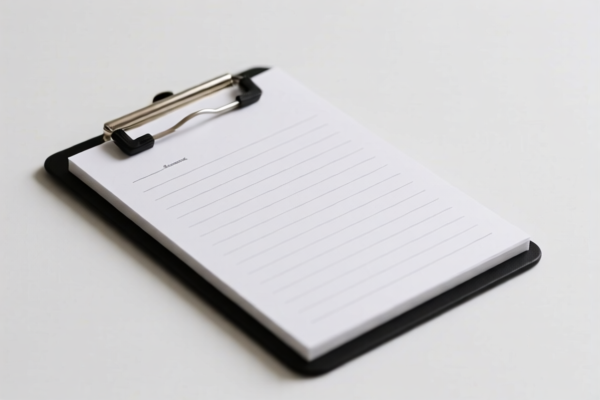
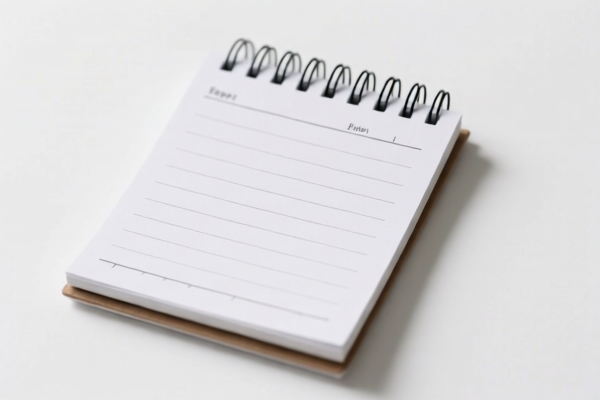
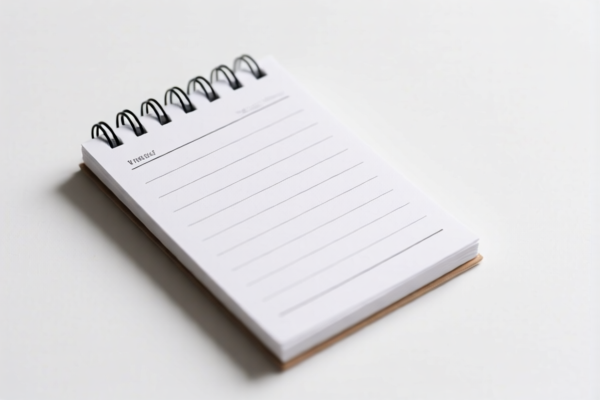
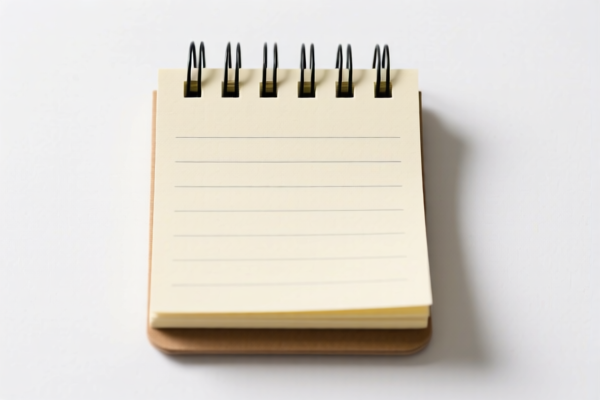
In international trade, "Letterheads" fall under the broad category of Paper Stationery. However, customs authorities strictly distinguish between printed letterheads (pre-printed business information) and blank memorandum pads or notebooks. The classification hinges on the specific form and function of the paper product.
According to the provided data, these items are classified under Chapter 48 (Paper and Paperboard; Articles of Paper Pulp, of Paper or of Paperboard). Specifically, they are categorized as: 1. Pre-printed Letter Pads / Memorandum Pads (specifically those with company letterheads pre-printed). 2. Other Registers/Account Books (if they do not fit the specific "letter pad" definition but are used for record-keeping).
⚠️ Key Distinction Point:
- If the item is a pad of paper with a company name/address pre-printed on the top portion → It is classified as a "Memorandum Pad" or "Letter Pad".
- If the item is a bound notebook or diary (even with a letterhead design on the cover or first page) → It may fall under "Diaries, notebooks and address books, bound."
- Crucial Note: The provided<DATA>strictly lists two HS Codes under the sub-heading for Registers, account books... letter pads, memorandum pads. Therefore, unbound printed letter pads and specific account books are the primary targets here.
📦 II. HS Code Classification Details (2026 Latest Tariff Authority Comparison)
| HS Code | Product Description | Applicable Scenario | Is it Bound? |
|---|---|---|---|
4820.10.20.20 |
Memorandum pads, letter pads and similar articles | Pre-printed letterheads on loose sheets or pads; business letterheads used for daily correspondence. | ❌ No (Typically unbound pads or loose sheets) |
4820.10.40.00 |
Other (Registers, account books, notebooks, etc.) | Bound notebooks, diaries, address books, or other stationery articles that do not fit the specific "letter pad" definition. | ✅ Yes (Bound items like diaries/notebooks) |
🔍 Important Reminder:
-4820.10.20.20is the most common classification for standard printed letterheads (unbound pads).
-4820.10.40.00is a residual category for other stationery like bound diaries or specialized account books.
- Do not mix: Do not declare a bound diary as a "letter pad" (4820.10.20.20) to avoid customs queries.
💰 III. 2026 Latest Tariff Rate Details (Including Surtax & Policy Add-ons)
✅ Applicable Country: United States (US)
✅ Country of Origin: China (CN) (Assumed based on typical 25% surtax scenarios in data)
✅ Effective Time: Current 2026 Policy (Reflecting the provided 25% surtax)
🎯 1. 4820.10.20.20 —— Memorandum Pads, Letter Pads
| Item | Content |
|---|---|
| Base Tariff Rate | 0.0% (ad valorem) |
| Section 301 Surcharge (USITC) | +25.0% |
| IEEPA Surtax | Not explicitly listed in <DATA> for this code (Note: Data only shows "Basic Tariff: 0.0%, Surtax: 25.0%") |
| Total Tax Rate | 25.0% |
| Tax Calculation | CIF Value × 25% |
| De Minimis Exemption | ❌ Not Applicable (Section 301 goods are generally subject to duties regardless of value if properly declared) |
| Legal Basis Path | USITC:4820.10.20.20 → FOOTNOTE:301_CHINA |
📌 Explanation:
- The 0% base tariff reflects the standard MFN (Most Favored Nation) rate for paper stationery.
- The 25% surtax is applied due to the Section 301 Trade Act targeting Chinese-origin goods.
- Total Liability: 25% of the declared value (CIF). This is a high-cost item for importers.
🎯 2. 4820.10.40.00 —— Other Stationery (Bound Notebooks, Diaries, etc.)
| Item | Content |
|---|---|
| Base Tariff Rate | 0.0% (ad valorem) |
| Section 301 Surcharge (USITC) | +25.0% |
| Total Tax Rate | 25.0% |
| Tax Calculation | CIF Value × 25% |
| De Minimis Exemption | ❌ Not Applicable |
| Legal Basis Path | USITC:4820.10.40.00 → FOOTNOTE:301_CHINA |
📌 Note:
- Same tax structure as above.
- Whether bound (notebook) or unbound (letter pad), Chinese-origin paper stationery faces the 25% surtax.
- No base duty, but the surtax makes the total landed cost significantly higher.
🛠️ IV. Customs Clearance Practical Advice (Real-World Pitfall Avoidance Guide)
✅ 1. Required Documentation Checklist (None Can Be Missing)
| Document | Mandatory? | Description |
|---|---|---|
| ✅ Commercial Invoice | ✔️ | Must clearly state: "Paper Letterheads," "Memorandum Pads," or "Bound Notebooks." Avoid vague terms like "Stationery." |
| ✅ Product Photos | ✔️ | Clear images showing: 1) The pre-printed letterhead design. 2) Whether items are bound or unbound. |
| ✅ Packing List | ✔️ | Detail the number of pads, sheets per pad, and total units. |
| ✅ Origin Certificate | ✔️ | Proves origin is China (to determine if 301 tax applies). |
| ✅ HS Code Declaration Form | ✔️ | Specify 4820.10.20.20 for letter pads or 4820.10.40.00 for other books. |
✅ 2. Declaration Tips (Key Mantra)
🔥 "Bound vs. Unbound! Name it Right, Tax is Lighter (or at least Clearer)!"
| Scenario | Correct Declaration | Common Mistake |
|---|---|---|
| Loose printed letterheads (pad form) | 4820.10.20.20 (Memorandum/Letter Pads) |
Misdeclaring as "Notebooks" (4820.10.40.00) → May trigger additional scrutiny. |
| Bound diaries/notebooks with letterheads | 4820.10.40.00 (Other) |
Misdeclaring as "Letter Pads" (4820.10.20.20) → Customs may reject as inaccurate. |
| Plain paper (no printing) | Usually Chapter 48, but Not these codes | Do not declare plain paper as "letterheads" if unprinted. |
✅ 3. Special Handling
| Situation | Advice |
|---|---|
| OEM Custom Letterheads | Provide a sample of the pre-printed design. Customs needs to verify it is indeed "stationery" and not "printed advertising material" (which might have different codes). |
| Mixed Containers | If a container has both 4820.10.20.20 and 4820.10.40.00, declare separately. Do not lump them together, or the entire shipment may be audited. |
| Origin Non-China | If from Vietnam, EU, etc., the 25% surtax does NOT apply. Ensure your Certificate of Origin is accurate to avoid wrongful surtax charges. |
🌍 V. Global Market Clearance Comparison (2026 Latest)
| Country/Region | Recommended HS Code | Tariff (China Origin) | Certification | Notes |
|---|---|---|---|---|
| 🇺🇸 USA | 4820.10.20.20 / 4820.10.40.00 |
25% (Total) | None specific | High surtax due to 301 Tariff. |
| 🇨🇳 China | 4820.10.20 / 4820.10.40 | 5% - 10% | N/A | Lower duties for imports into China. |
| 🇪🇺 EU | 4820.10.20 / 4820.10.40 | 0% - 3% | CE (if applicable) | No 301-style surtax. |
| 🇬🇧 UK | 4820.10.20 / 4820.10.40 | 0% - 5% | N/A | Post-Brexit tariffs may vary. |
📌 Conclusion:
- USA is the only major market with a 25% surtax on these paper goods from China.
- EU and UK offer much lower tariff burdens. Consider supply chain adjustments if targeting the US market with high-volume stationery.
📌 VI. Common Errors & Pitfall Guide (Lessons Learned)
❌ Mistake 1: Declaring "Letterheads" as "Printing Services"
👉 Consequence: Wrong HS Code, delay, potential penalty. Stationery is goods, not services.
❌ Mistake 2: Failing to distinguish between Bound (Notebook) and Unbound (Pad)
👉 Consequence: Customs may select 4820.10.40.00 (Other) for all, causing inventory mismatch. Be specific.
❌ Mistake 3: Ignoring the 25% Surtax in Cost Calculations
👉 Consequence: Profit margin erosion. Always include 25% in your landed cost model for US imports from China.
❌ Mistake 4: Using "Office Supplies" as a Generic Description
👉 Consequence: Too vague. Must specify "Memorandum Pads" or "Bound Notebooks."
✅ Correct Declaration Example:
"PAPER LETTERHEADS, UNBOUND, PRE-PRINTED WITH COMPANY LOGO, MODEL ABC" → HS: 4820.10.20.20
"BOUND NOTEBOOKS, COVERED WITH PAPER, USED FOR MEMORANDUM, MODEL XYZ" → HS: 4820.10.40.00
🎯 VII. Conclusion: Precise Classification Saves Money!
🎯 Remember the Mantra:
🔹 "Unbound Letter Pads: 4820.10.20.20"
🔹 "Bound Notebooks/Diaries: 4820.10.40.00"
🔹 "China Origin to US: 25% Surtax Applies to Both!"
📌 Pro Tip:
If you are importing large volumes of letterheads to the US, consider:
1. Pre-classification Ruling (ACE Portal): Submit a sample and photos to CBP for an official HS Code ruling.
2. Supply Chain Diversification: If possible, source from non-China origins to avoid the 25% surtax.
3. Cost Adjustment: Factor in the 25% total tax in your pricing strategy.
📣 Immediate Action:
📞 Contact your customs broker with clear photos of the pre-printed letterheads.
📋 Prepare separate packing lists for bound vs. unbound items.
💰 Calculate your CIF Value × 1.25 for accurate budgeting.
✨ Professional Clearance Starts with Accurate Classification!
💼 Every Percentage Point of Tax Matters in Paper Goods Trade!
用户评价
关于 HS 编码归类
协调制度(HS)是由世界海关组织(WCO)制定的国际贸易商品分类标准。全球 200 多个国家采用 HS 系统作为海关关税、贸易统计和进出口监管的基础。
每个 HS 编码遵循以下层级结构:
- 章(2 位)——商品大类(例如:第 84 章:机器和机械设备)
- 品目(4 位)——章内的更具体分类
- 子目(6 位)——国际通用细分,所有 WCO 成员国统一使用
- 本国细分(8-10 位)——各国自行扩展的细分编码,如美国 HTSUS 10 位编码
正确的 HS 编码归类对于顺利通关、准确缴纳关税和遵守贸易法规至关重要。错误归类可能导致海关延误、多缴关税或罚款。
从CN进口到US时,适用的关税税率可能包括:
- 最惠国(MFN)税率——适用于 WTO 成员国的标准关税税率
- 普通税率——适用于无贸易协定国家
- 贸易救济关税——附加关税,如 301 条款(反倾销)、232 条款(国家安全)或反补贴税
本页内容仅供参考。如需正式归类,请咨询当地海关或持牌报关代理。