License Plate
CN → US| HS编码 | 关税税率 | 原产国 | 目的国 | 文档 |
|---|---|---|---|---|
| 7326908688 | 87.9% | CN | US | 官方文档 |
| 8310000000 | 35.0% | CN | US | 官方文档 |
| 7326901000 | 85.0% | CN | US | 官方文档 |
商品图片
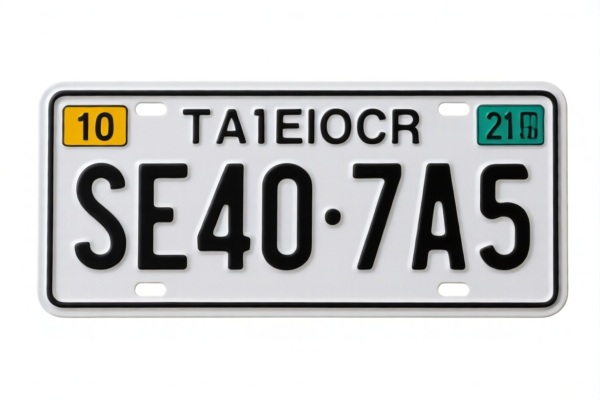
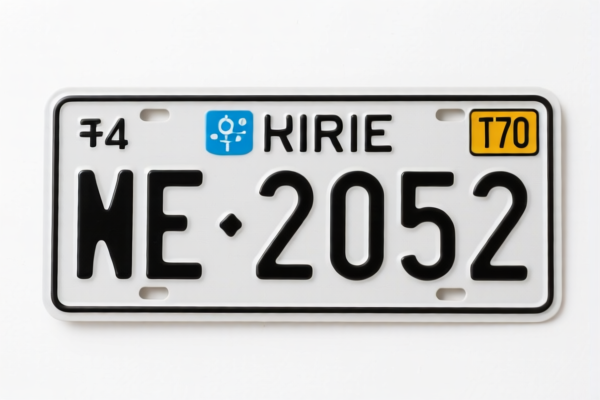
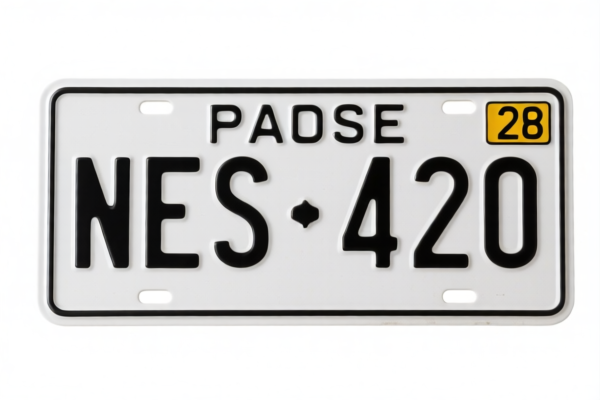
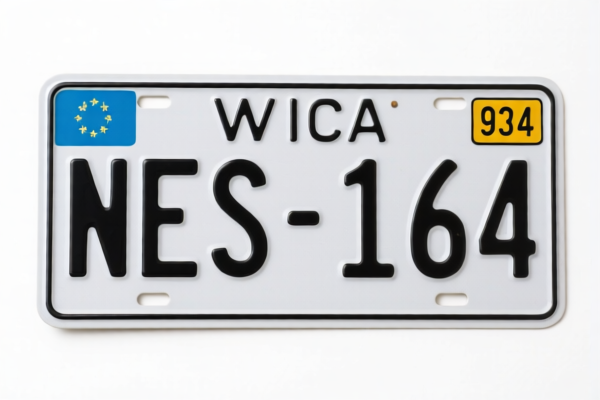
AI分析
🚗 License Plates (Automotive License Plates)
🌐 HS Code Reference & Customs Clearance Guide | 2026 Latest Tariff Analysis | Professional Clearance Strategy
📌 I. Product Definition & Classification: What Exactly Is a "License Plate"?
A license plate is a metallic or plastic identifier attached to vehicles, aircraft, or other objects for official registration. In international trade, classification hinges on Material and Function:
1. The "Signage" Argument (8310):
Treated as a "Sign, Plaque or Similar Indicator." If the plate is viewed primarily as an informational sign attached to a vehicle, it may fall under Chapter 83 (Miscellaneous Articles of Base Metal).
2. The "General Metal Article" Argument (7326):
Treated as "Other articles of iron or steel." If the plate is viewed strictly as a manufactured metal product (stampings, cutouts) without specific signage functionality recognized by the classifier, it falls under Chapter 73 (Articles of Iron or Steel).
⚠️ Critical Distinction:
- If the importer can prove the item is specifically designed as a "sign" or "nameplate" for identification → 8310.00.00.00 is often preferred.
- If the classification focuses purely on the metal composition (Steel/Iron) and generic form → 7326.90.10.00 or 7326.90.86.88 applies.
- Risk: Misclassification between "Signs" (Ch 83) and "General Metal Articles" (Ch 73) drastically changes the 122-Clause Tariff exposure.
📦 II. HS Code Classification Details (2026 Latest Tariff Authority)
Based on the provided data, there are three primary classification paths. Note the significant tax disparity driven by Section 232 (Steel/Aluminum) and Section 301/122 tariffs.
| HS Code | Product Description | Logic & Summary from Data | Estimated Total Tax Rate |
|---|---|---|---|
8310.00.00.00 |
Signs, Plaque or Similar Indicators | Logic: License plates are functionally "signs" or "address plates." Material is inferred as non-ferrous base metal (Aluminum) or ferrous, but the function drives the chapter. Summary: Matches "sign/plaque" use case; material reasonably inferred as base metal. |
35.0% |
7326.90.10.00 |
Other Articles of Iron or Steel (General) | Logic: Based on common sense, plates are often steel. Classified as "other articles" of steel. Summary: Matches "iron/steel other articles"; non-specific shape fits "other." |
85.0% |
7326.90.86.88 |
Other Articles of Iron or Steel (Catch-all) | Logic: Infer material as Metal (Iron/Steel). No specific conflict in form/use, but lacks the specific "sign" designation of 8310. Summary: Fits "other iron/steel articles"; no obvious form/use conflict. |
87.9% |
🔍 Key Takeaway:
- 8310.00.00.00 is the most tax-efficient option (35% vs. ~85-88%).
- The difference lies in whether the plate is classified as a "Sign" (Ch 83) or a "General Metal Article" (Ch 73).
- 122 Clause Risk: Sections 7326 codes attract an additional 50% tariff for Steel/Aluminum/Copper products, pushing taxes to ~85-88%. Section 8310 does not attract this 50% surcharge.
💰 III. 2026 Latest Tariff Rate Breakdown (Including Surcharges & Policies)
✅ Applicable Country: United States (US)
✅ Origin: China (CN)
✅ Effective Date: Current trade policies (Section 301, 232, 122)
🎯 1. 8310.00.00.00 —— The "Signage" Classification (LOWEST RISK)
| Item | Content |
|---|---|
| Base Tariff | 0.0% (Ad Valorem) |
| Section 301 Surcharge | +25.0% (Additional Duty on Chinese Goods) |
| Section 232 (Steel/Aluminum) | 0% (Not applied to Chapter 83 "Signs" in this classification logic) |
| Section 122 Surcharge | 0% (Not applied) |
| Total Tax Rate | 35.0% |
| Tax Calculation | CIF Value × 35% |
| De Minimis Exemption | ❌ Not Applicable (Commercial shipment) |
| Legal Basis Path | HTS:8310.00.00.00 → FTC:301-8310 |
📌 Explanation:
- By classifying as a "Sign" (Ch 83), the importer avoids the harsh 50% Section 122/232 tariffs that apply to raw steel/aluminum products.
- Only the standard 25% Section 301 tariff applies.
- Total Cost: 35%. This is the optimal classification for cost-saving.
🎯 2. 7326.90.10.00 —— The "General Steel Article" Classification (HIGH RISK)
| Item | Content |
|---|---|
| Base Tariff | 0.0% |
| Section 301 Surcharge | +25.0% |
| Section 232 / 122 Surcharge | +50.0% (Steel, Aluminum, Copper Products) |
| Total Tax Rate | 85.0% |
| Tax Calculation | CIF Value × 85% |
| De Minimis Exemption | ❌ Not Applicable |
| Legal Basis Path | HTS:7326.90.10.00 → FTC:301-7326 → SEC122:Steel/Alu |
📌 Explanation:
- Classification as "Iron/Steel Other Articles" triggers the 50% Section 122/232 tariff because license plates are often steel.
- Total Cost: 85%. This is prohibitively expensive for most commercial importers.
🎯 3. 7326.90.86.88 —— The "Catch-All Steel" Classification (HIGHEST RISK)
| Item | Content |
|---|---|
| Base Tariff | 2.9% |
| Section 301 Surcharge | +25.0% |
| Section 232 / 122 Surcharge | +50.0% (Steel, Aluminum, Copper Products) |
| Total Tax Rate | 87.9% |
| Tax Calculation | CIF Value × 87.9% |
| De Minimis Exemption | ❌ Not Applicable |
| Legal Basis Path | HTS:7326.90.86.88 → FTC:301-7326 → SEC122:Steel/Alu |
📌 Explanation:
- This is the broadest "other" category for steel articles.
- It incurs a 2.9% base tariff PLUS 50% surcharge PLUS 25% Section 301.
- Total Cost: 87.9%. This is the worst-case scenario.
🛠️ IV. Customs Clearance Practical Advice (Battle-Tested Pitfall Avoidance)
✅ 1. Documentation Checklist (Non-Negotiable)
| Document | Required? | Description |
|---|---|---|
| ✅ Product Specification Sheet | ✔️ | Must detail material (e.g., "Aluminum Alloy" vs. "Steel"), dimensions, and mounting method. |
| ✅ Product Photos | ✔️ | Show the plate clearly. If it has reflective coatings or specific sign-like features, highlight them. |
| ✅ Commercial Invoice | ✔️ | CRITICAL: Do NOT label as "License Plate" if possible. Use "Metal Nameplate," "Identification Sign," or "Vehicle Plaque." |
| ✅ HS Code Pre-Ruling | ✔️ | Highly Recommended. Apply for an ISF/Pre-Ruling from CBP to lock in 8310.00.00.00 before shipment. |
| ✅ Statement of Material | ✔️ | Explicitly state: "Made of Aluminum, Classified as Signage (Ch 83)." |
✅ 2. Declaration Strategy (Key Mantra)
🔥 "Function Over Material, Name Matters Most!"
| Scenario | Correct Declaration | Wrong Declaration |
|---|---|---|
| Goal: Low Tax (35%) | Use HS 8310.00.00.00. Name: "Aluminum Vehicle Identification Sign." | Name: "Steel License Plate" → CBP may force Ch 73 → 85-88% Tax. |
| Material: Aluminum | Emphasize Aluminum. Ch 83 covers "Base Metal" (includes Al). This helps avoid "Steel" surcharges. | Emphasize "Steel" → Triggers 50% Section 122 tariff. |
| Packaging | Declare as complete unit. Do not split into "Plate + Bolt + Bracket" if shipped together. | Splitting parts → Each part may be taxed separately, increasing admin burden. |
✅ 3. Special Cases & Mitigation
| Situation | Handling Advice |
|---|---|
| OEM Custom Plates | Provide design files showing it is a "Sign." Prove it is not a "General Metal Good." |
| Mixed Materials (Plastic + Metal) | If the plate is plastic with a metal insert, it might fall under Chapter 39 (Plastics) or 85. Check if plastic dominates. If so, avoid Steel tariffs entirely. |
| Aluminum Plates | Strongly Preferred. Aluminum is also "Base Metal" for Ch 83. It avoids the "Steel" definition issues in Ch 73, reinforcing the Ch 83 argument. |
| CBP Audit Risk | CBP often audits Ch 83 vs. Ch 73. Have duty engineers review your classification. The argument: "It is a sign designed to convey information (vehicle ID), not just a metal blank." |
🌍 V. Global Market Comparison (2026 Latest)
| Country/Region | Recommended HS Code | Tariff | Certification | Notes |
|---|---|---|---|---|
| 🇺🇸 USA | 8310.00.00.00 |
35% | None (Standard) | Avoid Ch 73 to save 50%+ in surcharges. |
| 🇨🇳 China | 8310.00.00.00 |
~0-10% | CCC (if applicable) | Low duty, but check domestic regulations. |
| 🇪🇺 EU | 8310.00.00.00 |
0% | CE (if electronic) | Generally low duty for signs. |
| 🇬🇧 UK | 8310.00.00.00 |
0% | UKCA | Post-Brexit, general base metal signs are often 0%. |
📌 Conclusion:
- The USA is the critical market where HS Code selection impacts cost by ~50 percentage points.
- China-origin goods face high tariffs in the US. Ch 83 (Signs) is the only viable path to keep costs manageable (35% vs 85%+).
📌 VI. Common Errors & Pitfalls (Blood Lessons)
❌ Error 1: Labeling goods as "License Plate" on the Invoice.
👉 Consequence: CBP automatically suspects Ch 73 or Ch 87. Risk of reclassification to 7326 → 85-88% tax.
Fix: Use "Vehicle Sign" or "Identification Plaque."
❌ Error 2: Using Steel Plates without Pre-Ruling.
👉 Consequence: Steel triggers Section 122/232. 50% extra tax.
Fix: Switch to Aluminum plates if possible, or secure a Pre-Ruling for Ch 83.
❌ Error 3: Ignoring the "122 Clause."
👉 Consequence: The 50% surcharge on steel/aluminum articles is not always obvious.
Fix: Always check Section 122 applicability for Chapter 73 items.
✅ Correct Approach:
"Aluminum Vehicle Identification Sign, Model XYZ, for US Market, Classified under HTS 8310.00.00.00."
🎯 VII. Conclusion: Precision Classification Saves 50%
🎯 Remember the Mantra:
🔹 "Signage is King: 35% vs 88%."
🔹 "Aluminum saves you from Steel Surcharges."
🔹 "Name it 'Sign,' not 'Plate,' to avoid the 50% Penalty."
📌 Pro Tip:
If you are importing large volumes, apply for a CBP Pre-Ruling immediately. The cost of a ruling is negligible compared to a 50% tax penalty.
Also, consider Aluminum substrates. They support the Ch 83 argument and avoid "Steel-specific" scrutiny.
📣 Immediate Action:
📞 Consult a Customs Broker
📄 Prepare "Signage" vs. "Metal Article" Technical Datasheet
🚀 Secure the 35% Rate. Avoid the 88% Trap.
✨ Professional Clearance Starts with Accurate Classification!
💼 Every Dollar Saved in Duty is Pure Profit!
用户评价
关于 HS 编码归类
协调制度(HS)是由世界海关组织(WCO)制定的国际贸易商品分类标准。全球 200 多个国家采用 HS 系统作为海关关税、贸易统计和进出口监管的基础。
每个 HS 编码遵循以下层级结构:
- 章(2 位)——商品大类(例如:第 84 章:机器和机械设备)
- 品目(4 位)——章内的更具体分类
- 子目(6 位)——国际通用细分,所有 WCO 成员国统一使用
- 本国细分(8-10 位)——各国自行扩展的细分编码,如美国 HTSUS 10 位编码
正确的 HS 编码归类对于顺利通关、准确缴纳关税和遵守贸易法规至关重要。错误归类可能导致海关延误、多缴关税或罚款。
从CN进口到US时,适用的关税税率可能包括:
- 最惠国(MFN)税率——适用于 WTO 成员国的标准关税税率
- 普通税率——适用于无贸易协定国家
- 贸易救济关税——附加关税,如 301 条款(反倾销)、232 条款(国家安全)或反补贴税
本页内容仅供参考。如需正式归类,请咨询当地海关或持牌报关代理。