Lignosulfonate Solution
CN → US| HS编码 | 关税税率 | 原产国 | 目的国 | 文档 |
|---|---|---|---|---|
| 3804001000 | 35.0% | CN | US | 官方文档 |
| 3804005000 | 38.7% | CN | US | 官方文档 |
| 3824405000 | 40.0% | CN | US | 官方文档 |
| 3824999397 | 40.0% | CN | US | 官方文档 |
| 3804005000 | 38.7% | CN | US | 官方文档 |
商品图片
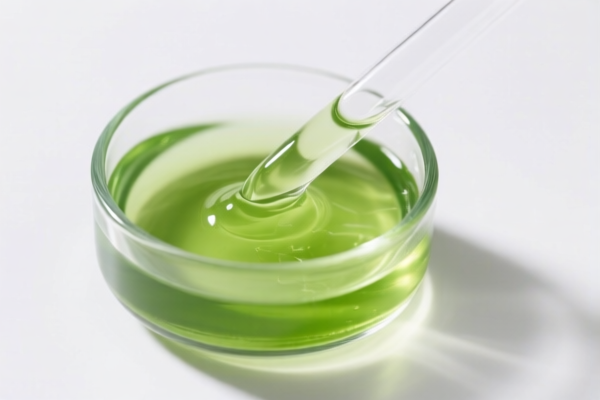
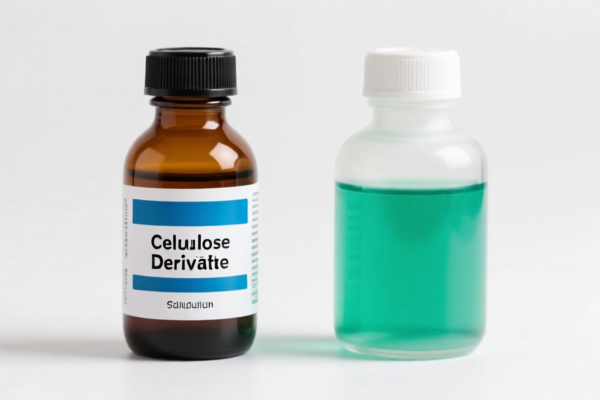
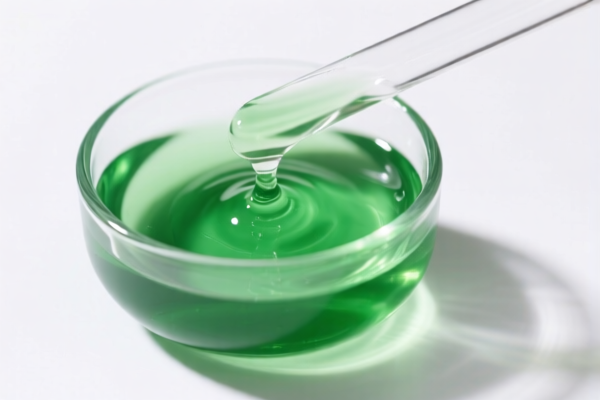
AI分析
🧪 Lignosulfonate Solution: HS Code Classification & US Customs Clearance Guide (2026)
🌐 HS Code Reference & Customs Clearance Strategy | 2026 Tariff Analysis | Professional Level Strategy
📌 I. Product Definition & Classification: Do You Really Understand "Lignosulfonate Solution"?
Lignosulfonate solutions are complex organic compounds derived from the lignin in wood pulp during the sulfite pulping process. They are widely used as dispersants, binders, and additives in construction, papermaking, and industrial chemistry.
In international trade, the classification of Lignosulfonate Solution depends entirely on its specific application, form, and end-use. Misclassification can lead to significant tax differences (from 35% to 40%) and potential customs delays.
⚠️ Key Distinction Points:
- If it is a residual alkaline liquor from the general process → 3804.00.10.00
- If it is specifically from paper pulp manufacturing → 3804.00.50.00
- If used as a concrete/cement additive → 3824.40.50.00
- If categorized as a general chemical industrial product → 3824.99.93.97
📦 II. HS Code Classification Details (2026 Latest Tariff Authority Comparison)
The following data is strictly based on the provided set. All items refer to Lignosulfonate Solution with consistent material composition.
| HS Code | Product Summary | Form/State | Primary Application | Total Tax Rate |
|---|---|---|---|---|
3804.00.10.00 |
Lignosulfonate Solution, residual alkaline liquor | Residual Alkaline Liquor | General Chemical/Pulping Residue | 35.0% |
3804.00.50.00 |
Lignosulfonate Solution, paper pulp manufacturing residual alkaline liquor | Paper Pulp Residual Alkaline Liquor | Papermaking Process | 38.7% |
3824.40.50.00 |
Lignosulfonate Solution, chemical additive for cement mortar/concrete | Solution | Construction/Cement Additive | 40.0% |
3824.99.93.97 |
Lignosulfonate Solution, other chemical industry products, chemical preparation | Chemical Preparation | General Chemical Industry | 40.0% |
3804.00.50.00 |
Custom Lignosulfonate Solution, residual alkaline liquor from papermaking process | Residual Alkaline Liquor | Papermaking Process (Custom) | 38.7% |
🔍 Critical Reminder:
- The material is identical across all entries; the difference lies in the specific state summary (e.g., "residual alkaline liquor" vs. "chemical preparation") and declared use. - 3804.00.10.00 and 3804.00.50.00 fall under Chapter 38 (Miscellaneous Chemical Products) but are often confused with Chapter 47 (Paper). Ensure the description matches the residual nature if applying for 3804. - 3824 Series is for functional additives (like concrete reducers), not just raw residues.
💰 III. 2026 Latest Tariff Rate Details (Including Surtaxes & Policy Add-ons)
✅ Applicable Country: United States (US)
✅ Origin: China (CN)
✅ Effective Date: Based on current trade measures (Section 301 & IEEPA)
🎯 1. 3804.00.10.00 —— Lignosulfonate Solution (Residual Alkaline Liquor)
| Item | Content |
|---|---|
| Basic Tariff | 0.0% (Ad Valorem) |
| Section 301 Surtax | +25.0% |
| IEEPA Surtax (122 Clause) | +10.0% |
| Total Tax Rate | 35.0% |
| Tax Calculation | CIF Value × 35.0% |
| De Minimis Eligibility | ❌ No (Denied) |
| Legal Basis Path | USITC:3804.00.10.00 → SECTION301:25% → IEEPA:10% |
📌 Explanation:
- This is the lowest tax bracket among the options. - It applies to lignosulfonate described as "residual alkaline liquor" without specifying a more specialized industrial application like concrete or custom papermaking. - Warning: Must ensure the product description does not explicitly state "concrete additive" or "cement reducer," or Customs may reclassify it to 3824 (40%).
🎯 2. 3804.00.50.00 —— Lignosulfonate Solution (Paper Pulp Residual Alkaline Liquor)
| Item | Content |
|---|---|
| Basic Tariff | 3.7% (Ad Valorem) |
| Section 301 Surtax | +25.0% |
| IEEPA Surtax (122 Clause) | +10.0% |
| Total Tax Rate | 38.7% |
| Tax Calculation | CIF Value × 38.7% |
| De Minimis Eligibility | ❌ No (Denied) |
| Legal Basis Path | USITC:3804.00.50.00 → SECTION301:25% → IEEPA:10% |
📌 Note:
- This code is for lignosulfonates specifically identified as residual alkaline liquor from paper pulp manufacturing. - The basic tariff is higher (3.7% vs 0%), leading to a 3.7% higher total tax compared to3804.00.10.00. - Customized Solutions: If the solution is "customized" for papermaking but remains residual alkaline liquor, it still falls under 3804.00.50.00 (38.7%).
🎯 3. 3824.40.50.00 —— Lignosulfonate Solution (Concrete/Cement Additive)
| Item | Content |
|---|---|
| Basic Tariff | 5.0% (Ad Valorem) |
| Section 301 Surtax | +25.0% |
| IEEPA Surtax (122 Clause) | +10.0% |
| Total Tax Rate | 40.0% |
| Tax Calculation | CIF Value × 40.0% |
| De Minimis Eligibility | ❌ No (Denied) |
| Legal Basis Path | USITC:3824.40.50.00 → SECTION301:25% → IEEPA:10% |
📌 Explanation:
- Highest Basic Tariff (5%). - Applies when the product is explicitly marketed and used as a chemical additive for cement mortar/concrete (e.g., water reducer, plasticizer). - Risk: If you declare this as a generic chemical to avoid the 5% basic rate, but the invoice shows "concrete additive," you face misdeclaration penalties.
🎯 4. 3824.99.93.97 —— Lignosulfonate Solution (Other Chemical Industrial Products)
| Item | Content |
|---|---|
| Basic Tariff | 5.0% (Ad Valorem) |
| Section 301 Surtax | +25.0% |
| > IEEPA Surtax (122 Clause) | +10.0% |
| Total Tax Rate | 40.0% |
| Tax Calculation | CIF Value × 40.0% |
| De Minimis Eligibility | ❌ No (Denied) |
| Legal Basis Path | USITC:3824.99.93.97 → SECTION301:25% → IEEPA:10% |
📌 Note:
- This is a catch-all category for other chemical industrial products/preparations. - If the product doesn't fit the "residual liquor" description (3804) or the "concrete additive" description (3824.40), it defaults here. - Same total tax as concrete additive (40%), but different basic rate composition (5% base + 35% surtaxes).
🛠️ IV. Customs Clearance Practical Advice (Battle-Tested Pitfall Guide)
✅ 1. Required Documentation Checklist (None Can Be Omitted)
| Document | Must Provide | Explanation |
|---|---|---|
| ✅ Product Specification Sheet | ✔️ | Must detail: Form (solution/liquid), Concentration, pH, and specific application (e.g., "for concrete" vs. "residual from pulping"). |
| ✅ Technical Data Sheet (TDS) | ✔️ | Proves the chemical nature. Critical for distinguishing between "residual liquor" and "processed chemical preparation." |
| ✅ Commercial Invoice | ✔️ | Must clearly state: "Lignosulfonate Solution" + "Form: [Specific State]" + "Use: [Specific End Use]". Avoid vague terms like "chemical." |
| ✅ Bill of Lading (B/L) | ✔️ | Consistent description with Invoice. |
| ✅ Certificate of Origin (CO) | ✔️ | Essential for verifying China origin to apply correct Surtaxes. |
| ✅ Manufacturer's Declaration | ✔️ | Confirms if the product is a by-product (residual) or a manufactured chemical additive. |
✅ 2. Declaration Skills (Key Mantra)
🔥 "Describe the Form, Declare the Use, Avoid Vague Terms!"
| Scenario | Correct Declaration | Wrong Declaration |
|---|---|---|
| General Residual Liquor | "Lignosulfonate Solution, Residual Alkaline Liquor" | "Wood Extract" or "Chemical Mixture" |
| Papermaking Residue | "Lignosulfonate Solution, Residual Alkaline Liquor from Paper Pulp" | "Papermaking Chemical" |
| Concrete Additive | "Lignosulfonate Solution, Concrete Water Reducer/Additive" | "Lignin" (Too vague, may be reclassified) |
| General Chemical | "Lignosulfonate Solution, Other Chemical Industrial Product" | "Industrial Waste" (Dangerous, may be prohibited) |
✅ 3. Special Circumstances Handling
| Situation | Handling Advice |
|---|---|
| OEM Customized Solution | If customized for papermaking, use 3804.00.50.00. Ensure the invoice mentions "Customized for Papermaking Process." |
| Mixed Use Product | If the product can be used for both paper and concrete, declare the primary intended use with supporting documentation. If ambiguous, Customs may choose the higher tariff (40%). |
| Residual vs. Processed | If the product is processed beyond being a simple residual (e.g., concentrated, purified), it may no longer qualify as "Residual Alkaline Liquor" (3804) and may fall under 3824 (40%). |
| Liquid vs. Powder | This data specifically refers to Solution/Liquid. If shipped as powder, HS Codes may differ (though often similar, tax impact varies). Ensure physical form matches declaration. |
🌍 V. Global Market Comparison (2026 Latest)
| Country/Region | Recommended HS Code | Tariff (China Origin) | Certification/Remarks |
|---|---|---|---|
| 🇺🇸 USA | 3804.00.10.00 (Lowest Tax) |
35.0% (Base 0% + 35% Surtaxes) | Highest Risk Market due to Section 301 & IEEPA. |
| 🇺🇸 USA | 3824.40.50.00 (Concrete) |
40.0% (Base 5% + 35% Surtaxes) | Higher base rate. |
| 🇨🇳 China | 3804.00.10.00 |
Varies (Import Duty) | No US Surtaxes apply. |
| 🇪🇺 EU | 3824.40.00 |
~5-6.5% | No Section 301. CE/REACH compliance required. |
| 🇦🇺 Australia | 3804.00.00 |
~5% | No major surtaxes. |
📌 Conclusion:
- The US is the most expensive market due to the叠加 (stacking) of 25% Section 301 and 10% IEEPA tariffs. - Tax Savings Strategy: If the product qualifies as General Residual Alkaline Liquor, classify under 3804.00.10.00 (35%) instead of 3824 Series (40%). This saves 5% on CIF value.
📌 VI. Common Errors & Pitfall Guide (Lessons Learned)
❌ Error 1: Declaring "Concrete Additive" as "General Chemical" to avoid 5% base rate.
👉 Consequence: Customs reclassifies, applies 40%, plus penalties for misdeclaration.
❌ Error 2: Ignoring the "Residual" nature.
👉 Consequence: If the product is a purified/processed lignosulfonate, classifying as "Residual Liquor" (3804.00.10.00) may be challenged. Customs may shift to 3824 (40%).
❌ Error 3: Vague Invoice Description ("Chemical Solution").
👉 Consequence: Customs requests additional info, causing delay in release and potential warehousing fees.
❌ Error 4: Confusing Lignosulfonate Solution with Lignin Powder.
👉 Consequence: Different HS codes and tax rates. Ensure physical form (Solution) is declared.
✅ Correct Practice:
"Lignosulfonate Solution, Residual Alkaline Liquor from Wood Pulping, for Use as Dispersion Agent"
(Matches3804.00.10.00if not specifically paper/customized)
🎯 VII. Conclusion: Professional Declaration, Cost Efficiency
🎯 Remember the Mantra:
🔹 "Residual Liquor = 35% (Lowest Tax Base)"
🔹 "Paper Residue = 38.7% (Higher Base)"
🔹 "Concrete/Other = 40% (Highest Base)"
🔹 "US Market: Add 35% Surtaxes Always!"
📌 Tip:
- If the product is not a concrete additive, avoid 3824.40.50.00 unless necessary.
- 3804.00.10.00 is the optimal classification for general lignosulfonate solutions that are residual alkaline liquors, minimizing the 0% base tariff impact.
- Always provide a clear Technical Data Sheet (TDS) to support the "Residual" or "Customized" status.
📣 Immediate Action:
📞 Contact your customs broker with TDS and Invoice Drafts for pre-classification review.
🚀 Avoid the 40% trap by accurately declaring the product's form and use!
✨ Professional Customs Clearance Starts with Precise Classification!
💼 Every percentage point counts in the US market!
用户评价
关于 HS 编码归类
协调制度(HS)是由世界海关组织(WCO)制定的国际贸易商品分类标准。全球 200 多个国家采用 HS 系统作为海关关税、贸易统计和进出口监管的基础。
每个 HS 编码遵循以下层级结构:
- 章(2 位)——商品大类(例如:第 84 章:机器和机械设备)
- 品目(4 位)——章内的更具体分类
- 子目(6 位)——国际通用细分,所有 WCO 成员国统一使用
- 本国细分(8-10 位)——各国自行扩展的细分编码,如美国 HTSUS 10 位编码
正确的 HS 编码归类对于顺利通关、准确缴纳关税和遵守贸易法规至关重要。错误归类可能导致海关延误、多缴关税或罚款。
从CN进口到US时,适用的关税税率可能包括:
- 最惠国(MFN)税率——适用于 WTO 成员国的标准关税税率
- 普通税率——适用于无贸易协定国家
- 贸易救济关税——附加关税,如 301 条款(反倾销)、232 条款(国家安全)或反补贴税
本页内容仅供参考。如需正式归类,请咨询当地海关或持牌报关代理。