Lithium Battery Tools
CN → US| HS编码 | 关税税率 | 原产国 | 目的国 | 文档 |
|---|---|---|---|---|
| 8543709860 | 37.6% | CN | US | 官方文档 |
| 8543706000 | 35.0% | CN | US | 官方文档 |
| 8504407007 | 35.0% | CN | US | 官方文档 |
| 8504409540 | 35.0% | CN | US | 官方文档 |
商品图片
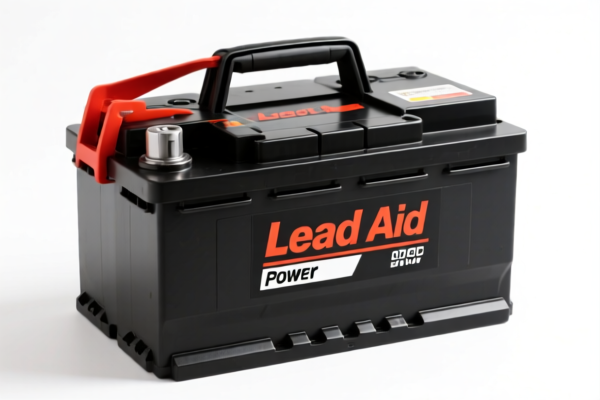
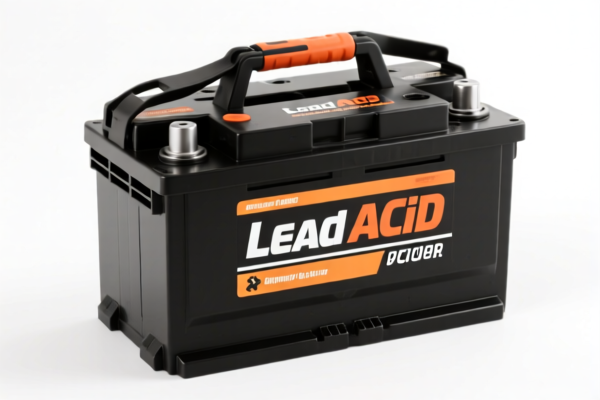
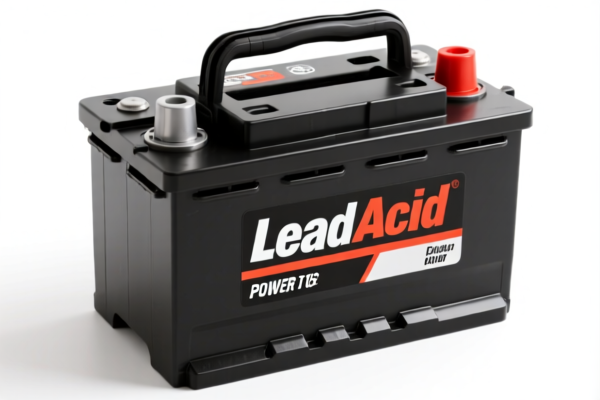
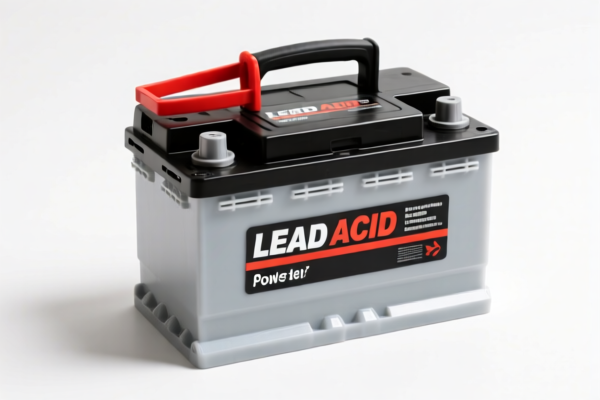
AI分析
🔋 Lithium Battery Charging Equipment (Tools & Power Banks)
🌐 HS Code Reference & Customs Clearance Guide | 2026 Latest Tariff Analysis | Professional Compliance Strategy
📌 1. Product Definition & Classification: What Exactly Are "Lithium Battery Tools"?
In international trade, the term "Lithium Battery Tools" is ambiguous. Customs authorities look at the function and independent operation of the device. Generally, these fall into two categories:
Charging Equipment (Chargers/Adapters): Devices that convert AC/DC power to charge lithium-ion batteries. These are considered "independent electrical apparatus" or "static converters." Battery Packs/Power Banks: The energy storage units themselves (though often classified separately under 8507, the data provided focuses on the charging aspect).
⚠️ Key Distinction Point:
- If the device is a standalone charger (plug-in or portable unit that charges a tool/battery) → It is classified as an electrical machine or static converter.
- If the device is an integrated tool (e.g., a drill with a built-in battery) → It may be classified under the tool category (e.g., Hand-tools, 8207/8467), but the DATA provided specifically addresses "Charging Equipment." Therefore, we will focus on the Charger/Power Supply classification as per the provided data.
📦 2. HS Code Classification Details (Based on Provided DATA)
The following HS Codes and tax details are derived strictly from the provided JSON data. These codes apply to Lithium Battery Charging Equipment.
| HS Code | Summary Description | Tax Details (Total/Structure) | Key Characteristics |
|---|---|---|---|
8543.70.98.60 |
Lithium battery charging equipment; belongs to electrical apparatus with independent functions, fitting the "Other Machines/Apparatus" category. | Total: 37.6% • Base: 2.6% • Additional: 25.0% • Section 301/122: 10% |
Independent Functionality: Best fit for smart chargers with microprocessors, communication interfaces, or specific logic control that don't fit standard converter definitions. |
8543.70.60.00 |
Lithium battery charging equipment; designed to connect to power networks or electronic devices, functioning as a functional electrical appliance. | Total: 35.0% • Base: 0.0% • Additional: 25.0% • Section 301/122: 10% |
Functional Appliance: Fits devices that are essentially "smart" adapters with specific functional purposes beyond simple conversion, possibly with digital displays or smart algorithms. |
8504.40.70.07 |
Lithium battery charging equipment; functionally categorized as static converters, fitting the "Other" catch-all category. | Total: 35.0% • Base: 0.0% • Additional: 25.0% • Section 301/122: 10% |
Static Converter: For chargers that primarily function as AC-DC or DC-DC converters without complex independent processing functions. |
8504.40.95.40 |
Lithium battery charging equipment; belongs to "Other" power sources, fitting rectifier and rectifying equipment uses. | Total: 35.0% • Base: 0.0% • Additional: 25.0% • Section 301/122: 10% |
Rectifier Equipment: For traditional chargers that function primarily as rectifiers (AC to DC) without advanced smart features. |
🔍 Critical Insight:
- Codes8504.40.70.07and8504.40.95.40are functionally similar (both 35% total tax) but differ slightly in specific sub-category descriptions ("Static Converter" vs. "Rectifier").
- Code8543.70.98.60has a higher total tax (37.6%) due to a higher base tariff (2.6% vs. 0%). This suggests it is for more "specialized" or "independent" electrical apparatus.
- Codes8543.70.60.00,8504.40.70.07, and8504.40.95.40all share the same total tax rate (35.0%). The choice among these depends on the precise technical description of the charger's function (Smart/Functional vs. Static Converter vs. Rectifier).
💰 3. Tariff Rate Breakdown (Detailed Explanation)
✅ Applicable Market: United States (US)
✅ Origin: China (CN) (Inferred from "122 Clause" and typical Section 301 context in such data)
✅ Effective Date: Current as of 2026
🎯 Scenario A: 8543.70.98.60 (Independent Electrical Apparatus)
| Item | Value |
|---|---|
| Base Tariff | 2.6% |
| Section 301 Additional Tariff | +25.0% |
| Section 122 / IEEPA Surcharge | +10.0% |
| Total Effective Tariff | 37.6% |
| Calculation | CIF Value × 37.6% |
| De Minimis Exemption | ❌ Not Eligible |
📌 Explanation:
- This code is taxed higher because it is classified under "Other Machines and Apparatus" with its own independent function, attracting a small base duty (2.6%) on top of the aggressive punitive tariffs.
- The 25% Section 301 tariff is standard for many electronics from China.
- The 10% surcharge (labeled as 122 Clause in the data) further increases the cost.
🎯 Scenario B: 8543.70.60.00, 8504.40.70.07, 8504.40.95.40 (Functional Converter/Rectifier)
| Item | Value |
|---|---|
| Base Tariff | 0.0% |
| Section 301 Additional Tariff | +25.0% |
| Section 122 / IEEPA Surcharge | +10.0% |
| Total Effective Tariff | 35.0% |
| Calculation | CIF Value × 35.0% |
| De Minimis Exemption | ❌ Not Eligible |
📌 Explanation:
- These codes benefit from a 0% base tariff, which is common for specific electrical converters under HTS 8504.
- However, the punitive tariffs (25% + 10%) still apply, bringing the total to 35%.
- Why choose one over the other?
- Use8504.40.70.07if the charger is technically a "static converter" (simple AC/DC or DC/DC conversion).
- Use8504.40.95.40if it is primarily a "rectifier" (AC to DC).
- Use8543.70.60.00if it has specific functional electronic control beyond simple conversion (e.g., smart charging profiles).
🛠️ 4. Customs Clearance Practical Advice
✅ 1. Required Documentation Checklist
| Document | Must Provide | Notes |
|---|---|---|
| Product Specification Sheet | ✔️ | Must detail input/output voltage, current, power, and charging protocol (e.g., CC/CV). |
| Circuit Diagram / Block Diagram | ✔️ | Critical for determining if it's a simple rectifier (8504) or a complex apparatus (8543). |
| Product Photos | ✔️ | Clear images of the device, label, and ports (USB, DC barrel jack, etc.). |
| Safety Certifications | ✔️ | UL, CE, FCC (if applicable) reports. |
| Commercial Invoice | ✔️ | Clearly state "Lithium Battery Charger" and specify model number. |
| Origin Certificate | ✔️ | Required for Section 301 duty assessment. |
✅ 2. Declaration Strategy
🔥 Golden Rule: "Be Specific on Function, Not Just Name."
| Situation | Recommended HS Code | Reasoning |
|---|---|---|
| Smart Charger with app control, display, and complex charging algorithm | 8543.70.98.60 or 8543.70.60.00 |
Fits "Independent Function" or "Functional Appliance." |
| Standard AC/DC Adapter for a drill/driver | 8504.40.70.07 or 8504.40.95.40 |
Functions as a simple static converter/rectifier. |
| Portable Power Bank (if classified as charger) | 8504.40.95.40 |
Often treated as a power source/rectifier combo. |
⚠️ Warning:
- Do NOT classify lithium battery chargers under 8507 (Batteries themselves). The DATA provided is for Charging Equipment.
- Do NOT use generic terms like "Power Supply" without specifying it is for Lithium Battery Charging.
✅ 3. Cost Optimization Tips
- Compare
8504vs.8543: - If your charger is a simple wall wart,
8504.40.70.07(35%) is cheaper than8543.70.98.60(37.6%). -
Savings: 2.6% on the CIF value. For a $10,000 shipment, this saves $260.
-
Verify "Independent Function":
- If the device has no microprocessor or complex logic, avoid
8543if possible to prevent the 2.6% base tariff. -
Ensure your technical description emphasizes "Static Conversion" rather than "Intelligent Control" if you want to qualify for the 0% base tariff.
-
Check for Trade War Exclusions:
- Although not in the DATA, always check if the specific HS Code has been excluded from Section 301 tariffs. If excluded, the tariff could drop to just the base rate (2.6% or 0%).
📌 5. Common Pitfalls & Avoidance
❌ Mistake 1: Classifying the battery instead of the charger.
👉 Consequence: Wrong HS Code, potential penalties, delayed clearance.
✅ Fix: Clearly label as "Charger" or "Power Adapter," not "Battery."
❌ Mistake 2: Using 8504.40.95.40 for a smart charger with app connectivity.
👉 Consequence: Customs may reclassify to 8543 due to "independent function," applying the higher 37.6% rate and potentially assessing duties retroactively.
✅ Fix: If it has smart features, declare it as 8543.70.60.00 or 8543.70.98.60 proactively, or prepare to justify why it's still a converter.
❌ Mistake 3: Ignoring the 10% Section 122 Surcharge.
👉 Consequence: Underestimating landed cost.
✅ Fix: Always include this 10% in your margin calculations. It applies to all four codes in the DATA.
🎯 6. Final Conclusion
- Best Value:
8504.40.70.07or8504.40.95.40(35% Total) for standard, non-smart chargers. - High-Tech/Smart:
8543.70.98.60(37.6% Total) for advanced, functionally independent chargers. - Critical Action: Provide detailed technical specs to prove the "simple converter" nature if aiming for the lower 35% rate.
🚀 Pro Tip:
Always request a Pre-Ruling from CBP if the product has complex electronic features. It’s cheaper to pay for a ruling than to face penalties and back duties.
✨ Accurate Classification = Accurate Costing = Happy Customs!
💼 Your bottom line depends on the decimal points!
用户评价
关于 HS 编码归类
协调制度(HS)是由世界海关组织(WCO)制定的国际贸易商品分类标准。全球 200 多个国家采用 HS 系统作为海关关税、贸易统计和进出口监管的基础。
每个 HS 编码遵循以下层级结构:
- 章(2 位)——商品大类(例如:第 84 章:机器和机械设备)
- 品目(4 位)——章内的更具体分类
- 子目(6 位)——国际通用细分,所有 WCO 成员国统一使用
- 本国细分(8-10 位)——各国自行扩展的细分编码,如美国 HTSUS 10 位编码
正确的 HS 编码归类对于顺利通关、准确缴纳关税和遵守贸易法规至关重要。错误归类可能导致海关延误、多缴关税或罚款。
从CN进口到US时,适用的关税税率可能包括:
- 最惠国(MFN)税率——适用于 WTO 成员国的标准关税税率
- 普通税率——适用于无贸易协定国家
- 贸易救济关税——附加关税,如 301 条款(反倾销)、232 条款(国家安全)或反补贴税
本页内容仅供参考。如需正式归类,请咨询当地海关或持牌报关代理。