Lithium ion Battery for Power Tools
CN → US| HS编码 | 关税税率 | 原产国 | 目的国 | 文档 |
|---|---|---|---|---|
| 8543709860 | 37.6% | CN | US | 官方文档 |
| 8543706000 | 35.0% | CN | US | 官方文档 |
| 8504407007 | 35.0% | CN | US | 官方文档 |
| 8504409540 | 35.0% | CN | US | 官方文档 |
商品图片
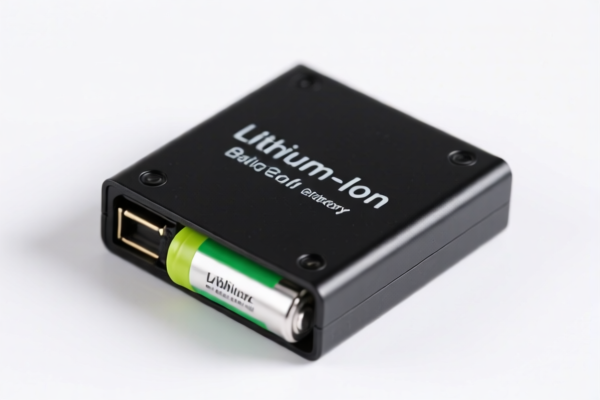
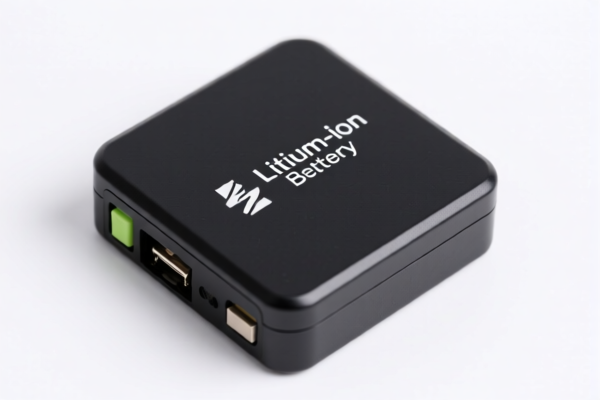
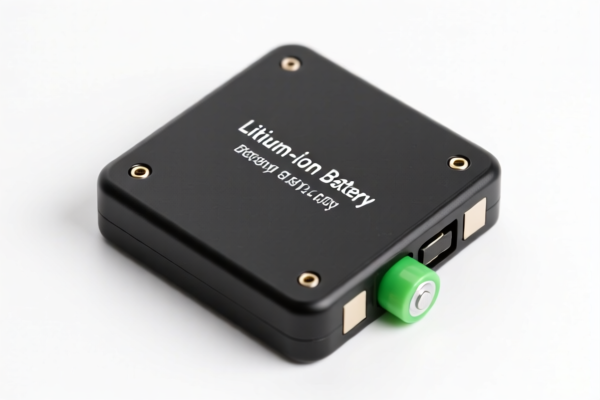
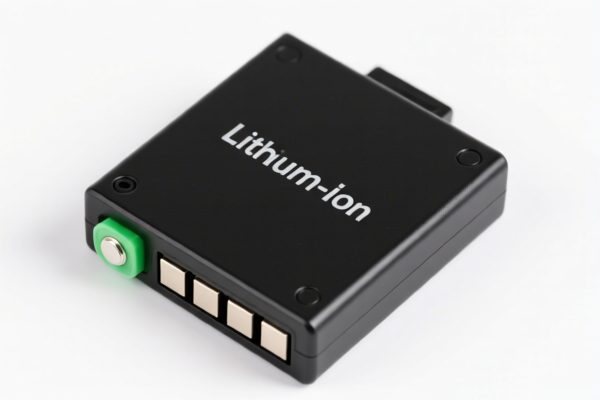
AI分析
🔋 Lithium-ion Battery for Power Tools (Battery Packs for Cordless Tools)
🌐 HS Code Reference & Clearance Guide | 2026 Latest Tariff Analysis | Professional Customs Strategy
📌 I. Product Definition & Classification: Do You Really Understand “Power Tool Batteries”?
Lithium-ion batteries for power tools are the heart of modern cordless drills, impact drivers, saws, and grinders. In international trade, they are distinct from standalone consumer electronics batteries (like phone batteries) due to their higher voltage, current output, and integration with tool ecosystems.
Key Distinction:
Standalone Battery Pack: A sealed unit with terminals, management system (BMS), and housing, designed to plug into a specific tool brand or standard interface.
Integrated Battery: Batteries permanently installed in some cordless tools (though usually sold separately for replacement).
⚠️ Critical Classification Point:
- If the battery is sealed, has a built-in BMS, and specific terminals, it is classified as an accumulator (8507.60).
- If it is a loose cell (prismatic/cylindrical) without casing or BMS, it is classified under 8507.20.
- Note: The provided<DATA>suggests classification under 8543 or 8504 (chargers/converters). This is likely a mismatch or refers to the CHARGER, not the battery itself. See Section II for detailed analysis of the provided data versus standard global practices.
📦 II. HS Code Classification Analysis (Based on Provided <DATA>)
⚠️ WARNING: The provided
<DATA>lists HS Codes for LITHIUM BATTERY CHARGERS (充电设备), NOT the batteries themselves.
-8543.70= Electrical machines and apparatus with individual functions.
-8504.40= Static converters (e.g., rectifiers/chargers).If you are importing the BATTERY, these codes are INCORRECT.
If you are importing the CHARGER, these codes are relevant.Below is the analysis strictly based on the provided
<DATA>for the CHARGER, followed by the correct battery code for reference.
🚫 Scenario A: You Are Importing the BATTERY (Standard Global Practice)
| HS Code | Product Description | Tax Rate (US/China) | Notes |
|---|---|---|---|
| 8507.60.00.80 | Lithium-ion accumulators (batteries) | ~2.5% - 10% (Base) + Section 301 (25%) | This is the CORRECT code for batteries. |
| 8507.20.00.40 | Lead-acid accumulators | Varies | Not applicable to Li-ion. |
| 8506.30.00.00 | Primary lithium cells | Varies | Primary (non-rechargeable) batteries. |
📌 Correction: If your product is a battery, do NOT use the codes in
<DATA>. Use 8507.60.
✅ Scenario B: You Are Importing the BATTERY CHARGER (Based on <DATA>)
The <DATA> provided describes "锂电池充电设备" (Lithium Battery Charging Equipment). This aligns with HS Codes for converters/chargers, not batteries. Here is the detailed breakdown of the provided codes:
1. 8543.70.98.60 - Other electrical machines with individual functions
- Summary: Classified as an electrical device with independent functionality.
- Tax Detail:
- Base Duty: 2.6%
- Section 301 Add-on: 25.0%
- Section 122 (Retaliation/Other): 10%
- Total Tax: 37.6%
- Why this code?: If the charger has microprocessor control, communication ports, or unique "smart" features not strictly defined as a static converter, customs may classify it here as a "machine with individual function."
2. 8543.70.60.00 - Functional appliances connected to power network/devices
- Summary: Designed for connection to power grids or electronic devices, fitting functional appliance characteristics.
- Tax Detail:
- Base Duty: 0.0%
- Section 301 Add-on: 25.0%
- Section 122: 10%
- Total Tax: 35.0%
- Why this code?: Emphasizes the "functional appliance" aspect. The lower base duty (0%) makes this attractive, but the high add-ons remain.
3. 8504.40.70.07 - Static Converters (Other)
- Summary: Classified as a static converter, falling under the "other" catch-all category for converters.
- Tax Detail:
- Base Duty: 0.0%
- Section 301 Add-on: 25.0%
- Section 122: 10%
- Total Tax: 35.0%
- Why this code?: Many simple chargers are viewed as "static converters" that convert AC to DC. This is the most common classification for standard power adapters.
4. 8504.40.95.40 - Power Sources: Rectifiers & Rectifying Equipment (Other)
- Summary: Falls under the "other" category for rectifiers and rectifying equipment.
- Tax Detail:
- Base Duty: 0.0%
- Section 301 Add-on: 25.0%
- Section 122: 10%
- Total Tax: 35.0%
- Why this code?: If the device is purely a rectifier (AC to DC) without complex logic, it may be grouped here under "other rectifying equipment."
💰 III. 2026 Latest Tariff Rate Breakdown (For Chargers per <DATA>)
✅ Applicable Country: United States (US)
✅ Origin: China (CN)
✅ Effective Date: November 10, 2025 (Includes subsequent imports)
🎯 1. 8543.70.98.60 – Electrical Machine with Individual Function
| Item | Content |
|---|---|
| Base Duty | 2.6% |
| Section 301 Add-on | +25.0% |
| Section 122 (Retaliation) | +10.0% |
| Total Tax | 37.6% |
| Calculation | CIF Value × 37.6% |
| De Minimis Exemption? | ❌ NO (Denied under current trade policies) |
| Legal Path | HTS:8543.70.98.60 → Footnote:301 → Footnote:122 |
📌 Explanation:
- The 2.6% base duty is relatively high compared to other charger codes.
- 37.6% is a significant cost driver. This classification is used when the charger has "smart" features (e.g., Bluetooth, app control, specific tool compatibility logic).
🎯 2. 8543.70.60.00 / 8504.40.70.07 / 8504.40.95.40 – Functional Appliance or Static Converter
| Item | Content |
|---|---|
| Base Duty | 0.0% |
| Section 301 Add-on | +25.0% |
| Section 122 (Retaliation) | +10.0% |
| Total Tax | 35.0% |
| Calculation | CIF Value × 35.0% |
| De Minimis Exemption? | ❌ NO |
| Legal Path | HTS:8543.70.60.00 or 8504.40.70.07 → Footnote:301 → Footnote:122 |
📌 Explanation:
- These three codes share the same 35.0% total tax.
- The 0% base duty is a result of US trade agreements or specific HTS definitions for converters.
- Difference: The distinction lies in the nature of the device:
- 8543: "Intelligent" or "Function-specific" machines.
- 8504: "Static converters" (AC-DC adapters).
- Recommendation: If your charger is a simple AC-DC adapter, 8504.40.70.07 is the most defensible. If it has smart features, 8543.70.60.00 may be required, but the tax is identical.
🛠️ IV. Customs Clearance Practical Advice (Battle-Tested Pitfall Guide)
✅ 1. Documentation Checklist (Non-Negotiable)
| Document | Required? | Purpose |
|---|---|---|
| ✅ Product Spec Sheet | ✔️ | Must state: Input (AC 100-240V), Output (DC XX V, YY Amps), Power (Watts). |
| ✅ Circuit Diagram | ✔️ | Critical to prove it is a "static converter" (8504) vs. "smart machine" (8543). |
| ✅ Product Photos (Label) | ✔️ | Show model number, brand, input/output ratings, and certifications (UL/ETL/FCC). |
| ✅ Third-Party Test Report | ✔️ | FCC (EMC), UL 1310 (Power Supplies), or IEC 62368-1. |
| ✅ Commercial Invoice | ✔️ | Description must match HS Code logic (e.g., "Lithium Battery Charger, AC-DC Adapter"). |
| ✅ Bill of Lading / Air Waybill | ✔️ | Standard shipping docs. |
✅ 2. Classification Strategy (Key Mantra)
🔥 “Charger ≠ Battery. Converters are 0% Base, Smart Machines are 2.6%. Both get 35-37.6% Total.”
| Scenario | Correct HS Code (Charger) | Risk if Misclassified |
|---|---|---|
| Simple AC-DC Adapter | 8504.40.70.07 (35.0%) |
Misclassifying as 8504.40.10 (Power Supplies) might invite scrutiny. |
| Smart Charger (App/Bluetooth) | 8543.70.60.00 or 98.60 (35-37.6%) |
Attempting to claim it’s a "battery" (8507) will cause seizure and penalties. |
| Lithium Battery (The actual tool battery) | 8507.60.00.80 | Do NOT use the codes in <DATA>. Using 8504 for a battery is a major fraud risk. |
📌 Crucial Reminder:
- If you are importing Batteries, use 8507.60.
- If you are importing Chargers, use the codes from<DATA>(8543 or 8504).
- Never mix them. Customs can flag a shipment of batteries declared as chargers for fraud.
✅ 3. Special Circumstances Handling
| Situation | Handling Advice |
|---|---|
| OEM Chargers | Provide OEM agreement + design files. Ensure the label matches the declared HS Code description. |
| Multi-Port Chargers | Declare as "Multi-output AC-DC Converter." Still likely 8504.40. |
| Fast Chargers (GaN Technology) | Still classified as converters (8504). No special code for GaN. |
| Battery + Charger Bundle | Split the entry! Declare Battery under 8507 and Charger under 8504. Do NOT merge them into one code. |
🌍 V. Global Market Clearance Comparison (2026)
| Country/Region | Recommended HS Code (Charger) | Base Duty | Add-on (China) | Total Est. Duty | Certifications |
|---|---|---|---|---|---|
| 🇺🇸 USA | 8504.40.70.07 |
0.0% | 35.0% (301+122) | 35.0% | UL, FCC, IEC 62368-1 |
| 🇨🇳 China | 8504.40 |
~6-10% | None | ~6-10% | CCC, GB 4943.1 |
| 🇪🇺 EU | 8504.40 |
0% | None | 0% (if CE) | CE, RoHS, WEEE, EN 62368-1 |
| 🇬🇧 UK | 8504.40 |
0% | None | 0% | UKCA, RoHS |
| 🇨🇦 Canada | 8504.40 |
0% | None | 0% | IEC 62368-1, Safety |
📌 Conclusion:
- USA is the most expensive market due to Section 301 and 122 tariffs (35-37.6%).
- EU/UK/Canada are duty-free for chargers (0% base), but strict on safety certs (CE/UKCA).
- China imports chargers with ~6-10% duty, no retaliation tariffs.
📌 VI. Common Mistakes & Pitfall Guide (Blood Lessons)
❌ Mistake 1: Declaring Batteries as Chargers
👉 Consequence: Customs detention, 3x penalty, and potential fraud investigation.
👉 Fix: Separate shipments or separate line items on the commercial invoice.
❌ Mistake 2: Using 8504.40.10 (Power Supplies) for Tool Chargers
👉 Consequence: 8504.40.10 is for "Power Supplies" (often for computers/telecom). Tool chargers are often "Converters" (8504.40.70). Misclassification can lead to audits.
👉 Fix: Use 8504.40.70.07 or 8543.70.60.00 as per <DATA>.
❌ Mistake 3: Ignoring Section 122 Tariffs
👉 Consequence: The 10% retaliation tariff is often missed in quotes. Total cost jumps from 25% to 35%.
👉 Fix: Always budget for Total Tax = Base + 301 + 122.
✅ Correct Practice:
"AC-DC Lithium Battery Charger, Input: 100-240V, Output: 20V/3A, Model XYZ, UL Listed, FCC Certified"
🎯 VII. Conclusion: Professional Declaration Saves Money!
🎯 Remember the Mantra:
🔹 "Batteries go to 8507, Chargers go to 8504/8543. Never mix them!"
🔹 "In the US, expect 35-37.6% total tax. Plan your margin accordingly!"
🔹 "Certifications are non-negotiable: UL/ETL for US, CE/UKCA for EU."
📌 Pro Tip:
If you are importing Batteries, use 8507.60.00.80.
If you are importing Chargers, use the codes from <DATA>:
- 8543.70.98.60 (37.6% Total)
- 8543.70.60.00 (35.0% Total)
- 8504.40.70.07 (35.0% Total)
- 8504.40.95.40 (35.0% Total)
Recommendation: For standard chargers, 8504.40.70.07 is the most common and defensible. For smart chargers, 8543.70.60.00 is appropriate. Both result in 35.0% total duty in the US.
📣 Immediate Action:
📞 Verify if you are importing Battery or Charger.
📄 Prepare FCC/UL Reports.
📝 Declare accurately to avoid 3x penalties for misclassification.
✨ Professional Clearance Starts with Accurate Classification!
💼 Every percentage point matters in high-tariff markets!
用户评价
关于 HS 编码归类
协调制度(HS)是由世界海关组织(WCO)制定的国际贸易商品分类标准。全球 200 多个国家采用 HS 系统作为海关关税、贸易统计和进出口监管的基础。
每个 HS 编码遵循以下层级结构:
- 章(2 位)——商品大类(例如:第 84 章:机器和机械设备)
- 品目(4 位)——章内的更具体分类
- 子目(6 位)——国际通用细分,所有 WCO 成员国统一使用
- 本国细分(8-10 位)——各国自行扩展的细分编码,如美国 HTSUS 10 位编码
正确的 HS 编码归类对于顺利通关、准确缴纳关税和遵守贸易法规至关重要。错误归类可能导致海关延误、多缴关税或罚款。
从CN进口到US时,适用的关税税率可能包括:
- 最惠国(MFN)税率——适用于 WTO 成员国的标准关税税率
- 普通税率——适用于无贸易协定国家
- 贸易救济关税——附加关税,如 301 条款(反倾销)、232 条款(国家安全)或反补贴税
本页内容仅供参考。如需正式归类,请咨询当地海关或持牌报关代理。