Lock
CN → US| HS编码 | 关税税率 | 原产国 | 目的国 | 文档 |
|---|---|---|---|---|
| 8301406030 | 23.2% | CN | US | 官方文档 |
| 7326908688 | 87.9% | CN | US | 官方文档 |
| 7326908676 | 87.9% | CN | US | 官方文档 |
| 8302416045 | 88.9% | CN | US | 官方文档 |
| 8301300090 | 23.2% | CN | US | 官方文档 |
| 8302419045 | 38.5% | CN | US | 官方文档 |
商品图片

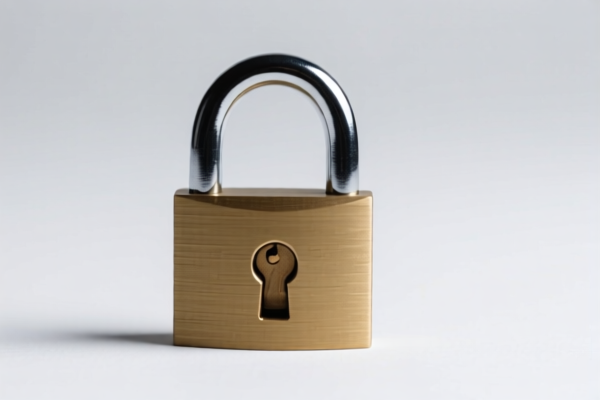
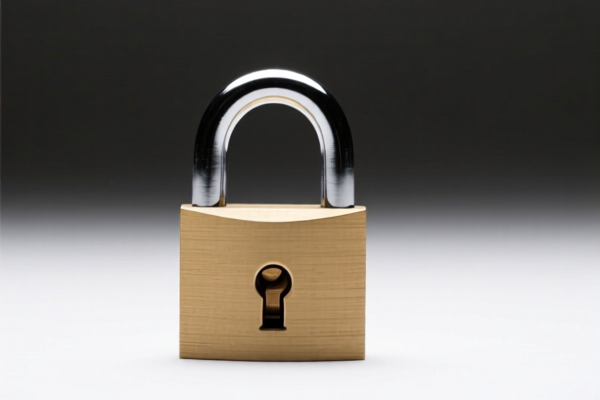

AI分析
🔐 Locks (Hardware for Doors, Furniture, and Vehicles)
🌐 HS Code Reference & Clearance Guide | 2026 Latest Tariff Breakdown | Professional Clearance Strategy
📌 I. Product Definition & Classification: Do You Really Understand "Locks"?
Locks are critical security components in international trade, ranging from simple door latches to complex electronic locking systems. In customs classification, they are strictly divided based on material composition and specific application. Misclassification often leads to drastic tariff differences (e.g., ~23% vs. ~88%).
Key Distinctions: * Base Metal Locks (Ch. 83.01): Typically include locks made of base metals (iron, steel, zinc, etc.) that are specifically designed as locking mechanisms. * Base Metal Parts/Accessories (Ch. 83.02 / 73.26): Includes locks made of iron/steel that may be classified as "parts" or other fabricated articles, often attracting higher additional duties. * Material Sensitivity: The distinction between "Steel/Aluminum/Copper" and other base metals can trigger specific "Section 232" or similar retaliatory tariffs in certain jurisdictions (like the US).
⚠️ Critical Warning:
- If the lock is made of Iron or Steel and classified under general articles (73.26) or parts (83.02), it may face ~88% total duties due to high additional tariffs.
- If correctly classified as Specific Locks (83.01), duties may drop to ~23%.
- Always verify the material and specific function before declaring!
📦 II. HS Code Classification Details (2026 Authoritative Mapping)
| HS Code | Product Description | Application Scenario | Material/Type | Estimated Total Duty (US) |
|---|---|---|---|---|
| 8301.40.60.30 | Door Locks | Specifically for door functions; inferred material: Base Metal | Base Metal | 23.2% |
| 7326.90.86.88 | Other Articles of Iron/Steel | Metal door locks, but classified as general steel articles | Iron/Steel | 87.9% |
| 7326.90.86.76 | Other Articles of Iron/Steel | Metal door locks, classified as other steel products | Iron/Steel | 87.9% |
| 8302.41.60.45 | Building Metal Lock Accessories | Accessories for indoor/outdoor doors | Metal | 88.9% |
| 8301.30.00.90 | Furniture/Building Locks | Locks for furniture/buildings; fits "Other furniture locks" | Metal | 23.2% |
| 8302.41.90.45 | Building Metal Accessories | Locks classified as basic metal building accessories | Basic Metal | 38.5% |
🔍 Key Insight:
- The "23.2%" Group (8301.40.60.30, 8301.30.00.90): These are classified as specific locks. Lower base duty (5.7%) and lower additional duties (7.5% + 10%).
- The "87-89%" Group (7326.90.86.88/76, 8302.41.60.45): These are often classified as parts or general steel articles. They face a 50% additional tariff on Steel/Aluminum/Copper products, plus 25% Section 301 and 10% Section 232/IEEPA.
- The "38.5%" Group (8302.41.90.45): A middle ground, classified as building accessories, avoiding the highest steel-specific penalties but still facing significant additional tariffs.
💰 III. 2026 Latest Tariff Rate Breakdown (Including Surtaxes)
✅ Applicable Country: United States (US)
✅ Origin: China (CN)
✅ Effective Date: 2025/2026 (Current policies)
🎯 1. 8301.40.60.30 & 8301.30.00.90 — The "Low Duty" Locks
| Item | Details |
|---|---|
| Base Duty | 5.7% (Ad Valorem) |
| Section 301 Surcharge | +7.5% |
| Section 232 / IEEPA Surcharge | +10% |
| Total Effective Rate | 23.2% |
| Calculation | CIF Value × 23.2% |
| De Minimis Exemption | ❌ Not Eligible (High tariffs usually negate de minimis) |
| Legal Basis | HTSUS 8301.40.60.30 / 8301.30.00.90 + Footnotes for Sec 301/232 |
📌 Explanation:
- This classification assumes the product is clearly identified as a "Lock" (Ch 83.01).
- The 7.5% is likely a reduced Section 301 rate for certain exclusions or specific subheadings.
- Crucial: Must prove it is a lock and not just a metal part to avoid the 50% steel penalty.
🎯 2. 7326.90.86.88 & 7326.90.86.76 — The "High Duty" Steel Articles
| Item | Details |
|---|---|
| Base Duty | 2.9% |
| Section 301 Surcharge | +25.0% |
| Steel/Aluminum/Copper Surcharge | +50.0% (Section 232/Retaliatory) |
| Section 232 / IEEPA Surcharge | +10% |
| Total Effective Rate | ~87.9% |
| Calculation | CIF Value × 87.9% |
| De Minimis Exemption | ❌ Not Eligible |
| Legal Basis | HTSUS 7326.90.86.88/76 + Steel Surtaxes |
📌 Warning:
- These codes classify the lock as an "Other Article of Iron or Steel."
- The 50% additional duty is applied because the material is identified as Steel, Aluminum, or Copper.
- This is a common pitfall: Declaring a steel lock as a "metal fitting" or "part" instead of a "lock" triggers this massive tax.
🎯 3. 8302.41.60.45 & 8302.41.90.45 — Accessories & Parts
| Item | Details |
|---|---|
| Base Duty | 3.5% - 3.9% |
| Section 301 Surcharge | +25.0% |
| Steel/Aluminum/Copper Surcharge | +50.0% (If applicable) |
| Section 232 / IEEPA Surcharge | +10% |
| Total Effective Rate | 38.5% - 88.9% |
| Calculation | CIF Value × Total Rate |
📌 Note:
-8302.41.90.45(38.5%) may not carry the full 50% steel penalty if classified differently, but still faces high surcharges.
-8302.41.60.45(88.9%) likely faces all surcharges, similar to the 7326 group.
🛠️ IV. Clearance Practical Advice (Pitfall Avoidance Guide)
✅ 1. Documentation Checklist (Essential for Low Duty)
| Document | Required? | Purpose |
|---|---|---|
| ✅ Product Specifications | ✔️ | Must explicitly state: "Function: Locking Mechanism", not "Metal Part." |
| ✅ Material Declaration | ✔️ | Clearly identify material. If Steel, prepare for high duty unless misclassified. |
| ✅ Photos of Locking Mechanism | ✔️ | Show the bolt, tumbler, keyway, or electronic component. Proves it's a lock. |
| ✅ Commercial Invoice | ✔️ | Description: "Base Metal Door Lock, Model XYZ, for Interior Use." Avoid vague terms like "Fitting." |
| ✅ HS Code Ruling | ✔️ | Previous CBP ruling for similar products is highly recommended. |
✅ 2. Declaration Tips (Key Mnemonics)
🔥 "Declare as Lock, Not Part! Function First, Material Second!"
| Scenario | Correct Declaration | Incorrect Declaration | Risk |
|---|---|---|---|
| Standard Door Lock | HS 8301.40.60.30 | HS 7326.90.86.88 | Save ~65% duty! |
| Furniture Lock | HS 8301.30.00.90 | HS 8302.41.90.45 | Save ~15% duty |
| Lock Accessory (e.g., Key) | HS 8302 or 8301.90 | HS 7326 | Risk of reclassification |
| Electronic Lock Body | HS 8301.40.60.30 | HS 8531 (Electrical) | Avoid dual classification errors |
⚠️ Critical:
- Do NOT use terms like "Metal Fitting," "Bracket," or "Component" if the item is a fully functional lock.
- Do NOT under-declare the material. If it's steel, expect the 50% penalty if misclassified as a general article.
✅ 3. Special Cases
| Case | Handling Advice |
|---|---|
| Electronic Locks | If it has a circuit board, it might still be 8301 if the primary function is mechanical locking, but consult a specialist. Sometimes 8531 applies, but 8301 is often preferred for core locking functions. |
| Locks with Keys | Keys are usually classified under 8301.90 or 8302. Ensure they are bundled correctly. |
| OEM Custom Locks | Provide design drawings showing the locking mechanism. |
| Mixed Containers | If mixing locks (8301) with general steel parts (7326), each item must be declared separately with its own HS Code to avoid penalty on the entire shipment. |
🌍 V. Global Market Comparison (2026)
| Market | Recommended HS Code | Est. Total Duty | Key Requirement |
|---|---|---|---|
| 🇺🇸 USA | 8301.40.60.30 |
23.2% | Must prove "Lock" function. Avoid 7326. |
| 🇪🇺 EU | 8301.10 / 8301.20 |
~0-3% + VAT | Standard MFN rates. No Section 301. |
| 🇨🇳 China | 8301.40 |
~2-3% | Standard import duty. |
| 🇬🇧 UK | 8301.40 |
~0-3% | Post-Brexit tariffs. |
📌 Conclusion:
- The US market is the most critical for accurate classification due to aggressive additional tariffs.
- Europe and Asia offer lower duty rates, making them more attractive for high-volume exports.
- Misclassification in the US can double or triple your landed cost.
📌 VI. Common Errors & Pitfalls (Lessons Learned)
❌ Error 1: Declaring a steel door lock as "Metal Hardware Fitting" (HS 7326).
👉 Result: Duty jumps from 23.2% to 87.9%.
👉 Fix: Use HS 8301.40.60.30.
❌ Error 2: Vague description: "Metal Lock Part."
👉 Result: Customs may classify as "Part of a Lock" (8301.90) or "Steel Article" (7326), leading to audits.
👉 Fix: Be specific: "Deadbolt Door Lock, Brass Finish."
❌ Error 3: Ignoring Material Composition.
👉 Result: If you claim it's "Aluminum" but it's "Steel," you face the 50% steel surcharge.
👉 Fix: Accurate material declaration is non-negotiable.
❌ Error 4: Assuming all locks are the same.
👉 Result: Furniture locks (8301.30) vs. Door locks (8301.40) have different subheadings.
👉 Fix: Match the application (Door vs. Furniture).
✅ Correct Approach:
"Base Metal Door Lock, Model ABC, for Residential Interior Doors, Zinc Alloy, with Key Set, HS 8301.40.60.30"
🎯 VII. Conclusion: Precision Saves Money!
🎯 Remember the Golden Rule:
🔹 "Function over Form: Declare as LOCK, not PART."
🔹 "Steel Penalty is Real: 50% Surtaxe for Steel Articles."
🔹 "23% vs 88%: The Difference is in the HS Code."
📌 Pro Tip:
If your locks are made of Non-Steel Base Metals (e.g., Zinc, Brass, Aluminum) and you can prove they are not "Steel/Aluminum/Copper" under the specific surtax definitions, you might avoid the 50% penalty even in HS 8302. However, HS 8301 is still safer and cheaper for functional locks.
📣 Action Item:
📞 Contact Customs Broker: Provide product photos and specifications.
📄 Request Advance Ruling: Get official CBP classification before shipping.
💰 Cost-Benefit Analysis: Is the cost of a ruling worth the ~65% duty savings? YES!
✨ Smart Classification, Higher Profits!
💼 Don't let tariffs eat your margins. Classify with Care!
用户评价
关于 HS 编码归类
协调制度(HS)是由世界海关组织(WCO)制定的国际贸易商品分类标准。全球 200 多个国家采用 HS 系统作为海关关税、贸易统计和进出口监管的基础。
每个 HS 编码遵循以下层级结构:
- 章(2 位)——商品大类(例如:第 84 章:机器和机械设备)
- 品目(4 位)——章内的更具体分类
- 子目(6 位)——国际通用细分,所有 WCO 成员国统一使用
- 本国细分(8-10 位)——各国自行扩展的细分编码,如美国 HTSUS 10 位编码
正确的 HS 编码归类对于顺利通关、准确缴纳关税和遵守贸易法规至关重要。错误归类可能导致海关延误、多缴关税或罚款。
从CN进口到US时,适用的关税税率可能包括:
- 最惠国(MFN)税率——适用于 WTO 成员国的标准关税税率
- 普通税率——适用于无贸易协定国家
- 贸易救济关税——附加关税,如 301 条款(反倾销)、232 条款(国家安全)或反补贴税
本页内容仅供参考。如需正式归类,请咨询当地海关或持牌报关代理。