Long Cotton Fiber for Paper Making
CN → US| HS编码 | 关税税率 | 原产国 | 目的国 | 文档 |
|---|---|---|---|---|
| 4802626120 | 35.0% | CN | US | 官方文档 |
| 5201003400 | 0.0% | CN | US | 官方文档 |
| 5201002200 | 0.0% | CN | US | 官方文档 |
| 5205111000 | 38.7% | CN | US | 官方文档 |
商品图片
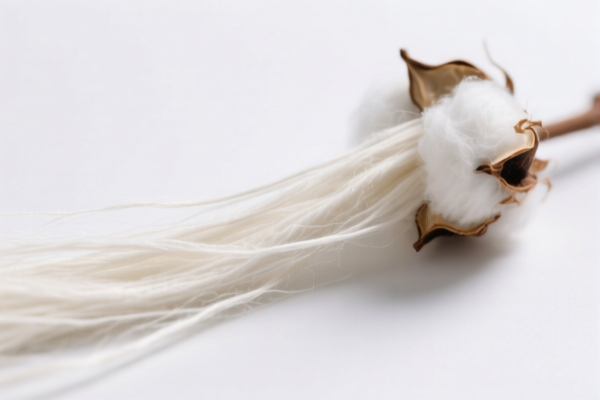
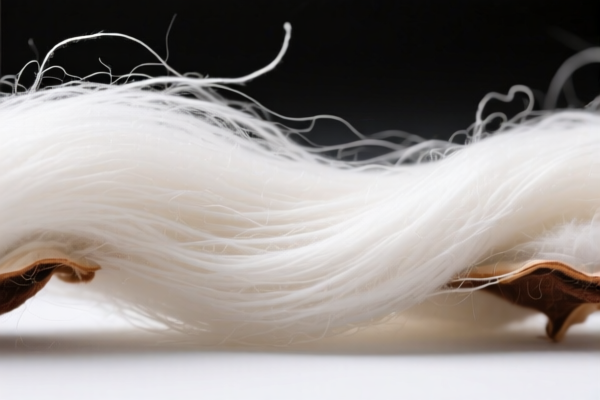
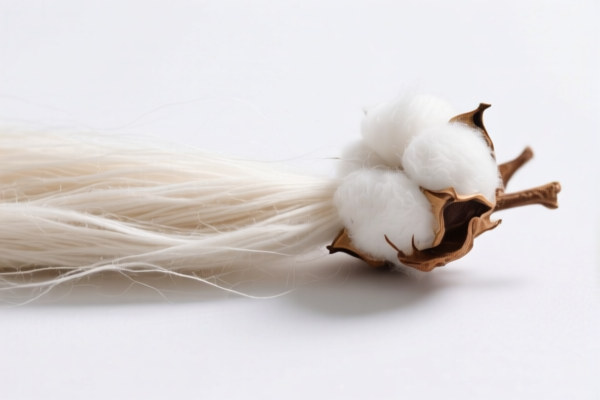
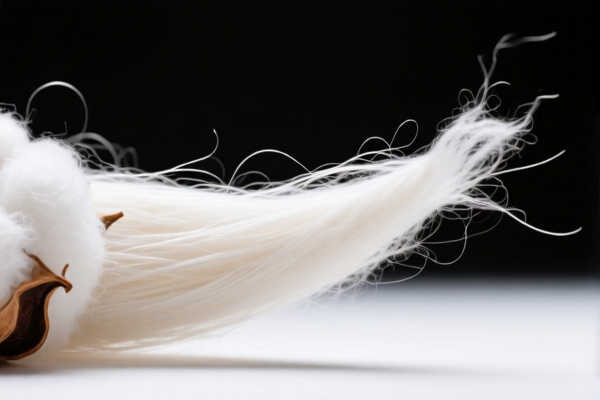
AI分析
🌿 Long Cotton Fiber for Paper Making
🌐 HS Code Reference & Customs Clearance Guide | 2026 Latest Tariff Analysis | Professional Compliance Strategy
📌 I. Product Definition & Classification: What Exactly is "Long Cotton Fiber"?
Long cotton fiber refers to raw cotton fibers with a staple length generally exceeding 28mm, often used as a premium raw material. However, in international trade, its classification depends entirely on its processing state and intended final use. It is not a single HS code but splits into two distinct categories:
- Raw Material Status (Textile/Agri Focus): Un-carded, un-combed cotton fibers intended for spinning or further processing. These fall under Chapter 52 (Cotton).
- Papermaking Ingredient Status (Industrial/Chemical Focus): Cotton fibers specifically processed or sold as an ingredient for high-grade paper manufacturing (e.g., currency paper, archival paper), where cotton content is significant. These fall under Chapter 48 (Paper and Paperboard).
⚠️ Key Distinction Point:
- If the fiber is in its natural, raw, un-processed state (un-carded/un-combed) → It is a textile raw material.
- If the product is explicitly described as "Cotton Pulp" or "Fiber for Paper" with specific chemical/physical properties for papermaking → It may be classified as paper-related.
- Note: The provided data suggests specific HS codes for both scenarios based on the product's nature.
📦 II. HS Code Classification Details (2026 Latest Tariff Authority Mapping)
| HS Code | Product Description | Application Scenario | Key Attribute |
|---|---|---|---|
4802.62.61.20 |
Long cotton fiber for paper making, containing >25% cotton fiber, conforming to paper attributes | High-grade specialty paper, currency paper, filter paper | 📄 Paper Attribute |
5201.00.34.00 |
Long cotton fiber, length 28.575-34.925 mm, un-carded or un-combed | Raw textile material, spinning preparation | 🧵 Raw Material |
5201.00.22.00 |
Long cotton fiber, length 28.575-34.925 mm, essence of cotton fiber raw material | General cotton trading, textile industry input | 🧵 Raw Material |
5205.11.10.00 |
Long fiber cotton raw material, cotton content >85%, un-carded fiber | Premium textile yarn production, high-quality fabrics | 🧵 High Purity Textile |
🔍 Critical Reminder:
-5201and5205codes apply to unprocessed cotton. The distinction lies in fiber length and purity.5201.00.34.00and5201.00.22.00share the same length range (28.575-34.925mm) but may differ in specific sub-classifications or market interpretations in the provided data.
-4802.62.61.20is unique: It classifies the fiber by its end-use (paper making) and composition (>25% cotton). This is crucial if the seller markets it as a papermaking additive rather than a textile raw material.
-5205.11.10.00requires a cotton content >85%, indicating a higher purity standard than general raw cotton.
💰 III. 2026 Latest Tariff Rate Breakdown (Including Additional Taxes & Policy Surcharges)
✅ Applicable Country: United States (US)
✅ Country of Origin: China (CN)
✅ Effective Date: November 10, 2025 (and subsequent imports)
🎯 1. 4802.62.61.20 —— Long Cotton Fiber for Paper Making
| Item | Detail |
|---|---|
| Base Duty | 0.0% (Ad Valorem) |
| USITC Additional Duty | +25.0% (Section 301 Tariffs) |
| IEEPA Additional Duty | +10.0% (China-specific surcharge) |
| Total Tax Rate | 35.0% |
| Tax Calculation | CIF Value × 35.0% |
| De Minimis Exemption | ❌ Not Available (deny_de_minimis) |
| Legal Basis Path | IEEPA:9903.01.25 → USITC:4802.62.61.20 |
📌 Explanation:
- Although classified under Chapter 48 (Paper), this specific item attracts the full 35% combined tariff (25% Section 301 + 10% IEEPA).
- Why 35%? Even though the base duty for many paper products is 0%, the Section 301 and IEEPA surcharges apply to Chinese-origin goods in this category.
- Risk: High tariff burden. Ensure the product description explicitly matches "for paper making" to avoid being reclassified as raw cotton (which has similar rates but different legal paths).
🎯 2. 5201.00.34.00 & 5201.00.22.00 —— Raw Cotton Fibers (Length 28.575-34.925mm)
| Item | Detail |
|---|---|
| Base Duty | 4.4¢/kg (Specific Duty) |
| USITC Additional Duty | +25.0% (Ad Valorem on value) |
| IEEPA Additional Duty | +10.0% (Ad Valorem on value) |
| Total Tax Structure | 4.4¢/kg + 35.0% Ad Valorem |
| Tax Calculation | (4.4¢ × Weight in kg) + (CIF Value × 35.0%) |
| De Minimis Exemption | ❌ Not Available (deny_de_minimis) |
| Legal Basis Path | IEEPA:9901.25 → USITC:5201.00.34.00 / 5201.00.22.00 |
📌 Explanation:
- Complex Tax Structure: These codes have a mixed duty: a specific fee per kilogram PLUS a percentage of the value.
- Total Effective Rate: The 35% ad valorem rate applies to the declared value, plus the fixed 4.4¢/kg fee.
- Why This Rate? Raw cotton is a strategic agricultural/textile commodity. The 25% Section 301 and 10% IEEPA tariffs are applied on top of the base specific duty.
- Importance of Length: The HS codes specifically define the fiber length (28.575-34.925mm). Misdeclaring length can lead to misclassification.
🎯 3. 5205.11.10.00 —— Long Fiber Cotton (>85% Cotton Content, Un-carded)
| Item | Detail |
|---|---|
| Base Duty | 3.7% (Ad Valorem) |
| USITC Additional Duty | +25.0% |
| IEEPA Additional Duty | +10.0% |
| Total Tax Rate | 38.7% |
| Tax Calculation | CIF Value × 38.7% |
| De Minimis Exemption | ❌ Not Available (deny_de_minimis) |
| Legal Basis Path | IEEPA:9903.01.25 → USITC:5205.11.10.00 |
📌 Explanation:
- Highest Ad Valorem Rate: At 38.7%, this is the most expensive option per unit value.
- Why Higher? This code represents higher purity (>85% cotton) and longer fiber quality, often considered a premium textile input.
- Target Market: Primarily for the textile industry. If your product is destined for paper making, do NOT use this code; use4802.62.61.20instead to potentially align with different regulatory interpretations (though the tariff % is similar, the legal basis differs).
🛠️ IV. Customs Clearance Practical Advice (Combat Pitfall Guide)
✅ 1. Required Documentation Checklist (All Mandatory)
| Document | Required | Notes |
|---|---|---|
| ✅ Product Specification Sheet | ✔️ | Must detail fiber length, cotton content %, and intended use (Paper vs. Textile). |
| ✅ Certificate of Origin (CO) | ✔️ | Essential for determining eligibility for any potential exemptions (if any apply to specific origins). |
| ✅ Commercial Invoice | ✔️ | Must clearly state "Cotton Fiber for Paper Making" OR "Raw Cotton Fiber" to match HS Code. |
| ✅ Packing List | ✔️ | Must match invoice details exactly. |
| ✅ Lab Test Report | ✔️ | Recommended to prove cotton content (>25% or >85%) and fiber length (28.575-34.925mm). |
✅ 2. Declaration Strategy (Key Mantras)
🔥 "Match Use to Code, State Length Precisely, Avoid Raw Mix-Ups!"
| Scenario | Correct Declaration | Wrong Approach |
|---|---|---|
| Product sold as papermaking ingredient | HS 4802.62.61.20 |
Declaring as "Cotton Raw Material" (5201) → Risk of reclassification & fines. |
| Product is unprocessed raw cotton | HS 5201.00.34.00 or 5201.00.22.00 |
Declaring as "Paper Fiber" → Inaccurate product nature. |
| Product is high-purity textile cotton | HS 5205.11.10.00 |
Declaring as generic "Cotton" → Higher duty risk if purity >85% is verified. |
| Mixed Shipments | Separate line items for each HS Code | Combining different fibers → Customs delay & inspection. |
✅ 3. Special Handling Tips
| Situation | Handling Advice |
|---|---|
| OEM Papermaking Supply | Provide letters from paper mills confirming the fiber's suitability for paper. This supports classification under 4802.62.61.20. |
| Fiber Length Variance | If actual length differs from 28.575-34.925mm, the code 5201.00.34.00 may be invalid. Use 5201.00.22.00 or other appropriate subcodes. |
| Cotton Content Dispute | If cotton content is below 85%, do not use 5205.11.10.00. Use 5201 codes instead. |
| Pre-Ruling Application | Highly recommended for 4802.62.61.20 to confirm that US CBP accepts this as "Paper Material" rather than "Raw Cotton." |
🌍 V. Global Market Customs Comparison (2026 Latest)
| Country/Region | Recommended HS Code | Tariff (China Origin) | Certifications | Notes |
|---|---|---|---|---|
| 🇺🇸 USA | 4802.62.61.20 / 5201 |
35% - 38.7% | No specific tech certs | High tariff burden; focus on accurate use declaration. |
| 🇨🇳 China | 4802.62.61.20 / 5201 |
0% - 10% | No special certs | Lower import duties; focus on quality standards. |
| 🇪🇺 EU | 4802.62.61.20 / 5201 |
0% - 6.5% | No special certs | Generally lower tariffs; check EUR.1 origin form. |
| 🇦🇺 Australia | 4802.62.61.20 / 5201 |
5% - 10% | No special certs | Moderate tariffs; standard customs procedures. |
| 🇯🇵 Japan | 4802.62.61.20 / 5201 |
0% - 5% | No special certs | Low tariffs; focus on phytosanitary certificates if raw. |
📌 Conclusion:
- The US is the most challenging market due to the 35%-38.7% combined tariff.
- Europe, Asia, and Australia offer significantly lower tariffs. Consider diversifying supply chains if US duties erode margins.
- Accurate classification is critical in the US to avoid penalties, as the tax difference between 35% and 38.7% is material, and misclassification can lead to higher penalties.
📌 VI. Common Errors & Pitfalls (Lessons from the Field)
❌ Error 1: Declaring papermaking cotton fiber as "Raw Cotton" (5201) to avoid perceived scrutiny.
👉 Consequence: If CBP verifies the end-use (paper), they may reassess or penalize for misdeclaration. While rates are similar, the legal basis changes. Better to declare correctly as 4802.62.61.20 if it truly is for paper.
❌ Error 2: Ignoring the specific duty (4.4¢/kg) for 5201 codes.
👉 Consequence: Underpaying duties for lightweight, high-volume shipments. The specific duty adds up significantly.
❌ Error 3: Using 5205.11.10.00 for products with <85% cotton.
👉 Consequence: Customs may reject the declaration or impose a different, potentially higher, duty rate for misclassified goods.
❌ Error 4: Failing to provide fiber length documentation.
👉 Consequence: For 5201.00.34.00, the length (28.575-34.925mm) is a defining characteristic. Lack of proof can lead to reclassification to a generic cotton code with different duties.
✅ Correct Approach:
"Cotton Fiber, Staple Length 30mm, Cotton Content 90%, Intended for Specialty Paper Manufacturing" →
4802.62.61.20
OR
"Raw Cotton Fiber, Un-carded, Length 29-34mm" →5201.00.34.00
🎯 VII. Conclusion: Precise Classification, Cost Control, Smooth Clearance!
🎯 Remember the Mantras:
🔹 "Paper Use → 4802; Raw Cotton → 5201/5205."
🔹 "Check Length & Purity; Avoid 5205 Unless >85%."
🔹 "US Tariffs are 35%+; Declare Correctly to Save Fines."
📌 Pro Tip:
If your shipment is small value (under $800), note that de minimis exemptions are denied for these HS codes from China. Plan your logistics accordingly.
Consider applying for an Advance Ruling (Ruling Letter) from US CBP for the first shipment of 4802.62.61.20 to secure classification certainty.
📣 Immediate Action:
📞 Consult a licensed customs broker.
📄 Prepare detailed product specs (Length, Content, Use).
🚀 Ensure your commercial invoice matches the HS Code description exactly.
✨ Professional Clearance Starts with Accurate Classification!
💼 Your Profit Margin Depends on Your HS Code Choice!
用户评价
关于 HS 编码归类
协调制度(HS)是由世界海关组织(WCO)制定的国际贸易商品分类标准。全球 200 多个国家采用 HS 系统作为海关关税、贸易统计和进出口监管的基础。
每个 HS 编码遵循以下层级结构:
- 章(2 位)——商品大类(例如:第 84 章:机器和机械设备)
- 品目(4 位)——章内的更具体分类
- 子目(6 位)——国际通用细分,所有 WCO 成员国统一使用
- 本国细分(8-10 位)——各国自行扩展的细分编码,如美国 HTSUS 10 位编码
正确的 HS 编码归类对于顺利通关、准确缴纳关税和遵守贸易法规至关重要。错误归类可能导致海关延误、多缴关税或罚款。
从CN进口到US时,适用的关税税率可能包括:
- 最惠国(MFN)税率——适用于 WTO 成员国的标准关税税率
- 普通税率——适用于无贸易协定国家
- 贸易救济关税——附加关税,如 301 条款(反倾销)、232 条款(国家安全)或反补贴税
本页内容仅供参考。如需正式归类,请咨询当地海关或持牌报关代理。