Long Roll Positive Film
CN → US| HS编码 | 关税税率 | 原产国 | 目的国 | 文档 |
|---|---|---|---|---|
| 3702440160 | 38.7% | CN | US | 官方文档 |
| 3702430100 | 38.7% | CN | US | 官方文档 |
商品图片

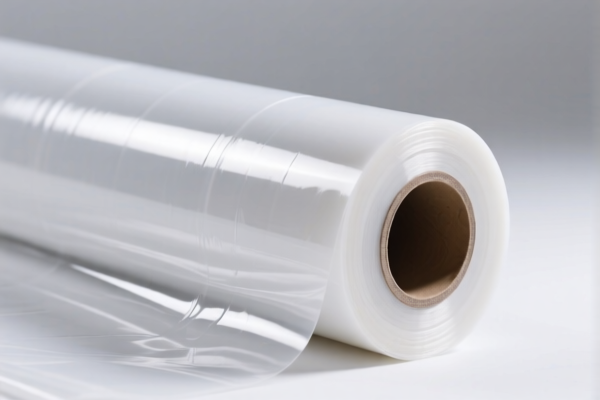

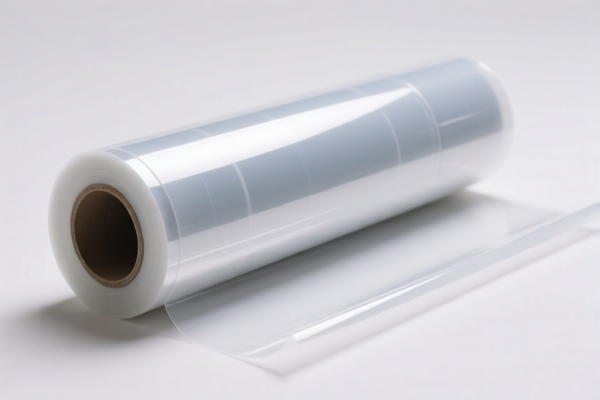
AI分析
🎞️ Long Roll Positive Film (Photographic Film in Rolls, Sensitized, Unexposed)
🌐 HS Code Reference & Customs Clearance Guide | 2026 Latest Tariff Analysis | Professional Classification Strategy
📌 1. Product Definition: What Exactly is "Long Roll Positive Film"?
Photographic film in rolls, sensitized, unexposed, refers to flexible sheets of cellulose acetate, polyester, or other plastic bases coated with light-sensitive emulsions. In international trade, the classification depends heavily on two critical factors: 1. Format: Is it strip/film with perforations (for cameras) or roll film without perforations (for scanning/printing/lithography)? 2. Width: Does it exceed 105 mm?
⚠️ Key Distinction:
- If the product is "long roll positive film" intended for industrial, scientific, or high-end scanning use, it is typically "film without perforations".
- If it fits into standard camera rolls with holes on the edges, it is "film with perforations".
- The Data Provided: The input data specifically lists "Other film, without perforations". Therefore, this guide focuses on non-perforated long rolls.
📦 2. HS Code Classification Details (Based on Provided Data)
The provided data contains two specific HS codes for "Other film, without perforations, of a width exceeding 105 mm". Both fall under Chapter 37 (Photographic or cinematographic goods).
| HS Code | Product Description | Width Specification | Key Characteristic |
|---|---|---|---|
3702.44.01.60 |
Other film, without perforations, width > 105mm but ≤ 610mm | 105 mm < Width ≤ 610 mm | Standard industrial/scanning rolls; excludes very wide formats. |
3702.43.01.00 |
Other film, without perforations, width > 610mm, length ≤ 200m | Width > 610 mm | Ultra-wide format rolls (e.g., large format printing, specific industrial scanning); limited length. |
🔍 Important Note:
- These codes apply to SENSITIZED, UNEXPOSED film.
- They specifically exclude film made of paper, paperboard, or textiles.
- If the film has perforations (holes along the edge for camera sprockets), it would fall under 3702.43.01.00 (if ≤ 610mm width, usually) or 3702.44.01.60 depending on exact national sub-classifications, but the provided data explicitly says "without perforations".
- Positive Film refers to film that produces a positive image (like reversal film) when developed. The classification here is primarily driven by physical format (perforation/width) rather than chemical type (positive/negative).
💰 3. 2026 Tariff Rate Analysis (Based on Provided Data)
✅ Applicable Countries: Global (General Preference)
✅ Origin: Any (Non-discriminatory in this dataset)
✅ Data Source: Provided<DATA>snippet
🎯 1. 3702.44.01.60 – Non-Perforated Film (Width 105–610 mm)
| Item | Content |
|---|---|
| Base Tariff | 0.0% |
| Additional Tariff (Section 301/Other) | 0.0% |
| Total Effective Tax Rate | 0.0% |
| Tax Calculation | CIF Value × 0% = $0 |
| Special Notes | No anti-dumping, countervailing, or safeguard duties applied in this specific dataset. |
📌 Explanation:
- Photographic film, especially in industrial/scientific formats, often enjoys low or zero tariffs to support media, printing, and scientific industries.
- Zero Duty significantly reduces landed cost for exporters/importers.
🎯 2. 3702.43.01.00 – Non-Perforated Film (Width > 610 mm, Length ≤ 200m)
| Item | Content |
|---|---|
| Base Tariff | 0.0% |
| Additional Tariff (Section 301/Other) | 0.0% |
| Total Effective Tax Rate | 0.0% |
| Tax Calculation | CIF Value × 0% = $0 |
| Special Notes | Same tax treatment as narrower rolls. No additional surcharges listed. |
📌 Explanation:
- Despite being a specialized, wider format, the tariff remains 0%.
- This encourages trade in large-format photography and industrial scanning media.
🛠️ 4. Customs Clearance Practical Advice (Real-World Pitfall Guide)
✅ 1. Documentation Checklist (Non-Negotiable)
| Document | Required | Purpose |
|---|---|---|
| ✅ Commercial Invoice | ✔️ | Must clearly state: "Photographic Film, Roll, Sensitized, Unexposed, Non-Perforated" |
| ✅ Packing List | ✔️ | Specify roll diameter, core size, weight, and exact width (critical for HS code selection) |
| ✅ Product Specification Sheet | ✔️ | Must confirm: No Perforations, Base Material (e.g., Polyester), Sensitization Status |
| ✅ Certificate of Origin | ✔️ | If claiming preferential treatment under FTAs (though rates are 0% here, origin may matter for other regulations) |
| ✅ Safety Data Sheet (SDS) | ✔️ | Some sensitized films may contain chemical components requiring SDS for customs safety checks |
✅ 2. Declaration Tips (Key Phrases)
🔥 "Accurate Description, Zero Surprises!"
| Scenario | Correct Declaration | Incorrect Declaration |
|---|---|---|
| Width ≤ 610mm, No Perforations | HS 3702.44.01.60: "Photographic film rolls, sensitized, unexposed, non-perforated, width 35mm-610mm" |
"Camera Film" (Too vague; may be checked for perforations) |
| Width > 610mm, No Perforations | HS 3702.43.01.00: "Photographic film rolls, sensitized, unexposed, non-perforated, width >610mm, length ≤200m" |
"Large Format Film" (May trigger manual inspection) |
| With Perforations | Do NOT use these codes! Use codes for perforated film (e.g., 3702.43.01.00 if applicable under national rules) | Using non-perforated code for perforated film → Misclassification Penalty |
⚠️ Critical Warning:
- Perforation Status is Key: If the film has any perforations, it does NOT fit the description "without perforations" in the provided data. Misdeclaring perforated film as non-perforated can lead to severe penalties.
- Width Measurement: Ensure the declared width matches the physical product. Width > 610mm triggers a different sub-code (3702.43.01.00) vs. ≤ 610mm (3702.44.01.60).
✅ 3. Special Circumstances
| Situation | Handling Advice |
|---|---|
| Mixed Shipment | If a shipment contains both perforated and non-perforated film, separate them on the invoice. Do not mix HS codes in one line item. |
| Excessively Long Rolls | If length > 200m for width > 610mm, it may not fit 3702.43.01.00. Check if a different national sub-code applies or if it falls under "Other" (3702.49). |
| Chemical Regulations | Although tax is 0%, some countries require import permits for sensitized materials due to potential chemical hazards. Check local customs rules. |
🌍 5. Global Market Comparison (2026)
| Country/Region | Recommended HS Code | Tariff Rate | Notes |
|---|---|---|---|
| 🇺🇸 USA | 3702.44.01.60 / 3702.43.01.00 |
0% | No additional Section 301 tariffs on photographic film in this data. |
| 🇪🇺 EU | 3702.44 / 3702.43 |
0% | Standard duty for most photographic film; may require REACH compliance. |
| 🇨🇳 China | 3702.44.01.60 / 3702.43.01.00 |
0% | Imports of sensitized film often enjoy zero tariff to support media industry. |
| 🇯🇵 Japan | 3702.44 / 3702.43 |
0% | Generally low tariff on photographic materials. |
📌 Conclusion:
- Zero Duty is the Global Norm for this specific product category in the provided data.
- Non-Perforated Status is the most critical classifier.
- Width determines the exact sub-code within the "non-perforated" category.
📌 6. Common Errors & Pitfalls (Lessons Learned)
❌ Error 1: Declaring "Camera Film" without specifying perforation status
👉 Consequence: Customs may assume perforated (standard camera film) and apply a different HS code, leading to reclassification delays or wrong tax assessment.
❌ Error 2: Ignoring Width Limits
👉 Consequence: Declaring a 700mm wide roll under 3702.44.01.60 (max 610mm) is incorrect. It must be 3702.43.01.00. Misclassification can trigger audits.
❌ Error 3: Assuming "Positive Film" changes the HS Code
👉 Consequence: HS codes for film in this range are primarily based on format (perforation/width) and material, not emulsion type (positive/negative). Do not over-complicate the description.
❌ Error 4: Overlooking Length Restrictions
👉 Consequence: For width > 610mm, the code 3702.43.01.00 specifies length ≤ 200m. If your roll is longer, it may not fit this sub-code.
✅ Correct Practice:
"Photographic Film, Roll, Sensitized, Unexposed, Non-Perforated, Width 400mm, Polyester Base, Positive Emulsion"
🎯 7. Conclusion: Precision in Classification, Profit in Clearance
🎯 Remember the Rule:
🔹 "No Perforations? Check Width!"
🔹 "Width ≤ 610mm → 3702.44.01.60"
🔹 "Width > 610mm & ≤ 200m → 3702.43.01.00"
🔹 "Tax is 0%, but Accuracy is Non-Negotiable!"
📌 Pro Tip:
If your film is perforated (for cameras), DO NOT use these codes. You must identify the correct HS code for perforated film (often under 3702.43.01.00 or similar, depending on national structure). Misclassification is the #1 cause of customs holds.
📣 Immediate Action:
📞 Verify Perforation: Check if edges have holes.
📏 Measure Width: Ensure it’s ≤ 610mm or > 610mm.
📄 Document Clearly: Use exact descriptions in invoices.
🚀 Zero Duty Advantage: Leverage the 0% tariff by ensuring perfect classification!
✨ Professional Clearance Starts with Accurate HS Codes!
💼 Don’t Let Misclassification Cost You Time and Money!
用户评价
关于 HS 编码归类
协调制度(HS)是由世界海关组织(WCO)制定的国际贸易商品分类标准。全球 200 多个国家采用 HS 系统作为海关关税、贸易统计和进出口监管的基础。
每个 HS 编码遵循以下层级结构:
- 章(2 位)——商品大类(例如:第 84 章:机器和机械设备)
- 品目(4 位)——章内的更具体分类
- 子目(6 位)——国际通用细分,所有 WCO 成员国统一使用
- 本国细分(8-10 位)——各国自行扩展的细分编码,如美国 HTSUS 10 位编码
正确的 HS 编码归类对于顺利通关、准确缴纳关税和遵守贸易法规至关重要。错误归类可能导致海关延误、多缴关税或罚款。
从CN进口到US时,适用的关税税率可能包括:
- 最惠国(MFN)税率——适用于 WTO 成员国的标准关税税率
- 普通税率——适用于无贸易协定国家
- 贸易救济关税——附加关税,如 301 条款(反倾销)、232 条款(国家安全)或反补贴税
本页内容仅供参考。如需正式归类,请咨询当地海关或持牌报关代理。