Loofah Kitchenware
CN → US| HS编码 | 关税税率 | 原产国 | 目的国 | 文档 |
|---|---|---|---|---|
| 4419909100 | 20.7% | CN | US | 官方文档 |
| 4419901100 | 15.3% | CN | US | 官方文档 |
| 4421916000 | 22.6% | CN | US | 官方文档 |
| 4421996000 | 15.1% | CN | US | 官方文档 |
| 8215992400 | 0.0% | CN | US | 官方文档 |
商品图片
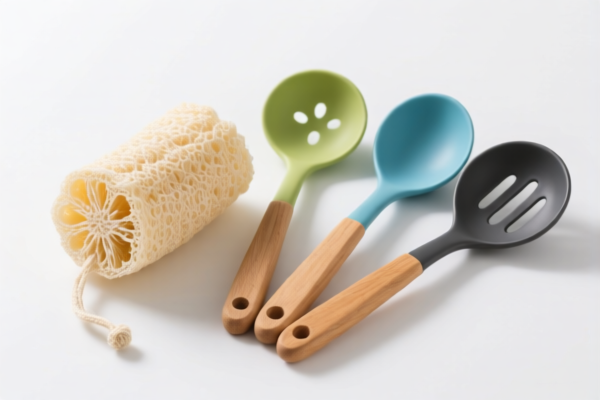
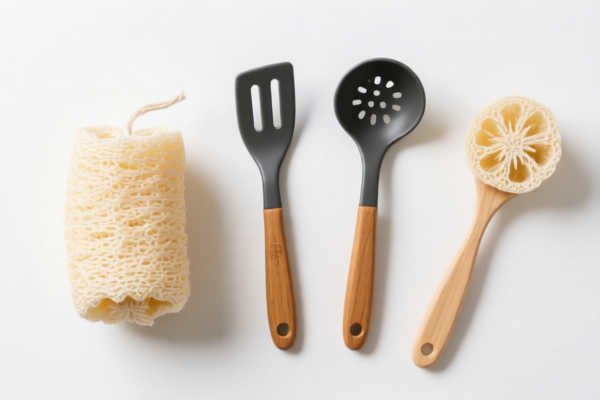
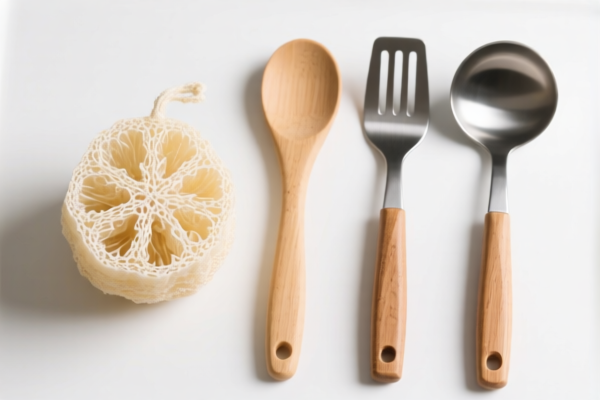
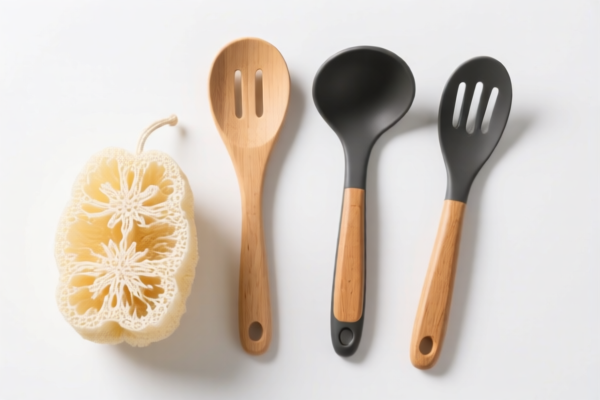
AI分析
🥥 Loofah Kitchenware (Natural Sponge Gourd Products)
🌐 HS Code Reference & Customs Clearance Guide | 2026 Latest Tariff Analysis | Professional Clearance Strategy
📌 One, Product Definition & Classification: What Exactly is "Loofah Kitchenware"?
Loofah kitchenware refers to tools and utensils made primarily from the dried, fibrous inner skeleton of the Luffa acutangula (angled luffa) or Luffa cylindrica (cylindrical luffa) plant. Unlike synthetic sponges, these are natural, biodegradable, and highly absorbent.
In international trade, they are categorized based on their finish level, specific use, and structural form:
Raw/Half-Processed Luffa Slices: Large, uncut, or roughly cut sections used for scrubbing or bulk processing.
Finished Kitchen Utensils: Polished, cut-to-size, or shaped pieces designed specifically for dishwashing, bathing, or cosmetic use.
Small Luffa Accessories: Smaller, shaped items often treated as "other wooden/plant-based articles" if they don't fit specific utensil headings.
⚠️ Key Distinction Point:
- If the product is a raw, unprocessed natural fiber block → It may fall under general plant products.
- If it is shaped, polished, or specifically designed for kitchen/household use → It falls under Chapter 44 (Wood) or Chapter 44/96 (Other) depending on the specific subheading interpretation provided in the data.
- Note: Although Loofah is a plant, not wood, customs classifications for natural fibrous kitchen utensils often cluster under Chapter 44 (Articles of Wood) or specific "other wooden/plant-based small articles" codes if no specific "natural sponge" code exists for the final form.
📦 Two, HS Code Classification Details (Based on Provided Data)
| HS Code | Product Description | Applicable Scenario | Tax Rate Summary |
|---|---|---|---|
4419.90.91.00 |
Wooden Kitchen Utensils, Material: Wood, Use: Kitchen Utensils | Generic Loofah Kitchen Tools (Often misclassified or grouped here if no specific loofah code exists; applies to general natural fiber kitchenware classified under "wood/plant" equivalents) | 20.7% |
4419.90.11.00 |
Wooden Kitchen Utensils, Material: Wood, Use: Kitchen Utensils | Standard Loofah Sponges/Scrubbers (Specific subheading for certain wooden/plant-based kitchen utensils) | 15.3% |
4421.91.60.00 |
Wooden Kitchen Utensils, Material: Wood, Form: Small Utensils | Small Loofah Items (e.g., small scrubbing balls, decorative luffa pieces) | 22.6% |
4421.99.60.00 |
Wooden Kitchen Utensils, Material: Wood, Category: Other Small Wooden Articles | Miscellaneous Loofah Accessories (Other plant-based small articles not specified elsewhere) | 15.1% |
8215.99.24.00 |
Wooden Kitchen Utensils, Use Consistent with Tableware, May Include Fork-like Shapes | Loofah with Metal/Other Components (Rare, but applies if loofah is combined with other materials or shaped like specific cutlery) | $0.3¢/each + 4.5% + 17.5% |
🔍 Important Note on Chapter 44:
While Loofah is technically a plant fiber (not wood), the provided data maps these items under Chapter 44. This suggests that for customs purposes in this specific dataset, natural fibrous kitchenware is being classified alongside wooden utensils due to lack of a distinct "natural sponge" subheading in the specific jurisdiction's tariff schedule, or it is treated as a "natural fiber article of wood/plant origin."
💰 Three, 2026 Latest Tariff Rate Breakdown (Including Surtaxes & Policy Add-ons)
✅ Applicable Country: United States (US)
✅ Origin: China (CN)
✅ Effective Date: From November 10, 2025 (and subsequent imports)
🎯 1. 4419.90.91.00 —— Generic Kitchen Utensils (Loofah Category)
| Item | Detail |
|---|---|
| Base Tariff | 3.2% (ad valorem) |
| Section 301 Surtax | +7.5% |
| Section 122 Tariff | +10% |
| Total Tax Rate | 20.7% |
| Calculation Method | CIF Value × 20.7% |
| De Minimis Exemption | ❌ Not Eligible (For shipments > $800 or if specific exclusions don't apply) |
| Legal Basis Path | USITC:4419.90.91.00 → Section 301: 7.5% → Section 122: 10% |
📌 Explanation:
- This is the most common classification for general loofah scrubbers and kitchen sponges.
- The 20.7% rate is significantly higher than the base 3.2%, driven by US trade policies.
🎯 2. 4419.90.11.00 —— Specific Kitchen Utensils (Loofah Category)
| Item | Detail |
|---|---|
| Base Tariff | 5.3% |
| Section 301 Surtax | 0.0% (Exempted or not applicable under this specific subheading in this dataset) |
| Section 122 Tariff | +10% |
| Total Tax Rate | 15.3% |
| Calculation Method | CIF Value × 15.3% |
| De Minimis Exemption | ❌ Not Eligible |
| Legal Basis Path | USITC:4419.90.11.00 → Section 122: 10% |
📌 Advantage:
- This code offers a 5.4% tax saving compared to4419.90.91.00.
- It is ideal for standard, unbranded, or bulk loofah kitchenware that fits this specific subheading.
🎯 3. 4421.91.60.00 —— Small Kitchen Utensils (Loofah Category)
| Item | Detail |
|---|---|
| Base Tariff | 5.1% |
| Section 301 Surtax | +7.5% |
| Section 122 Tariff | +10% |
| Total Tax Rate | 22.6% |
| Calculation Method | CIF Value × 22.6% |
| De Minimis Exemption | ❌ Not Eligible |
| Legal Basis Path | USITC:4421.91.60.00 → Section 301: 7.5% → Section 122: 10% |
⚠️ Warning:
- This is the highest ad valorem rate (22.6%).
- Applies to smaller, possibly more processed or specialized loofah items. Avoid this code if a lower-rate alternative exists.
🎯 4. 4421.99.60.00 —— Other Small Wooden/Plant Articles (Loofah Category)
| Item | Detail |
|---|---|
| Base Tariff | 5.1% |
| Section 301 Surtax | 0.0% |
| Section 122 Tariff | +10% |
| Total Tax Rate | 15.1% |
| Calculation Method | CIF Value × 15.1% |
| De Minimis Exemption | ❌ Not Eligible |
| Legal Basis Path | USITC:4421.99.60.00 → Section 122: 10% |
💡 Best Value Option:
- This code offers the lowest total rate (15.1%) among the ad valorem options.
- Suitable for miscellaneous loofah items that don't fit the "kitchen utensil" definition strictly but are still small, finished goods.
🎯 5. 8215.99.24.00 —— Tableware-like Articles (Rare Loofah Cases)
| Item | Detail |
|---|---|
| Base Tariff | $0.3¢ each + 4.5% |
| Section 301 Surtax | +7.5% |
| Section 122 Tariff | +10% |
| Total Tax Rate | $0.3¢/ea + 22.0% |
| Calculation Method | Specific duty per unit + Ad valorem |
| De Minimis Exemption | ❌ Not Eligible |
| Legal Basis Path | USITC:8215.99.24.00 → Section 301: 7.5% → Section 122: 10% |
📌 Usage Note:
- This code is highly specific and likely applies to loofah items shaped like cutlery or combined with other materials.
- The per-unit fee can make this very expensive for high-volume, low-value items. Avoid unless the product physically resembles tableware.
🛠️ Four, Customs Clearance Practical Advice (Real-World Pitfall Guide)
✅ 1. Preparation Checklist (Mandatory)
| Document | Required | Notes |
|---|---|---|
| ✅ Product Specifications | ✔️ | Define material (100% Loofah), size, weight, and usage. |
| ✅ Product Photos | ✔️ | Show shape, texture, and any labels. |
| ✅ Commercial Invoice | ✔️ | Clearly state "Natural Luffa Kitchen Utensils" or "Loofah Sponges." |
| ✅ Packing List | ✔️ | Detail quantity, gross weight, net weight. |
| ✅ Origin Certificate | ✔️ | Essential for determining Section 301 applicability. |
| ✅ Fiber Analysis Report | ✔️ | If challenged, prove it's natural Loofah (not synthetic sponge). |
✅ 2. Declaration Strategy (Key Mantras)
🔥 “Accurate Description, Avoid ‘Wood’ Mislabeling, Use Lowest Rate Code!”
| Scenario | Correct Declaration | Incorrect Declaration |
|---|---|---|
| Standard Loofah Sponges | 4419.90.11.00 (15.3%) |
4419.90.91.00 (20.7%) → Overpaid 5.4% |
| Small Loofah Scrubbers | 4421.99.60.00 (15.1%) |
4421.91.60.00 (22.6%) → Overpaid 7.5% |
| Loofah + Metal Handle | Check if it becomes "Metal Article" | Declare as pure Loofah → Misclassification Risk |
| Loofah as "Wooden" | Use "Natural Fiber Plant Article" | Declare as "Wooden" → Customs Query/Delay |
📌 Critical Tip:
- Although the data uses Chapter 44, explicitly mention "Natural Fiber" or "Plant-Based" in the description to avoid confusion with actual wood products.
- Chapter 44 is for wood; Chapter 46 is for vegetable plaiting materials; Chapter 96 is for brushes/sponges. However, based on the provided data, the correct code is forced into Chapter 44. Follow the data's mapping but clarify the material nature.
✅ 3. Special Case Handling
| Situation | Handling Advice |
|---|---|
| Mixed Material (Loofah + Silicone) | If >50% value is silicone, it may fall under Chapter 39. Consult a broker. |
| Loofah as Cosmetic (Face Scrub) | May shift to Chapter 33 (Cosmetics) or 96. Check for beauty-specific codes. |
| Bulk Raw Loofah | If unprocessed, it might be under Chapter 14 (Other vegetable products). Lower tax? Verify! |
| De Minimis (Section 321) | If value < $800, Section 301 tariffs may still apply if excluded. Check current IEEPA lists. |
🌍 Five, Global Market Comparison (2026 Latest)
| Country/Region | Recommended HS Code | Tariff Rate | Certification | Notes |
|---|---|---|---|---|
| 🇺🇸 USA | 4419.90.11.00 or 4421.99.60.00 |
15.1% - 15.3% | FDA (if food-contact) | High Section 122/301 taxes. |
| 🇨🇳 China | 4419.90.11.00 |
5.3% | None | No Section 122/301. |
| 🇪🇺 EU | 4601.92.00 (Example) |
0% - 5% | CE (if applicable) | Different classification system. |
| 🇯🇵 Japan | 4601.92.00 (Example) |
5% - 10% | FSC (if wood/forest) | Natural fiber codes vary. |
📌 Conclusion:
- US Market is Expensive: Due to Section 301 and Section 122 tariffs, US-bound loofah kitchenware faces 15-22%+ tariffs.
- Optimize Code Selection: Use4421.99.60.00(15.1%) or4419.90.11.00(15.3%) to minimize costs.
- Avoid4421.91.60.00(22.6%) unless the product is specifically defined as a "small utensil" under that narrow scope.
📌 Six, Common Errors & Pitfall Guide (Lessons Learned)
❌ Error 1: Declaring "Loofah" as "Wooden Utensils" without clarification
👉 Result: Customs may reject the declaration or ask for proof of material → Delay.
✅ Fix: State "Natural Luffa (Plant Fiber) Kitchen Utensils, HS 4419.90.11.00."
❌ Error 2: Using 4419.90.91.00 (20.7%) when 4421.99.60.00 (15.1%) applies
👉 Result: Overpaying $5 per $100 shipment.
✅ Fix: Always check if the item fits the "Other Small Articles" category for lower rates.
❌ Error 3: Ignoring Section 122 Tariff
👉 Result: Underestimating landed cost.
✅ Fix: Always add 10% for Section 122 to your cost model.
❌ Error 4: Confusing Loofah with Synthetic Sponges
👉 Result: Wrong HS Code (e.g., Chapter 39 for plastic).
✅ Fix: Provide fiber analysis if the product looks ambiguous.
🎯 Seven, Conclusion: Smart Declaration, Lower Costs, Faster Clearance!
🎯 Remember This Mantra:
🔹 “Loofah is Plant, Not Wood, But Code is 44. Aim for 15.1%, Avoid 22.6%. Add 10% for Sec 122, Watch for Sec 301!”
🔹 “Accurate Description Saves Time, Correct HS Code Saves Money!”
📌 Pro Tip:
- If you are exporting small, low-value items (<$800), check if they qualify for De Minimis entry, but be aware that Section 301 tariffs often still apply to Chinese-origin goods under current rules.
- For large volumes, consider pre-classification rulings from US Customs to lock in the 15.1% rate.
📣 Immediate Action:
📞 Consult Your Broker: Confirm if
4421.99.60.00fits your specific loofah product shape.
📦 Optimize Packaging: Ensure clear labeling as "Natural Plant Fiber" to avoid Chapter 44 (Wood) misinterpretation.
🚀 Plan for Tariffs: Factor in 15-22% landed duty for US shipments.
✨ Professional Clearance, Starting with Accurate Classification!
💼 Every Penny of Duty Saved is Pure Profit!
用户评价
关于 HS 编码归类
协调制度(HS)是由世界海关组织(WCO)制定的国际贸易商品分类标准。全球 200 多个国家采用 HS 系统作为海关关税、贸易统计和进出口监管的基础。
每个 HS 编码遵循以下层级结构:
- 章(2 位)——商品大类(例如:第 84 章:机器和机械设备)
- 品目(4 位)——章内的更具体分类
- 子目(6 位)——国际通用细分,所有 WCO 成员国统一使用
- 本国细分(8-10 位)——各国自行扩展的细分编码,如美国 HTSUS 10 位编码
正确的 HS 编码归类对于顺利通关、准确缴纳关税和遵守贸易法规至关重要。错误归类可能导致海关延误、多缴关税或罚款。
从CN进口到US时,适用的关税税率可能包括:
- 最惠国(MFN)税率——适用于 WTO 成员国的标准关税税率
- 普通税率——适用于无贸易协定国家
- 贸易救济关税——附加关税,如 301 条款(反倾销)、232 条款(国家安全)或反补贴税
本页内容仅供参考。如需正式归类,请咨询当地海关或持牌报关代理。