Low Odor Polyvinyl Chloride Resin
CN → US| HS编码 | 关税税率 | 原产国 | 目的国 | 文档 |
|---|---|---|---|---|
| 3904100000 | 41.5% | CN | US | 官方文档 |
| 3904210000 | 41.5% | CN | US | 官方文档 |
| 3901905501 | 41.5% | CN | US | 官方文档 |
| 3915900090 | 35.0% | CN | US | 官方文档 |
| 3904100000 | 41.5% | CN | US | 官方文档 |
商品图片


AI分析
🏭 Low Odor Polyvinyl Chloride (PVC) Resin: The Ultimate Import Guide for the US Market
🌐 HS Code Reference & Customs Clearance Strategy | 2026 Latest Tariff Analysis | Professional Grade Clearance Protocol
📌 I. Product Definition & Classification: What Exactly Is "Low Odor PVC Resin"?
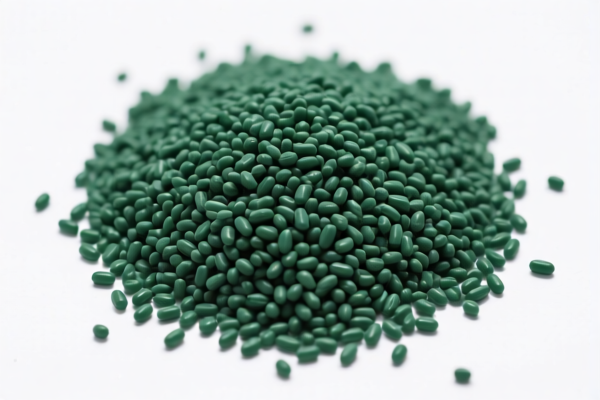
Low Odor PVC Resin is a specialized polymer material primarily composed of polyvinyl chloride. It is distinguished by its significantly reduced volatile organic compound (VOC) emissions and odor profile, making it suitable for sensitive applications like medical devices, food packaging, and high-end consumer goods.
In international trade, its classification depends heavily on its physical form and chemical structure:
- Primary Form/Granules/Powder (Unplasticized): The raw resin before additives are mixed in. This is the most common form for import.
- Waste/Scrap/Regrind: Recycled material or manufacturing off-cuts.
- Vinyl Polymer Classification: Sometimes misclassified under ethylene polymers due to structural similarities in broader chemical groups, though strictly a vinyl chloride polymer.
⚠️ Key Classification Distinction:
- Raw Resin (Granules/Powder): Must be classified under Chapter 39, Heading 3904 (Polyvinyl Chloride).
- Scrap/Waste/Off-cuts: Classified under 3915 (Waste, scrap, and forgings, of plastics).
- Misclassification Risk: Do NOT classify under 3901 (Ethylene polymers) unless the specific chemical structure is an ethylene-vinyl chloride copomer explicitly stated, which is rare for standard PVC. Standard PVC is 3904.
📦 II. HS Code Classification Matrix (2026 Latest Tariff Authority)
| HS Code | Product Description | Physical Form | Key Characteristics | Tax Risk Level |
|---|---|---|---|---|
3904.10.00.00 |
Polyvinyl Chloride Resin (Primary Form) | Resin (Granules, Powder, Beads) | Non-plasticized, polymer shape. Most Common. | 🔴 High (41.5%) |
3904.21.00.00 |
Polyvinyl Chloride Resin (Primary Form) | Resin (Primary Shape) | Non-plasticized, specific sub-category. Same Rate. | 🔴 High (41.5%) |
3901.90.55.01 |
Ethylene Polymers (Misclassification Risk) | Resin (Primary Shape) | Often wrongly used for PVC. Only if explicitly Ethylene-Copolymer. | 🔴 High (41.5%) |
3915.90.00.90 |
Waste, Scrap & Off-cuts of Plastics | Scrap, Regrind, Shavings | NOT raw resin. Only for waste material. | 🟠 Medium (35.0%) |
🔍 Critical Warning:
-3904Series (Raw Resin): This is the correct classification for new, unused PVC resin.
-3915Series (Scrap): Only for recycled/waste material. Do not use this for new resin to avoid fraud allegations.
-3901Series (Ethylene): Only use if the product is not PVC but an ethylene-based copolymer. PVC is not ethylene-based. Using this code for PVC is a misdeclaration.
💰 III. 2026 US Tariff Rate Breakdown (Detailed Analysis)
✅ Destination Country: United States (US)
✅ Origin Country: China (CN)
✅ Effective Date: 2025/2026 Tariff Cycle
🎯 1. Raw PVC Resin (3904.10.00.00 & 3904.21.00.00)
| Component | Rate | Legal Basis / Explanation |
|---|---|---|
| Base Duty | 6.5% | Standard MFN (Most Favored Nation) duty for PVC resins. |
| Section 301 Duty | +25.0% | USITC Footnote 9903.88.01: Retaliatory tariff on Chinese goods. |
| IEEPA Tariff | +10.0% | International Emergency Economic Powers Act: Specific levy on Chinese chemical imports. |
| TOTAL DUTY | 41.5% | Cumulative Tax Burden |
📌 Calculation Example:
- CIF Value: $100,000
- Base Tax: $6,500
- Section 301 Tax: $25,000
- IEEPA Tax: $10,000
- Total Tax Due: $41,500🚫 De Minimis Exemption:
- ❌ NOT APPLICABLE.
- These codes are explicitly excluded from Section 321 (de minimis) relief. Shipments must be formally entered, and duties paid.
🎯 2. PVC Scrap/Waste (3915.90.00.90)
| Component | Rate | Legal Basis / Explanation |
|---|---|---|
| Base Duty | 0.0% | Scrap materials often have lower base rates. |
| Section 301 Duty | +25.0% | Retaliatory tariff applies to Chinese scrap/plastics. |
| IEEPA Tariff | +10.0% | IEEPA levy applies to the total value. |
| TOTAL DUTY | 35.0% | Lower than raw resin, but still significant. |
⚠️ Warning:
- If you are importing new resin but declare it as scrap (3915) to save 6.5% base duty, this is customs fraud.
- CBP (Customs and Border Protection) conducts strict audits on plastic waste vs. new resin. Penalties include seizure, fines, and blacklisting.
🛠️ IV. Customs Clearance Operational Guide (Avoiding Pitfalls)
✅ 1. Required Documentation Checklist
| Document | Mandatory? | Purpose |
|---|---|---|
| Commercial Invoice | ✅ Yes | Must clearly state: "Polyvinyl Chloride Resin, Low Odor, Primary Form" |
| Packing List | ✅ Yes | Detail weight, volume, and packaging type (bags, pallets). |
| Certificate of Origin (CO) | ✅ Yes | To prove Chinese origin (triggers Section 301/IEEPA). |
| Material Safety Data Sheet (MSDS) | ✅ Yes | Required for hazardous chemical handling, even if "low odor." |
| Product Specification Sheet | ✅ Yes | Proves physical form (granules/powder) and chemical composition (100% PVC). |
| Bill of Lading (B/L) | ✅ Yes | Standard shipping document. |
✅ 2. Declaration Best Practices
🔥 "Form Matters: Resin vs. Scrap vs. Misclassification"
| Scenario | Correct HS Code | Risk if Incorrect |
|---|---|---|
| New PVC Granules/Powder | 3904.10.00.00 |
Misdeclaring as 3915 (Scrap) = Fraud. Misdeclaring as 3901 = Misclassification. |
| Recycled PVC Regrind | 3915.90.00.90 |
Must be clearly identified as "scrap" or "regrind" in description. |
| Ethylene-Vinyl Chloride Copolymer | 3901.90.55.01 |
Only if chemical analysis proves it is primarily ethylene-based. |
| PVC Pipes/Fittings (Finished Goods) | 3917 or 3918 |
NOT 3904. Finished goods have different duties. |
✅ 3. Special Scenarios & Mitigation
| Scenario | Strategy |
|---|---|
| Low VOC Claims | Provide third-party lab reports proving VOC levels. This does not change HS Code but may help with EPA/DOE compliance. |
| OEM/Private Label | Ensure the invoice lists the actual manufacturer, not just the trader, for origin verification. |
| Bonded Warehouses | Consider importing into a US Foreign Trade Zone (FTZ) to defer duty payment until the resin is sold domestically. |
| High Duty Impact | Calculate total landed cost early. If 41.5% is too high, explore supply chain alternatives (e.g., sourcing from non-China countries for 0% Section 301, though base duty may still apply). |
🌍 V. Global Market Comparison (2026)
| Market | HS Code | Duty Rate (China Origin) | Key Requirement |
|---|---|---|---|
| 🇺🇸 USA | 3904.10.00.00 |
41.5% | Section 301 + IEEPA. No de minimis. |
| 🇨🇳 China (Import) | 3904.10 |
~6.5% | Standard import duty. |
| 🇪🇺 EU | 3904 |
6.5% | No Section 301 equivalent. |
| 🇨🇦 Canada | 3904 |
0% (CETA/USMCA may apply) | Verify preferential access. |
📌 Conclusion:
- The US is the most expensive market for importing Chinese PVC resin due to the 41.5% cumulative duty.
- No duty-free options exist for raw PVC resin from China under current trade policies.
📌 VI. Common Mistakes & Pitfalls (Blood Lessons)
❌ Mistake 1: Declaring PVC Resin as 3901 (Ethylene Polymers)
👉 Result: CBP rejects the declaration, demands reclassification, and imposes penalties. PVC is vinyl chloride, not ethylene.
❌ Mistake 2: Declaring New Resin as 3915 (Scrap) to Save 6.5%
👉 Result: Severe Fraud Penalties. CBP uses X-rays and physical inspections to distinguish new granules from waste. Fines can exceed the duty savings by 10x.
❌ Mistake 3: Assuming "Low Odor" = "Low Duty"
👉 Result: Duty rates are based on HS Code, not product quality or emissions. "Low Odor" does not reduce tariffs.
❌ Mistake 4: Ignoring IEEPA 10% Tariff
👉 Result: Underestimating landed cost. Many importers only account for the 25% Section 301 and forget the additional 10% IEEPA levy, leading to cash flow surprises.
✅ Correct Declaration Example:
"Polyvinyl Chloride (PVC) Resin, Low Odor, Primary Form, Granules, 100% Virgin Material, Non-Plasticized. HS: 3904.10.00.00"
🎯 VII. Conclusion: Professional Clearance for Cost Efficiency
🎯 Key Takeaway:
🔹 HS Code
3904.10.00.00is the standard for Raw PVC Resin.
🔹 Total Duty is 41.5% (6.5% Base + 25% Section 301 + 10% IEEPA).
🔹 No De Minimis Exemption: All shipments must be formally entered.
📌 Actionable Advice:
1. Verify Material Form: Ensure your supplier provides a certificate stating "Primary Form/Resin," not "Scrap."
2. Budget for 41.5%: Include this in your landed cost calculations.
3. Consult a Customs Broker: Before shipping, get a Pre-Ruling or Binding Tariff Information from a US customs broker to confirm the HS Code.
4. Consider FTZs: Use Foreign Trade Zones to delay duty payment and improve cash flow.
📣 Immediate Action Required:
📞 Contact your customs broker with the following:
- Product Spec Sheet (proving PVC structure)
- MSDS
- Photos of the granules/powder
- Invoice Draft
🚀 Ensure compliance, avoid seizures, and manage your 41.5% duty burden effectively!
✨ Accurate Classification Saves Money. Compliance Prevents Disasters.
💼 Every percentage point in duty counts. Get it right from the start!
用户评价
关于 HS 编码归类
协调制度(HS)是由世界海关组织(WCO)制定的国际贸易商品分类标准。全球 200 多个国家采用 HS 系统作为海关关税、贸易统计和进出口监管的基础。
每个 HS 编码遵循以下层级结构:
- 章(2 位)——商品大类(例如:第 84 章:机器和机械设备)
- 品目(4 位)——章内的更具体分类
- 子目(6 位)——国际通用细分,所有 WCO 成员国统一使用
- 本国细分(8-10 位)——各国自行扩展的细分编码,如美国 HTSUS 10 位编码
正确的 HS 编码归类对于顺利通关、准确缴纳关税和遵守贸易法规至关重要。错误归类可能导致海关延误、多缴关税或罚款。
从CN进口到US时,适用的关税税率可能包括:
- 最惠国(MFN)税率——适用于 WTO 成员国的标准关税税率
- 普通税率——适用于无贸易协定国家
- 贸易救济关税——附加关税,如 301 条款(反倾销)、232 条款(国家安全)或反补贴税
本页内容仅供参考。如需正式归类,请咨询当地海关或持牌报关代理。