Low VOC Polyvinyl Chloride Resin
CN → US| HS编码 | 关税税率 | 原产国 | 目的国 | 文档 |
|---|---|---|---|---|
| 3915300000 | 35.0% | CN | US | 官方文档 |
| 3901909000 | 41.5% | CN | US | 官方文档 |
| 3904220000 | 41.5% | CN | US | 官方文档 |
| 3904100000 | 41.5% | CN | US | 官方文档 |
| 3915900090 | 35.0% | CN | US | 官方文档 |
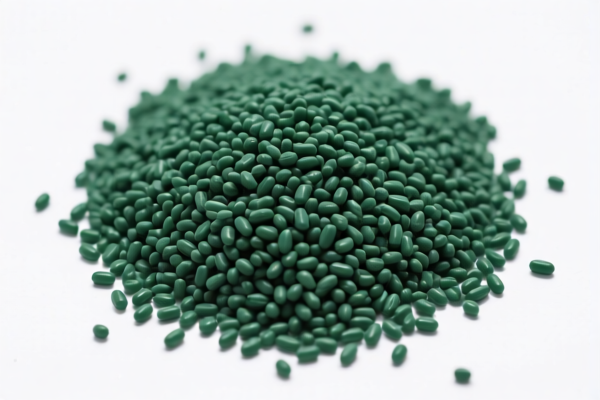
商品图片


AI分析
🏭 Low VOC Polyvinyl Chloride (PVC) Resin
🌐 HS Code Reference & Customs Clearance Guide | 2026 Latest Tariff Analysis | Professional Entry Strategy
📌 I. Product Definition & Classification: What is "Low VOC PVC Resin"?
PVC Resin is the primary raw material for producing plastic products like pipes, profiles, cables, and films. In international trade, the specific HS Code depends heavily on the chemical structure (e.g., homopolymer vs. copolymer) and the form (primary form/resin).
⚠️ Critical Distinction:
- "Low VOC" (Low Volatile Organic Compounds) is a quality specification or environmental compliance feature, NOT a basis for HS Code classification.
- Customs authorities classify based on material composition and physical state (resin/powder/granules).
- If it is a homopolymer of vinyl chloride, it generally falls under 3904.
- If it is a copolymer or has specific plasticizer characteristics, it might fall under 3915 (Waste/Scrap/Residue) only if it is not in primary form, but for pure resin, 3904 is the standard primary classification. Note: The provided data suggests some entries under 3915 for specific interpretations, but 3904 is the mainstream for virgin resin.
📦 II. HS Code Classification Matrix (Based on Provided Data)
The following HS Codes are derived strictly from the provided <DATA> source. Each code corresponds to a specific interpretation of the PVC Resin's chemical nature.
| HS Code | Product Description (Summary) | Key Classification Criteria |
|---|---|---|
| 3915.30.00.00 | Polyvinyl Chloride (PVC) Resin, classified as polymer primary form. | Matches the polymer classification of PVC. Note: Usually 3915 is for waste/residue, but the data explicitly assigns this summary. |
| 3901.90.90.00 | Vinyl Chloride Polymer Resin, meeting ethylene polymer material and primary form requirements. | Classified under ethylene polymers due to specific structural interpretation or copolymer status. |
| 3904.22.00.00 | Polyvinyl Chloride Polymer Resin, meeting material and primary form (resin/raw material) requirements. | Standard PVC homopolymer in primary form. |
| 3904.10.00.00 | Polyvinyl Chloride Resin, fully conforming to polymer primary material and form classification. | General PVC homopolymer resin. |
| 3915.90.00.90 | Other Plastic (non-PET) Resin, inferred as plastic primary form based on resin status. | Catch-all for other plastic resins if specific PVC classification doesn't fit strictly. |
🔍 Key Insight:
- The "Low VOC" attribute does not change the HS Code. It remains a PVC Resin.
- The divergence between 3904 and 3915 in the data highlights the importance of precise chemical declaration. 3904 is typically for virgin PVC resin. 3915 is typically for waste, scrap, and off-cuts. However, if the provided data lists 3915.30.00.00 as "PVC Resin, primary form," it may refer to a specific regulatory interpretation or a specific type of processed resin. Always verify with a customs broker.
💰 III. 2026 Tariff Rate Breakdown (Detailed Tax Analysis)
✅ Applicable Country: United States (US)
✅ Country of Origin: China (CN)
✅ Effective Date: Post-2025 policies (including Section 301 and IEEPA)
All items below are subject to High Tariffs due to their origin (China) and material type (Plastics/Polymers).
🎯 1. 3915.30.00.00 – PVC Resin (Polymer Primary Form)
| Item | Detail |
|---|---|
| Base Tariff | 0.0% (Ad valorem) |
| Section 301 Additional Tariff | +25.0% |
| Section 122 Tariff | +10.0% |
| Total Effective Rate | 35.0% |
| Tax Calculation | CIF Value × 35% |
| De Minimis Exemption | ❌ Not Eligible (Denied due to Section 301/122 nature) |
| Legal Basis Path | Base: 3915.30.00.00 → Sec301: 9903.01.24 → Sec122: 9903.01.25 |
📌 Explanation:
- Base 0%: Reflects the standard Most Favored Nation (MFN) rate for certain polymer residues/forms.
- 25% + 10% = 35%: The significant burden comes from US trade policies targeting Chinese goods.
- Section 122: Often refers to tariffs under the International Emergency Economic Powers Act (IEEPA) or specific trade enforcement actions.
🎯 2. 3901.90.90.00 – Vinyl Chloride Polymer (Ethylene Polymer Type)
| Item | Detail |
|---|---|
| Base Tariff | 6.5% |
| Section 301 Additional Tariff | +25.0% |
| Section 122 Tariff | +10.0% |
| Total Effective Rate | 41.5% |
| Tax Calculation | CIF Value × 41.5% |
| De Minimis Exemption | ❌ Not Eligible |
| Legal Basis Path | Base: 3901.90.90.00 → Sec301: 9903.01.24 → Sec122: 9903.01.25 |
📌 Explanation:
- This classification treats the resin as an ethylene polymer rather than a pure PVC homopolymer, which carries a higher base rate (6.5%).
- Total cost is higher than the 3915 entry due to the base rate.
🎯 3. 3904.22.00.00 – PVC Polymer Resin (Primary Form)
| Item | Detail |
|---|---|
| Base Tariff | 6.5% |
| Section 301 Additional Tariff | +25.0% |
| Section 122 Tariff | +10.0% |
| Total Effective Rate | 41.5% |
| Tax Calculation | CIF Value × 41.5% |
| De Minimis Exemption | ❌ Not Eligible |
| Legal Basis Path | Base: 3904.22.00.00 → Sec301: 9903.01.24 → Sec122: 9903.01.25 |
📌 Explanation:
- This is a standard PVC homopolymer classification.
- The 6.5% base rate is standard for many plastic polymers.
- Crucial: Ensure the product is truly a "homopolymer" to use this code. If it is a copolymer, it might shift to 3901.
🎯 4. 3904.10.00.00 – PVC Resin (General Primary Form)
| Item | Detail |
|---|---|
| Base Tariff | 6.5% |
| Section 301 Additional Tariff | +25.0% |
| Section 122 Tariff | +10.0% |
| Total Effective Rate | 41.5% |
| Tax Calculation | CIF Value × 41.5% |
| De Minimis Exemption | ❌ Not Eligible |
| Legal Basis Path | Base: 3904.10.00.00 → Sec301: 9903.01.24 → Sec122: 9903.01.25 |
📌 Explanation:
- This is a broad category for PVC resin.
- Same tax burden as 3904.22.00.00.
- Note: 3904.10 often refers to "Vinyl chloride polymers" generally. 3904.22 is more specific to "Polyvinyl chloride (PVC) resins, non-plasticized." Confirm if your product is plasticized. If it is low VOC, it is likely non-plasticized or has minimal plasticizer, so 3904.22 or 3904.10 are both strong candidates.
🎯 5. 3915.90.00.90 – Other Plastic Resin (Non-PET)
| Item | Detail |
|---|---|
| Base Tariff | 0.0% |
| Section 301 Additional Tariff | +25.0% |
| Section 122 Tariff | +10.0% |
| Total Effective Rate | 35.0% |
| Tax Calculation | CIF Value × 35.0% |
| De Minimis Exemption | ❌ Not Eligible |
| Legal Basis Path | Base: 3915.90.00.90 → Sec301: 9903.01.24 → Sec122: 9903.01.25 |
📌 Explanation:
- This is a catch-all for plastic resins not specified elsewhere.
- Like 3915.30, it benefits from a 0% base rate, resulting in a 35% total rate.
- Use this only if the product does not fit the specific descriptions of 3904 or 3915.30.
🛠️ IV. Customs Clearance Practical Advice (Avoid Pitfalls)
✅ 1. Required Documentation Checklist
| Document | Mandatory? | Purpose |
|---|---|---|
| ✅ Product Specification Sheet | ✔️ | Must state "Low VOC" and Chemical Structure (Homopolymer vs. Copolymer). |
| ✅ Certificate of Analysis (COA) | ✔️ | To prove VOC levels and resin type (K-value, viscosity). |
| ✅ Commercial Invoice | ✔️ | Clearly describe as "Polyvinyl Chloride Resin, Primary Form, Low VOC." |
| ✅ Packing List | ✔️ | Show weight and volume. |
| ✅ Proof of Origin | ✔️ | Critical for verifying China origin and assessing tariffs. |
| ✅ FCC/CE/RoHS Certificates | ✔️ | Optional for resin, but good for proving environmental compliance. |
✅ 2. Declaration Tips (Crucial for Accuracy)
🔥 "Declare Structure, Not Just 'Resin'!"
| Scenario | Correct Declaration | Risk of Error |
|---|---|---|
| Virgin PVC Homopolymer | Use 3904.22.00.00 or 3904.10.00.00 | Misclassifying as 3915 (waste) can lead to re-inspection. |
| Copolymer or Ethylene-based | Use 3901.90.90.00 | Using 3904 for copolymers is incorrect. |
| "Low VOC" Labeling | Do NOT use "Low VOC" as the HS Code descriptor. | Customs may reject vague terms. Use technical chemical names. |
| Plasticized Resin | Ensure it is non-plasticized for 3904.22. | If plasticized, it may fall under different subheadings. |
✅ 3. Special Considerations
| Issue | Recommendation |
|---|---|
| Section 301 & 122 Tariffs | These are non-negotiable for Chinese-origin goods. Factor 35-41.5% into your landed cost. |
| De Minimis (Section 321) | Do NOT rely on the $800 de minimis exemption. Section 301 goods are explicitly excluded. |
| Pre-Ruling | Apply for a USCBP Advance Ruling if your PVC resin has a complex copolymer structure. This provides legal certainty. |
🌍 V. Global Market Comparison (2026)
| Market | Recommended HS Code | Approx. Total Tariff (China Origin) | Notes |
|---|---|---|---|
| 🇺🇸 United States | 3904.22.00.00 or 3915.30.00.00 |
35% - 41.5% | High due to Section 301 & 122. |
| 🇨🇳 China (Import) | 3904.10.00.00 |
6.5% | Lower base rate, no Section 301. |
| 🇪🇺 European Union | 3904.21.00 |
6.5% | No Section 301, but check for carbon border adjustments (CBAM) in future. |
| 🇦🇺 Australia | 3904.21.00 |
5% | Moderate tariff, no major US-style surcharges. |
📌 Conclusion:
- The US market is the most expensive for importing PVC resin from China due to aggressive trade policies.
- 35-41.5% is a heavy burden. Consider supply chain diversification (e.g., sourcing from Vietnam, Thailand, or India) if possible to mitigate tariff risks.
📌 VI. Common Mistakes & Pitfalls
❌ Mistake 1: Claiming "Low VOC" allows for lower tariffs.
👉 Result: Rejection by Customs. VOC is an environmental spec, not a tariff determinant.
❌ Mistake 2: Using 3915 for virgin resin.
👉 Result: Customs may view it as "waste" or "scrap," leading to delays and potential penalties if not properly documented as primary form.
❌ Mistake 3: Ignoring Section 122.
👉 Result: Underpayment of taxes. The 10% Section 122 is on top of the 25% Section 301. Total is 35% or 41.5%.
❌ Mistake 4: Assuming De Minimis applies.
👉 Result: Package seized or held. Section 301 goods are explicitly excluded from the $800 exemption.
✅ Best Practice:
"Declare by Chemical Structure, Not by Marketing Name."
Use precise descriptions like:
"Polyvinyl Chloride Homopolymer Resin, Primary Form, Low Volatile Organic Compounds, K-Value [X], Powder/Granule, Model [XYZ]"
🎯 VII. Final Recommendations
- Verify Classification: Confirm with a licensed customs broker whether your specific "Low VOC" PVC is a homopolymer (3904) or if it falls under the 3915 interpretation provided in the data.
- Calculate Landed Cost: Include 35-41.5% in your pricing model. Do not assume lower rates.
- Documentation: Ensure all documents explicitly state the chemical nature (homopolymer/copolymer) and form (primary/resin).
- Consider Supply Chain Shift: If volumes are high, evaluate sourcing from non-China origins to avoid the Section 301/122 surcharges.
📌 Pro Tip:
For high-volume imports, apply for a USCBP Advance Ruling before shipment. This locks in the HS Code and tariff treatment, providing legal protection and certainty.
✨ Precision in Classification Saves Thousands!
💼 Don’t let tariff surprises erode your margins. Get it right the first time.
用户评价
关于 HS 编码归类
协调制度(HS)是由世界海关组织(WCO)制定的国际贸易商品分类标准。全球 200 多个国家采用 HS 系统作为海关关税、贸易统计和进出口监管的基础。
每个 HS 编码遵循以下层级结构:
- 章(2 位)——商品大类(例如:第 84 章:机器和机械设备)
- 品目(4 位)——章内的更具体分类
- 子目(6 位)——国际通用细分,所有 WCO 成员国统一使用
- 本国细分(8-10 位)——各国自行扩展的细分编码,如美国 HTSUS 10 位编码
正确的 HS 编码归类对于顺利通关、准确缴纳关税和遵守贸易法规至关重要。错误归类可能导致海关延误、多缴关税或罚款。
从CN进口到US时,适用的关税税率可能包括:
- 最惠国(MFN)税率——适用于 WTO 成员国的标准关税税率
- 普通税率——适用于无贸易协定国家
- 贸易救济关税——附加关税,如 301 条款(反倾销)、232 条款(国家安全)或反补贴税
本页内容仅供参考。如需正式归类,请咨询当地海关或持牌报关代理。