Low Viscosity Refractory Mud
CN → US| HS编码 | 关税税率 | 原产国 | 目的国 | 文档 |
|---|---|---|---|---|
| 6902905010 | 35.0% | CN | US | 官方文档 |
| 3801300000 | 39.9% | CN | US | 官方文档 |
| 6902901010 | 35.0% | CN | US | 官方文档 |
| 6902901010 | 35.0% | CN | US | 官方文档 |
商品图片
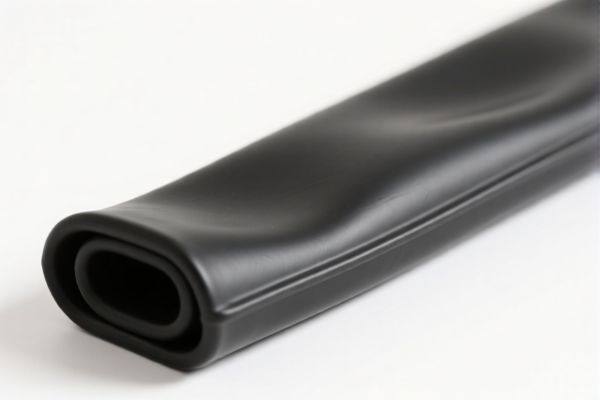
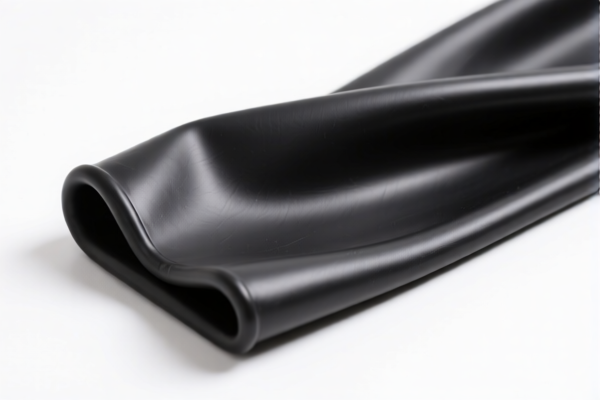
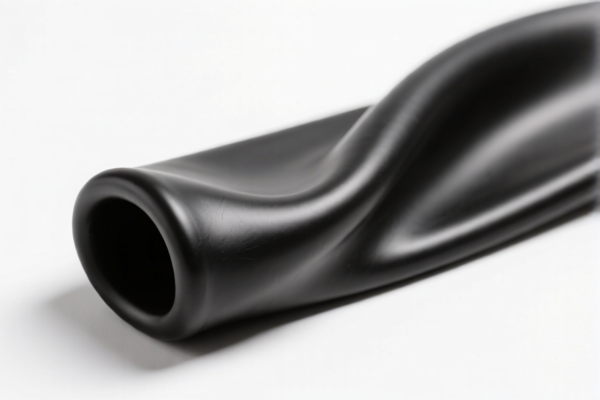
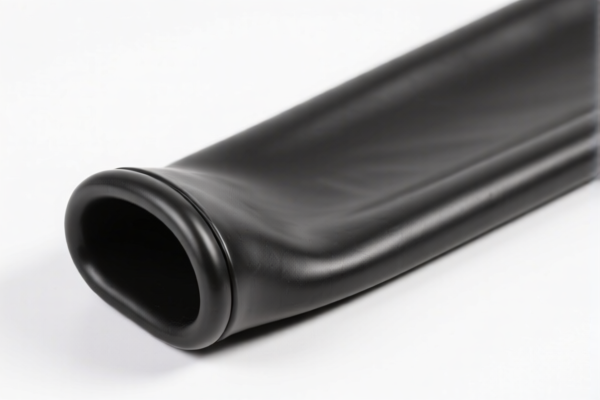
AI分析
🧱 Low Viscosity Refractory Mud (Low Viscosity Refractory Slurry)
🌐 HS Code Classification & Customs Clearance Guide | 2026 Latest Tariff Analysis | Professional通关 Strategy for Heat-Resistant Materials
📌 I. Product Definition & Classification: What is "Low Viscosity Refractory Mud"?
Low Viscosity Refractory Mud, also known as refractory slurry or cement, is a specialized construction material used in high-temperature industrial applications (e.g., kilns, furnaces, boilers). Its key characteristics are: * High Refractoriness: Resistant to extreme heat. * Low Viscosity: Flows easily, allowing it to fill gaps between bricks or coat linings effectively without air bubbles. * Composition: Typically made from clay, high-alumina cement, or specific oxides mixed with water or binders.
In international trade, its classification is not straightforward. It depends entirely on whether it is viewed as a finished ceramic product or an unfinished chemical paste. Misclassification here leads to significant tariff discrepancies.
⚠️ Key Distinction Point:
- If it is a raw paste/slush for lining (糊剂范畴) → Likely 3801.30.00.00
- If it is processed clay/ceramic material in brick/block form or equivalent properties → Likely 6902.90.50.10 or 6902.90.10.10
📦 II. HS Code Classification Details (Based on Provided Data)
| HS Code | Product Description & Rationale | Total Tax Rate | Tax Breakdown |
|---|---|---|---|
6902.90.50.10 |
Low viscosity refractory mud matched for refractory products; clay material characteristics. (Regarded as a refined clay-based refractory product) |
35.0% | Base: 0.0% Section 301: 25.0% Section 122: 10.0% |
3801.30.00.00 |
Low viscosity refractory mud falls under the category of furnace lining pastes. (Regarded as a chemical paste/adhesive for lining) |
39.9% | Base: 4.9% Section 301: 25.0% Section 122: 10.0% |
6902.90.10.10 |
Low viscosity refractory mud (low shrinkage) meets the morphology and clay material attributes of refractory ceramic building products/bricks/blocks. (Regarded as a finished ceramic brick/block analog) |
35.0% | Base: 0.0% Section 301: 25.0% Section 122: 10.0% |
🔍 Critical Analysis:
- The biggest difference lies between 35.0% and 39.9%. -3801.30.00.00carries a 4.9% base tariff because it is classified under "Colloids including those chemically modified... not elsewhere specified," treating the mud as a chemical paste. -6902.xxxxxxcarries a 0% base tariff because Chapter 69 covers "Ceramic Products," treating the mud as a clay-based material. - Both scenarios are hit by the same punitive tariffs: 25% (Section 301) and 10% (Section 122).
💰 III. 2026 Latest Tariff Rate Explanation (Detailed Breakdown)
✅ Applicable Country: United States (US)
✅ Origin: China (CN)
✅ Effective Date: Ongoing (Subject to current trade policies)
🎯 Scenario 1: Classification as Ceramic Product (6902.90.50.10 / 6902.90.10.10)
| Item | Content |
|---|---|
| Base Tariff | 0% (ad valorem) Reason: Ceramic refractory products often have preferential base rates. |
| USITC Additional Duty (Sec 301) | +25% Reason: China-origin goods under US Trade Act Section 301. |
| IEEPA Additional Duty (Sec 122) | +10% Reason: National security-related import duties on certain materials. |
| Total Effective Rate | 35.0% |
| Tax Calculation | CIF Value × 35% |
| De Minimis Exemption | ❌ Not Applicable High-value industrial goods do not qualify for $800 de minimis relief in this context. |
| Legal Basis Path | HTSUS: 6902.90 → USITC: Sec 301 Footnote 9903.88.01 → IEEPA: Sec 122 |
📌 Why this classification?
- If the mud is marketed as "Low Shrinkage" (低收缩) or matches "Refractory Brick/Block" attributes, customs may view it as a ceramic composite rather than a simple chemical glue. - Advantage: Lower base tariff (0% vs 4.9%).
🎯 Scenario 2: Classification as Chemical Paste (3801.30.00.00)
| Item | Content |
|---|---|
| Base Tariff | 4.9% (ad valorem) Reason: Classified as "Colloids... chemically modified," specifically furnace lining pastes. |
| USITC Additional Duty (Sec 301) | +25% |
| IEEPA Additional Duty (Sec 122) | +10% |
| Total Effective Rate | 39.9% |
| Tax Calculation | CIF Value × 39.9% |
| De Minimis Exemption | ❌ Not Applicable |
| Legal Basis Path | HTSUS: 3801.30 → USITC: Sec 301 Footnote 9903.88.01 → IEEPA: Sec 122 |
📌 Why this classification?
- If the product is sold strictly as a "paste" (糊剂) for coating or lining, without implying it is a solid brick, customs may default to Chapter 38 (Chemicals). - Disadvantage: Higher base tariff adds ~$5,000 in tax per $100,000 CIF value compared to Scenario 1.
🛠️ IV. Customs Clearance Practical Advice (Avoid Pitfalls)
✅ 1. Documentation Checklist (Critical for Clearance)
| Document | Required? | Explanation |
|---|---|---|
| ✅ Technical Data Sheet (TDS) | ✔️ Yes | Must clearly state: "Low Viscosity," "Refractory," "Clay-based" or "High Alumina." |
| ✅ Product Photos | ✔️ Yes | Show consistency (liquid/paste) AND application context (lining a furnace). |
| ✅ Composition Analysis | ✔️ Yes | Confirm % of clay vs. chemical binders. High clay content supports 6902 classification. |
| ✅ Commercial Invoice | ✔️ Yes | Use precise description: "Low Viscosity Refractory Clay Slurry for Furnace Lining" |
| ✅ Certificate of Origin (CO) | ✔️ Yes | To prove China origin and apply correct Section 301/122 duties. |
| ✅ Pre-Ruling Application | ✔️ Highly Recommended | Apply for an Advance Ruling from CBP to fix the HS Code before shipping. |
✅ 2. Declaration Strategy (Key Mantra)
🔥 “Clay Content High, Go Chapter 69; Chemical Paste, Go Chapter 38! Choose Wisely, Save 4.9%!”
| Situation | Recommended HS Code | Reasoning |
|---|---|---|
| Product is clay-based and acts as a ceramic material | 6902.90.50.10 or 6902.90.10.10 |
Lower base tax (0%). Argue it is a "refractory ceramic product." |
| Product is chemically modified paste with minimal clay structure | 3801.30.00.00 |
Higher base tax (4.9%). Argue it is a "colloid/paste for lining." |
| Mixed/Unclear Composition | ❌ Risky | CBP may audit and assign the higher tax rate after the fact. |
⚠️ Warning:
- Do NOT simply say "Refractory Material" on the invoice. Be specific. - If you claim6902, emphasize "Clay Material Attributes" (粘土材质特征) and "Low Shrinkage" (低收缩) if applicable.
✅ 3. Special Case Handling
| Scenario | Handling Advice |
|---|---|
| OEM Custom Mud | Provide formulation sheet to prove clay content >50% to support 6902. |
| High-Alumina Mud | If >50% alumina, it may still fall under 6902 if classified as ceramic, but verify specific subheadings. |
| Sample vs. Bulk | Samples under $800 might qualify for de minimis, but bulk commercial shipments cannot. |
| Dispute with CBP | If CBP assigns 3801, provide expert testimony that the product is a "refractory brick equivalent" in function. |
🌍 V. Global Market Comparison (2026)
| Country/Region | Recommended HS Code | Tariff (China Origin) | Remarks |
|---|---|---|---|
| 🇺🇸 USA | 6902.90.50.10 |
35.0% (Base 0% + 25% + 10%) | Most common classification for clay-based mud. |
| 🇺🇸 USA | 3801.30.00.00 |
39.9% (Base 4.9% + 25% + 10%) | If classified as chemical paste. |
| 🇨🇳 China | 6902.90.50.10 |
~6-10% | Domestic exports often face lower base rates. |
| 🇪🇺 EU | 6902.90.50 |
0-6.5% | No Section 301/122 equivalent. |
| 🇮🇳 India | 6902.90 |
7.5-10% | Check specific BCD rates. |
📌 Conclusion:
- USA is the most expensive market due to Section 301 and 122 duties. - Strategy: Aim for6902.90.50.10or6902.90.10.10to save the 4.9% base tariff.
📌 VI. Common Mistakes & Pitfalls (Lessons Learned)
❌ Mistake 1: Declaring as "Construction Chemicals" → 3824
👉 Result: CBP reclassifies to 3801.30.00.00 or 6902.xxxx based on composition → Delay + Back Taxes.
❌ Mistake 2: Using vague terms like "Mud" or "Slurry" without "Refractory"
👉 Result: CBP may classify as common clay (6904) → Audit for Undervaluation or Misclassification.
❌ Mistake 3: Ignoring Section 122 (10% Tax)
👉 Result: Underpaying by 10% → Penalties and Interest.
❌ Mistake 4: Assuming De Minimis applies
👉 Result: Bulk shipments of industrial materials are never eligible for $800 de minimis exemption.
✅ Correct Approach:
"Low Viscosity Refractory Clay Mud, High Temperature Resistant, For Industrial Kiln Lining, Clay-Based"
HS Code:6902.90.50.10(if clay-based)
Total Duty: 35.0%
🎯 VII. Conclusion: Professional Classification Saves Money!
🎯 Remember:
🔹 "Clay is Ceramic (6902, 35%), Paste is Chemical (3801, 39.9%)!"
🔹 "Don't leave 4.9% on the table by misclassifying!"
🔹 "Section 301 + 122 = 35-40%, regardless of Chapter!"
📌 Pro Tip:
If your product has high alumina content or special binders, consult a customs broker to see if a Special Manufacturing Process argument can justify 6902 classification.
Apply for a CBP Advance Ruling before shipping large volumes to lock in the 35.0% rate.
📣 Immediate Action:
📞 Contact a licensed customs broker.
📦 Provide a Technical Data Sheet highlighting Clay Content and Refractory Properties.
🚀 Secure the 35.0% rate, not 39.9%!
✨ Precision in Classification, Profit in Customs!
💼 Every Percent Counts in Industrial Trade!
用户评价
关于 HS 编码归类
协调制度(HS)是由世界海关组织(WCO)制定的国际贸易商品分类标准。全球 200 多个国家采用 HS 系统作为海关关税、贸易统计和进出口监管的基础。
每个 HS 编码遵循以下层级结构:
- 章(2 位)——商品大类(例如:第 84 章:机器和机械设备)
- 品目(4 位)——章内的更具体分类
- 子目(6 位)——国际通用细分,所有 WCO 成员国统一使用
- 本国细分(8-10 位)——各国自行扩展的细分编码,如美国 HTSUS 10 位编码
正确的 HS 编码归类对于顺利通关、准确缴纳关税和遵守贸易法规至关重要。错误归类可能导致海关延误、多缴关税或罚款。
从CN进口到US时,适用的关税税率可能包括:
- 最惠国(MFN)税率——适用于 WTO 成员国的标准关税税率
- 普通税率——适用于无贸易协定国家
- 贸易救济关税——附加关税,如 301 条款(反倾销)、232 条款(国家安全)或反补贴税
本页内容仅供参考。如需正式归类,请咨询当地海关或持牌报关代理。