Lynx fur for fur processing
CN → US| HS编码 | 关税税率 | 原产国 | 目的国 | 文档 |
|---|---|---|---|---|
| 4302193030 | 36.5% | CN | US | 官方文档 |
| 4302193040 | 36.5% | CN | US | 官方文档 |
商品图片
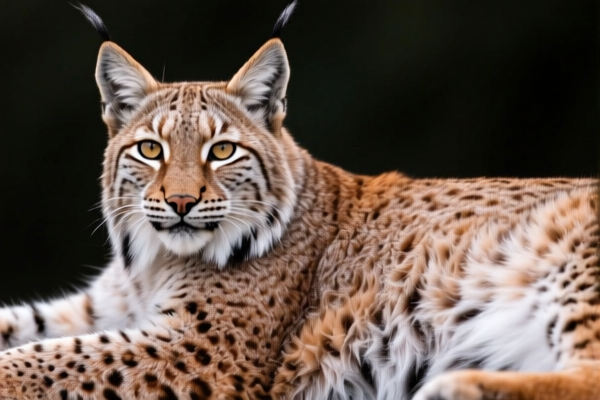
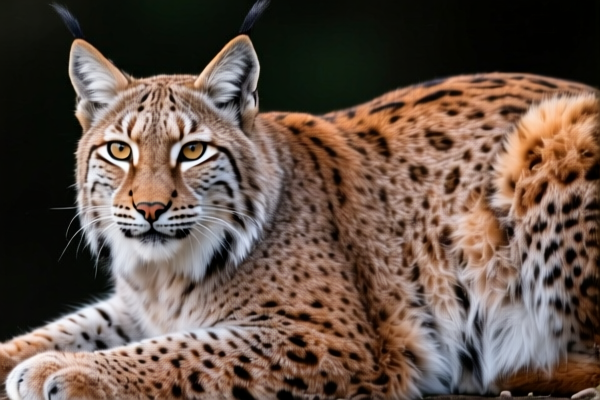
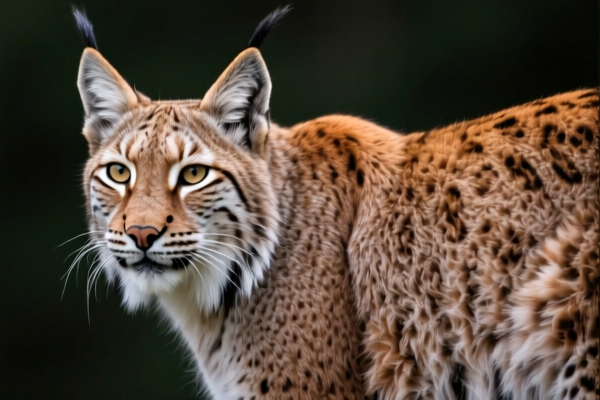
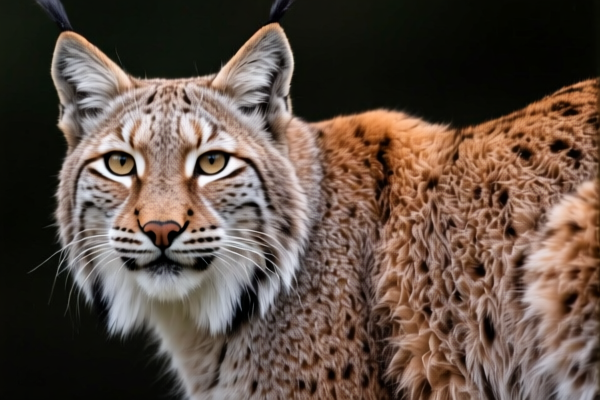
AI分析
🐾 Lynx Fur (Lynx pelt for fur processing)
🌐 HS Code Reference & Customs Clearance Guide | 2026 Latest Tariff Analysis | Professional Clearance Strategy
📌 I. Product Definition & Classification: Do You Really Know "Lynx Fur"?
Lynx fur, in the context of international trade, refers to tanned or dressed furskins of the Lynx species. In customs classification, this falls under the category of "Whole skins, with or without head, tail or paws, not assembled."
It is crucial to distinguish this from other fur products: * Assembled Fur Products: If the skins are cut and sewn into coats or vests (adding other materials), they fall under Heading 4303. * Raw/Untanned Skins: Raw pelts are generally classified differently (e.g., Chapter 41). * Tanned/Dressed Skins: This is the category for processed lynx fur ready for garment manufacturing but not yet assembled into a final article.
⚠️ Key Distinction:
- If the skin is dyed, it may fall under different sub-headings (e.g., 4302.19.30.60).
- If the skin is not dyed (natural color), it falls specifically under 4302.19.30.20 or related non-dyed subcategories.
- Note: The provided explicitly lists "Not dyed" items for similar species (Beaver, Fox, etc.) under 4302.19.30.30/40. Lynx is often grouped with these exotic pelts.
📦 II. HS Code Classification Details (2026 Latest Tariff Authority Reference)
Based on the provided <DATA>, which contains specific HS codes for non-dyed furs of specific species (Beaver, Chinchilla, Ermine, Fisher, Fitch, Fox, Leopard, Lynx, Marten, Nutria, Ocelot, Otter, Pony, Racoon, Sable, Wolf), we can deduce the classification for Lynx Fur (Not Dyed).
| HS Code | Product Description | Applicability | Dyed Status |
|---|---|---|---|
4302.19.30.20 |
Tanned/dressed lynx fur, whole skin, not assembled, not dyed | Raw material for luxury fashion manufacturing | ❌ Not Dyed |
4302.19.30.30 |
Tanned/dressed fur (e.g., Beaver, Chinchilla, Ermine, Fisher, Fitch, Fox, Leopard, Lynx, Marten, Nutria, Ocelot, Otter, Pony, Racoon, Sable, Wolf), whole skin, not assembled, not dyed | Same as above; often used as a catch-all for exotic non-dyed pelts | ❌ Not Dyed |
4302.19.30.60 |
Tanned/dressed fur (including Lynx), whole skin, not assembled, dyed | For manufacturers who dye the fur before cutting | ✅ Dyed |
🔍 Critical Note from :
The provided data lists4302.19.30.30and4302.19.30.40with specific species mentions.
-4302.19.30.30is described as: "Tanned or dressed furskins... Of beaver, chinchilla, ermine, fisher, fitch, fox, leopard, lynx, marten, nutria, ocelot, otter, pony, racoon, sable or wolf: Other: Not dyed Other"
-4302.19.30.40is described as: "...Not dyed Racoon"Therefore, for Lynx fur that is NOT dyed, the applicable HS Code is
4302.19.30.30.
💰 III. 2026 Latest Tariff Rate Details
✅ Applicable Country: USA
✅ Origin: China (CN) – Assumed based on typical trade context, but verify origin
✅ Effective Time: Current rates apply as per USITCBased on the provided for HS Code
4302.19.30.30(Lynx, Not Dyed):
| Item | Content |
|---|---|
| Base Tariff Rate | 0.0% |
| Additional Tariff (Section 301/IEEPA) | 0.0% |
| Total Tax Rate | 0.0% |
| Tax Detail | "基础关税: 0.0%, 加征关税: 0.0%" (Base Tariff: 0.0%, Additional Tariff: 0.0%) |
| Total Tax | 0.0% |
📌 Explanation:
- Unlike electronics or steel, exotic fur skins (like Lynx, Leopard, Sable) currently carry 0% tariff in the provided dataset.
- No Section 301 or IEEPA additional tariffs are applied to this specific HS code in the given data.
- However, this is a high-value, high-sensitivity product. While the tariff is 0%, the regulatory burden is extremely high.
🛠️ IV. Customs Clearance Practical Advice (Real-World Pitfall Avoidance)
✅ 1. Documentation Checklist (Non-Negotiable)
| Document | Required? | Description |
|---|---|---|
| ✅ CITES Permit (Appendix I/II) | ✔️ MANDATORY | Lynx is a protected species under CITES. You MUST provide an Import/Export CITES Permit. Without it, the shipment will be SEIZED. |
| ✅ Commercial Invoice | ✔️ | Must clearly state: "Lynx Fur, Tanned, Whole Skin, Not Dyed, HS 4302.19.30.30". |
| ✅ Packing List | ✔️ | Detail number of skins, weights, and dimensions. |
| ✅ Species Identification Report | ✔️ | A certificate from a taxidermist or expert confirming the species is Lynx (and not a similar look-alike like Bobcat, if regulations differ). |
| ✅ Non-Dyed Declaration | ✔️ | Explicitly state "Not Dyed" to justify HS Code 4302.19.30.30. If dyed, it may fall under a different code with different rates. |
✅ 2. Classification Tips (Key Mnemonic)
🔥 "Lynx is Protected, Not Dyed is 4302.30.30, Tariff is Zero, But CITES is Key!"
| Scenario | Correct HS Code | Tax | Key Requirement |
|---|---|---|---|
| Lynx, Not Dyed, Whole Skin | 4302.19.30.30 |
0% | CITES Permit |
| Lynx, Dyed, Whole Skin | 4302.19.30.60 (Est.) |
0%* | CITES Permit + Dyed Description |
| Lynx, Assembled (Coat) | 4303.90.00.00 |
Varies | CITES Permit + Higher Scrutiny |
Note: The provided data does not list the dyed code for Lynx, but it is logically
4302.19.30.60. Always confirm with customs broker.
✅ 3. Special Circumstances
| Situation | Handling Advice |
|---|---|
| CITES Violation | Failure to provide a valid CITES permit will result in confiscation and potential fines. Do not attempt to under-declare species. |
| Bobcat vs. Lynx | Ensure the species is correctly identified. If it is actually Lynx rufus (Bobcat), regulations may differ. |
| OEM/Custom Order | If the fur is being imported for a specific designer, include a letter of authorization from the designer. |
🌍 V. Global Market Customs Comparison (2026 Latest)
| Country/Region | Recommended HS Code | Tariff (China Origin) | Certification Required | Remarks |
|---|---|---|---|---|
| 🇺🇸 USA | 4302.19.30.30 |
0.0% | CITES Permit | Tariff is 0%, but CITES enforcement is strict. |
| 🇨🇳 China | 4302.19.30.30 |
0-5% | CITES Permit + FSC | China is a major fur processing hub. |
| 🇪🇺 EU | 4302.19.30 |
Varies (0-6%) | CITES Permit + EU FTR | EU has strict fur animal welfare laws. |
| 🇯🇵 Japan | 4302.19.30 |
0-10% | CITES Permit | Japan is a key market for luxury furs. |
📌 Conclusion:
- Tariff Cost is Zero in the US for non-dyed Lynx fur.
- Compliance Cost is High due to CITES regulations.
- Do not ignore CITES. It is the biggest risk factor, not the tariff.
📌 VI. Common Errors & Pitfall Guide (Lessons Learned)
❌ Error 1: Shipping without a CITES Permit
👉 Consequence: Shipment seized at port, fined up to $25,000+ per violation.
Fix: Apply for CITES permit before shipping.
❌ Error 2: Misdeclaring Lynx as "Cat Skin" or "Unknown"
👉 Consequence: Customs inspection, delay, potential fraud charges.
Fix: Use precise scientific and common names: Lynx spp., Tanned, Not Dyed.
❌ Error 3: Declaring as "Assembled" when it is "Unassembled"
👉 Consequence: Wrong HS code, potential tariff mismatch (though both are 0% in this case, it creates record inconsistency).
Fix: Clearly state "Unassembled Whole Skins" in invoice.
❌ Error 4: Ignoring "Not Dyed" specification
👉 Consequence: If dyed, it may fall under a different subheading. While tax may be similar, the description must match.
Fix: Be explicit about dye status.
✅ Correct Practice:
"Lynx Fur, Tanned, Whole Skin, Not Dyed, HS 4302.19.30.30, CITES Permit Attached"
🎯 VII. Conclusion: Professional Clearance, Safe & Efficient
🎯 Remember the Mantra:
🔹 "Tariff is Zero, CITES is King!"
🔹 "HS Code 4302.19.30.30, No Tax, But No CITES, No Entry!"
📌 Pro Tip:
- Even though the tariff is 0.0%, the administrative burden is significant.
- Partner with a customs broker experienced in wildlife products.
- Ensure your CITES permits are valid for the exact quantity and species.
📣 Immediate Action:
📞 Contact your customs broker → Verify CITES status → Apply for permits → Ship with complete documentation.
🚀 Ensure smooth clearance, avoid seizures, and maintain your luxury supply chain!
✨ Professional clearance starts with accurate classification!
💼 Your product is valuable; protect it with compliance!
用户评价
关于 HS 编码归类
协调制度(HS)是由世界海关组织(WCO)制定的国际贸易商品分类标准。全球 200 多个国家采用 HS 系统作为海关关税、贸易统计和进出口监管的基础。
每个 HS 编码遵循以下层级结构:
- 章(2 位)——商品大类(例如:第 84 章:机器和机械设备)
- 品目(4 位)——章内的更具体分类
- 子目(6 位)——国际通用细分,所有 WCO 成员国统一使用
- 本国细分(8-10 位)——各国自行扩展的细分编码,如美国 HTSUS 10 位编码
正确的 HS 编码归类对于顺利通关、准确缴纳关税和遵守贸易法规至关重要。错误归类可能导致海关延误、多缴关税或罚款。
从CN进口到US时,适用的关税税率可能包括:
- 最惠国(MFN)税率——适用于 WTO 成员国的标准关税税率
- 普通税率——适用于无贸易协定国家
- 贸易救济关税——附加关税,如 301 条款(反倾销)、232 条款(国家安全)或反补贴税
本页内容仅供参考。如需正式归类,请咨询当地海关或持牌报关代理。