Machine Tool Parts
CN → US| HS编码 | 关税税率 | 原产国 | 目的国 | 文档 |
|---|---|---|---|---|
| 8479909596 | 85.0% | CN | US | 官方文档 |
| 8448595000 | 17.0% | CN | US | 官方文档 |
| 8479899599 | 87.5% | CN | US | 官方文档 |
| 9403910080 | 35.0% | CN | US | 官方文档 |
| 9402900020 | 10.0% | CN | US | 官方文档 |
商品图片
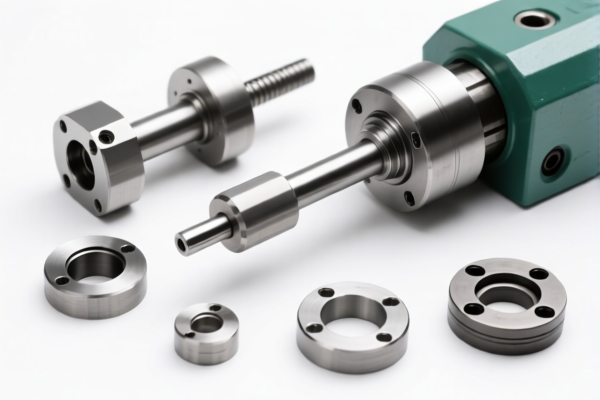
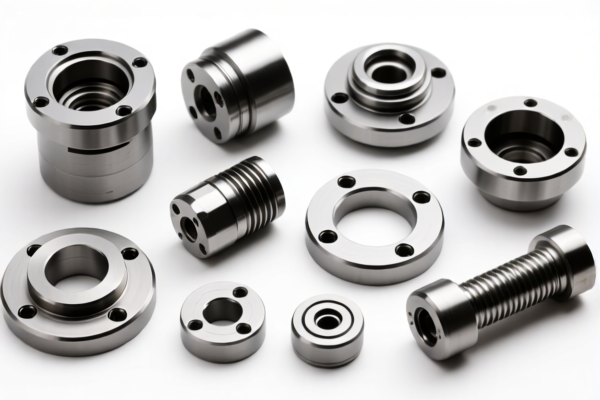
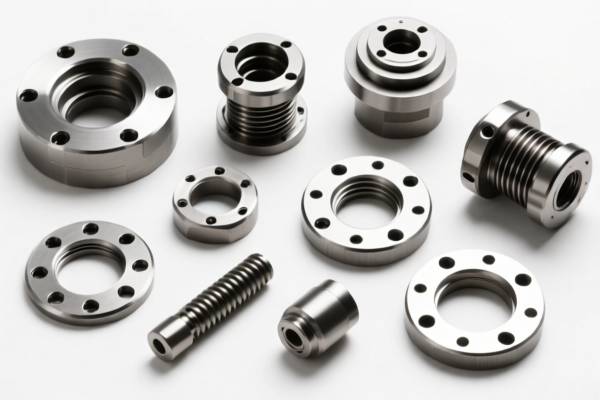
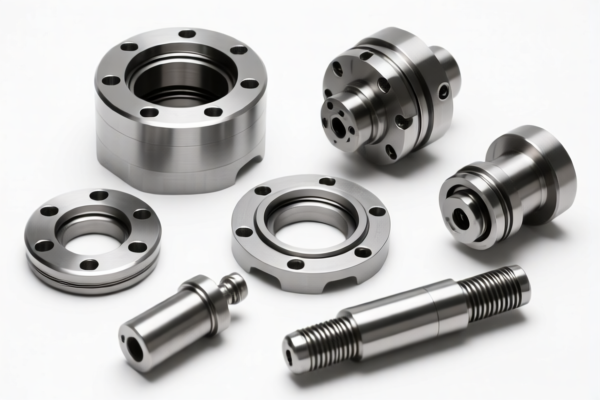
AI分析
🏭 Machine Tool Parts (Industrial Machinery Components)
🌐 HS Code Reference & Clearance Guide | 2026 Latest Tariff Analysis | Professional Clearance Strategy
📌 I. Product Definition and Classification: What Exactly are "Machine Tool Parts"?
"Machine Tool Parts" is a broad and often misleading term in international trade. It refers to components designed specifically for the operation, maintenance, or extension of machine tools (such as lathes, milling machines, grinders, and presses) or other mechanical appliances. However, misclassification is the #1 cause of customs delays and fines because these parts can fall into drastically different chapters depending on their function, specificity, and material.
⚠️ Critical Distinction:
- If the part is specifically designed for a machine in Chapter 84 (e.g., spindle parts for a lathe) → It usually falls under 8448.
- If the part is a general mechanical component with independent function or no specific machine tool application → It may fall under the 8479 "catch-all" category.
- If the part is made of steel, aluminum, or copper and falls under Section XV or Specific Steel Articles → It may trigger Section 232 (122 Clauses) tariffs, drastically increasing costs.
📦 II. HS Code Classification Details (Based on Provided Data)
| HS Code | Product Description | Applicable Scenario | Material/Functional Conflict |
|---|---|---|---|
8448.59.50.00 |
Parts & accessories for machines of heading 8447 | Specific to knitting/weaving machinery; Lowest Tax | ✅ No material conflict; highly specific |
8479.90.95.96 |
Parts of machines/appliances with individual functions | General "catch-all" for independent mechanical parts | ⚠️ High Risk: May trigger 122 Clauses if metallic |
8479.89.95.99 |
Other machines & independent functional mechanical appliances | Generic machinery parts; Highest Tax | ⚠️ High Risk: 50% if Steel/Al/Copper; 25% additional tariff |
9403.91.00.80 |
Parts of furniture (Metal/Steel) | Structural supports, legs, frames for furniture | ⚠️ Medium Risk: 25% additional tariff |
9402.90.00.20 |
Parts of medical/functional furniture | Beds, hospital furniture components | ✅ Low Risk: 0% additional tariff |
🔍 Key Insight:
- 8448.59.50.00 is the "Gold Standard" for textile machinery parts with the lowest tax burden (17%).
- 8479 series codes are "catch-all" categories. If your part is a generic mechanical component (not specific to a machine tool heading like 8448), it defaults here.
- 122 Clauses (Section 232) apply if the part is made of Steel, Aluminum, or Copper. This adds 50% on top of other tariffs for certain 8479 codes.
💰 III. 2026 Latest Tariff Rate Breakdown (Detailed Tax Analysis)
✅ Applicable Country: United States (US)
✅ Origin: China (CN)
✅ Effective Date: 2025/2026 (Current Trade Policy)
🎯 1. 8448.59.50.00 —— Parts of Machines of Heading 8447 (Best Case Scenario)
| Item | Content |
|---|---|
| Base Tariff | 0% (ad valorem) |
| USITC Additional Duty | +7.0% (301 Tariff) |
| IEEPA Additional Duty | +10% (China-specific) |
| Section 232 (122 Clause) | N/A (Not applicable to this specific textile machinery code) |
| Total Tax Rate | 17.0% |
| Tax Calculation | CIF Value × 17% |
| De Minimis Eligibility | ❌ No (Deny de minimis for Section 301/232 goods) |
| Legal Basis | USITC:8448.59.50.00 → FOOTNOTE:301.8448 → IEEPA:9903.01.24 |
📌 Explanation:
- This is the most favorable classification for mechanical parts.
- It avoids the 50% Section 232 tariff because it is classified under Chapter 84 (Machinery) rather than Section XV (Metals).
- Total tax is only 17%, making this the optimal HS Code for textile-related machinery parts.
🎯 2. 8479.90.95.96 —— Other Parts of Machines with Independent Functions (High Risk)
| Item | Content |
|---|---|
| Base Tariff | 0% |
| USITC Additional Duty | +25.0% (301 Tariff) |
| IEEPA Additional Duty | +10% |
| Section 232 (122 Clause) | +50% (If made of Steel, Aluminum, or Copper) |
| Total Tax Rate | 85.0% (Base 0% + 25% + 10% + 50%) |
| Tax Calculation | CIF Value × 85% |
| De Minimis Eligibility | ❌ No |
| Legal Basis | USITC:8479.90.95.96 → FOOTNOTE:232.7216 → IEEPA:9903.01.25 |
📌 Explanation:
- WARNING: This is a "catch-all" code. If the part is metallic (Steel/Al/Copper), the 50% Section 232 tariff applies.
- Even if non-metallic, the base is 35% (0% + 25% + 10%).
- 85% is an extremely high tax burden, often exceeding the profit margin of generic machinery parts.
🎯 3. 8479.89.95.99 —— Other Machines & Independent Functional Appliances (Highest Risk)
| Item | Content |
|---|---|
| Base Tariff | 2.5% |
| USITC Additional Duty | +25.0% (301 Tariff) |
| IEEPA Additional Duty | +10% |
| Section 232 (122 Clause) | +50% (If made of Steel, Aluminum, or Copper) |
| Total Tax Rate | 87.5% (2.5% + 25% + 10% + 50%) |
| Tax Calculation | CIF Value × 87.5% |
| De Minimis Eligibility | ❌ No |
| Legal Basis | USITC:8479.89.95.99 → FOOTNOTE:232.7216 → IEEPA:9903.01.25 |
📌 Explanation:
- This code has a base tariff of 2.5% (unlike the 0% in 8479.90).
- Like8479.90.95.96, if the part is metallic, the 50% Section 232 tariff is added.
- Total tax of 87.5% makes this the least desirable classification for importers.
🎯 4. 9403.91.00.80 —— Parts of Furniture (Non-Metallic/Mixed)
| Item | Content |
|---|---|
| Base Tariff | 0% |
| USITC Additional Duty | +25.0% (301 Tariff) |
| IEEPA Additional Duty | +10% |
| Section 232 (122 Clause) | N/A (Not applicable to furniture parts) |
| Total Tax Rate | 35.0% |
| Tax Calculation | CIF Value × 35% |
| De Minimis Eligibility | ❌ No |
| Legal Basis | USITC:9403.91.00.80 → FOOTNOTE:301.9403 → IEEPA:9903.01.24 |
📌 Explanation:
- Applies if the part is structurally a furniture component (e.g., metal legs, frames).
- No Section 232 tariff, but 35% is still significant.
🎯 5. 9402.90.00.20 —— Parts of Medical/Functional Furniture (Lowest Risk)
| Item | Content |
|---|---|
| Base Tariff | 0% |
| USITC Additional Duty | 0.0% |
| IEEPA Additional Duty | +10% |
| Section 232 (122 Clause) | N/A |
| Total Tax Rate | 10.0% |
| Tax Calculation | CIF Value × 10% |
| De Minimis Eligibility | ❌ No |
| Legal Basis | USITC:9402.90.00.20 → IEEPA:9903.01.24 |
📌 Explanation:
- Only applicable if the part is for medical or hospital furniture (e.g., hospital bed parts).
- Lowest tax (10%) among all options, but strictly limited to medical/functional use.
🛠️ IV. Customs Clearance Practical Advice (Real-World Pitfall Guide)
✅ 1. Preparation Checklist (Non-negotiable)
| Document | Required? | Explanation |
|---|---|---|
| ✅ Product Specification Sheet | ✔️ | Must detail dimensions, weight, material (Steel/Al/Copper vs. Plastic/Rubber). |
| ✅ Technical Diagrams | ✔️ | Critical for proving if the part is "specific" (8448) or "general" (8479). |
| ✅ Material Certificate | ✔️ | Essential to avoid Section 232 (122 Clause) penalties if claiming non-metallic. |
| ✅ Commercial Invoice | ✔️ | Must clearly state "Part for [Specific Machine Model]", not just "Machine Part". |
| ✅ Photo of Part & Label | ✔️ | Shows branding, model number, and any markings indicating specific use. |
| ✅ Original Packaging | ✔️ | Avoids suspicion of "parts disguised as machines". |
✅ 2. Declaration Strategy (Key Mnemonics)
🔥 "Specific is 17%, General is 85%, Steel is 50% Extra!"
| Scenario | Correct Declaration | Wrong Practice |
|---|---|---|
| Textile Machine Part (e.g., shuttle, needle) | 8448.59.50.00 |
Declaring as 8479... → Tax jumps from 17% to 85% |
| Generic Gear/Bearing (Steel/Al/Cu) | Avoid 8479 or prepare for 85% tax | Trying to hide material composition → Customs Seizure |
| Furniture Leg | 9403.91.00.80 |
Declaring as 8479 → Unjustified high tax |
| Hospital Bed Screw | 9402.90.00.20 |
Declaring as 8479 → Missed 10% opportunity |
✅ 3. Special Case Handling
| Situation | Handling Advice |
|---|---|
| Part is Metallic (Steel/Al/Cu) | CRITICAL: If classified under 8479, expect 50% Section 232 tariff. Try to justify if it falls under 8448 (specific machinery) to avoid Section 232. |
| Part is Non-Specific | If the part is used across multiple machine types, it likely falls under 8479. Prepare for 35%-85% tax. |
| Part is for Furniture | If it looks like a machine part but is for a chair/table, declare as 9403. Do not use 8479. |
| Part is for Medical Bed | Declare as 9402.90.00.20 for 10% tax. Provide medical equipment documentation. |
🌍 V. Global Market Clearance Comparison (2026)
| Country/Region | Recommended HS Code | Tariff Rate | Certification | Notes |
|---|---|---|---|---|
| 🇺🇸 USA | 8448.59.50.00 |
17% (if textile-specific) | None | Avoid 8479 if metallic (85% tax) |
| 🇨🇳 China | 8448.59.50.00 |
5-10% | CCC (if applicable) | No Section 301/232 tariffs |
| 🇪🇺 EU | 8448.59.50.00 |
0-4.5% | CE Marking | No Section 232 equivalent |
| 🇲🇽 Mexico | 8448.59.50.00 |
0% (under USMCA) | None | Best alternative for US-bound goods |
| 🇻🇳 Vietnam | 8448.59.50.00 |
0% (under EVFTA/USMCA) | None | Consider supply chain shift |
📌 Conclusion:
- USA is the most expensive market due to Section 301 (10-25%) and Section 232 (50%) tariffs.
- Mexico and Vietnam offer 0% tariffs under free trade agreements, making them attractive for re-export to the US.
📌 VI. Common Errors & Pitfalls (Lessons Learned)
❌ Error 1: Declaring a Steel Bearing as a "General Mechanical Part" under 8479.90.95.96
👉 Consequence: 50% Section 232 tariff added → Total tax 85%.
✅ Fix: Verify if the bearing is specific to a machine tool. If not, consider alternative markets or suppliers.
❌ Error 2: Using "Machine Part" as the product name
👉 Consequence: Customs cannot determine specificity → Flags for manual examination → Delay + Potential misclassification.
✅ Fix: Use precise names: "Spindle Housing for CNC Lathe, Model X" or "Knitting Machine Needle, Type Y".
❌ Error 3: Ignoring Material Composition
👉 Consequence: Customs suspects Steel/Al/Cu → Applies 50% Section 232 automatically.
✅ Fix: Provide Material Certificates proving non-metallic content if claiming lower tax codes.
🎯 VII. Conclusion: Precision Classification Saves Money!
🎯 Remember the Mantra:
🔹 "Specific is 17%, General is 85%, Steel is 50% Extra!"
🔹 "If it's for a machine, prove it. If it's steel, pay 50% more."
📌 Pro Tip:
If your parts are generic and metallic, consider:
1. Shifting supply chain to Mexico/Vietnam (0% US tariff).
2. Applying for a Tariff Classification Ruling from US CBP before shipment.
3. Re-engineering parts to be non-metallic (plastic/composite) to avoid Section 232.
📣 Immediate Action:
📞 Consult a customs broker with specific technical diagrams.
📦 Clearly label material composition on all packaging.
🚀 Avoid the 85% Trap: Choose8448if possible, or accept the cost of8479.
✨ Professional clearance starts with precise classification!
💼 Your profit margin depends on your HS Code!
用户评价
关于 HS 编码归类
协调制度(HS)是由世界海关组织(WCO)制定的国际贸易商品分类标准。全球 200 多个国家采用 HS 系统作为海关关税、贸易统计和进出口监管的基础。
每个 HS 编码遵循以下层级结构:
- 章(2 位)——商品大类(例如:第 84 章:机器和机械设备)
- 品目(4 位)——章内的更具体分类
- 子目(6 位)——国际通用细分,所有 WCO 成员国统一使用
- 本国细分(8-10 位)——各国自行扩展的细分编码,如美国 HTSUS 10 位编码
正确的 HS 编码归类对于顺利通关、准确缴纳关税和遵守贸易法规至关重要。错误归类可能导致海关延误、多缴关税或罚款。
从CN进口到US时,适用的关税税率可能包括:
- 最惠国(MFN)税率——适用于 WTO 成员国的标准关税税率
- 普通税率——适用于无贸易协定国家
- 贸易救济关税——附加关税,如 301 条款(反倾销)、232 条款(国家安全)或反补贴税
本页内容仅供参考。如需正式归类,请咨询当地海关或持牌报关代理。