Man made fiber woven fabric
CN → US| HS编码 | 关税税率 | 原产国 | 目的国 | 文档 |
|---|---|---|---|---|
| 5407912090 | 49.9% | CN | US | 官方文档 |
| 5512110090 | 24.0% | CN | US | 官方文档 |
| 5513130090 | 49.9% | CN | US | 官方文档 |
| 5513230191 | 49.9% | CN | US | 官方文档 |
| 5407200000 | 35.0% | CN | US | 官方文档 |
商品图片
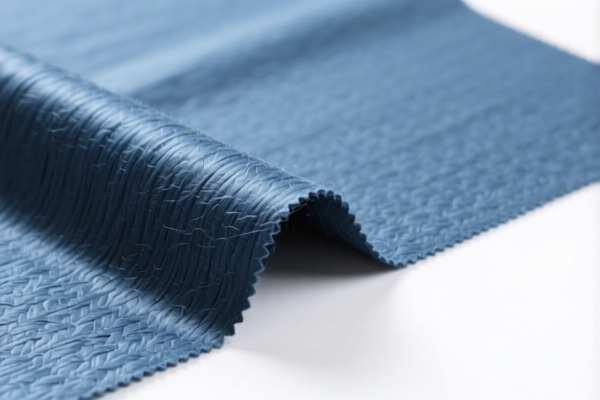
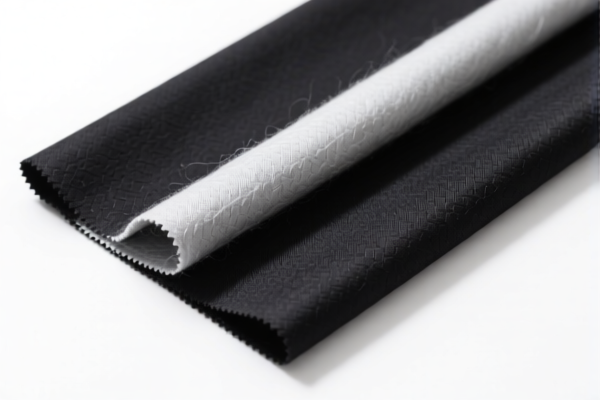
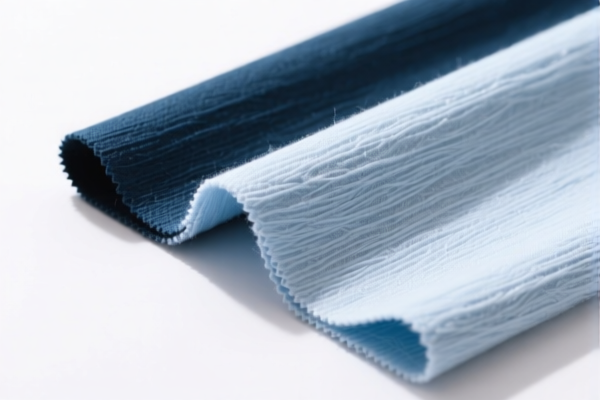
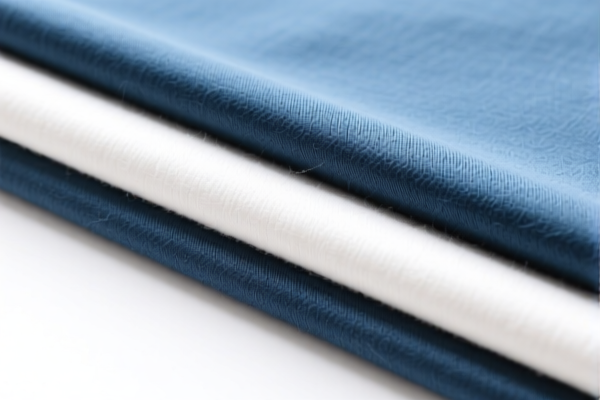
AI分析
🧵 Man-Made Fiber Woven Fabric: HS Code Deep Dive & 2026 Customs Clearance Strategy
🌐 HS Code Reference & Clearance Guide | 2026 Latest Tariff Analysis | Professional Entry Strategy
📌 I. Product Definition & Classification: What is "Man-Made Fiber Woven Fabric"?
"Man-made fiber woven fabric" is a broad category in international trade, encompassing textiles made from synthetic or artificial fibers (such as polyester, nylon, viscose) that are interlaced at right angles.
In customs classification, these fabrics are primarily divided into two main chapters based on fiber length and manufacturing process: 1. Chapter 54: Fabrics made from continuous filaments (long strands, e.g., polyester filament). 2. Chapter 55: Fabrics made from staple fibers (short fibers spun into yarn, e.g., cotton-like polyester).
⚠️ Key Distinction:
- If the fabric is made from filaments (smooth, continuous), it generally falls under HS Code 5407.
- If the fabric is made from staple fibers (textured, spun), it generally falls under HS Code 5512 or 5513.
- Crucial Note: Many entries in the provided data show 5407 and 55xx codes with high combined tariffs (49.9%). This indicates that without specific exemptions or correct subclassification (e.g., weight, weave structure, fiber content), these goods are subject to significant trade barriers.
📦 II. HS Code Classification Details (Based on Provided Data)
The following table outlines the specific HS codes extracted from your data, along with their summaries and tax implications. All listed codes are subject to US Import Regulations (including Section 301 and IEEPA tariffs).
| HS Code | Product Description (Summary) | Total Tax Rate | Tax Composition Details |
|---|---|---|---|
5407.91.20.90 |
Synthetic fiber woven fabric; material & form match; no other conflicting categories. | 49.9% | Base: 14.9% + Section 301: 25.0% + IEEPA (122): 10.0% |
5512.11.00.90 |
Synthetic staple fiber woven fabric; fiber ratio unspecified; classified under "other" subcategories. | 24.0% | Base: 12.0% + Section 301: 2.0% + IEEPA (122): 10.0% |
5513.13.00.90 |
Synthetic fiber woven fabric; no clear process/weight difference; classified under "other" categories. | 49.9% | Base: 14.9% + Section 301: 25.0% + IEEPA (122): 10.0% |
5513.23.01.91 |
Synthetic staple fiber woven fabric; weave structure unspecified; fits "other" categories. | 49.9% | Base: 14.9% + Section 301: 25.0% + IEEPA (122): 10.0% |
5407.20.00.00 |
Synthetic fiber woven fabric; material & form fully match classification explanation. | 35.0% | Base: 0.0% + Section 301: 25.0% + IEEPA (122): 10.0% |
🔍 Critical Observation:
- Most synthetic woven fabrics face a 49.9% total duty rate if they do not qualify for lower base rates or specific exemptions.
-5512.11.00.90is the only entry with a significantly lower rate (24.0%) due to a lower base duty (12.0%) and minimal Section 301 addition (2.0%).
-5407.20.00.00offers a moderate rate (35.0%) because it has a 0% base duty, but still incurs full Section 301 (25%) and IEEPA (10%) taxes.
💰 III. 2026 Latest Tariff Rate Breakdown (Including Surcharge Policies)
✅ Applicable Country: United States (US)
✅ Origin: China (CN)
✅ Effective Date: Post-2025 policies (including ongoing Section 301 and IEEPA measures)
🎯 1. High-Tariff Group: 5407.91.20.90, 5513.13.00.90, 5513.23.01.91
Total Rate: 49.9%
| Item | Detail |
|---|---|
| Base Duty | 14.9% (Ad Valorem) |
| Section 301 Surcharge | +25.0% (Applied to Chinese-origin goods under USITC Footnote 9903.88.01) |
| IEEPA (122) Surcharge | +10.0% (International Emergency Economic Powers Act) |
| Total Effective Rate | 49.9% |
| Calculation Basis | CIF Value × 49.9% |
| De Minimis Exemption | ❌ Not Eligible (Section 321 de minimis does not apply to Section 301/IEEPA goods) |
| Legal Path | USITC:5407.91.20.90 → FOOTNOTE:9903.88.01 → IEEPA:9903.01.25 |
📌 Explanation:
- These codes represent generic "other" synthetic fabrics without specific weight, weave, or fiber content declarations that might qualify for lower base duties.
- The 49.9% rate is a severe cost barrier, making these products highly competitive only at very low FOB prices.
🎯 2. Low-Tariff Anomaly: 5512.11.00.90
Total Rate: 24.0%
| Item | Detail |
|---|---|
| Base Duty | 12.0% (Ad Valorem) |
| Section 301 Surcharge | +2.0% (Significantly reduced compared to 25%) |
| IEEPA (122) Surcharge | +10.0% |
| Total Effective Rate | 24.0% |
| Calculation Basis | CIF Value × 24.0% |
| De Minimis Exemption | ❌ Not Eligible |
| Legal Path | USITC:5512.11.00.90 → FOOTNOTE:9903.88.01 → IEEPA:9903.01.25 |
📌 Note:
- This code applies to synthetic staple fiber fabrics (likely polyester/cotton blends or specific staple compositions).
- The 2.0% Section 301 rate is unusually low, suggesting this subheading may have specific exclusions or a different trade policy treatment. This is the most cost-effective option among the list.
🎯 3. Moderate-Tariff Option: 5407.20.00.00
Total Rate: 35.0%
| Item | Detail |
|---|---|
| Base Duty | 0.0% (Free entry) |
| Section 301 Surcharge | +25.0% (Full rate) |
| IEEPA (122) Surcharge | +10.0% |
| Total Effective Rate | 35.0% |
| Calculation Basis | CIF Value × 35.0% |
| De Minimis Exemption | ❌ Not Eligible |
| Legal Path | USITC:5407.20.00.00 → FOOTNOTE:9903.88.01 → IEEPA:9903.01.25 |
📌 Explanation:
- This code often covers polyester filament fabric with specific characteristics (e.g., unbleached, certain weights).
- While the base duty is free, the 35% total rate is still high due to the 35% sum of surcharges.
🛠️ IV. Customs Clearance Practical Advice (Pitfall Avoidance Guide)
✅ 1. Essential Documentation Checklist
| Document | Required | Purpose |
|---|---|---|
| ✅ Product Specification Sheet | ✔️ | Must detail fiber content (%), weight (GSM), weave type (plain, twill, satin), and width. |
| ✅ Commercial Invoice | ✔️ | Must explicitly state "Woven Fabric, Man-Made Fibers" and HS Code. |
| ✅ Packing List | ✔️ | Include gross/net weight and dimensions to verify weight-based classifications. |
| ✅ Certificate of Origin (CO) | ✔️ | Mandatory for proving Chinese origin (triggers tariffs). |
| ✅ Third-Party Test Report | ✔️ | Recommended to verify fiber content and fabric composition to avoid misclassification. |
✅ 2. Declaration Strategies (Key Tips)
🔥 Golden Rule: "Be Specific on Fiber & Weave; Avoid 'Other' Traps!"
| Scenario | Correct Declaration | Incorrect Declaration | Consequence |
|---|---|---|---|
| Polyester Filament Fabric | 5407.20.00.00 (if matches) |
Generic "Man-Made Fabric" → 5407.91.20.90 |
Tax jumps from 35% to 49.9% |
| Staple Fiber Fabric (Polyester/Cotton) | 5512.11.00.90 (if eligible) |
Generic "Woven Fabric" → 5513.13.00.90 |
Tax jumps from 24% to 49.9% |
| Unspecified Fabric | Provide detailed specs | Vague description | Customs may assess highest duty (49.9%) + penalties |
📌 Critical Tip:
-5512.11.00.90is the best-case scenario for synthetic staple fabrics. Ensure your fabric matches the specific criteria for this subheading (e.g., weight, fiber blend).
-5407.20.00.00is optimal for filament fabrics with 0% base duty. Verify if your fabric qualifies for this specific "0% base" category.
✅ 3. Special Circumstances
| Situation | Recommendation |
|---|---|
| High Volume Imports | Consider Section 301 Exclusion List. Check if your specific HS code + product type was granted an exclusion (though most have expired). |
| Transshipment Risk | Do not attempt to declare as "Made in Vietnam/Malaysia" unless the country-of-origin rules are strictly met. US Customs strictly tracks synthetic fabric origins. |
| Fabric vs. Garment | Ensure the item is unmade fabric. If it is cut pieces or sewn, it may fall under Chapter 61/62 (Garments), which has different (often higher or lower) rates. |
🌍 V. Global Market Comparison (2026)
| Market | Recommended HS Code | Est. Total Duty (China Origin) | Notes |
|---|---|---|---|
| 🇺🇸 USA | 5407.20.00.00 / 5512.11.00.90 |
35% - 49.9% | Heavily impacted by Section 301 & IEEPA. |
| 🇨🇳 China | 5407.20.00.00 |
5% - 15% | Lower base duties; no Section 301. |
| 🇪🇺 EU | 5407.51.00 / 5512.11.00 |
6.5% - 12% | No Section 301; WTO standard rates apply. |
| 🇯🇵 Japan | 5407.42.00 / 5512.11.00 |
0% - 9% | Favorable tariffs under EPA. |
📌 Conclusion:
- The US market is the most expensive for man-made fiber fabrics due to layered tariffs.
- Optimization Strategy:
1. Classify Precisely: Aim for5512.11.00.90(24%) or5407.20.00.00(35%) by proving specific fiber/weave characteristics.
2. Avoid "Other" Codes: Do not use5407.91.20.90or5513.13.00.90unless absolutely necessary, as they incur the maximum 49.9% duty.
3. Pre-Ruling: Apply for a Customs Ruling before shipment to confirm the correct HS code and duty rate.
📌 VI. Common Mistakes & Pitfalls (Lessons Learned)
❌ Mistake 1: Declaring all synthetic fabrics under one generic code.
👉 Result: Customs reclassifies to the highest duty rate (49.9%) + back taxes.
❌ Mistake 2: Ignoring fiber content percentages.
👉 Result: Misclassification between Chapter 54 (Filament) and Chapter 55 (Staple), leading to duty discrepancies.
❌ Mistake 3: Assuming "De Minimis" applies.
👉 Result: Section 301 and IEEPA tariffs cannot be bypassed via $800 de minimis threshold for Chinese goods.
✅ Correct Action:
"Specify Fiber %, Weight, and Weave. Choose the lowest-duty subheading. Verify with Pre-Ruling."
🎯 VII. Conclusion: Professional Classification for Cost Savings
🎯 Key Takeaway:
🔹
5512.11.00.90(24%) and5407.20.00.00(35%) are your best options.
🔹 Avoid5407.91.20.90and5513.13.00.90(49.9%) unless you cannot qualify for the lower-rate codes.
🔹 Documentation is Key: Provide detailed specs to justify your HS code choice.
📣 Immediate Action:
📞 Contact a Licensed Customs Broker to review your fabric specifications.
🚀 Apply for an Advance Ruling to lock in the 35% or 24% rate and avoid the 49.9% penalty.
✨ Precision in Classification Saves Up to 25.9% in Duties!
💼 Don't let generic declarations cost you your margin.
用户评价
关于 HS 编码归类
协调制度(HS)是由世界海关组织(WCO)制定的国际贸易商品分类标准。全球 200 多个国家采用 HS 系统作为海关关税、贸易统计和进出口监管的基础。
每个 HS 编码遵循以下层级结构:
- 章(2 位)——商品大类(例如:第 84 章:机器和机械设备)
- 品目(4 位)——章内的更具体分类
- 子目(6 位)——国际通用细分,所有 WCO 成员国统一使用
- 本国细分(8-10 位)——各国自行扩展的细分编码,如美国 HTSUS 10 位编码
正确的 HS 编码归类对于顺利通关、准确缴纳关税和遵守贸易法规至关重要。错误归类可能导致海关延误、多缴关税或罚款。
从CN进口到US时,适用的关税税率可能包括:
- 最惠国(MFN)税率——适用于 WTO 成员国的标准关税税率
- 普通税率——适用于无贸易协定国家
- 贸易救济关税——附加关税,如 301 条款(反倾销)、232 条款(国家安全)或反补贴税
本页内容仅供参考。如需正式归类,请咨询当地海关或持牌报关代理。