Medical Grade Polypropylene Resin
CN → US| HS编码 | 关税税率 | 原产国 | 目的国 | 文档 |
|---|---|---|---|---|
| 3902100000 | 41.5% | CN | US | 官方文档 |
| 3902300000 | 41.5% | CN | US | 官方文档 |
| 3914002000 | 35.0% | CN | US | 官方文档 |
| 3914006000 | 38.9% | CN | US | 官方文档 |
| 3904220000 | 41.5% | CN | US | 官方文档 |
商品图片

AI分析
🏥 Medical Grade Polypropylene Resin (The "Golden Material" for Life-Saving Devices)
🌐 HS Code Reference & Customs Clearance Guide | 2026 Latest Tariff Analysis | Professional Customs Strategy
📌 I. Product Definition: What is "Medical Grade Polypropylene Resin"?
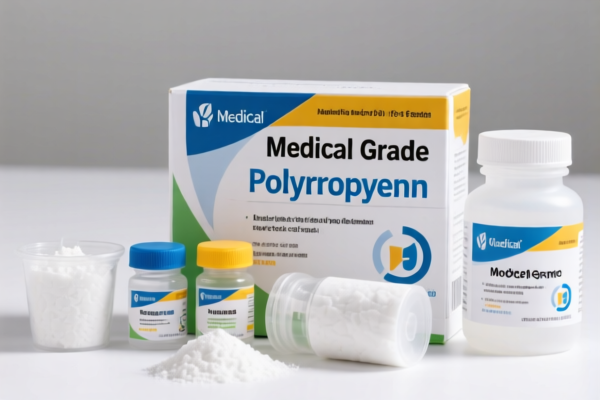
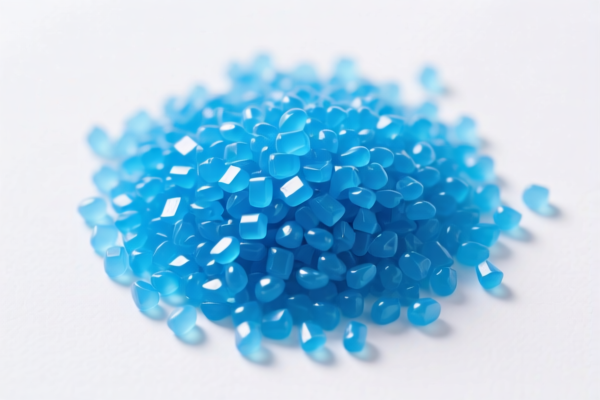
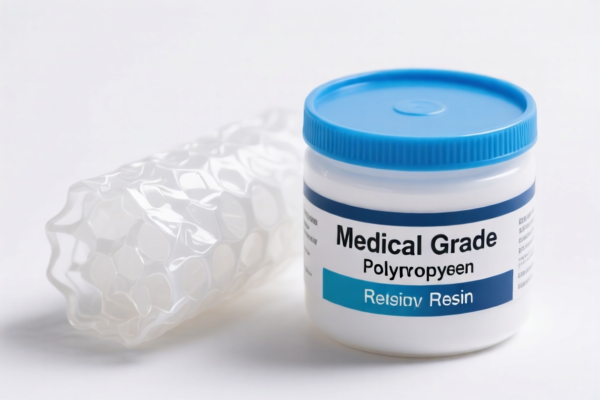
Medical Grade Polypropylene (PP) Resin is a high-performance polymer material specifically engineered for critical healthcare applications. It is characterized by: * Biocompatibility: Non-toxic, hypoallergenic, and compliant with FDA/ISO 10993 standards. * Sterilizability: Withstands steam, ethylene oxide (EtO), and gamma radiation without degrading. * Primary Form: Supplied as raw material (granules, pellets, or powder) for downstream manufacturing of syringes, infusion bags, surgical instruments, and diagnostic components.
In international trade, the classification hinges on the chemical structure (homopolymer vs. copolymer) and the physical form (raw resin vs. processed intermediate). Misclassification can lead to severe tariff penalties due to ongoing US-China trade measures.
📦 II. HS Code Classification Matrix (2026 Latest Tariff Authority)
Based on the provided data, here are the precise classifications for Medical Grade Polypropylene/PVC under current US trade rules.
| HS Code | Product Description | Chemical Structure | Physical Form | Key Classification Logic |
|---|---|---|---|---|
| 3902.10.00.00 | Polypropylene, Homopolymer | Polypropylene (Homopolymer) | Raw Material / Primary Form | Fits definition of "Polymer of Propylene, Primary Form." |
| 3902.30.00.00 | Polypropylene, Copolymer | Propylene Copolymer | Raw Material / Primary Form | Fits definition of "Other Polymer of Propylene, Primary Form." |
| 3914.00.20.00 | Polypropylene, Ion-Exchange/Primary | Polypropylene | Pellets / Raw Material | Classified as "Primary Forms" or ion-exchange agents (specific subheading for PP primary forms). |
| 3914.00.60.00 | Polypropylene, Other Primary Forms | Polypropylene | Pellets / Raw Material | Classified as "Other" primary forms of polymers (generic PP primary form fallback). |
| 3904.22.00.00 | Polyvinyl Chloride (PVC) Resin | PVC (Polyvinyl Chloride) | Resin / Primary Form | Note: Included in data as alternative medical plastic. Fits "Polyvinyl Chloride, Primary Form." |
⚠️ Critical Distinction: * Homopolymer (3902.10) vs. Copolymer (3902.30): Determine the chemical structure. If it's pure PP, use 3902.10. If it’s a blend (e.g., EPDM), use 3902.30. * PP vs. PVC (3904.22): If the material is actually PVC (used for blood bags/tubing), it falls under 3904.22, not 3902. Do not mix these up.
💰 III. 2026 Tariff Rate Breakdown (Detailed Tax Analysis)
✅ Applicable Country: United States (US)
✅ Origin: China (CN)
✅ Effective Date: Current Trade War Measures (Section 301 + IEEPA)
All listed HS Codes are subject to high punitive tariffs due to their origin. Below is the detailed tax structure for each code.
🎯 1. 3902.10.00.00 & 3902.30.00.00 — Polypropylene Resins (Homopolymer & Copolymer)
| Item | Detail |
|---|---|
| Base Duty Rate | 6.5% (Standard MFN Rate) |
| Section 301 Duty | +25.0% (List 3/4A Tariffs) |
| Section 122 Duty | +10.0% (Specific Provision for Certain Plastic Resins) |
| Total Tax Rate | 41.5% |
| Calculation | CIF Value × 41.5% |
| De Minimis Exemption | ❌ NOT Eligible (Value > $800 is taxed; below $800 may be exempt, but bulk imports are fully taxed) |
| Legal Basis Path | 3902.10/30 → USITC Footnote → Section 301: 9903.88.01 → IEEPA: 9903.01.25 |
📌 Explanation:
The 6.5% is the standard WTO base rate for plastic resins. * The 25% is the Section 301 "trade war" tariff on Chinese plastics. * The 10% is a specific additional tariff under Section 122 (or similar executive order provisions) targeting certain chemical inputs. * Total 41.5%* makes this a high-cost input. Cost-saving strategies (duty drawback, free trade agreements) are essential.
🎯 2. 3914.00.20.00 — Polypropylene (Specific Primary Form)
| Item | Detail |
|---|---|
| Base Duty Rate | 0.0% |
| Section 301 Duty | +25.0% |
| Section 122 Duty | +10.0% |
| Total Tax Rate | 35.0% |
| Calculation | CIF Value × 35.0% |
| De Minimis Exemption | ❌ NOT Eligible |
| Legal Basis Path | 3914.00.20 → USITC Footnote → Section 301: 9903.88.01 → IEEPA: 9903.01.25 |
📌 Explanation:
This code has a lower base rate (0%), reducing the total tax burden to 35% (6.5% lower than the 3902 series). * Strategic Tip: If your product qualifies as a "specific primary form" under 3914.20 rather than 3902.10, this is the optimal HS Code* to minimize costs.
🎯 3. 3914.00.60.00 — Polypropylene (Other Primary Forms)
| Item | Detail |
|---|---|
| Base Duty Rate | 3.9% |
| Section 301 Duty | +25.0% |
| Section 122 Duty | +10.0% |
| Total Tax Rate | 38.9% |
| Calculation | CIF Value × 38.9% |
| De Minimis Exemption | ❌ NOT Eligible |
| Legal Basis Path | 3914.00.60 → USITC Footnote → Section 301: 9903.88.01 → IEEPA: 9903.01.25 |
📌 Explanation:
* Use this code if the PP does not fit the specific "ion-exchange" or "primary form" definitions of 3914.20. * It is more expensive than 3914.20 but cheaper than the standard 3902 codes.
🎯 4. 3904.22.00.00 — Medical Grade PVC Resin
| Item | Detail |
|---|---|
| Base Duty Rate | 6.5% |
| Section 301 Duty | +25.0% |
| Section 122 Duty | +10.0% |
| Total Tax Rate | 41.5% |
| Calculation | CIF Value × 41.5% |
| De Minimis Exemption | ❌ NOT Eligible |
| Legal Basis Path | 3904.22 → USITC Footnote → Section 301: 9903.88.01 → IEEPA: 9903.01.25 |
📌 Explanation:
If your product is PVC (e.g., for IV bags, blood storage), do NOT* use PP codes. * The tax rate is identical to the standard PP Homopolymer (41.5%).
🛠️ IV. Customs Clearance Practical Advice (Avoiding Pitfalls)
✅ 1. Documentation Checklist (Mandatory)
| Document | Required? | Purpose |
|---|---|---|
| Certificate of Origin (CO) | ✔️ Essential | Proves Chinese origin (triggers tariffs) or non-Chinese origin (potential exemptions). |
| Product Specification Sheet | ✔️ Essential | Must detail: "Medical Grade," "Sterilizable," "Primary Form (Pellets/Resin)," Chemical Structure (Homo vs. Copolymer). |
| Safety Data Sheet (SDS) | ✔️ Essential | Confirms no hazardous chemicals that would trigger additional EPA/DEA controls. |
| FDA Prior Notice | ✔️ Essential | Medical devices/resins often require FDA Prior Notice before arrival. |
| Bill of Lading / Invoice | ✔️ Essential | Must match HS Code and value exactly. |
✅ 2. Classification Strategy: PP Homopolymer vs. Copolymer vs. 3914
🔥 “Structure Determines Tax, Form Determines Code!”
| Scenario | Recommended HS Code | Tax Rate | Why? |
|---|---|---|---|
| Pure PP Granules | 3902.10.00.00 | 41.5% | Standard homopolymer resin. |
| Blended PP (e.g., with EPDM) | 3902.30.00.00 | 41.5% | Copolymer definition applies. |
| PP Resin classified as "Primary Form" under 3914 | 3914.00.20.00 | 35.0% | Best Option if specs allow. 6.5% savings per unit. |
| PVC Resin (for bags/tubing) | 3904.22.00.00 | 41.5% | Different polymer type. Do not mislabel as PP. |
✅ 3. Critical Customs Risks & Solutions
| Risk | Consequence | Mitigation Strategy |
|---|---|---|
| Misclassification (PP vs. PVC) | Audit, Back Taxes, Fines | Ensure technical specs clearly state "Polypropylene" or "Polyvinyl Chloride." |
| Misclassification (3902 vs. 3914) | Overpayment of 6.5% | Consult with a customs broker to see if your specific PP resin qualifies as a "primary form" under 3914. |
| Origin Fraud | Seizure, Penalties | Do not transship through Vietnam/Malaysia to fake origin. Customs tracks chemical fingerprints. |
| Lack of FDA Prior Notice | Cargo Hold/Return | File FDA Prior Notice 3-5 days before arrival. |
🌍 V. Global Market Comparison (2026 Context)
| Country | HS Code | Tariff (China Origin) | Key Requirement |
|---|---|---|---|
| 🇺🇸 USA | 3902.10 / 3902.30 | 41.5% | FDA Prior Notice, High Compliance |
| 🇺🇸 USA | 3914.00.20 | 35.0% | FDA Prior Notice, High Compliance |
| 🇨🇳 China | 3902.10 | 0% - 2.5% | N/A (Import) |
| 🇪🇺 EU | 3902.10 | 1.5% - 2.5% | REACH Registration, FDA Equivalency |
| 🇯🇵 Japan | 3902.10 | 1.3% - 3.5% | PMDA Registration (if device) |
📌 Conclusion:
USA is the most expensive market due to Section 301 + Section 122 tariffs. * 3914.00.20.00 is the sweet spot for cost reduction if your product qualifies. * EU/Japan* are more favorable but require strict chemical registration (REACH in EU).
📌 VI. Common Mistakes & How to Avoid Them
❌ Mistake 1: Declaring "Plastic Resin" generically.
👉 Fix: Use precise HS codes (3902.10 vs. 3902.30 vs. 3914.20). Generic descriptions lead to audits.
❌ Mistake 2: Confusing PP with PVC.
👉 Fix: Verify the polymer type. PVC (3904.22) is used for flexibility (bags), PP (3902.10) for rigidity (syringes). Wrong code = Wrong Duty.
❌ Mistake 3: Ignoring the 10% Section 122 Duty.
👉 Fix: Many brokers only apply the 25% Section 301. Remember the extra 10%! Total is not 25%, but 35-41.5%.
❌ Mistake 4: Failing to file FDA Prior Notice.
👉 Fix: Medical-grade resins are often considered "food contact" or "device component" adjacent. FDA Prior Notice is mandatory.
🎯 VII. Conclusion: Smart Classification Saves Money
🎯 Key Takeaway:
🔹 “Check the Polymer: Homo is 41.5%, Copolymer is 41.5%, But 3914.20 is 35.0%!”
🔹 “Don’t Forget the 10%: 25% + 10% + Base = High Cost.”
✅ Action Plan: 1. Verify Chemical Structure: Is it Homopolymer, Copolymer, or Can it be classified as Primary Form (3914)? 2. Optimize Code: If possible, use 3914.00.20.00 to save 6.5%. 3. Prepare Docs: SDS, CO, FDA Prior Notice, and Spec Sheets. 4. Budget High: Assume 35-41.5% duty in the US.
📣 Immediate Action:
📞 Consult a Customs Broker to review your SDS and Technical Specs.
🚀 Apply for Advance Ruling if possible to lock in the 35% rate for 3914.00.20.00.
✨ Precision Classification = Maximum Profit.
💼 Don’t let a 6.5% difference cost you your margin!
用户评价
关于 HS 编码归类
协调制度(HS)是由世界海关组织(WCO)制定的国际贸易商品分类标准。全球 200 多个国家采用 HS 系统作为海关关税、贸易统计和进出口监管的基础。
每个 HS 编码遵循以下层级结构:
- 章(2 位)——商品大类(例如:第 84 章:机器和机械设备)
- 品目(4 位)——章内的更具体分类
- 子目(6 位)——国际通用细分,所有 WCO 成员国统一使用
- 本国细分(8-10 位)——各国自行扩展的细分编码,如美国 HTSUS 10 位编码
正确的 HS 编码归类对于顺利通关、准确缴纳关税和遵守贸易法规至关重要。错误归类可能导致海关延误、多缴关税或罚款。
从CN进口到US时,适用的关税税率可能包括:
- 最惠国(MFN)税率——适用于 WTO 成员国的标准关税税率
- 普通税率——适用于无贸易协定国家
- 贸易救济关税——附加关税,如 301 条款(反倾销)、232 条款(国家安全)或反补贴税
本页内容仅供参考。如需正式归类,请咨询当地海关或持牌报关代理。