Medical Instrument
CN → US| HS编码 | 关税税率 | 原产国 | 目的国 | 文档 |
|---|---|---|---|---|
| 9021908100 | 10.0% | CN | US | 官方文档 |
| 9018195500 | 35.0% | CN | US | 官方文档 |
| 9018907520 | 35.0% | CN | US | 官方文档 |
| 9021908100 | 10.0% | CN | US | 官方文档 |
| 9018195500 | 35.0% | CN | US | 官方文档 |
商品图片
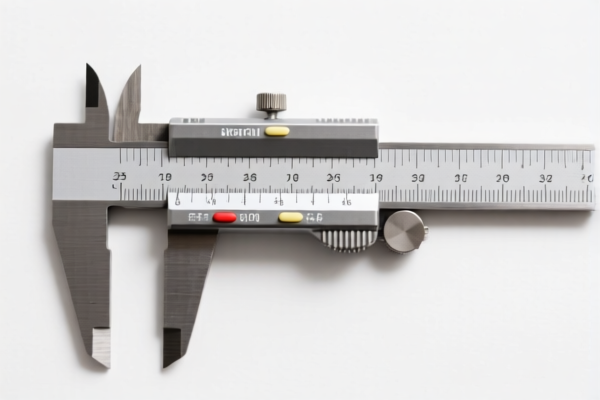
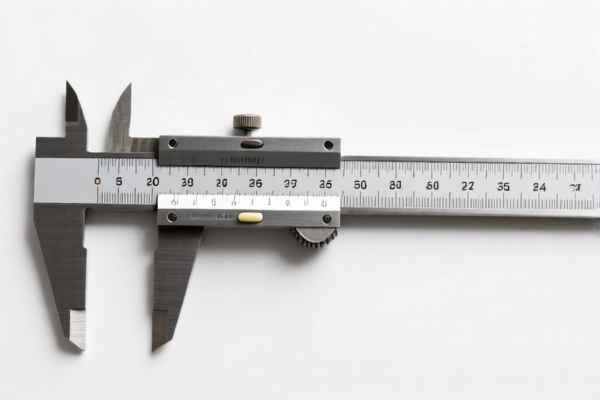
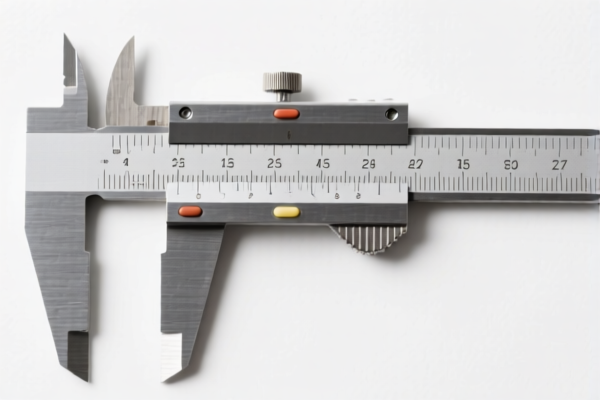
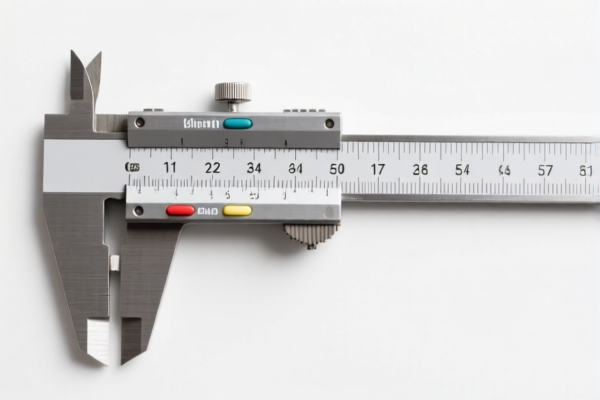
AI分析
🏥 Medical Instruments: HS Code Classification & Customs Clearance Strategy (2026 Guide)
🌐 HS Code Reference & Customs Strategy | 2026 Latest Tariff Analysis | Professional Clearance Guide
📌 1. Product Definition & Classification: What Exactly Are "Medical Instruments"?
"Medical Instruments and Apparatus" is a broad category encompassing devices used for the diagnosis, treatment, prevention, or compensation of injury or illness. In international trade, these are primarily classified under Chapter 90 of the Harmonized System (HS).
Because the user input is generic ("Medical Instrument and Equipment"), classification depends heavily on specific function, shape, and intended use. The provided data highlights four potential HS codes, ranging from orthopedic/compensatory devices to general medical/surgical instruments and their parts.
⚠️ Key Distinction:
- If the item is a prosthetic, hearing aid, or orthopedic appliance → Likely 9021.90.81.00
- If the item is a surgical, dental, or veterinary instrument/device → Likely 9018 series (e.g., 9018.19.55.00, 9018.90.75.20, 9018.90.75.80)
- Missing Specifics: Without a detailed description (material, specific function), the system defaults to "catch-all" categories based on usage consistency.
📦 2. HS Code Classification Details (Based on Provided Data)
| HS Code | Product Description | Matching Logic | Total Tax Rate |
|---|---|---|---|
9021.90.81.00 |
Orthopedic/Medical Compensatory Devices (e.g., artificial joints, hearing aids, braces) | High Fit: The term "Medical Instrument and Equipment" aligns with "orthopedic devices, artificial parts, hearing aids, and other medical compensatory devices." Since this is a "Other (other)" category, it is considered a likely match absent material conflicts. | 10.0% |
9018.19.55.00 |
Medical/Surgical/Dental/Veterinary Instruments & Apparatus | Exact Fit: The name "Medical Instrument and Equipment" perfectly matches the classification description: "Instruments and apparatus for medical, surgical, dental, or veterinary sciences." | 35.0% |
9018.90.75.20 |
Other Medical Instruments & Apparatus | Likely Fit: The product belongs to the broad "Medical Instrument" category. As the name lacks specific form details, it defaults to the "Other/Catch-all" principle. No material conflict exists, so it is deemed a possible match. | 35.0% |
9018.90.75.80 |
Parts & Accessories for Medical Instruments | Match: Usage is medical; form is spare parts/accessories. Although the material is unspecified, the "spare parts default" principle applies. No obvious material or form conflict with medical instrument parts exists, so it is deemed a match. | 35.0% |
🔍 Critical Insight:
- 9018 Series (35% Total Tax) covers most general medical, surgical, and dental devices and their parts. This is the most common classification for broad "medical instruments."
- 9021 Series (10% Total Tax) is specific to orthopedic/compensatory devices (e.g., braces, artificial limbs, hearing aids). If your product fits this niche, the tax is significantly lower.
- Ambiguity Risk: Since "Medical Instrument and Equipment" is vague, Customs may scrutinize the actual product to determine if it falls under 9018 (higher tax) or 9021 (lower tax).
💰 3. 2026 Tariff Rate Breakdown (Detailed Tax Clauses)
✅ Applicable Country: United States (US)
✅ Origin: China (CN)
✅ Effective Date: November 10, 2025 (for subsequent imports)
🎯 1. 9021.90.81.00 – Orthopedic/Medical Compensatory Devices
| Item | Detail |
|---|---|
| Base Duty Rate | 0.0% (ad valorem) |
| Section 301 (USITC) Additional Duty | 0.0% |
| IEEPA 122 Clause Duty | +10.0% (Targeted at specific Chinese medical/compensatory goods) |
| Total Tax Rate | 10.0% |
| Tax Calculation | CIF Value × 10% |
| De Minimis Eligibility | ❌ Not Eligible (Generally, medical devices are subject to stricter scrutiny; de minimis may be denied or require additional documentation) |
| Legal Basis Path | IEEPA:9903.01.25 → IEEPA:9903.01.24 → USITC:9021.90.81.00 → FOOTNOTE:122_CLAUSE |
📌 Explanation:
- This code benefits from a low base duty (0%) and no Section 301 tariffs.
- The 10% IEEPA tax is the only surcharge.
- Advantage: This is the most tax-efficient option if the product is indeed an orthopedic/compensatory device.
🎯 2. 9018.19.55.00, 9018.90.75.20, 9018.90.75.80 – General Medical Instruments & Parts
| Item | Detail |
|---|---|
| Base Duty Rate | 0.0% (ad valorem) |
| Section 301 (USITC) Additional Duty | +25.0% |
| IEEPA 122 Clause Duty | +10.0% |
| Total Tax Rate | 35.0% |
| Tax Calculation | CIF Value × 35% |
| De Minimis Eligibility | ❌ Not Eligible (High-value medical devices are typically excluded from de minimis thresholds) |
| Legal Basis Path | IEEPA:9901.25 → IEEPA:9903.01.24 → USITC:9018.xxxxxx → FOOTNOTE:9903.88.01 |
📌 Explanation:
- Base Duty: 0% for most medical instruments.
- Section 301 Tariff: 25% applies to a wide range of Chinese-made medical devices and instruments.
- IEEPA Tariff: 10% applies to specific Chinese medical/health products.
- Total: 35%. This is a significant cost increase compared to the 9021 category.
- Note: Codes9018.90.75.20and9018.90.75.80are "other" and "parts" subcategories, but they inherit the same high tariff structure as9018.19.55.00.
🛠️ 4. Customs Clearance Practical Advice (Pitfall Avoidance Guide)
✅ 1. Documentation Checklist (Essential for Clearance)
| Document | Required | Notes |
|---|---|---|
| ✅ Product Specification Sheet | ✔️ | Must detail function, material, dimensions, and intended medical use. |
| ✅ Product Photos | ✔️ | Clear images of the device, labels, and any packaging. |
| ✅ Intended Use Statement | ✔️ | Explicitly state if it’s for diagnosis, treatment, or orthopedic compensation. |
| ✅ FDA Registration/Listing | ✔️ | Critical for US Imports. Most medical instruments require FDA clearance (510(k), PMA, or De Novo). Provide FDA number if applicable. |
| ✅ Commercial Invoice | ✔️ | Must accurately describe the product to match the HS Code claim. |
| ✅ Packing List | ✔️ | Show contents clearly (e.g., "Device + Accessories"). |
| ✅ Certificate of Origin (CO) | ✔️ | Required for origin determination and tariff application. |
✅ 2. Classification Strategy (Key Tips)
🔥 "Be Specific: 'Medical Instrument' is Too Vague!"
| Scenario | Recommended HS Code | Risk |
|---|---|---|
| Orthopedic Brace, Artificial Limb, Hearing Aid | 9021.90.81.00 |
✅ Low Risk if documentation proves compensatory/orthopedic use. Lower Tax (10%). |
| Surgical Scalpel, Dental Drill, Veterinary Scope | 9018.19.55.00 |
✅ Standard Risk. Well-defined medical/surgical use. Higher Tax (35%). |
| Generic "Medical Device" with No Specific Function | 9018.90.75.20 |
⚠️ High Risk. Customs may question the classification. If it doesn’t fit 9018/9021, it could be misclassified. |
| Spare Parts for a Medical Device | 9018.90.75.80 |
✅ Standard Risk. Must prove parts are exclusively for a 9018 device. Higher Tax (35%). |
📌 Critical Reminder:
- Do NOT use "Medical Instrument and Equipment" as the sole description.
- DO specify: "Sterile Surgical Forceps" or "Adjustable Knee Brace" or "Dental Handpiece."
- Misclassification can lead to audits, penalties, and shipment delays.
✅ 3. Special Considerations
| Scenario | Handling Advice |
|---|---|
| FDA Compliance | Non-negotiable. Ensure the product has the necessary FDA registration/510(k) clearance. Without it, the shipment may be refused entry. |
| Material Composition | While the provided data says "no material conflict," Customs may still require material info (e.g., stainless steel, plastic) to confirm HS Code accuracy. |
| OEM/Contract Manufacturing | Provide the end-user’s specification or order to prove the intended medical use. |
| Parts vs. Whole | If shipping "parts," ensure they are not complete devices in disguise. Parts must be clearly identifiable as such (e.g., "replacement tip for ultrasonic scaler"). |
🌍 5. Global Market Comparison (2026 Outlook)
| Country/Region | Recommended HS Code | Estimated Duty (China Origin) | Key Certifications | Notes |
|---|---|---|---|---|
| 🇺🇸 USA | 9018.xxxxxx or 9021.xxxxxx |
10% – 35% | FDA 510(k), CE Mark (if applicable) | High scrutiny on medical devices. IEEPA/301 tariffs apply. |
| 🇨🇳 China | 9018.xxxxxx or 9021.xxxxxx |
0% – 10% | NMPA (China FDA) | Lower duties, but strict NMPA registration required for import. |
| 🇪🇺 EU | 9018.xxxxxx or 9021.xxxxxx |
0% – 4.5% | CE Mark, MDR/IVDR Compliance | No US-style tariffs, but strict MDR compliance needed. |
| 🇬🇧 UK | 9018.xxxxxx or 9021.xxxxxx |
0% – 4.5% | UKCA Mark | Post-Brexit rules apply. |
| 🇦🇺 Australia | 9018.xxxxxx or 9021.xxxxxx |
0% – 5% | TGA Registration | Mandatory TGA listing for most medical devices. |
📌 Conclusion:
- USA has the most complex tariff structure due to IEEPA and Section 301 tariffs.
- Tax Savings Opportunity: If your product is an orthopedic/compensatory device, classify under 9021.90.81.00 to save 25% in duties compared to general medical instruments (9018).
- Compliance is Key: FDA clearance is more critical than HS Code optimization in the US.
📌 6. Common Mistakes & Pitfalls (Lessons Learned)
❌ Mistake 1: Using "Medical Instrument" as the product name without specifics.
👉 Consequence: Customs holds the shipment for classification review → Delays of 2-4 weeks.
❌ Mistake 2: Classifying a general surgical tool as an orthopedic device to save tax.
👉 Consequence: Fraud allegation, back taxes, and penalties. Only use 9021 if the device is truly orthopedic/compensatory.
❌ Mistake 3: Ignoring FDA requirements.
👉 Consequence: Seizure and Destruction of goods at US ports.
❌ Mistake 4: Declaring parts as "machinery" to avoid medical device tariffs.
👉 Consequence: Misclassification penalties if parts are clearly for medical use.
✅ Correct Approach:
"Sterile Surgical Scalpel, Stainless Steel, Intended for Human Surgery, FDA Cleared (510k#:XXXXXXXX)"
"Adjustable Lumbar Support Brace, Intended for Orthopedic Compensation, Not for Use in Surgery"
🎯 7. Final Recommendations: Smart Classification, Cost Optimization
🎯 Remember:
🔹 "Specificity Saves Money: 9021 (10%) vs. 9018 (35%)"
🔹 "FDA First, Then HS Code: No Clearance, No Entry!"
🔹 "Parts Must Be Proven: Don’t Hide Devices as Accessories!"
📌 Pro Tip:
- If your product can be classified under 9021.90.81.00, provide strong evidence (product manuals, clinical usage, orthopedic design) to justify the lower tax rate.
- If it is a general medical instrument, budget for the 35% total duty.
- Always consult with a licensed customs broker and verify FDA status before shipping.
📣 Immediate Action:
📞 Contact a Customs Broker + Provide Product Specifications + Verify FDA Status
🚀 Ensure Smooth Clearance, Avoid Delays, and Optimize Costs!
✨ Professional Clearance Starts with Accurate Classification!
💼 Every Percent of Duty Saved is Pure Profit!
用户评价
关于 HS 编码归类
协调制度(HS)是由世界海关组织(WCO)制定的国际贸易商品分类标准。全球 200 多个国家采用 HS 系统作为海关关税、贸易统计和进出口监管的基础。
每个 HS 编码遵循以下层级结构:
- 章(2 位)——商品大类(例如:第 84 章:机器和机械设备)
- 品目(4 位)——章内的更具体分类
- 子目(6 位)——国际通用细分,所有 WCO 成员国统一使用
- 本国细分(8-10 位)——各国自行扩展的细分编码,如美国 HTSUS 10 位编码
正确的 HS 编码归类对于顺利通关、准确缴纳关税和遵守贸易法规至关重要。错误归类可能导致海关延误、多缴关税或罚款。
从CN进口到US时,适用的关税税率可能包括:
- 最惠国(MFN)税率——适用于 WTO 成员国的标准关税税率
- 普通税率——适用于无贸易协定国家
- 贸易救济关税——附加关税,如 301 条款(反倾销)、232 条款(国家安全)或反补贴税
本页内容仅供参考。如需正式归类,请咨询当地海关或持牌报关代理。