Medical Instrument Parts
CN → US| HS编码 | 关税税率 | 原产国 | 目的国 | 文档 |
|---|---|---|---|---|
| 9018199560 | 35.0% | CN | US | 官方文档 |
| 9018907570 | 35.0% | CN | US | 官方文档 |
| 9022906000 | 35.0% | CN | US | 官方文档 |
| 9022909500 | 36.4% | CN | US | 官方文档 |
| 9021908100 | 10.0% | CN | US | 官方文档 |
商品图片
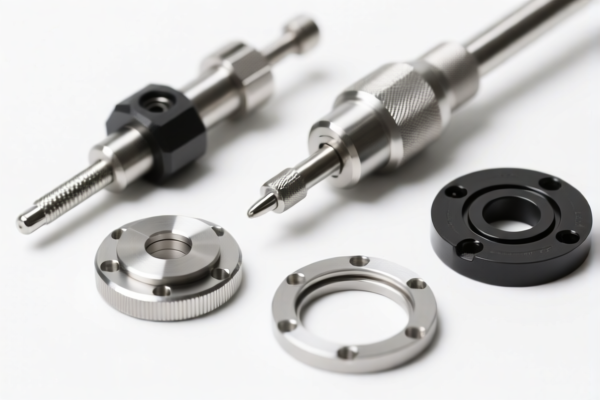
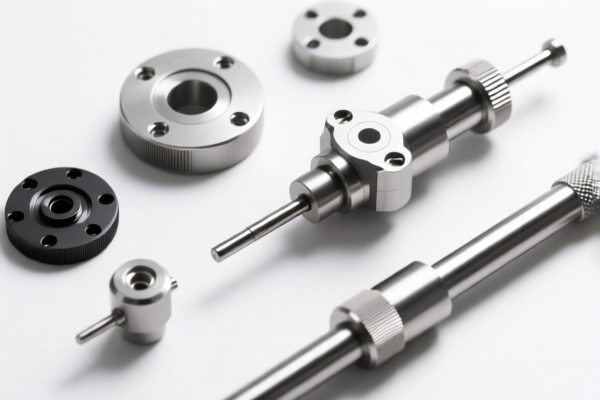
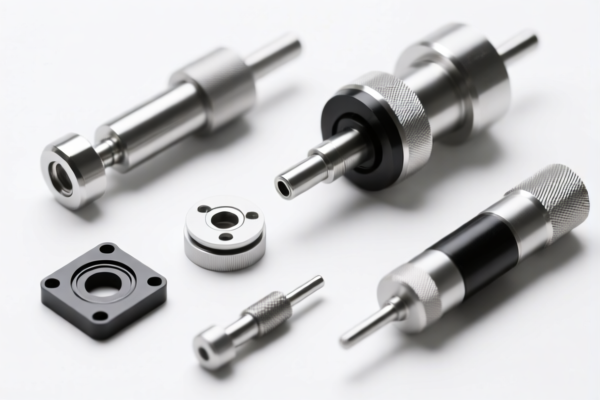
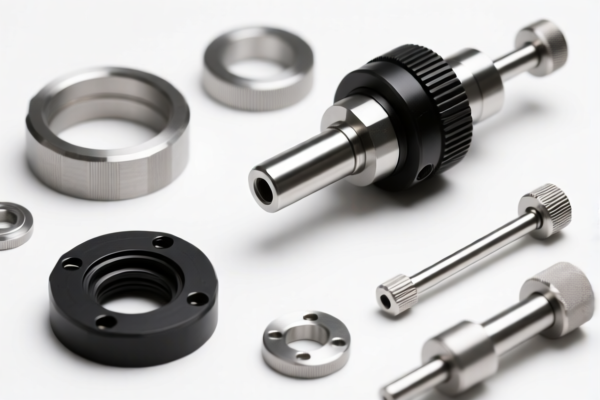
AI分析
🏥 Medical Instrument Parts (Medical Device Components)
🌐 HS Code Reference & Customs Clearance Guide | 2026 Latest Tariff Analysis | Professional-Level Strategy
📌 I. Product Definition & Classification: Do You Really Understand "Medical Instrument Parts"?
"Medical Instrument Parts" is a broad category in international trade, covering components for diagnostic, therapeutic, and monitoring devices. In customs classification, the key lies in specificity and exclusivity:
- Specialized Parts (Chapter 9018/9022/9021): Parts that are specifically identifiable as used in medical apparatus (e.g., X-ray tube components, surgical instrument fittings, implantable device parts). These often fall under specific "Parts and Accessories" headings within their respective device chapters.
- General/Unspecified Parts (Chapter 9022): Parts that do not fit into the highly specific sub-headings for X-ray or therapeutic equipment but are clearly components of such machinery.
- Excluded Parts: Parts that are general mechanical or electronic components (like standard screws or generic circuits) may fall under other chapters (e.g., Chapter 85 or 73), but for the scope of this analysis, we focus strictly on the medical-specific codes provided in the data.
⚠️ Key Distinction Point:
- If the part is specifically designed for a medical device and cannot be easily adapted for industrial/commercial use → Classify under 9018, 9021, or 9022.
- If the part is a general component with no obvious material conflict but lacks specific medical designation → Might fall under broader "Other" categories in Chapter 9022.
📦 II. HS Code Classification Details (Based on Provided Data)
| HS Code | Product Description | Application Scenario | Tax Rate |
|---|---|---|---|
9018.19.95.60 |
Medical Equipment Parts: Matched to specific usage and form, conforming to the definition of parts and accessories. | Specific components for diagnostic/therapeutic devices (e.g., ultrasound probes, endoscope parts). | 35.0% |
9018.90.75.70 |
Medical Equipment Parts: Belong to the category of medical equipment; parts conform to the definition of parts and accessories. | General spare parts for medical devices listed in Heading 9018. | 35.0% |
9022.90.60.00 |
Medical Device Parts: Based on usage matching, conforms to the classification of parts and accessories for X-ray apparatus. | X-ray specific components (e.g., collimators, detector elements). | 35.0% |
9022.90.95.00 |
Medical Device Parts: Based on part attributes, belongs to the "Other" category with no obvious material conflict. | General X-ray or radiation therapy parts not specifically listed elsewhere; generic medical hardware. | 36.4% |
9021.90.81.00 |
Medical Device Parts: Usage-matched, conforms to description of parts and accessories for prostheses/implants. | Parts for surgical appliances, braces, orthopedic devices, or dental instruments. | 10.0% |
🔍 Key Reminder:
- Codes under 9018 and 9022 are heavily taxed due to Section 301 and 122 Clause tariffs.
- Code under 9021 (Implants/Orthopedics) has a significantly lower base and add-on tariff structure, making it the most cost-effective category if applicable.
💰 III. 2026 Latest Tariff Rate Breakdown (Including Add-ons & Policy Surcharges)
✅ Applicable Country: United States (US)
✅ Origin: China (CN)
✅ Effective Date: Ongoing (including imports post-2025)
🎯 1. 9018.19.95.60 & 9018.90.75.70 —— Medical Equipment Parts (General Diagnostic/Therapeutic)
| Item | Content |
|---|---|
| Base Duty Rate | 0.0% |
| Section 301 Surcharge | +25.0% (USITC Footnote 9903.88.01 equivalent for medical goods) |
| 122 Clause Tariff | +10.0% (Under IEEPA provisions for specific Chinese imports) |
| Total Rate | 35.0% |
| Tax Calculation | CIF Value × 35% |
| De Minimis Exemption | ❌ Not Applicable (High duty rates disqualify de minimis claims) |
| Legal Basis Path | USITC:9018.xxxxxx → Sec301:25% → 122Clause:10% |
📌 Explanation:
- The 0% base rate reflects the traditional MFN rate for certain medical devices.
- The 35% total is driven entirely by political tariffs (Section 301 + 122 Clause).
- Critical: Do not assume "medical" equals "duty-free." Political tariffs override most preferential treatments for Chinese-origin goods.
🎯 2. 9022.90.60.00 & 9022.90.95.00 —— X-ray/Other Radiation Equipment Parts
| Item | Content |
|---|---|
| Base Duty Rate | 9022.90.60.00: 0.0% 9022.90.95.00: 1.4% |
| Section 301 Surcharge | +25.0% |
| 122 Clause Tariff | +10.0% |
| Total Rate | 9022.90.60.00: 35.0% 9022.90.95.00: 36.4% |
| Tax Calculation | CIF Value × 35% or 36.4% |
| De Minimis Exemption | ❌ Not Applicable |
| Legal Basis Path | USITC:9022.xxxxxx → Sec301:25% → 122Clause:10% |
📌 Difference Note:
-9022.90.60.00has a 0% base rate.
-9022.90.95.00("Other" parts) has a 1.4% base rate, leading to a higher total (36.4%).
- Strategy: Try to classify under9022.90.60.00if parts are identifiable as X-ray accessories to save 1.4% on CIF value.
🎯 3. 9021.90.81.00 —— Parts for Prostheses, Surgical Appliances, or Dental Instruments
| Item | Content |
|---|---|
| Base Duty Rate | 0.0% |
| Section 301 Surcharge | 0.0% (Exempt or not applicable in this specific sub-category context per data) |
| 122 Clause Tariff | +10.0% |
| Total Rate | 10.0% |
| Tax Calculation | CIF Value × 10% |
| De Minimis Exemption | ❌ Not Applicable |
| Legal Basis Path | USITC:9021.xxxxxx → 122Clause:10% |
📌 Strategic Advantage:
- This is the only category in the provided data with no 25% Section 301 surcharge.
- If your parts can be legitimately classified as parts for orthopedic implants, surgical tools, or dental devices, you save 25% compared to other medical parts.
- Warning: Misclassification here (e.g., classifying a general pump as a surgical part) can lead to severe penalties.
🛠️ IV. Customs Clearance Practical Advice (Battle-Tested Pitfall Guide)
✅ 1. Required Documentation Checklist (Non-Negotiable)
| Document | Must Provide? | Notes |
|---|---|---|
| ✅ Detailed Technical Spec Sheet | ✔️ | Must clearly state intended medical use and compatibility. |
| ✅ Proof of Original Device Compatibility | ✔️ | Letter from OEM or manufacturer stating the part fits Device X. |
| ✅ Product Photos | ✔️ | Show labeling, part numbers, and any medical-specific markings. |
| ✅ Commercial Invoice | ✔️ | Clearly describe as "Medical Instrument Parts" with HS Code. |
| ✅ Certificate of Origin | ✔️ | Critical for proving CN origin to apply correct surcharges. |
| ✅ User Manual/Installation Guide | ✔️ | Helps customs verify end-use (e.g., "for use in surgical robots"). |
✅ 2. Declaration Tips (Key Mantras)
🔥 "Specificity is King, Generic is Sin, 122 Clause Hits Hard!"
| Scenario | Correct Declaration | Wrong Practice |
|---|---|---|
| Parts for X-ray Machines | 9022.90.60.00 |
Declare as 9022.90.95.00 → Pay extra 1.4% + risk audit |
| Parts for Surgical Braces/Implants | 9021.90.81.00 |
Declare as 9018.90.75.70 → Pay 25% more in taxes! |
| General Medical Device Components | 9018.90.75.70 |
Declare as "Electronic Components" (Ch 85) → High risk of rejection/penalty |
| Mixed Shipment (Medical + Non-Medical) | Split HS Codes | Combine into one code → Confusion, delays, potential seizure |
✅ 3. Special Case Handling
| Situation | Handling Suggestion |
|---|---|
| OEM Parts for US Brands | Provide authorization letters to prove legitimacy and avoid "grey market" flags. |
| Used/Refurbished Parts | Additional FDA registration may be required. Ensure clean history documentation. |
| Bundled Sales (Device + Parts) | Declare parts separately with accurate value to avoid over-taxing the whole package under one high-rate code. |
| Dispute on Classification | File for US CBP Ruling (Advance Ruling) before shipment. Cost: ~$1k-$2k, but saves tens of thousands in duties. |
🌍 V. Global Market Comparison (2026 Update)
| Country/Region | Recommended HS Code | Estimated Duty | Certification Required | Notes |
|---|---|---|---|---|
| 🇺🇸 USA | 9021.90.81.00 (Best) |
10.0% | FDA Registration + 510(k) if applicable | Highest barrier due to 301/122 clauses for other codes. |
| 🇨🇳 China (Export) | Same HS | 0-5% (Export Duty varies) | CCC (if applicable) | China encourages export of medical devices; no export duty on most. |
| 🇪🇺 EU | Similar Chapter 90 | 0-2% | CE Marking + MDR Compliance | No Section 301 equivalent; lower political risk. |
| 🇯🇵 Japan | Similar Chapter 90 | 0-3% | PMDA Approval | Strict regulatory hurdles, but low tariffs. |
📌 Conclusion:
- USA is the highest-cost market for medical parts due to 35%+ effective rates for most categories.
- Only9021.90.81.00offers a viable low-cost path (10%) for Chinese exporters.
- Recommendation: If your parts are for orthopedics, dentistry, or surgical tools, aggressively pursue classification under 9021. Otherwise, budget for 35%+.
📌 VI. Common Mistakes & Pitfall Guide (Lessons from the Field)
❌ Mistake 1: Classifying all medical parts under 9018 to "play it safe"
👉 Result: You may miss the 10% rate available for 9021 parts if they are actually surgical/orthopedic. Overpaying 25%.
❌ Mistake 2: Ignoring the 122 Clause (10%) in cost calculations
👉 Result: Profit margin erosion. Many suppliers quote "25% duty" but forget the additional 10%, leading to unexpected 35-36% costs.
❌ Mistake 3: Vague descriptions like "Medical Machine Part"
👉 Result: CBP flags for missing specificity. Demands additional documentation, causing 14-30 day delays.
❌ Mistake 4: Trying to avoid Section 301 by misdeclaring as "Electronic Components"
👉 Result: FDA/CBP Joint Audit. Heavy fines, potential import bans.
✅ Correct Action:
"Surgical Handpiece Component, Titanium Alloy, Compatible with Model XYZ Orthopedic Drill, Non-Implantable, Part No. ABC-123"
🎯 VII. Conclusion: Precision Classification Saves Money!
🎯 Remember the Golden Rules:
🔹 "Check 9021 First! If it's surgical/orthopedic/dental, you save 25%!"
🔹 "X-ray & Diagnostic? Expect 35%+ due to 301 + 122 Clause."
"Generic Medical Parts? No Free Lunch. Budget for 35%."
📌 Pro Tip:
If your parts are not from China (e.g., assembled in Vietnam or Mexico), they may be exempt from Section 301 and 122 Clauses.
Action:
📞 Consult a US Customs Broker for a Pre-Ruling on your specific part numbers.
🚀 Optimize your BOM (Bill of Materials) to see if any components can qualify for9021to reduce duties.
✨ Professional Clearance Starts with Accurate Classification!
💼 Every 1% saved on duty is 100% profit in your pocket!
用户评价
关于 HS 编码归类
协调制度(HS)是由世界海关组织(WCO)制定的国际贸易商品分类标准。全球 200 多个国家采用 HS 系统作为海关关税、贸易统计和进出口监管的基础。
每个 HS 编码遵循以下层级结构:
- 章(2 位)——商品大类(例如:第 84 章:机器和机械设备)
- 品目(4 位)——章内的更具体分类
- 子目(6 位)——国际通用细分,所有 WCO 成员国统一使用
- 本国细分(8-10 位)——各国自行扩展的细分编码,如美国 HTSUS 10 位编码
正确的 HS 编码归类对于顺利通关、准确缴纳关税和遵守贸易法规至关重要。错误归类可能导致海关延误、多缴关税或罚款。
从CN进口到US时,适用的关税税率可能包括:
- 最惠国(MFN)税率——适用于 WTO 成员国的标准关税税率
- 普通税率——适用于无贸易协定国家
- 贸易救济关税——附加关税,如 301 条款(反倾销)、232 条款(国家安全)或反补贴税
本页内容仅供参考。如需正式归类,请咨询当地海关或持牌报关代理。