Medicinal Cork Stopper
CN → US| HS编码 | 关税税率 | 原产国 | 目的国 | 文档 |
|---|---|---|---|---|
| 4504104700 | 35.0% | CN | US | 官方文档 |
| 4503106000 | 35.0% | CN | US | 官方文档 |
| 3926909989 | 22.8% | CN | US | 官方文档 |
| 4503102000 | 35.0% | CN | US | 官方文档 |
| 4502000000 | 35.0% | CN | US | 官方文档 |
| 4504104500 | 35.0% | CN | US | 官方文档 |
商品图片
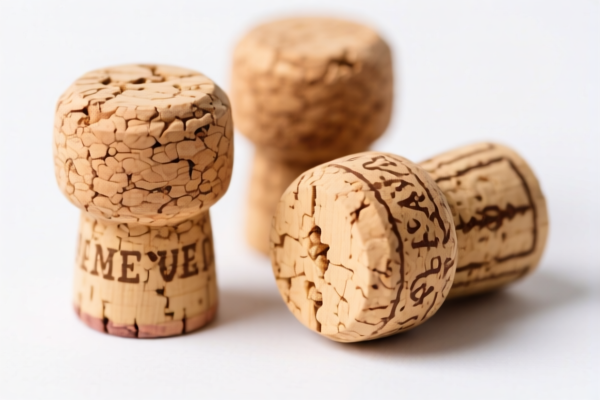
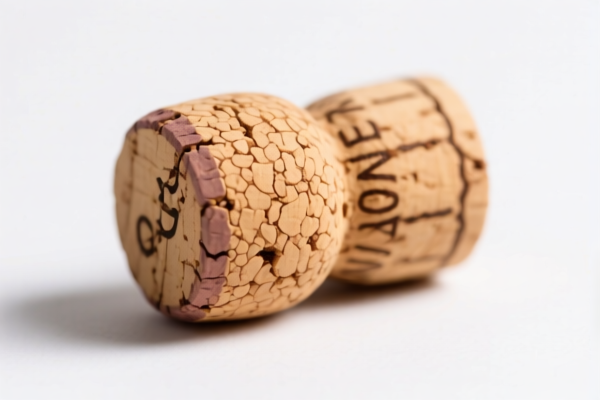
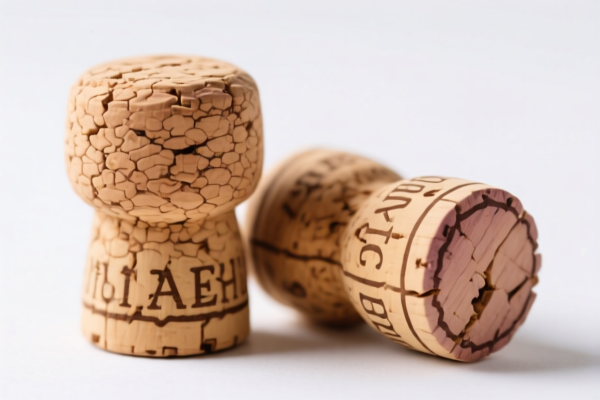
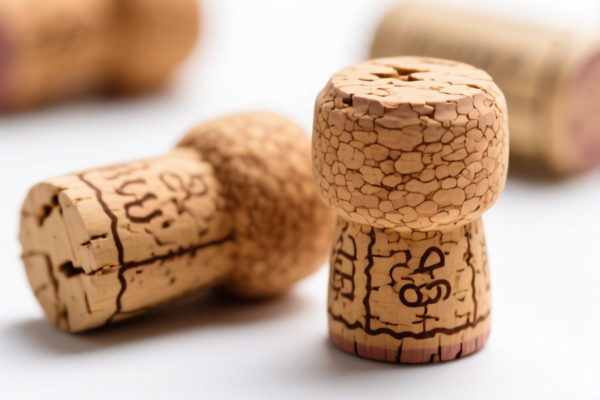
AI分析
🍷 Medicinal Cork Stopper: Precision Classification & US Customs Clearance Guide
🌐 HS Code Reference & Clearance Strategy | 2026 Latest Tariff Analysis | Professional Level Compliance
📌 One, Product Definition & Classification Logic: What Exactly is "Medicinal Cork"?
"Medicinal Cork Stopper" refers to stoppers made from cork (natural or agglomerated) or composite materials used specifically for sealing medicinal bottles, vials, or pharmaceutical containers. In international trade, classification depends heavily on material composition and degree of processing.
Natural Cork vs. Agglomerated/Composite Cork: * Natural Cork (Block/Tubular): Derived directly from the bark of the Quercus suber (cork oak). If processed simply into cylinders or plugs without complex composite bonding, it falls under Chapter 45 (Cork and manufactures thereof). * Agglomerated/Composite Cork: Made from cork granules bonded with adhesive (natural or synthetic) or mixed with plastic/rubber. If significant plastic/adhesive is present, it may migrate to Chapter 39 (Plastics) or remain in Chapter 45 depending on the "essential character" rule.
⚠️ Key Classification Distinction: * If the product is pure natural cork shaped into a stopper → Chapter 45 (Headings 4502 or 4503). * If the product is a composite (e.g., cork + plastic insert, or agglomerated cork with significant plastic binder) → Chapter 39 (Headings 3926) may apply if the plastic content defines the essential character.
📦 Two, HS Code Classification Details (2026 Latest Tariff Authority Mapping)
| HS Code | Product Description | Material/State | Essential Character |
|---|---|---|---|
4503.10.60.00 |
Cork stoppers and corks | Natural Cork | Natural Cork (Simple processing into stoppers) |
4502.00.00.00 |
Natural cork (in logs, blocks, plates, etc.) | Natural Cork | Raw/Natural Cork (Unworked or simply worked blocks) |
4503.10.20.00 |
Other articles of natural cork | Natural Cork | Other Natural Cork Articles |
4504.10.47.00 |
Agglomerated cork stoppers | Agglomerated/Composite | Agglomerated Cork (Granules bonded) |
3926.90.99.89 |
Other plastic articles/manufactures | Plastic/Composite | Plastic/Resin Dominant (If plastic is essential) |
🔍 Critical Analysis of the DATA Provided: The provided data lists five HS Codes. Here is the logical deduction for each:
4503.10.60.00: The Most Likely Candidate for "Medicinal Cork Stopper"
- Logic: This code specifically covers "Cork stoppers and corks" of natural cork. Medicinal stoppers are a subset of "stopovers." If the stopper is made from natural cork cylinders, this is the correct classification.
- Data Match: "Natural cork material, matching the use of a stopper."
4502.00.00.00: For Raw or Semi-Processed Natural Cork
- Logic: If the "medicinal cork" is supplied as unfinished blocks or plates before being cut into stoppers, it falls here. However, finished stoppers usually go to 4503. This code is included in the data as a related "natural cork article."
- Data Match: "Natural cork material, matching natural cork material and stopper purpose."
4503.10.20.00: Other Natural Cork Articles
- Logic: A residual category for natural cork items that are not specifically "stoppers" but are other cork products. Sometimes customs may use this if the specific "stoper" subheading is disputed, but
4503.10.60is more precise for stoppers.- Data Match: "Natural cork material."
4504.10.47.00: Agglomerated Cork Stoppers
- Logic: Many "medicinal corks" are not solid natural cork but agglomerated cork (cork granules pressed together). This code specifically covers "Agglomerated cork... of a kind used for corks or stoppers." If your product is made from compressed cork dust, this is the correct code.
- Data Match: "Soft cork (agglomerated), matching material soft cork and form stopper."
3926.90.99.89: Plastic/Composite Composite
- Logic: If the "medicinal stopper" contains a significant plastic component (e.g., a plastic ring, a plastic insert, or is a vinyl/plastic stopper misidentified as cork), or if the cork is agglomerated with synthetic resin as the primary binder, it may be classified as a plastic article.
- Data Match: "Inferred as cork/plastic composite material."
💰 Three, 2026 Latest Tariff Rate Details (Including Surcharges & Policy Add-ons)
✅ Applicable Country: United States (US)
✅ Country of Origin: China (CN)
✅ Effective Date: November 10, 2025 (for subsequent imports)
All HS Codes in the provided data carry a Total Tax of 35.0% or 22.8%. The breakdown is identical in structure but differs in base rates.
🎯 1. For Natural Cork Products (4503.10.60.00, 4502.00.00.00, 4503.10.20.00)
Total Tax Rate: 35.0%
| Item | Content |
|---|---|
| Base Duty (MFN) | 0.0% |
| Section 301 Duty | +25.0% (Added tariffs under USITC Footnote) |
| IEEPA Duty (Section 122/Other) | +10.0% (Specific China-related surcharge) |
| Total Ad Valorem Rate | 35.0% |
| Tax Calculation | CIF Value × 35% |
| De Minimis Exemption | ❌ Not Available (High tariff products are typically excluded) |
| Legal Basis Path | USITC:4503.10.60.00 → FOOTNOTE:301 → IEEPA:122/Other |
📌 Explanation: * 0% Base Duty: Natural cork has a very low base duty due to lack of US domestic competition. * 25% Section 301: This is the standard punitive tariff on many Chinese goods. * 10% IEEPA/122 Clause: This additional 10% is a specific surcharge on Chinese-origin goods, bringing the total to 35%. * Impact: Even though the base is 0%, the 35% effective rate is significant.
🎯 2. For Composite/Plastic Cork Products (3926.90.99.89)
Total Tax Rate: 22.8%
| Item | Content |
|---|---|
| Base Duty (MFN) | 5.3% |
| Section 301 Duty | +7.5% |
| IEEPA Duty | +10.0% |
| Total Ad Valorem Rate | 22.8% |
| Tax Calculation | CIF Value × 22.8% |
| De Minimis Exemption | ❌ Not Available |
| Legal Basis Path | USITC:3926.90.99.89 → FOOTNOTE:301 → IEEPA:122/Other |
📌 Explanation: * 5.3% Base Duty: Plastic articles have a moderate base duty. * 7.5% Section 301: A lower surcharge than the 25% for cork, likely due to specific list exclusions or lower priority classification. * 10% IEEPA: The same 10% surcharge applies. * Total 22.8%: Significantly lower than the 35% for natural cork. This is a critical financial difference.
🎯 3. For Agglomerated Cork (4504.10.47.00)
Total Tax Rate: 35.0%
📌 Explanation: * Follows the same 35% structure as natural cork (0% Base + 25% S301 + 10% IEEPA). * Caution: Agglomerated cork is often cheaper to produce but faces the same high tariff burden as natural cork in the US.
🛠️ Four, Customs Clearance Practical Advice (Avoiding Pitfalls)
✅ 1. Preparation Checklist (Non-Negotiable)
| Document | Mandatory? | Description |
|---|---|---|
| ✅ Product Specifications | ✔️ | Detailed composition: % Natural Cork, % Agglomerated, % Plastic/Adhesive. |
| ✅ Composition Statement | ✔️ | Explicitly state: "Made of X% natural cork, Y% synthetic binder." Crucial for choosing between 4503 and 3926. |
| ✅ Product Photos | ✔️ | Close-up of the cross-section to show if it is solid natural cork or agglomerated granules. |
| ✅ Commercial Invoice | ✔️ | Clear description: "Natural Cork Stoppers for Pharmaceutical Use" or "Agglomerated Cork Plugs." |
| ✅ Origin Certificate | ✔️ | Proof of Chinese origin is required to assess the 35% or 22.8% rates accurately. |
✅ 2. Declaration Strategy (Key Mnemonic)
🔥 "Material Defines Code, Code Defines Cost!"
| Scenario | Correct HS Code | Risk if Misdeclared |
|---|---|---|
| Solid Natural Cork Stopper | 4503.10.60.00 |
Misclassifying as plastic (3926) may lead to penalties for undervaluation; misclassifying as agglomerated (4504) may face scrutiny. |
| Compressed Cork Granules (Agglomerated) | 4504.10.47.00 |
If declared as natural cork, customs may inspect and reject if microstructure shows bonding. |
| Cork + Plastic Insert/Coating | 3926.90.99.89 |
If declared as cork, you pay 35% instead of 22.8%. Benefit: Lower tax. But must prove plastic is essential. |
| Pure Plastic Stopper (Misnamed "Cork") | 3926.90.99.89 |
Fraud Risk: If labeled "Cork" but is plastic, it is false declaration. |
✅ 3. Special Considerations for Medicinal Products
- FDA Compliance: While CBP focuses on HS codes, FDA regulates medicinal stoppers. Ensure your "cork stoppers" meet FDA food/drug contact standards (21 CFR). CBP may hold goods if FDA alerts are active.
- Sterilization: If the stoppers are sterile, declare this in the description. It does not change the HS code but may affect inspection priority.
- Composite Advantage: If your product is a cork-plastic composite, consider if the plastic content can be justified to classify under
3926.90.99.89. The 12.2% tax saving (35% vs 22.8%) is substantial. However, you must have documentation proving the plastic component is essential to the function.
🌍 Five, Global Market Comparison (2026)
| Country/Region | Recommended HS Code | Est. Tariff (China Origin) | Notes |
|---|---|---|---|
| 🇺🇸 USA | 4503.10.60.00 (Natural) |
35% | High surcharges (301 + IEEPA). |
| 🇺🇸 USA | 3926.90.99.89 (Composite) |
22.8% | Lower rate if plastic content is significant. |
| 🇪🇺 EU | 4503.10.90 |
0% | No Section 301/IEEPA equivalents. Free trade under certain conditions. |
| 🇨🇳 China | 4503.10.90 |
0-5% | Low entry duty. |
| 🇬🇧 UK | 4503.10.90 |
0% | Post-Brexit tariffs vary, but generally favorable for natural cork. |
📌 Conclusion: * US Market: Tariffs are the biggest cost driver. 35% is high. * Optimization: If feasible, reformulate the stopper to include a functional plastic component to qualify for
3926(22.8%). Or, explore third-party assembly in non-China countries to avoid IEEPA/301 surcharges.
📌 Six, Common Errors & Pitfalls (Lessons Learned)
❌ Error 1: Calling all cork stoppers "Natural Cork" (4503) when they are Agglomerated (4504).
👉 Consequence: Customs may reclassify, delay clearance, or impose penalties for inaccurate description.
❌ Error 2: Ignoring the IEEPA 10% surcharge in cost calculations.
👉 Consequence: Profit margin erosion. The 10% is automatic on Chinese goods for these codes.
❌ Error 3: Misclassifying Composite Stoppers as Natural Cork to avoid plastic reporting.
👉 Consequence: If the product is actually plastic-dominant, you risk fraud allegations. If it is cork-dominant, you pay 35% instead of 22.8%.
✅ Correct Practice:
"Medicinal Cork Stoppers, Composition: 80% Agglomerated Cork, 20% Natural Rubber Binder, Sterile, FDA Compliant, Model: XYZ, Origin: China"
🎯 Seven, Conclusion: Strategic Sourcing & Cost Control
🎯 Key Takeaways:
1. Natural/Agglomerated Cork: Always expect 35% total tax in the US (0% base + 25% + 10%).
2. Plastic/Composite: Consider shifting to 22.8% total tax if product design allows.
3. Documentation is Key: Clear composition statements prevent customs delays.
4. Pre-Ruling: For large volumes, apply for a CBP Binding Ruling to confirm the HS code (4503 vs 4504 vs 3926) and avoid retroactive tax changes.
📣 Immediate Action:
📞 Review Product Formulation: Does it contain plastic? Can it be optimized for
3926? 📄 Update Documentation: Ensure invoices explicitly state material composition. 🚀 Contact Customs Broker: Submit samples for pre-classification analysis.
✨ Professional Clearance, Starts with Accurate Classification! 💼 Every Percentage Point Counts in Tariff Management!
用户评价
关于 HS 编码归类
协调制度(HS)是由世界海关组织(WCO)制定的国际贸易商品分类标准。全球 200 多个国家采用 HS 系统作为海关关税、贸易统计和进出口监管的基础。
每个 HS 编码遵循以下层级结构:
- 章(2 位)——商品大类(例如:第 84 章:机器和机械设备)
- 品目(4 位)——章内的更具体分类
- 子目(6 位)——国际通用细分,所有 WCO 成员国统一使用
- 本国细分(8-10 位)——各国自行扩展的细分编码,如美国 HTSUS 10 位编码
正确的 HS 编码归类对于顺利通关、准确缴纳关税和遵守贸易法规至关重要。错误归类可能导致海关延误、多缴关税或罚款。
从CN进口到US时,适用的关税税率可能包括:
- 最惠国(MFN)税率——适用于 WTO 成员国的标准关税税率
- 普通税率——适用于无贸易协定国家
- 贸易救济关税——附加关税,如 301 条款(反倾销)、232 条款(国家安全)或反补贴税
本页内容仅供参考。如需正式归类,请咨询当地海关或持牌报关代理。