Metal Braided Plastic Tube
CN → US| HS编码 | 关税税率 | 原产国 | 目的国 | 文档 |
|---|---|---|---|---|
| 3917290090 | 38.1% | CN | US | 官方文档 |
| 3926909987 | 22.8% | CN | US | 官方文档 |
| 3917210000 | 38.1% | CN | US | 官方文档 |
| 3926909989 | 22.8% | CN | US | 官方文档 |
商品图片
AI分析
🖥️ Metal Braided Plastic Tube (Plastic Tubing, Reinforced)
🌐 HS Code Reference & Customs Clearance Guide | 2026 Latest Tariff Analysis | Professional Clearance Strategy
📌 I. Product Definition & Classification: What Exactly is a "Metal Braided Plastic Tube"?
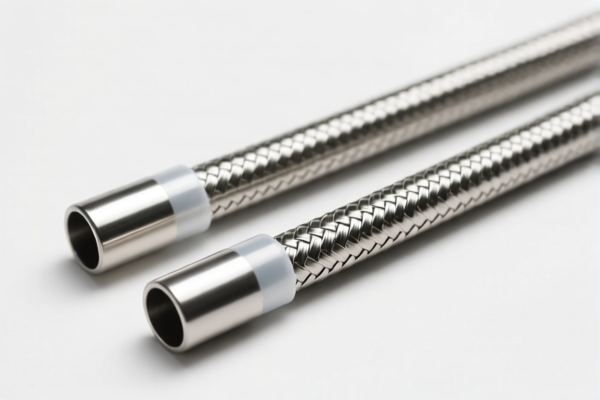
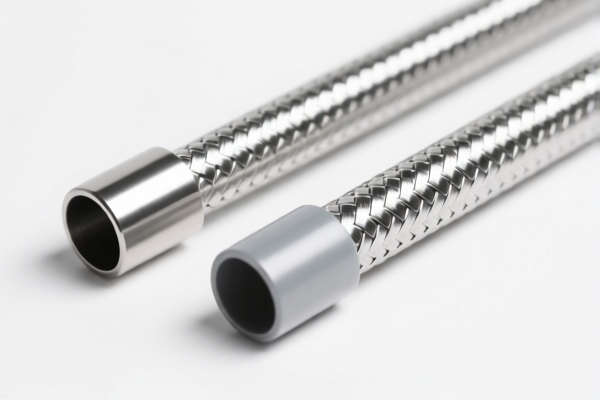
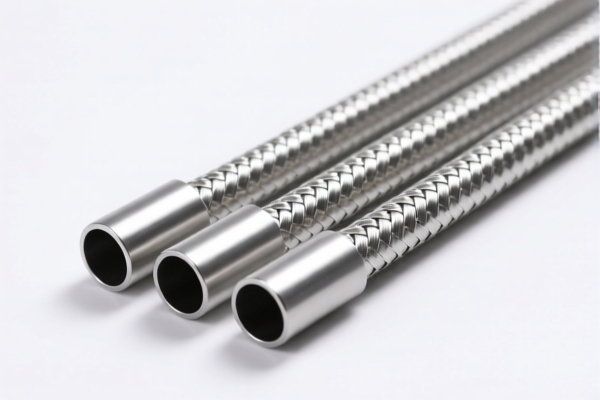
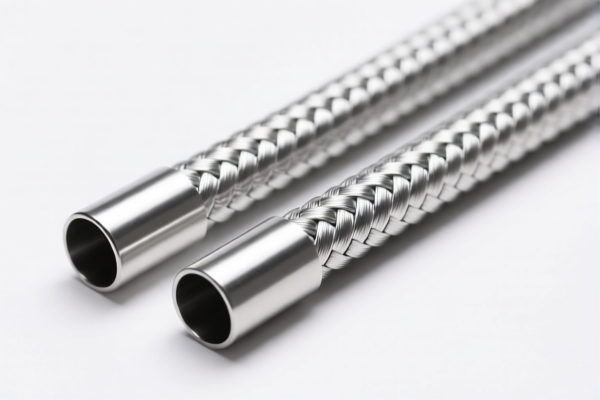
A Metal Braided Plastic Tube is a composite product consisting of a plastic core (inner liner) reinforced with a metal braid (usually stainless steel or brass) for added pressure resistance and durability. In international trade, classification depends heavily on whether the plastic material constitutes the essential character or if the metal reinforcement changes the classification.
Based on the provided data, the product is classified under Chapter 39 (Plastics) because the primary material and form ("Tube") align with plastic articles.
⚠️ Key Distinction:
- If the metal braid is merely for reinforcement and the plastic forms the primary volume and function → Chapter 39 (Plastics).
- If the metal structure is the primary load-bearing element and plastic is just a lining → Could potentially fall under Chapter 73 (Iron/Steel), but the provided data strictly points to Chapter 39 classifications.
- Note: All provided HS codes in the source data fall under Chapter 39, indicating the plastic element is deemed primary for customs purposes in this specific context.
📦 II. HS Code Classification Details (Based on Provided Data)
The following HS codes are derived strictly from the provided <DATA> set. The classification logic focuses on matching the material (Plastic) and form (Tube).
| HS Code | Summary & Classification Logic | Total Tax Rate | Tax Detail Breakdown |
|---|---|---|---|
| 3917.29.00.90 | Match: Matches material (Plastic) and form (Tube). Applicable to plastic tubes of unspecified length. | 38.1% | Base: 3.1% Section 301: 25.0% Section 122: 10% |
| 3926.90.99.87 | Match: Plastic material, tube form. Fits "Other plastic articles" (hard tubes or similar). Considered a catch-all/fallback category for plastic tubes. | 22.8% | Base: 5.3% Section 301: 7.5% Section 122: 10% |
| 3917.21.00.00 | Match: Product name "Plastic" matches material requirements; "Tube" matches form requirements. Successful match for plastic tubes. | 38.1% | Base: 3.1% Section 301: 25.0% Section 122: 10% |
| 3926.90.99.89 | Match: Plastic material complies with HS 3926909989 "Plastic" requirements. Classified as plastic articles. | 22.8% | Base: 5.3% Section 301: 7.5% Section 122: 10% |
🔍 Critical Observation:
- There is a significant tax disparity between 3917.xxxx codes (38.1%) and 3926.xxxx codes (22.8%). - 3917 refers specifically to "Tubes, Pipes and Hoses," while 3926 refers to "Other articles of plastics." - Strategy: If the product can be legitimately classified under 3926, you save 15.3% in duties. However, 3917 is more technically accurate for "Tubes." Customs may challenge the use of 3926 for tubular products.
💰 III. 2026 Latest Tariff Rate Breakdown (Including Surtaxes & Policy Add-ons)
✅ Applicable Country: United States (US)
✅ Origin: China (CN) (Inferred from the specific 122 Section & 301 Section references typical in US-China trade data)
✅ Effective Time: Current 2025-2026 Tariff Regime
🎯 1. High Tax Bracket: 3917.29.00.90 & 3917.21.00.00
Classification: Specific Plastic Tubes/Hoses
| Item | Content |
|---|---|
| Base Tariff | 3.1% (Ad Valorem) |
| Section 301 Surtax | +25.0% (USITC Footnote applicable to Chinese-origin plastics/tubes) |
| Section 122 Surtax | +10.0% (Additional tariff for certain Chinese imports) |
| Total Effective Rate | 38.1% |
| Tax Calculation | CIF Value × 38.1% |
| De Minimis Exemption | ❌ Not Eligible |
| Legal Basis Path | Section 301:3917 → Section 122:3917 → USITC:3917.xxxx |
📌 Explanation:
- The 25% Section 301 tax is a heavy burden on industrial plastic components. - The 10% Section 122 tax adds further cost. - This is a high-cost classification. Misclassification to 3926 is risky but offers savings.
🎯 2. Low Tax Bracket: 3926.90.99.87 & 3926.90.99.89
Classification: Other Plastic Articles (Catch-all)
| Item | Content |
|---|---|
| Base Tariff | 5.3% (Ad Valorem) |
| Section 301 Surtax | +7.5% (Lower surtax rate for "Other Plastic Articles" vs. specific tubes) |
| Section 122 Surtax | +10.0% |
| Total Effective Rate | 22.8% |
| Tax Calculation | CIF Value × 22.8% |
| De Minimis Exemption | ❌ Not Eligible |
| Legal Basis Path | Section 301:3926 → Section 122:3926 → USITC:3926.90.99.8x |
📌 Explanation:
- The Section 301 rate is significantly lower (7.5% vs 25%) for this subheading. - Risk: Customs may argue that "tubes" must be classified under Chapter 39.17 (Tubes/Pipes/Hoses) rather than 39.26 (Other Articles). If challenged, you may face penalties and back-taxes.
🛠️ IV. Customs Clearance Practical Advice (Live Pitfall Avoidance Guide)
✅ 1. Required Documentation Checklist (Non-negotiable)
| Document | Mandatory? | Purpose |
|---|---|---|
| ✅ Product Specification Sheet | ✔️ | Details core material (Plastic type), braid material (Metal type), pressure rating, diameter. |
| ✅ Technical Drawings/Cross-Section | ✔️ | Proves the plastic core is the primary function and metal is reinforcement. Crucial for 3917 vs 73 argument. |
| ✅ Product Photos (Labeled) | ✔️ | Shows the braided exterior and smooth plastic interior. |
| ✅ Commercial Invoice | ✔️ | Must clearly state "Plastic Tube with Metal Reinforcement." |
| ✅ Bill of Lading / Packing List | ✔️ | Consistency in quantity and weight. |
| ✅ Country of Origin Certificate | ✔️ | Required for Section 301 & 122 application. |
✅ 2. Declaration Strategy (Key Mnemonics)
🔥 "Plastic Core, Metal Skin: Declare as Tube, But Check for Fallback!"
| Scenario | Recommended HS Code | Risk Level | Reason |
|---|---|---|---|
| Standard Plastic Tube (Metal Braid Only) | 3917.29.00.90 or 3917.21.00.00 |
🟡 Medium | Technically correct. High tax (38.1%). |
| Complex Plastic Assembly (Not purely tube) | 3926.90.99.87 |
🔴 High Risk | Lower tax (22.8%), but high audit risk if deemed a "tube." |
| Metal Hose with Plastic Liner | 7308 or 8481 |
🔴 High Risk | Not in provided data, but if metal is primary, 3917 is wrong. |
💡 Pro Tip:
If the metal braid is removable or clearly secondary (e.g., thin wire vs. thick plastic wall), emphasize the Plastic Tube nature to justify 3917.
If the product is a custom plastic fitting that happens to be tubular, try 3926 for lower taxes, but be prepared to justify why it's not a standard "tube."
✅ 3. Special Case Handling
| Situation | Handling Advice |
|---|---|
| Mixed Materials (Plastic + Metal) | Provide a material weight ratio. If plastic >50% by weight, Chapter 39 is strong. |
| High-Pressure Industrial Tubes | Usually falls under 3917. Do not try to hide it under 3926 if it's clearly a hose/pipe. |
| Consumer Use (e.g., Aquarium Tubing) | May be more acceptable for 3926 as an "article" rather than industrial "tube." |
| Sample Declaration | Send a sample to a customs broker for Pre-Ruling (Advance Ruling) before bulk shipment. |
🌍 V. Global Market Clearance Comparison (2026 Latest)
| Country/Region | Recommended HS Code (from Data) | Effective Tax Rate | Certification Requirements | Notes |
|---|---|---|---|---|
| 🇺🇸 USA | 3917.29.00.90 / 3926.90.99.87 |
38.1% / 22.8% | FDA (if food/water contact), RoHS | High Section 301/122 taxes apply. |
| 🇨🇳 China | 3917.29.00.00 |
~3-5% | CCC (if applicable) | No Section 301/122 surtaxes. |
| 🇪🇺 EU | 3917.29.00 |
~4-6% | REACH, RoHS | No US-style retaliatory tariffs. |
| 🇬🇧 UK | 3917.29.00 |
~3-5% | UKCA, RoHS | Post-Brexit tariffs may vary. |
| 🇯🇵 Japan | 3917.29.00 |
~0-5% | PSE (if electrical component) | Generally low tariffs for plastics. |
📌 Conclusion:
- USA is the most costly market due to Section 301 (25% or 7.5%) and Section 122 (10%) surcharges. - No other major markets in the provided data context apply these punitive tariffs. - Supply Chain Strategy: If importing to the US, consider transshipment (with caution) or tariff engineering (modifying product to fit 3926 if defensible) to save 15.3%.
📌 VI. Common Errors & Pitfall Guide (Lessons Learned)
❌ Mistake 1: Declaring "Metal Tube" because of the braid.
👉 Consequence: Wrong HS Code (Chapter 73). If plastic is primary, customs will reclassify to 3917 and penalize for misdeclaration.
❌ Mistake 2: Using 3926 for a standard industrial hose to save 15%.
👉 Consequence: Customs audit. If the tube is used for fluid/gas transport under pressure, it must be 3917. Penalty + Back Taxes.
❌ Mistake 3: Ignoring Section 122 Tariff.
👉 Consequence: Underpayment of duty. The 10% Section 122 tariff is mandatory for Chinese-origin goods in many cases.
✅ Correct Practice:
"Plastic Tubing, Reinforced with Stainless Steel Braid, for Industrial Fluid Transfer, Model XYZ, Material: PVC/PE Core, SS Braid, Pressure Rating: 100 PSI"
🎯 VII. Conclusion: Professional Declaration Saves Money!
🎯 Remember the Mnemonic:
🔹 "Plastic Core, Metal Braid: 3917 is Safe, 3926 is Greedy."
🔹 "38% vs 22%: Save 15% if Defensible, Don't Risk the Audit."
🔹 "Section 301 + Section 122 = High Cost; Plan Accordingly."
📌 Pro Tip:
If your product is not intended for high-pressure fluid transport, but rather for structural or decorative purposes, argue for 3926.90.99.87 to benefit from the 22.8% tax rate.
If it is a standard hose/pipe, accept the 38.1% rate under 3917 to ensure compliance.
📣 Immediate Action:
📞 Consult a licensed US customs broker.
📦 Provide detailed cross-section drawings.
📝 Apply for an Advance Ruling if importing large volumes.
🚀 Clear Customs Smoothly, Avoid Penalties, Maximize Profit!
✨ Professional Clearance Starts with Accurate Classification!
💼 Every Percent of Tax Saved is Pure Profit!
用户评价
关于 HS 编码归类
协调制度(HS)是由世界海关组织(WCO)制定的国际贸易商品分类标准。全球 200 多个国家采用 HS 系统作为海关关税、贸易统计和进出口监管的基础。
每个 HS 编码遵循以下层级结构:
- 章(2 位)——商品大类(例如:第 84 章:机器和机械设备)
- 品目(4 位)——章内的更具体分类
- 子目(6 位)——国际通用细分,所有 WCO 成员国统一使用
- 本国细分(8-10 位)——各国自行扩展的细分编码,如美国 HTSUS 10 位编码
正确的 HS 编码归类对于顺利通关、准确缴纳关税和遵守贸易法规至关重要。错误归类可能导致海关延误、多缴关税或罚款。
从CN进口到US时,适用的关税税率可能包括:
- 最惠国(MFN)税率——适用于 WTO 成员国的标准关税税率
- 普通税率——适用于无贸易协定国家
- 贸易救济关税——附加关税,如 301 条款(反倾销)、232 条款(国家安全)或反补贴税
本页内容仅供参考。如需正式归类,请咨询当地海关或持牌报关代理。