Metal Brazing Powder Additive
CN → US| HS编码 | 关税税率 | 原产国 | 目的国 | 文档 |
|---|---|---|---|---|
| 3810100000 | 40.0% | CN | US | 官方文档 |
| 8311900000 | 35.0% | CN | US | 官方文档 |
| 8311306000 | 35.0% | CN | US | 官方文档 |
| 3810905000 | 40.0% | CN | US | 官方文档 |
| 3811900000 | 41.5% | CN | US | 官方文档 |
商品图片
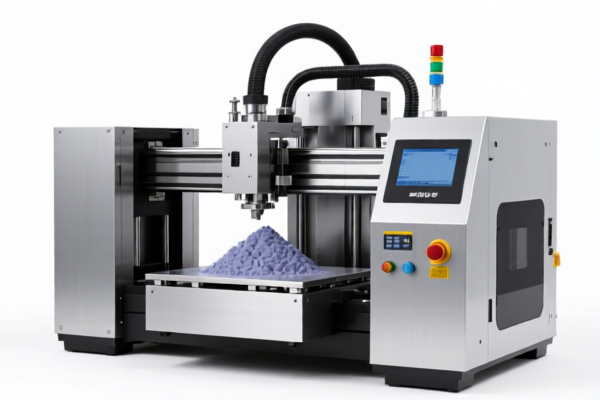
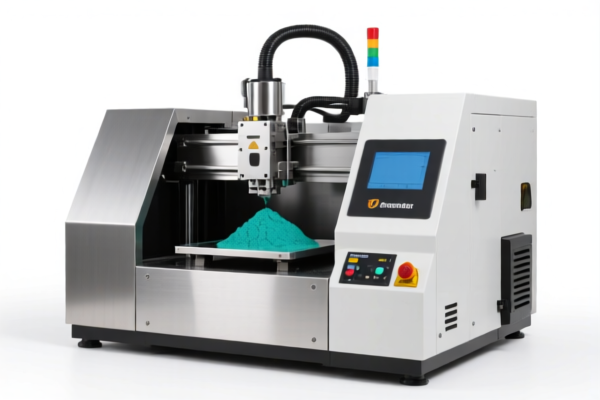
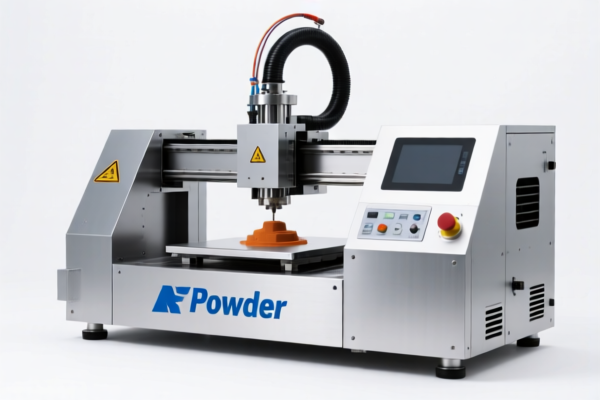
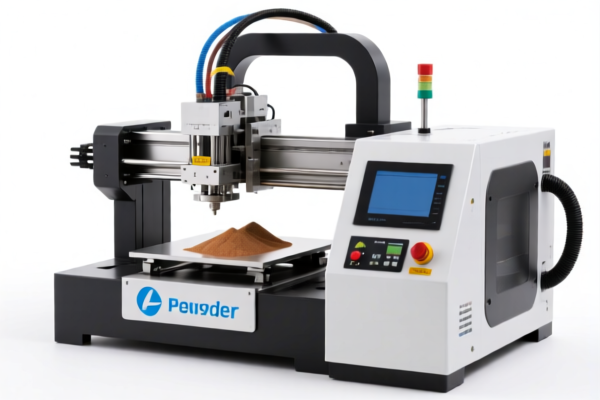
AI分析
⚒️ Metal Brazing Powder Additive (Brazing & Welding Fluxes & Alloys)
🌐 HS Code Reference & Customs Clearance Guide | 2026 Latest Tariff Analysis | Professional Clearance Strategy
📌 1. Product Definition & Classification: Do You Know What "Brazing Powder" Actually Is?
Metal Brazing Powder Additives are critical auxiliary materials used in industrial manufacturing, automotive repair, and aerospace assembly. In international trade, these products are primarily categorized into two distinct types based on their chemical nature and primary function:
1. Brazing Fluxes & Powdered Alloys (Chemical/Mixed Powders):
Powders designed to clean metal surfaces, prevent oxidation, and facilitate the flow of filler metal during brazing. These often contain borates, fluorides, or metal powder mixtures.
Key Identifier: Used as a flux or additive in conjunction with other welding materials.
2. Metallic Filler Materials (Base Metals/Carbides):
Pure metal powders, alloys, or carbide powders intended to act as the actual filler metal or structural component in brazing/welding processes.
Key Identifier: Primarily composed of base metals (copper, nickel, silver, etc.) or metal carbides.
⚠️ Critical Distinction Point:
- If the product is primarily a chemical flux or a mixed powder additive for brazing/welding preparation → It falls under Chapter 38 (Miscellaneous Chemical Products).
- If the product is primarily a metallic alloy powder or carbide used as the filler metal itself → It falls under Chapter 83 (Miscellaneous Articles of Base Metal).
📦 2. HS Code Classification Details (2026 Latest Tariff Authority Comparison)
| HS Code | Product Description | Application Scenario | Material Nature |
|---|---|---|---|
3810.10.00.00 |
Brazing powders and pastes; fluxes for soldering, brazing or welding | General brazing fluxes, mixed powder additives for welding | Mixed materials (metal + chemical fluxes) |
3810.90.50.00 |
Other fluxes, preparations for soldering, brazing or welding; powdered materials for surface treatment | Powdered brazing aids, specialized flux powders | Chemical/Flux powders |
8311.90.00.00 |
Wire, rods, electrodes and similar products of base metal or of metal carbides, whether or not coated, designed for brazing, soldering, welding or metal spraying; powders and flakes of base metal or of metal carbides, designed for brazing, soldering, welding or metal spraying | Filler metal powders, carbide powders for thermal spray or brazing | Base metals / Metal Carbides |
8311.30.60.00 |
Wire, rods, electrodes and similar products of base metal or of metal carbides... designed for brazing... | Auxiliaries for welding materials like rods/wires (if specified as base metal auxiliary) | Base Metals |
🔍 Key Reminder:
- Products labeled "Brazing Powder Additive" are most commonly classified under 3810.10.00.00 or 3810.90.50.00 if they function as fluxes or mixed chemical powders.
- If the product is pure metal powder (e.g., copper-nickel powder) intended to be the filler metal, it may fall under 8311.90.00.00.
- Misclassification between Chapter 38 (Chemical) and Chapter 83 (Base Metal) can lead to significant duty discrepancies due to different tariff rates.
💰 3. 2026 Latest Tariff Rate Breakdown (Including Surcharges & Policy Add-ons)
✅ Applicable Country: United States (US)
✅ Origin: China (CN)
✅ Effective Date: From November 10, 2025 (and subsequent imports)
🎯 1. 3810.10.00.00 —— Brazing Powders and Pastes (Fluxes/Additives)
| Item | Content |
|---|---|
| Base Tariff | 5.0% (ad valorem) |
| USITC Section 301 Surcharge | +25.0% |
| IEEPA Section 122 Surcharge | +10.0% |
| Total Tariff Rate | 40.0% |
| Tax Calculation | CIF Value × 40% |
| De Minimis Eligibility | ❌ No (deny_de_minimis) |
| Legal Basis Path | IEEPA:9903.01.25 → IEEPA:9903.01.24 → USITC:3810.10.00.00 → FOOTNOTE:9903.88.01 |
📌 Explanation:
- "Base Tariff 5%": Standard Most-Favored-Nation (MFN) rate for brazing fluxes/powders.
- "USITC 25%": Additional tariff under Trade Act of 1974, Section 301, targeting Chinese goods.
- "IEEPA 10%": Additional tariff under International Emergency Economic Powers Act for specific Chinese imports.
- Total 40%: This is a high-cost classification. Importers must budget for this significant landed cost.
🎯 2. 3810.90.50.00 —— Other Fluxes & Powdered Materials for Welding/Brazing
| Item | Content |
|---|---|
| Base Tariff | 5.0% (ad valorem) |
| USITC Section 301 Surcharge | +25.0% |
| IEEPA Section 122 Surcharge | +10.0% |
| Total Tariff Rate | 40.0% |
| Tax Calculation | CIF Value × 40% |
| De Minimis Eligibility | ❌ No (deny_de_minimis) |
| Legal Basis Path | IEEPA:9903.01.25 → IEEPA:9903.01.24 → USITC:3810.90.50.00 → FOOTNOTE:9903.88.01 |
📌 Note:
- Similar to the above, this "Other Fluxes" category carries the same high tariff burden.
- Applies to specialized powdered brazing aids not specifically listed under 3810.10.
🎯 3. 8311.90.00.00 —— Base Metal or Carbide Powders for Brazing/Welding
| Item | Content |
|---|---|
| Base Tariff | 0.0% (ad valorem) |
| USITC Section 301 Surcharge | +25.0% |
| IEEPA Section 122 Surcharge | +10.0% |
| Total Tariff Rate | 35.0% |
| Tax Calculation | CIF Value × 35% |
| De Minimis Eligibility | ❌ No (deny_de_minimis) |
| Legal Basis Path | IEEPA:9903.01.25 → IEEPA:9903.01.24 → USITC:8311.90.00.00 → FOOTNOTE:9903.88.01 |
📌 Note:
- If your product is pure metal powder (e.g., Nickel-Copper powder) used as a brazing filler, the base rate is lower (0%), resulting in a 35% total rate.
- This is 5% cheaper than the flux/chapter 38 classification, but requires strict proof of material composition.
🎯 4. 8311.30.60.00 —— Base Metal Auxiliaries for Welding Rods/Wires
| Item | Content |
|---|---|
| Base Tariff | 0.0% (ad valorem) |
| USITC Section 301 Surcharge | +25.0% |
| IEEPA Section 122 Surcharge | +10.0% |
| Total Tariff Rate | 35.0% |
| Tax Calculation | CIF Value × 35% |
| De Minimis Eligibility | ❌ No (deny_de_minimis) |
| Legal Basis Path | IEEPA:9903.01.25 → IEEPA:9903.01.24 → USITC:8311.30.60.00 → FOOTNOTE:9903.88.01 |
📌 Note:
- Applies if the powder is specifically an auxiliary for welding rods/wires made of base metal.
- Also carries a 35% total rate.
🎯 5. 3811.90.00.00 —— Liquid/Semi-Solid Brazing Lubricants (Special Case)
Note: While your query specified "Powder", this HS Code is included in the data for liquid/semi-solid variants.
| Item | Content |
|---|---|
| Base Tariff | 6.5% (ad valorem) |
| USITC Section 301 Surcharge | +25.0% |
| IEEPA Section 122 Surcharge | +10.0% |
| Total Tariff Rate | 41.5% |
| Tax Calculation | CIF Value × 41.5% |
| De Minimis Eligibility | ❌ No (deny_de_minimis) |
| Legal Basis Path | IEEPA:9903.01.25 → IEEPA:9903.01.24 → USITC:3811.90.00.00 → FOOTNOTE:9903.88.01 |
📌 Note:
- For liquid or semi-solid brazing lubricants (e.g., mineral oil-based preparations), the rate is slightly higher at 41.5% due to a higher base tariff (6.5%).
- Ensure correct physical state declaration (Powder vs. Liquid).
🛠️ 4. Customs Clearance Practical Advice (Field Pitfall Avoidance Guide)
✅ 1. Documentation Checklist (All Required)
| Document | Mandatory? | Description |
|---|---|---|
| ✅ Product Specification Sheet | ✔️ | Must detail chemical composition, physical state (powder/liquid), and intended use (brazing/welding). |
| ✅ Material Safety Data Sheet (MSDS) | ✔️ | Critical for hazmat classification, especially for fluxes containing fluorides or borates. |
| ✅ Commercial Invoice | ✔️ | Clearly state "Brazing Powder Additive" and specify HS Code. |
| ✅ Packing List | ✔️ | Detail net/gross weight, package type. |
| ✅ Certificate of Origin (CO) | ✔️ | Required for determining eligibility of surcharges (if applicable for non-China origins). |
| ✅ Third-Party Test Report | ✔️ | Proof of material composition (e.g., XRF analysis for metal content) to support Chapter 38 vs. Chapter 83 classification. |
✅ 2. Declaration Tips (Key Mnemonics)
🔥 “State State State: Powder, Flux, or Metal?!”
| Scenario | Correct Declaration | Incorrect Approach |
|---|---|---|
| Flux Powder (Chemical) | Use 3810.10.00.00 or 3810.90.50.00. Declare as "Brazing Flux Powder". |
Declaring as "Metal Powder" → Risk of misclassification audit. |
| Metal Filler Powder | Use 8311.90.00.00. Declare as "Base Metal Alloy Powder for Brazing". |
Declaring as "Flux" → Overpaying duties (if 0% base vs 5% base). |
| Liquid Lubricant | Use 3811.90.00.00. Declare as "Brazing Lubricant Paste". |
Declaring as "Powder" → Customs seizure/delay. |
| Mixed Packaging | Declare each component separately if possible. | Bundling liquid and powder together → Complex classification issues. |
✅ 3. Special Case Handling
| Situation | Handling Advice |
|---|---|
| OEM Custom Flux | Provide customer order + technical datasheet. Avoid generic "Welding Supplies" descriptions. |
| High Metal Content Flux | If >50% metal by weight, consult if Chapter 83 is more appropriate (potential 35% vs 40% savings). |
| Dual-Use Goods | Ensure no restricted military/aerospace applications are declared if avoiding scrutiny. |
| Small Samples | ❌ No De Minimis. All shipments from China to US are subject to these tariffs, regardless of value. |
🌍 5. Global Market Customs Comparison (2026 Latest)
| Country/Region | Recommended HS Code | Tariff (China Origin) | Certification Requirements | Notes |
|---|---|---|---|---|
| 🇺🇸 USA | 3810.10.00.00 / 8311.90.00.00 |
35%-41.5% (incl. 301/122) | None specific | High tariffs apply. No de minimis. |
| 🇨🇳 China | 3810.10.00.00 |
5%-13% | None | Lower tariffs for export to China? (Check import rules). |
| 🇪🇺 EU | 3810.10.00.00 |
0%-6.5% | REACH Registration | No Section 301 equivalent. |
| 🇦🇺 Australia | 3810.10.00.00 |
5% | ADR for transport | No major surcharges. |
| 🇯🇵 Japan | 3810.10.00.00 |
3.4% | JIS Standards | Moderate tariff. |
📌 Conclusion:
- The USA imposes the highest landed cost for these items due to the combination of base tariffs and the aggressive Section 301 (25%) and IEEPA (10%) surcharges.
- EU and other markets are significantly more favorable, with no punitive surcharges.
- For US-bound goods, accurate classification (35% vs 40%) can save 5% on the CIF value.
📌 6. Common Mistakes & Pitfalls (Blood Lessons)
❌ Mistake 1: Calling all "Brazing Powders" the same HS Code.
👉 Consequence: If you declare a pure metal powder as "Flux" (3810), you pay 40%. If it qualifies as "Metal Powder" (8311), you pay 35%. Overpayment by 5%.
👉 Conversely, if you declare a chemical flux as "Metal Powder", customs will audit and reclassify, leading to penalties and back taxes.
❌ Mistake 2: Assuming Small Shipments Are Tax-Free.
👉 Consequence: Since Nov 2025, Section 122 tariffs apply to most Chinese goods, and Section 301 applies broadly. De Minimis (under $800) exemptions are DENIED for many categories including these. Every shipment is taxed.
❌ Mistake 3: Ignoring MSDS for Flux Powders.
👉 Consequence: Customs may detain the shipment as "HazMat" if MSDS is missing or unclear, causing delays and storage fees.
🎯 7. Conclusion: Professional Declaration, Cost Control
🎯 Remember the Mnemonics:
🔹 "Flux Powder is Chapter 38 (40%), Metal Powder is Chapter 83 (35%)."
🔹 "US Market No De Minimis. Pay up or Plan Ahead."
🔹 "MSDS Mandatory. Composition is King."
📌 Pro Tip:
If your product is a mixed powder (part flux, part metal), consider getting a Pre-Ruling (Advance Ruling) from CBP to confirm whether it should be classified as a flux (3810) or a metal product (8311). This clarity can save you 5% on every shipment.
📣 Immediate Action:
📞 Contact a licensed Customs Broker + Provide MSDS + Submit Material Analysis Report
🚀 Ensure Smooth Clearance, Avoid Delays, and Optimize Your Landed Cost!
✨ Professional Clearance Starts with Accurate Classification!
💼 Every Percent of Duty Saved is Pure Profit!
用户评价
关于 HS 编码归类
协调制度(HS)是由世界海关组织(WCO)制定的国际贸易商品分类标准。全球 200 多个国家采用 HS 系统作为海关关税、贸易统计和进出口监管的基础。
每个 HS 编码遵循以下层级结构:
- 章(2 位)——商品大类(例如:第 84 章:机器和机械设备)
- 品目(4 位)——章内的更具体分类
- 子目(6 位)——国际通用细分,所有 WCO 成员国统一使用
- 本国细分(8-10 位)——各国自行扩展的细分编码,如美国 HTSUS 10 位编码
正确的 HS 编码归类对于顺利通关、准确缴纳关税和遵守贸易法规至关重要。错误归类可能导致海关延误、多缴关税或罚款。
从CN进口到US时,适用的关税税率可能包括:
- 最惠国(MFN)税率——适用于 WTO 成员国的标准关税税率
- 普通税率——适用于无贸易协定国家
- 贸易救济关税——附加关税,如 301 条款(反倾销)、232 条款(国家安全)或反补贴税
本页内容仅供参考。如需正式归类,请咨询当地海关或持牌报关代理。