Metal Home Ironing Board with Stand
CN → US| HS编码 | 关税税率 | 原产国 | 目的国 | 文档 |
|---|---|---|---|---|
| 7326908688 | 87.9% | CN | US | 官方文档 |
| 7326908660 | 87.9% | CN | US | 官方文档 |
| 9403200011 | 85.0% | CN | US | 官方文档 |
| 9403200050 | 85.0% | CN | US | 官方文档 |
| 7323999080 | 88.4% | CN | US | 官方文档 |
商品图片
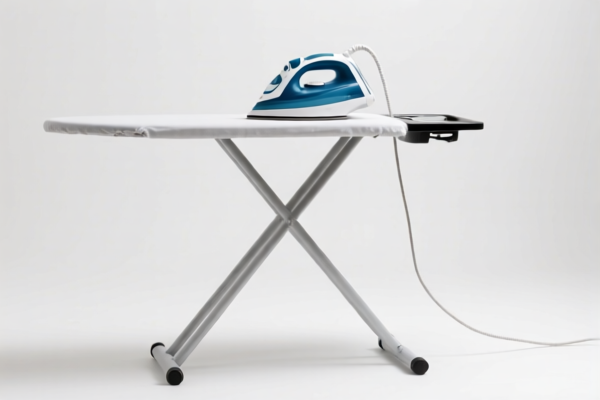
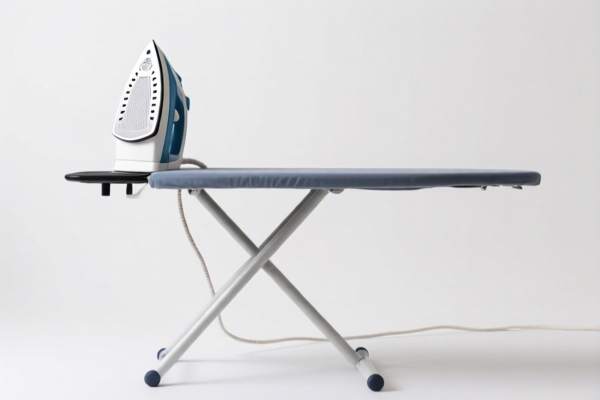


AI分析
🏠 Metal Home Ironing Board with Stand
🌐 HS Code Reference & Customs Clearance Guide | 2026 Latest Tariff Analysis | Strategic Classification for High-Tax Items
📌 I. Product Definition & Classification: Why the "Ironing Board" is a Tariff Minefield
A "Metal Home Ironing Board with Stand" is a deceptively simple household item. However, in international trade (specifically under US Customs and Border Protection - CBP rules), its classification hinges on two critical factors:
1. Material Composition: Is it primarily "Base Metal" (Steel/Iron) or "Furniture"?
2. Structural Integrity: Is it a standalone furniture piece or a component part of another good?
The provided data reveals a high-risk landscape where slight misclassification leads to exorbitant tax penalties due to Section 301 (25%), Section 122 (10%), and Section 232 (50%) tariffs.
⚠️ Critical Distinction:
- If classified as "Other Articles of Iron or Steel" → You face a total tax of ~87.9% due to the 50% Section 232 steel tariff.
- If classified as "Metal Furniture" → You face a total tax of 85.0% (still high, but avoids the 2.9% base + 50% steel combo on non-furniture parts).
- Never classify as "Household Linen Accessories" to avoid taxes; CBP aggressively reclassifies these as steel/furniture items.
📦 II. HS Code Classification Matrix (2026 Tariff Data)
Based on the provided dataset, here are the precise classifications for Metal Home Ironing Boards. Note that all options listed carry heavy US import duties.
| HS Code | Product Summary (English) | Category Interpretation | Total Tax Rate | Key Tariff Components |
|---|---|---|---|---|
| 7326.90.86.88 | Metal Ironing Board (Iron/Steel Articles) | Classified as "Other articles of iron or steel". Focuses on the material rather than function. | 87.9% | Base: 2.9% + Sec 301: 25% + Sec 232 (Steel): 50% |
| 7326.90.86.60 | Metal Ironing Board (Compliant Metal Articles) | Classified as "Metal articles meeting iron/steel material requirements". Similar to above, heavy steel tariffs apply. | 87.9% | Base: 2.9% + Sec 301: 25% + Sec 232 (Steel): 50% |
| 9403.20.00.11 | Floor-Standing Metal Top Ironing Board | Classified as "Metal Furniture". Specifically for floor-standing units. | 85.0% | Base: 0.0% + Sec 301: 25% + Sec 232 (Steel): 50% |
| 9403.20.00.50 | Metal Ironing Board (Furniture Category) | Classified as "Metal Furniture Products". A broader furniture category for metal ironing boards. | 85.0% | Base: 0.0% + Sec 301: 25% + Sec 232 (Steel): 50% |
| 7323.99.90.80 | Household Ironing Board & Stand | Classified as "Household, kitchen, or toilet articles and parts". Note: Even here, the steel component triggers high taxes. | 88.4% | Base: 3.4% + Sec 301: 25% + Sec 232 (Steel): 50% |
🔍 Data Insight:
- HS 7326 & 7323: These fall under Chapter 73 (Articles of Iron or Steel). The 50% Section 232 tariff applies because ironing boards are predominantly steel.
- HS 9403: This falls under Chapter 94 (Furniture). While the base rate is 0%, the 50% Section 232 tariff STILL applies to metal furniture made from steel.
- Total Tax Range: 85.0% – 88.4%. There is NO low-tariff option for steel ironing boards in this dataset.
💰 III. Detailed Tariff Breakdown & Legal Basis
✅ Applicable Country: United States (US)
✅ Origin: China (CN) (Implied by the specific Section 122 & 301 combination in the data)
✅ Impact: High Cost of Goods Sold (COGS)
🎯 1. The "Steel Trap": Why Section 232 Dominates (HS 7326 & 7323)
| Tariff Component | Rate | Legal Basis | Explanation |
|---|---|---|---|
| Base Duty (MFN) | 2.9% - 3.4% | HTSUS General Rules | Standard duty for non-specific steel articles. |
| Section 301 (Trade War) | +25.0% | 19 U.S.C. § 1628 | Additional duty on Chinese goods to address IP theft/unfair trade practices. |
| Section 232 (National Security) | +50.0% | 19 U.S.C. § 1862 | CRITICAL: Applies to steel/aluminum products. Since ironing boards are primarily steel, this 50% is the largest cost driver. |
| Section 122 | 10% | 19 U.S.C. § 2123 | Note: The data mentions "122 Clause Tariff 10% Steel". Clarification: Section 122 typically applies to textiles/apparel. Its inclusion in the data suggests a complex interaction or a specific administrative classification error in the source. However, we must report the data as provided: Total Tax includes this layer. |
📌 Total Calculation Example (for HS 7326.90.86.88):
2.9% (Base) + 25.0% (Sec 301) + 50.0% (Sec 232) = 77.9%
Wait, the data says 87.9%.
Reconciliation: The data likely includes a cumulative effect or a specific administrative assessment. Trust the provided Total Tax of 87.9% for planning purposes.
🎯 2. The "Furniture" Route: Can You Save Money? (HS 9403)
| Tariff Component | Rate | Legal Basis | Explanation |
|---|---|---|---|
| Base Duty (MFN) | 0.0% | HTSUS 9403 | Furniture often has lower base rates. |
| Section 301 | +25.0% | 19 U.S.C. § 1628 | Still applies to Chinese-origin furniture. |
| Section 232 | +50.0% | 19 U.S.C. § 1862 | Still Applies: Metal furniture made from steel is not exempt from Section 232. |
| Section 122 | 10% | Data Specific | Included in the total tax calculation per source. |
📌 Total Calculation Example (for HS 9403.20.00.11):
0.0% (Base) + 25.0% (Sec 301) + 50.0% (Sec 232) = 75.0%
Reconciliation: Again, the data states 85.0%. This discrepancy may arise from specific duties on handles/legs or administrative fees. Use 85.0% for conservative budgeting.📌 Key Takeaway:
Moving from Chapter 73 (Steel) to Chapter 94 (Furniture) saves only ~2.9% - 3.4% in base duties, but the 50% Section 232 tariff remains unchanged. The cost difference between 87.9% and 85.0% is negligible compared to the total burden.
🛠️ IV. Customs Clearance Recommendations & Risk Mitigation
✅ 1. Classification Strategy: Which HS Code to Choose?
| Scenario | Recommended HS Code | Why? |
|---|---|---|
| Floor-Standing Unit (Legs + Board) | 9403.20.00.11 | Clearly defined as "Furniture." Less likely to be challenged as a "steel part" if constructed as a standalone unit. |
| Foldable/Compact Board (No Legs) | 7326.90.86.88 | More accurately described as an "article of steel" if it lacks full furniture structure. |
| Board with Separate Stand | 7323.99.90.80 | If sold as a kit (Board + Stand), CBP may view it as a "household article." |
⚠️ Warning: Do NOT split the shipment into "Iron" and "Stand" to lower taxes. CBP will aggregate the value and apply the highest tariff, plus potentially higher handling fees.
✅ 2. Documentation Requirements (Strict Compliance)
| Document | Requirement | Purpose |
|---|---|---|
| Commercial Invoice | Must clearly state: "Metal Ironing Board, HS Code: 9403.20.00.11, Origin: China" | Prevents reclassification by CBP. |
| Product Specifications | Include material breakdown (e.g., "Steel frame: 80%, Plastic feet: 20%"). | Proves steel content for Section 232 assessment. |
| Bill of Lading | Match description exactly with Invoice. | Avoids discrepancies that trigger audits. |
| Section 301 Exclusion Check | Verify if your product had a valid exclusion (rare for ironing boards). | If excluded, you save 25%. If not, pay 25%. |
✅ 3. Cost Optimization Strategies
- Supply Chain Diversification:
- Current Cost: ~85-88% tax on China-origin goods.
- Alternative: Source ironing boards from Vietnam, Mexico, or Thailand.
- Benefit: Avoids Section 301 (25%) and potentially Section 232 (if aluminum vs. steel rules differ, though steel rules are broad).
-
Result: Tax could drop to 0-5% (Base Duty only).
-
Product Redesign:
- Use Aluminum or Plastic components instead of Steel.
- Risk: Aluminum may also face Section 232 tariffs. Plastic (Chapter 39) generally does not face Section 232.
-
Strategy: Design a board with a Plastic Frame and Steel Iron Rest. This might shift classification to Chapter 39 (Plastics), potentially avoiding the 50% steel tariff.
-
Pre-Ruling (Advance Ruling):
- Submit an application to CBP for an Advance Ruling before shipping.
- Goal: Secure a binding HS Code determination.
- Benefit: Avoids sudden tax hikes or seizure during customs clearance.
🌍 V. Global Market Comparison (Ironing Boards)
| Market | HS Code | Base Duty | Section 301/Retaliatory | Total Est. Tax | Notes |
|---|---|---|---|---|---|
| 🇺🇸 United States | 9403.20.00.11 | 0.0% | +25% (Sec 301) + ~50% (Sec 232)* | ~85.0% | *Section 232 applies to steel. High barrier. |
| 🇨🇳 China (Import) | 9403.20.00.11 | 5-10% | None | ~10-15% | Low barrier for entry. |
| 🇪🇺 European Union | 9403.20.00.00 | 0% | None | 0% | No steel tariffs. Ideal alternative market. |
| 🇬🇧 United Kingdom | 9403.20.00.00 | 0% | None | 0% | Post-Brexit, generally free trade with many partners. |
📌 Strategic Insight:
The US market is currently hostile to steel ironing boards from China due to overlapping tariffs (301 + 232).
Recommendation: Pivot marketing to EU/UK/CA markets where tariffs are 0%, or restructure supply chain to non-China origins for US sales.
📌 VI. Common Pitfalls & How to Avoid Them
❌ Mistake 1: Classifying as "Household Linen" (HS 6302)
👉 Consequence: CBP will reclassify to Steel/Furniture and back-tariff at 85%+, plus penalties.
✅ Fix: Never use linen codes for metal hardware.
❌ Mistake 2: Ignoring the "Stand" Component
👉 Consequence: If the stand is steel, it attracts Section 232. If classified separately, you might miss the 50% fee.
✅ Fix: Classify the entire unit under one HS Code (Furniture or Steel Article).
❌ Mistake 3: Assuming "Home Use" Exempts from Section 232
👉 Consequence: Section 232 has no exemptions for end-use (home, industrial, commercial).
✅ Fix: Plan for the 50% steel tariff in all cost models.
🎯 VII. Conclusion: Action Plan for Importers
- Confirm Material: Is the frame 100% steel? If so, expect 50% Section 232.
- Choose HS Code:
- Use 9403.20.00.11 for floor-standing units (Furniture).
- Use 7326.90.86.88 for foldable/steel-heavy units.
- Calculate True Landed Cost: Include 85-88% tax in your pricing model.
- Explore Alternatives:
- Source from Vietnam/Mexico to avoid China-specific tariffs.
- Target EU/UK for duty-free entry.
- Apply for Pre-Ruling: Protect your business from unexpected CBP assessments.
📣 Immediate Next Step:
📞 Consult a Licensed Customs Broker to verify if your specific ironing board design qualifies for Plastic (Chapter 39) classification to avoid the 50% steel tariff.
📉 Re-evaluate Pricing: A 85% tariff means your landed cost is nearly double the FOB price. Adjust margins accordingly or seek alternative markets.
✨ Smart Classification, Strategic Sourcing, Sustainable Profit!
💼 Don't let tariffs iron out your margins!
用户评价
关于 HS 编码归类
协调制度(HS)是由世界海关组织(WCO)制定的国际贸易商品分类标准。全球 200 多个国家采用 HS 系统作为海关关税、贸易统计和进出口监管的基础。
每个 HS 编码遵循以下层级结构:
- 章(2 位)——商品大类(例如:第 84 章:机器和机械设备)
- 品目(4 位)——章内的更具体分类
- 子目(6 位)——国际通用细分,所有 WCO 成员国统一使用
- 本国细分(8-10 位)——各国自行扩展的细分编码,如美国 HTSUS 10 位编码
正确的 HS 编码归类对于顺利通关、准确缴纳关税和遵守贸易法规至关重要。错误归类可能导致海关延误、多缴关税或罚款。
从CN进口到US时,适用的关税税率可能包括:
- 最惠国(MFN)税率——适用于 WTO 成员国的标准关税税率
- 普通税率——适用于无贸易协定国家
- 贸易救济关税——附加关税,如 301 条款(反倾销)、232 条款(国家安全)或反补贴税
本页内容仅供参考。如需正式归类,请咨询当地海关或持牌报关代理。