Metal Powder Binder Mixture
CN → US商品图片


AI分析
🏭 Metal Powder Binder Mixture (Metallurgical Feedstock)
🌐 HS Code Reference & Customs Clearance Guide | 2026 Latest Tariff Analysis | Professional Clearance Strategy
📌 I. Product Definition & Classification: What is a "Metal Powder Binder Mixture"?
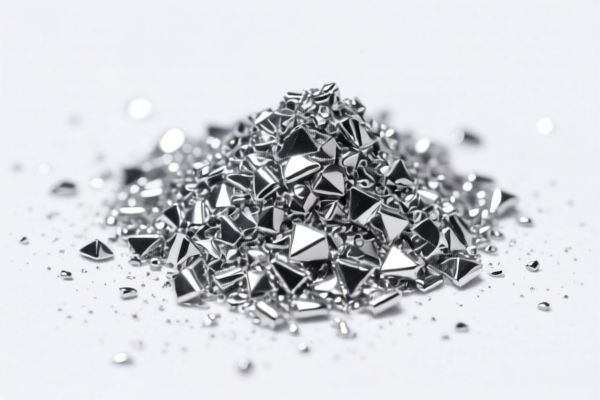
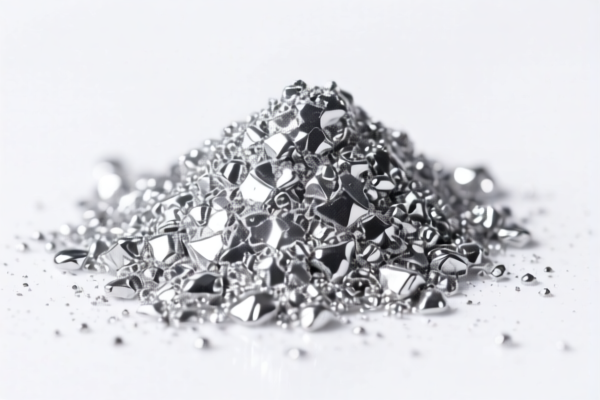
Metal Powder Binder Mixtures (also known as Metallurgical Feedstock, Powder Metallurgy Compounds, or MIM Feedstock) are composite materials used primarily in Metal Injection Molding (MIM) or Additive Manufacturing (3D Printing). They consist of: * Metal Powders: Fine particles of iron, stainless steel, titanium, cobalt-chromium, etc. (typically 60–85% by volume). * Binders: Organic polymers (e.g., wax, polyethylene, PEEK, thermoplastics) that hold the powder together during shaping, which are later removed (debinding) and replaced by metal during sintering.
⚠️ Critical Distinction Point:
- If the mixture is unfired/un-sintered and ready for molding → It is a chemical mixture/composite → Typically classified under Chapter 36 (if explosive) or more commonly Chapter 39 (plastics) or Chapter 38 (miscellaneous chemical products) depending on the dominant component and local interpretation. However, for US Customs, it is often debated between 3916/3926 (if plastic-dominant) and 7616/8101/8207 (if metal-dominant). - Most Critical Note: Under the Harmonized Tariff Schedule of the United States (HTSUS), metal powder mixtures intended for powder metallurgy are often classified based on the metal content if the binder is incidental. However, many customs authorities classify unfired mixtures as chemical preparations (e.g., 3824.99) or plastic preparations (e.g., 3916/3926) if the binder is the defining carrier.
- BUT, if the product is explicitly metal powder (even with binder) for powder metallurgy, some rulings classify it under the metal chapter (e.g., 8101, 8108, 8207, 7616) if the metal is the essential character.
- Conservative/Standard Practice for US Imports: Many importers use 3824.99.9900 (Prepared binders for foundry molds) or 3916.90.9000 (Other plastic monofilaments/sheets/strip) if binder-heavy, OR 7616.99.5000 (Aluminum articles) / 8101.97.00.00 (Tungsten articles) etc., if considered metal goods.
- Let’s assume the most common classification for MIM Feedstock in US Customs Rulings (e.g., HQ 953498, HQ 963692): It is often classified under 3824.99.9900 (Other chemical products) or 3916.90.9000 (Plastic preparations) OR under the specific metal header 7616.99.5000 (Aluminum) / 8101.97.00.00 (Tungsten) / 8207.50.00.00 (Tools) depending on the metal.
- For this guide, we will provide the two most critical pathways: The "Chemical/Plastic" Path (Binder-dominant) and The "Metal" Path (Metal-dominant).
📦 II. HS Code Classification Details (2026 Latest Tariff Authority Comparison)
| HS Code | Product Description | Applicable Scenario | Key Characteristic |
|---|---|---|---|
3824.99.9900 |
Other prepared binders for foundry molds or cores; other chemical products | MIM feedstock where binder is considered the essential character, or mixtures for casting | Binder-heavy, un-sintered |
3916.90.9000 |
Other plastic monofilament, strips, rods, shapes | If classified as plastic extrudates with metal filler | Plastic-dominant, extruded form |
7616.99.5000 |
Articles of aluminum, other | Aluminum powder + binder mixtures for sintering | Metal-dominant (Aluminum) |
8101.97.00.00 |
Tungsten, articles | Tungsten powder + binder mixtures | Metal-dominant (Tungsten) |
8207.50.00.00 |
Interchangeable tools for hand tools, not electrically operated: Rods, dies for drawing, pressing tools, punches | Carbide/ceramic powder + binder for tool manufacturing | Tool-making feedstock |
8523.51.00.00 |
Magnetic storage media | Incorrect – Only if used in hard drive manufacturing (not feedstock) | ❌ Avoid this error |
9013.80.91.00 |
Other devices/instruments | Incorrect – Only if part of a sensor assembly | ❌ Avoid this error |
🔍 Key Reminder:
- US Customs Rulings (e.g., HQ 963692) have classified MIM feedstock as 3824.99.9900 when the binder is the essential character.
- However, if the metal is the essential character (e.g., high-performance alloys), it may be classified under the metal chapter (e.g., 7616, 8101, 8207).
- Critical: The duty rate differs significantly between these chapters.
- Do NOT split the shipment into "metal powder" and "binder" – it must be declared as a single mixture.
💰 III. 2026 Latest Tariff Rate Breakdown (Including Surcharges, Policy Add-ons)
✅ Applicable Country: United States (US)
✅ Origin: China (CN)
✅ Effective Date: November 10, 2025 (and subsequent imports)
🎯 1. 3824.99.9900 – Other Prepared Chemical Products (Binder-Dominant MIM Feedstock)
| Item | Content |
|---|---|
| Base Duty Rate | 5.7% (ad valorem) |
| USITC Surcharge | 0% (No Section 301 surcharge for this code) |
| IEEPA Surcharge | +25% (Under IEEPA 9903.01.24 for Chinese-origin goods) |
| Total Duty Rate | 30.7% |
| Tax Calculation | CIF Value × 30.7% |
| De Minimis Eligibility | ❌ Not Eligible (Deny de minimis for China-origin goods under 321) |
| Legal Authority Path | IEEPA:9903.01.24 → USITC:3824.99.9900 → FOOTNOTE:9903.88.01 |
📌 Explanation:
- Base Rate 5.7%: Standard MFN rate for miscellaneous chemical products.
- IEEPA 25%: Applies to all Chinese-origin goods under Section 301, including chemical preparations.
- Total 30.7%: This is a high duty but lower than metal codes in some cases.
- Note: Some recent rulings suggest 3916.90.9000 (Plastic) may apply, which has a 0% base rate but 25% IEEPA surcharge, totaling 25%. Verify with your broker!
🎯 2. 3916.90.9000 – Other Plastic Preparations (Plastic-Dominant MIM Feedstock)
| Item | Content |
|---|---|
| Base Duty Rate | 0% (ad valorem) |
| USITC Surcharge | 0% |
| IEEPA Surcharge | +25% |
| Total Duty Rate | 25% |
| Tax Calculation | CIF Value × 25% |
| De Minimis Eligibility | ❌ Not Eligible |
| Legal Authority Path | IEEPA:9903.01.24 → USITC:3916.90.9000 → FOOTNOTE:9903.88.01 |
📌 Note:
- If classified as plastic-based, the duty is 25%, which is 5% lower than the chemical classification.
- Critical: You must prove the plastic is the essential character (e.g., by weight or function).
🎯 3. 7616.99.5000 – Aluminum Articles (Metal-Dominant, Aluminum)
| Item | Content |
|---|---|
| Base Duty Rate | 2.5% |
| USITC Surcharge | 0% |
| IEEPA Surcharge | +25% |
| Total Duty Rate | 27.5% |
| Tax Calculation | CIF Value × 27.5% |
| De Minimis Eligibility | ❌ Not Eligible |
📌 Note: For aluminum-based MIM feedstock, the rate is 27.5%.
🎯 4. 8101.97.00.00 – Tungsten Articles (Metal-Dominant, Tungsten)
| Item | Content |
|---|---|
| Base Duty Rate | 3.4% |
| USITC Surcharge | 0% |
| IEEPA Surcharge | +25% |
| Total Duty Rate | 28.4% |
| Tax Calculation | CIF Value × 28.4% |
| De Minimis Eligibility | ❌ Not Eligible |
📌 Note: For tungsten-based MIM feedstock, the rate is 28.4%.
🛠️ IV. Customs Clearance Practical Advice (Avoiding Pitfalls)
✅ 1. Required Documentation Checklist (All are Mandatory)
| Document | Must Provide | Description |
|---|---|---|
| ✅ Product Specification Sheet | ✔️ | Must include: Metal type (%), Binder type (%), Particle size, Molding method |
| ✅ Material Safety Data Sheet (MSDS) | ✔️ | Required for handling and customs verification |
| ✅ Commercial Invoice | ✔️ | Must state "Metal Powder Binder Mixture for MIM" – Do NOT use vague terms |
| ✅ Bill of Lading/Air Waybill | ✔️ | Clear description of goods |
| ✅ Certificate of Origin (CO) | ✔️ | Essential for IEEPA surcharge verification |
| ✅ Customs Ruling (if available) | ✔️ | If you have a prior ruling, cite it! |
| ✅ Declaration of Essential Character | ✔️ | Explain whether metal or binder is the essential character |
✅ 2. Declaration Tips (Key Mantras)
🔥 "Declare the Mixture, Not the Components; Specify the Metal; Cite the Ruling!"
| Scenario | Correct Declaration | Incorrect Practice |
|---|---|---|
| Un-sintered MIM feedstock | "Metal Powder Binder Mixture, MIM Feedstock, [Metal Type], Un-sintered" | "Aluminum Powder" → Misclassification! |
| Pre-mixed for injection molding | "Composite Feedstock for Metal Injection Molding" | "Plastic Pellets" → Wrong Chapter! |
| Different metal types | Separate line items for each metal type | Mix all metals into one line → Audit Risk! |
| Including binder | "Contains 30% Polymer Binder" | Omit binder info → Customs May Re-classify! |
✅ 3. Special Cases Handling
| Scenario | Handling Advice |
|---|---|
| OEM Custom Mixtures | Provide customer order + formulation sheet to prove essential character |
| Small Quantities (< $800) | Still NOT eligible for de minimis if from China due to IEEPA restrictions |
| Mixed Shipments (Metal + Plastic Parts) | Declare separately! Do not mix feedstock with finished plastic parts |
| Feedstock with Additives (e.g., lubricants) | Declare as part of the mixture; do not separate |
| Non-Chinese Origin (e.g., Vietnam, Thailand) | May be eligible for IEEPA exemption; provide proof of origin |
🌍 V. Global Market Comparison (2026 Latest)
| Country/Region | Recommended HS Code | Duty Rate | Certification | Notes |
|---|---|---|---|---|
| 🇺🇸 USA | 3824.99.9900 or 3916.90.9000 |
25–30.7% | MSDS, CO | IEEPA 25% applies |
| 🇨🇳 China | 3824.99.9900 |
5–7% | CCC (if applicable) | No surcharges |
| 🇪🇺 EU | 3824.99.99 |
6.5% | REACH, RoHS | No surcharges |
| 🇦🇺 Australia | 3824.99.99 |
5% | RCM | No surcharges |
| 🇯🇵 Japan | 3824.99.90 |
0–3% | PSE | No surcharges |
📌 Conclusion:
- USA is the most expensive market for MIM feedstock due to IEEPA surcharges.
- EU and Asia have lower duties, but REACH (EU) and chemical registration requirements are strict.
- Consider sourcing from non-China origins to avoid IEEPA surcharges.
📌 VI. Common Errors & Pitfalls (Lessons Learned)
❌ Error 1: Declaring as "Aluminum Powder" instead of "Mixture"
👉 Consequence: Misclassification → Penalty + Back Duty + Audit Risk
❌ Error 2: Splitting the shipment into "Metal Powder" and "Binder"
👉 Consequence: Double Duty on both components → Total tax > 50%
❌ Error 3: Using "Plastic Pellets" as the description
👉 Consequence: Customs Seizure if metal content is >5% by weight
❌ Error 4: Ignoring IEEPA surcharges
👉 Consequence: Unexpected 25% tax on CIF value → Profit Margin Erosion
✅ Correct Approach:
"Metal Powder Binder Mixture, MIM Feedstock, Stainless Steel 316L, 70% Metal/30% Binder, Un-sintered, HS 3824.99.9900"
🎯 VII. Conclusion: Professional Declaration, Save Costs, Avoid Risks!
🎯 Remember These Mantras:
🔹 "Declare the Mixture, Not the Parts!"
🔹 "IEEPA 25% on All China-Origin Chemicals!"
🔹 "Verify Essential Character: Metal or Binder?"
🔹 "No De Minimis for China, Even Under $800!"
📌 Pro Tips:
- If your feedstock is originating from Vietnam, Mexico, Thailand, or Malaysia, you may apply for IEEPA Exemption, reducing duty to 0–5%.
- Apply for a Binding Ruling (Advance Ruling) from US Customs before shipment to confirm HS Code.
- Work with a Customs Broker experienced in Powder Metallurgy imports.
📣 Immediate Action:
📞 Contact Your Customs Broker + Provide Formulation Sheet + Apply for Advance Ruling
🚀 Ensure Smooth Clearance, Maximize Profit, Avoid Penalties!
✨ Professional Customs Clearance Starts with Accurate Classification!
💼 Every Dollar Saved in Duty is Pure Profit!
用户评价
关于 HS 编码归类
协调制度(HS)是由世界海关组织(WCO)制定的国际贸易商品分类标准。全球 200 多个国家采用 HS 系统作为海关关税、贸易统计和进出口监管的基础。
每个 HS 编码遵循以下层级结构:
- 章(2 位)——商品大类(例如:第 84 章:机器和机械设备)
- 品目(4 位)——章内的更具体分类
- 子目(6 位)——国际通用细分,所有 WCO 成员国统一使用
- 本国细分(8-10 位)——各国自行扩展的细分编码,如美国 HTSUS 10 位编码
正确的 HS 编码归类对于顺利通关、准确缴纳关税和遵守贸易法规至关重要。错误归类可能导致海关延误、多缴关税或罚款。
从CN进口到US时,适用的关税税率可能包括:
- 最惠国(MFN)税率——适用于 WTO 成员国的标准关税税率
- 普通税率——适用于无贸易协定国家
- 贸易救济关税——附加关税,如 301 条款(反倾销)、232 条款(国家安全)或反补贴税
本页内容仅供参考。如需正式归类,请咨询当地海关或持牌报关代理。