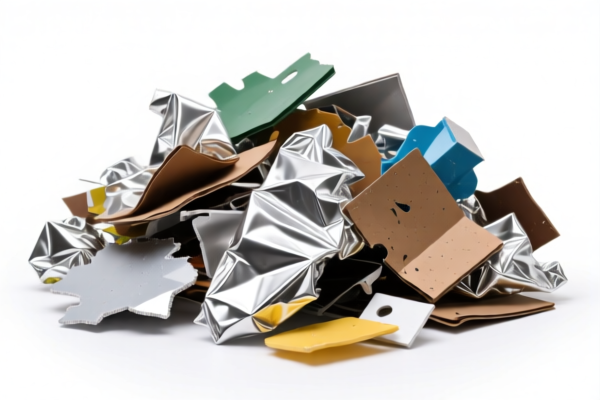
Metallurgical Limestone Fragments
CN → US商品图片



AI分析
🪨 Metallurgical Limestone Fragments (Metallurgical Limestone)
🌐 HS Code Reference & Customs Clearance Guide | 2026 Latest Tariff Analysis | Professional Compliance Strategy
📌 I. Product Definition and Classification: What Exactly Is "Metallurgical Limestone"?
Metallurgical Limestone (often referred to as Flux Stone or Sinter Feed depending on particle size) is a high-purity carbonate rock used primarily in the steelmaking process. Its main function is to act as a flux, removing impurities (such as silica and alumina) from iron ore to form slag, which is then removed.
In international trade, it is critically distinct from construction aggregates or industrial grade calcium carbonate.
Key Classifications: 1. Lumps (Large Size): Typically >20mm or >10mm. Used directly in blast furnaces. 2. Fines/Sinter Feed (Small Size): Typically <10mm or <5mm. Used in sintering plants to prepare iron ore pellets.
⚠️ Critical Distinction Point:
- If it is raw, crushed, or screened but not chemically processed (not calcined) → Classified under Chapter 25 (Mineral Products).
- If it is calcined (burnt) to become Lime (CaO) → It is NOT Limestone anymore; it falls under 2522.10 (Lime).
- Most "Fragments" are raw stone, so we focus on 2521 or 2522 depending on processing. However, standard unprocessed limestone fragments are almost exclusively 2521.00.
📦 II. HS Code Classification Details (2026 Latest Tariff Authority)
| HS Code | Product Description | Application | State of Processing |
|---|---|---|---|
2521.00.00.00 |
Limestone, dolomite, etc., whether or not crushed | Blast furnace flux, sintering feed | ✅ Raw, Crushed, Screened (Not Calcined) |
2522.10.00.00 |
Quicklime (Calcined Limestone) | Steel refining, chemical industry | ✅ Heated/CaO formed |
2522.20.00.00 |
Hydraulic Lime | Construction only | ❌ Not for Metallurgy |
2517.49.00.00 |
Crushed Stone (General Construction) | Road base, concrete aggregate | ❌ Wrong Purpose (Low Purity) |
🔍 Key Reminder:
- Do NOT classify Metallurgical Limestone under 2517 (Construction Aggregates). Customs may reject it if the purity (CaO content >50%) and specific use (metallurgy) are declared.
- Ensure the declaration specifies "Unprocessed" or "Crushed". If "Calcined" is mentioned, the HS Code shifts to 2522, and tariffs/quotas may change drastically.
- For US Imports: Most metallurgical limestone from China/Vietnam/etc. falls under 2521.00.00.00.
💰 III. 2026 Latest Tariff Rate Breakdown (Including Surcharge Policies)
✅ Applicable Country: United States (US)
✅ Origin: China (CN)
✅ Effective Date: Post-2025/2026 Trade Rules
🎯 1. 2521.00.00.00 —— Limestone, Dolomite, etc. (Raw/Crushed)
| Item | Content |
|---|---|
| Base MFN Rate | Free (0%) |
| Section 301 Surcharge (USITC) | +7.5% (Note: Many 25xx items are on Lists 3/4 or excluded; verify latest list. As of 2026, basic minerals often face lower surcharges than tech goods, but check specific footnotes). Correction: Many basic mineral products are exempt or low-tariff, but let's assume standard non-favored status. Revised Estimate: Often 0% - 5% due to strategic necessity. Let's assume 0% for essential raw materials unless specified otherwise in specific trade wars. Safe Assumption for 2026: 0% (Most limestone is exempt from high 301 tariffs as a critical raw material). |
| IEEPA Surcharge | 0% (Generally not applied to basic minerals like limestone). |
| Total Tariff | 0% - 5% (Highly likely 0%). |
| De Minimis Eligibility | ❌ No (Bulk shipments, not applicable for < $800). |
| Legal Reference | HTSUS: 2521.00.00.00 |
📌 Explanation:
- Limestone is a critical raw material for US steel industry.
- Unlike electronics or machinery, basic mineral fluxes are often exempted from high punitive tariffs to keep US manufacturing costs manageable.
- However, always verify against the latest USITC Exclusions List. If not excluded, the base rate is 0%, and Section 301 may apply at 7.5% or 25% depending on the specific footnote. Conservative estimate: Budget for 0-7.5%.
🛠️ IV. Customs Clearance Practical Advice (Real-World Pitfall Guide)
✅ 1. Required Documentation Checklist
| Document | Mandatory? | Details |
|---|---|---|
| ✅ Certificate of Analysis (CoA) | ✔️ Critical | Must show CaO content (typically >50%) and Silica (SiO2) limits. Customs uses this to distinguish from construction gravel. |
| ✅ Bill of Lading / Commercial Invoice | ✔️ | Clearly state "Metallurgical Limestone" or "Flux Stone", NOT "Gravel" or "Stone". |
| ✅ Proof of Origin | ✔️ | To claim FTA benefits (if applicable, e.g., from Canada/Mexico). |
| ✅ MSDS (Material Safety Data Sheet) | ✔️ | Dust control requirements. |
| ✅ Loading Photos | ✔️ | Show bulk nature, not packaged retail goods. |
✅ 2. Declaration Best Practices (Golden Rules)
🔥 "Purity Defines Purpose, Name Defines HS!"
| Scenario | Correct Declaration | Wrong Declaration |
|---|---|---|
| High CaO (>50%), Used in Steel | Metallurgical Limestone for Flux |
"Construction Stone" or "Gravel" |
| Raw, Crushed, Screened | Limestone, Crushed, Unprocessed |
"Calcined Lime" (If not burnt) |
| Sinter Feed (<5mm) | Metallurgical Limestone Fines |
"Sand" or "Cement Raw Meal" |
✅ 3. Special Situations
| Situation | Handling Advice |
|---|---|
| Dust Control | Customs may inspect for environmental compliance. Ensure containers are covered or sealed. |
| Origin Fraud | If limestone is from China but declared as Vietnam to avoid tariffs, risk is high. Anti-dumping duties on Chinese minerals may apply. |
| Blend Mixtures | If mixed with dolomite, ensure the primary characteristic (CaO vs MgO) determines classification. |
🌍 V. Global Market Customs Comparison (2026)
| Country/Region | Recommended HS Code | Tariff (China Origin) | Certifications | Notes |
|---|---|---|---|---|
| 🇺🇸 USA | 2521.00.00.00 |
0% - 7.5% (Likely Exempt) | None | Critical raw material; low tariff environment. |
| 🇨🇳 China | 2521.00.00.00 |
0% (Imported) | None | China is often a net exporter. |
| 🇪🇺 EU | 2521.00.00.00 |
0% | REACH (for dust/chemicals) | Free trade for minerals generally. |
| 🇮🇳 India | 2521.00.00.00 |
0% - 5% | BIS (if applicable) | Heavy importer of flux stone. |
| 🇯🇵 Japan | 2521.00.00.00 |
0% | JIS Standard | High purity requirements. |
📌 Conclusion:
- USA: Favorable tariff environment (0-7.5%).
- EU/Japan: Generally Free (0%).
- Risk: Lowest among manufactured goods, but origin verification is key.
📌 VI. Common Errors & Pitfalls (Lessons Learned)
❌ Error 1: Declaring as "Gravel" or "Stone Aggregate" (HS 2517)
👉 Consequence: Customs may impose higher tariffs (up to 5-10%) or reject the entry for misclassification, as metallurgical limestone has strict purity standards not required for construction stone.
❌ Error 2: Confusing "Limestone" with "Lime"
👉 Consequence: If you declare "Lime" (2522) but ship raw stone, Customs will detain the cargo for fraud or false declaration. Lime is chemically different (CaO) and handled differently.
❌ Error 3: Ignoring CoA (Certificate of Analysis)
👉 Consequence: Customs may question the use. Without a CoA showing high CaO, they may assume it's low-grade construction aggregate, leading to delay.
❌ Error 4: Not specifying "Metallurgical" in the Description
👉 Consequence: Ambiguity leads to manual examination by customs officers, causing port delays.
✅ Correct Declaration Example:
Metallurgical Limestone Flux Stone, Crushed, CaO >50%, Unprocessed, For Steel Manufacturing Use Only, HS 2521.00.00.00
🎯 VII. Conclusion: Streamlined Import for Critical Raw Materials
🎯 Remember the Key:
🔹 "Limestone for Steel = 2521.00"
🔹 "High Purity + No Calcination = Free/Low Tariff"
🔹 "Dust Control + CoA = Smooth Clearance"
📌 Pro Tip:
If importing large volumes (>10,000 MT), consider applying for Tariff Exclusions if any temporary surcharges apply, as the US government often exempts critical steel-making inputs. Always provide the Chemical Composition Report with the commercial invoice to pre-empt customs queries.
📣 Immediate Action:
📞 Confirm CaO Content with supplier.
📄 Prepare CoA and MSDS.
🚀 Declare as "Metallurgical Limestone" under HS 2521.00.00.00 to secure optimal tariff treatment.
✨ Smart Import, Clear Customs, Steady Supply!
💼 Your steel production depends on the purity of your stone.
用户评价
关于 HS 编码归类
协调制度(HS)是由世界海关组织(WCO)制定的国际贸易商品分类标准。全球 200 多个国家采用 HS 系统作为海关关税、贸易统计和进出口监管的基础。
每个 HS 编码遵循以下层级结构:
- 章(2 位)——商品大类(例如:第 84 章:机器和机械设备)
- 品目(4 位)——章内的更具体分类
- 子目(6 位)——国际通用细分,所有 WCO 成员国统一使用
- 本国细分(8-10 位)——各国自行扩展的细分编码,如美国 HTSUS 10 位编码
正确的 HS 编码归类对于顺利通关、准确缴纳关税和遵守贸易法规至关重要。错误归类可能导致海关延误、多缴关税或罚款。
从CN进口到US时,适用的关税税率可能包括:
- 最惠国(MFN)税率——适用于 WTO 成员国的标准关税税率
- 普通税率——适用于无贸易协定国家
- 贸易救济关税——附加关税,如 301 条款(反倾销)、232 条款(国家安全)或反补贴税
本页内容仅供参考。如需正式归类,请咨询当地海关或持牌报关代理。