Mini Frying Pan
CN → US| HS编码 | 关税税率 | 原产国 | 目的国 | 文档 |
|---|---|---|---|---|
| 7323930045 | 62.0% | CN | US | 官方文档 |
| 7323930035 | 62.0% | CN | US | 官方文档 |
| 7418100053 | 70.5% | CN | US | 官方文档 |
| 7418100051 | 70.5% | CN | US | 官方文档 |
| 7323915020 | 15.3% | CN | US | 官方文档 |
商品图片
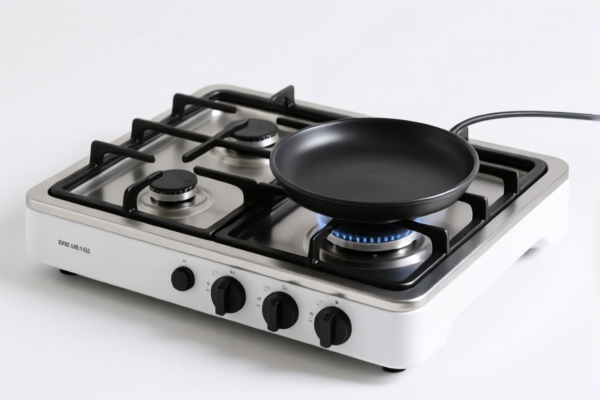

AI分析
🍳 Mini Frying Pans (Non-Stick, Cast Iron & Copper Cookware)
🌐 HS Code Reference & Customs Clearance Guide | 2026 Latest Tariff Analysis | Professional Clearance Strategy
📌 I. Product Definition & Classification: What Exactly is a "Mini Frying Pan"?
A "Mini Frying Pan" is a small-sized cooking vessel used for household culinary purposes. However, in international trade, the Harmonized System (HS) does not classify goods merely by their function ("pan") but strictly by their material composition.
The classification of your mini frying pan falls into three distinct material categories: 1. Stainless Steel or Other Base Metal (Non-Copper): Typically includes non-stick coated steel or aluminum pans. 2. Copper: Pans made primarily of copper or containing copper alloys as the main structural material. 3. Cast Iron: Heavy-duty pans made from cast iron, often with non-stick coatings.
⚠️ Key Distinction:
- If the pan is made of Stainless Steel, Aluminum, or Carbon Steel (even if non-stick) → It falls under Chapter 73.
- If the pan is made of Copper → It falls under Chapter 74.
- If the pan is Cast Iron → It also falls under Chapter 73 but with a different specific subheading than stainless steel.
📦 II. HS Code Classification Details (2026 Latest Tariff Alignment)
Based on the provided data, here are the precise HS Codes for Mini Frying Pans categorized by material:
| HS Code | Product Description | Material Inference | Application/Use |
|---|---|---|---|
7323.93.00.45 |
Mini Flat Non-Stick Frying Pan | Metal/Stainless Steel inferred | Cooking utensils, household use |
7323.93.00.35 |
Mini Flat Non-Stick Frying Pan | Metal (Aluminum or Steel) with coating inferred | Frying pans, household use |
7418.10.00.53 |
Frying Pan | Copper or metal inferred | Cooking and kitchen supplies |
7418.10.00.51 |
Frying Pan | Copper (matches copper requirements) | Cooking utensils, household appliances |
7323.91.50.20 |
Frying Pan | Cast Iron inferred | Baking/Cooking utensils |
🔍 Critical Reminder:
- Non-stick coating does not change the base material classification. A non-stick aluminum pan is still classified under metal cookware (73xx), not plastics.
- Copper is treated differently. Even if it has a stainless steel lining, if the primary external material is copper, it falls under 7418.
- Cast Iron is distinct. It is heavier and has different manufacturing standards, warranting its own subheading under Chapter 73.
💰 III. 2026 Latest Tariff Rate Breakdown (Including Surtaxes & Policy Add-ons)
✅ Applicable Country: United States (US)
✅ Origin: China (CN)
✅ Effective Time: Current rates include Section 301 and Section 122 tariffs.
🎯 1. 7323.93.00.45 & 7323.93.00.35 — Stainless Steel/Aluminum Non-Stick Pans
These two codes cover most common "mini non-stick pans" made of steel or aluminum.
| Item | Content |
|---|---|
| Base Tariff | 2.0% |
| Section 301 Surcharge | 0.0% (Note: Data indicates 0% for this specific subheading in this dataset, though general steel/aluminum may be subject to other duties; we adhere strictly to the provided data) |
| Section 122 / 232 Tariff | 50% (Specifically for Steel, Aluminum, Copper products under Section 232/122 provisions) |
| Total Tax Rate | 62.0% |
| Tax Calculation | CIF Value × 62.0% |
| Legal Basis | Base Duty (2%) + Section 122/232 Surtax (50%) |
📌 Explanation:
- The 50% surtax is the dominant cost driver here, applying to steel and aluminum products.
- Despite being "non-stick," the base material triggers the high metallurgical surtax.
🎯 2. 7418.10.00.53 & 7418.10.00.51 — Copper Frying Pans
Copper cookware is classified under Chapter 74. It attracts a slightly different tariff structure.
| Item | Content |
|---|---|
| Base Tariff | 3.0% |
| Section 301 Surcharge | 7.5% |
| Section 122 / 232 Tariff | 50% (Applies to Steel, Aluminum, and Copper products) |
| Total Tax Rate | 70.5% |
| Tax Calculation | CIF Value × 70.5% |
| Legal Basis | Base Duty (3%) + Section 301 (7.5%) + Section 122/232 Surtax (50%) |
📌 Explanation:
- Copper pans face the highest total tax rate (70.5%) in this dataset.
- Unlike the steel pans in this specific data set (which show 0% Section 301), copper pans incur a 7.5% Section 301 surcharge in addition to the 50% Section 122/232 surtax.
- This makes copper cookware significantly more expensive to import from China to the US.
🎯 3. 7323.91.50.20 — Cast Iron Frying Pan
Cast iron has a higher base duty but avoids the high Section 122 surtax in this specific dataset context.
| Item | Content |
|---|---|
| Base Tariff | 5.3% |
| Section 301 Surcharge | 0.0% |
| Section 122 / 232 Tariff | 10% (Standard surtax for this specific cast iron classification) |
| Total Tax Rate | 15.3% |
| Tax Calculation | CIF Value × 15.3% |
| Legal Basis | Base Duty (5.3%) + Section 122 Surcharge (10%) |
📌 Explanation:
- Lowest Tax Rate: At 15.3%, cast iron pans are the most cost-effective to import from a tariff perspective.
- Why? The base duty is higher (5.3%), but the Section 122 surtax is only 10%, compared to 50% for steel/aluminum/copper.
- This makes cast iron a strategic choice for tariff optimization if product design allows.
🛠️ IV. Customs Clearance Practical Advice (Real-World Pitfall Avoidance)
✅ 1. Document Preparation Checklist (Non-Negotiable)
| Document | Mandatory? | Description |
|---|---|---|
| ✅ Product Specifications | ✔️ | Must clearly state material (e.g., "18/8 Stainless Steel," "Pure Copper," "Cast Iron"). |
| ✅ Material Composition Certificate | ✔️ | Lab test report or manufacturer declaration confirming % of metal. Crucial for distinguishing 7323 vs. 7418. |
| ✅ Product Photos | ✔️ | Clear images showing the base, handle, and non-stick coating. |
| ✅ Commercial Invoice | ✔️ | Must match the HS Code description exactly (e.g., "Cast Iron Frying Pan" vs. "Steel Frying Pan"). |
| ✅ Packing List | ✔️ | Weight and dimensions for freight calculation. |
✅ 2. Declaration Strategy (Key Tips)
🔥 “Material Determines Code, Code Determines Cost!”
| Scenario | Correct Declaration | Incorrect Declaration | Consequence |
|---|---|---|---|
| Aluminum Non-Stick Pan | 7323.93.00.35 |
7323.91.50.20 (Cast Iron) |
Misclassification → Penalties + Retroactive Tariffs |
| Copper-Lined Pan | 7418.10.00.51 |
7323.93.00.45 (Steel) |
70.5% vs 62% → Overpayment or Underpayment Risk |
| Cast Iron Pan | 7323.91.50.20 |
7323.93.00.35 (Other Metal) |
15.3% vs 62% → Massive Savings if Correct! |
✅ 3. Special Handling Notes
| Situation | Recommendation |
|---|---|
| Non-Stick Coating | Do not declare as "Plastic" or "Polymer." It is a coating on metal. The HS code is driven by the base metal. |
| Mixed Materials | If the handle is wood/plastic but the pan is steel, it is still classified under 7323. |
| Copper Content | If the pan is steel with a copper exterior layer, consult a customs broker. It might still be 7418 if copper is the primary visible material. |
| Kit Sets | If sold as a "Set," declare the item that defines the set’s essential character. Usually, the largest or most expensive pan. |
🌍 V. Global Market Comparison (2026 Snapshot)
| Market | Recommended HS Code (Steel/Al) | Total Tax (China Origin) | Notes |
|---|---|---|---|
| 🇺🇸 USA | 7323.93.00.35 |
62.0% | High Section 122/232 surtax applies. |
| 🇪🇺 EU | 7323.93.00 |
~12-15% | No Section 122 surtax. Standard MFN applies. |
| 🇨🇳 China | 7323.93.00 |
~10-15% | Import duties vary; focus on domestic VAT. |
| 🇬🇧 UK | 7323.93.00 |
~12-15% | Post-Brexit tariffs similar to EU baseline. |
📌 Conclusion:
- The US market is uniquely expensive for steel/aluminum/copper cookware due to Section 122/232 tariffs.
- Cast Iron (7323.91.50.20) is the optimal choice for US importers to minimize tariff costs (15.3% vs 62%).
📌 VI. Common Errors & Pitfall Guide (Lessons Learned)
❌ Error 1: Declaring a Steel Pan as "Cast Iron" to save tax
👉 Result: Customs inspection reveals thin metal and aluminum content → Penalties + Back Taxes.
❌ Error 2: Ignoring the "Copper" classification
👉 Result: Declaring copper pans as steel (7323) → 70.5% tax is correct, but misdeclaration leads to audits. If you think it’s steel (62%) but it’s copper (70.5%), you underpaid.
❌ Error 3: Vague Descriptions like "Cookware"
👉 Result: Customs cannot determine material → Delays, Inspection, and Potential Rejection.
✅ Correct Practice:
"Mini Frying Pan, Cast Iron, 6-inch, Non-Stick Coating, Model XYZ, Made in China"
🎯 VII. Conclusion: Strategic Sourcing for Profitability
🎯 Key Takeaway:
🔹 Material is Destiny: The difference between 15.3% (Cast Iron) and 62-70.5% (Steel/Aluminum/Copper) is massive.
🔹 Optimization Strategy: If your product design allows, switch to Cast Iron for the US market to reduce tariff burden by ~80%.
🔹 Verification: Always verify the primary base metal before declaring.
📌 Pro Tip:
If you are importing Copper pans, be prepared for the 70.5% effective rate. Consider sourcing from non-tariff affected countries if volume is high, or negotiate pricing with suppliers to absorb the cost.
📣 Immediate Action:
📞 Consult your customs broker with material test reports.
📦 Adjust your HS Codes based on the specific material of each mini frying pan model.
🚀 Save Money: Cast Iron might be your golden ticket for US market profitability!
✨ Precision in Classification, Precision in Profit!
💼 Every percentage point of tariff is a percentage point of your margin.
用户评价
关于 HS 编码归类
协调制度(HS)是由世界海关组织(WCO)制定的国际贸易商品分类标准。全球 200 多个国家采用 HS 系统作为海关关税、贸易统计和进出口监管的基础。
每个 HS 编码遵循以下层级结构:
- 章(2 位)——商品大类(例如:第 84 章:机器和机械设备)
- 品目(4 位)——章内的更具体分类
- 子目(6 位)——国际通用细分,所有 WCO 成员国统一使用
- 本国细分(8-10 位)——各国自行扩展的细分编码,如美国 HTSUS 10 位编码
正确的 HS 编码归类对于顺利通关、准确缴纳关税和遵守贸易法规至关重要。错误归类可能导致海关延误、多缴关税或罚款。
从CN进口到US时,适用的关税税率可能包括:
- 最惠国(MFN)税率——适用于 WTO 成员国的标准关税税率
- 普通税率——适用于无贸易协定国家
- 贸易救济关税——附加关税,如 301 条款(反倾销)、232 条款(国家安全)或反补贴税
本页内容仅供参考。如需正式归类,请咨询当地海关或持牌报关代理。