Mink Raw Fur Skins Tails
CN → US| HS编码 | 关税税率 | 原产国 | 目的国 | 文档 |
|---|---|---|---|---|
| 4303100030 | 39.0% | CN | US | 官方文档 |
| 4302110020 | 37.1% | CN | US | 官方文档 |
| 4302110010 | 37.1% | CN | US | 官方文档 |
| 4301100020 | 17.5% | CN | US | 官方文档 |
商品图片
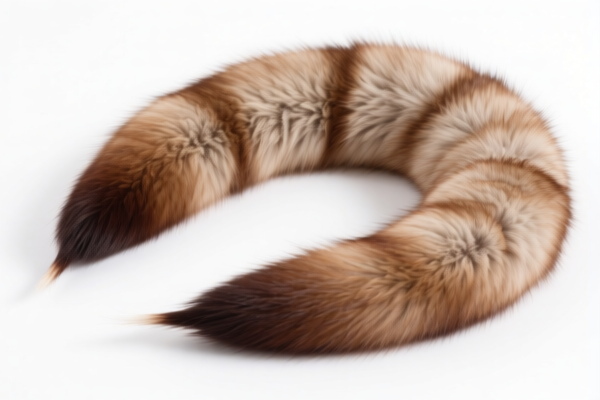
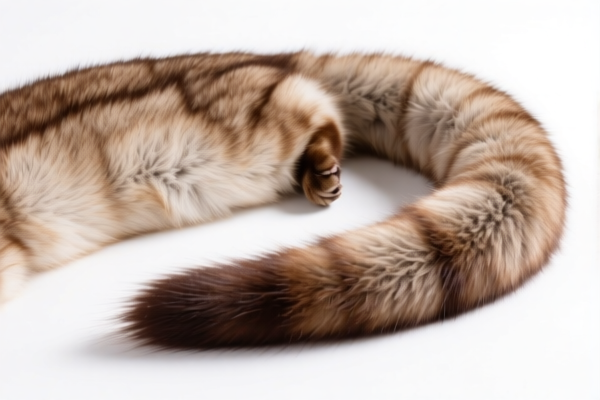
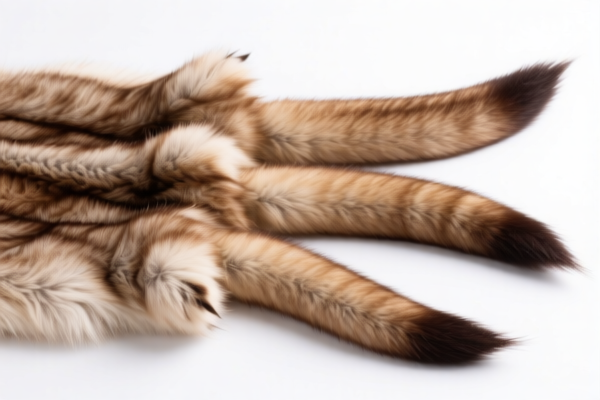
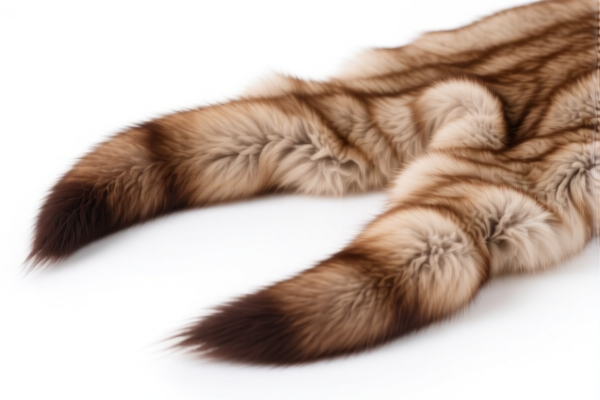
AI分析
🐾 Mink Raw Fur Skins & Tails (Hides and Skins)
🌐 HS Code Reference & Clearance Guide | 2026 Latest Tariff Rules | Professional Customs Strategy
📌 I. Product Definition & Classification: Understanding "Mink Raw Fur"
Mink raw fur skins and tails are the unprocessed or minimally processed pelts of the mink (Neovison vison), which serve as the primary raw material for the luxury fur industry. In international trade, these items are classified based on their state of processing and physical form. The degree of preservation (fresh, frozen, salted, dried) and whether they are whole, fragmented, or tanned significantly impacts their HS Code assignment and applicable tariffs.
Key Distinctions:
* Raw/Unprocessed (4301.10): Skins that have been removed from the animal but only undergone basic preservation (salting, drying, or freezing) without chemical tanning or full leather-like preparation.
* Partially Processed/Tanned (4302.11): Skins that have undergone chemical tanning, dressing, or are prepared for further manufacturing, often retaining the natural hair but treated for durability.
* Finished制品 (4303.10): Although the user input is "Raw Fur," it is critical to distinguish raw materials from finished goods. If the skins have been cut, assembled, or turned into articles (even unfinished ones), they fall under 4303. However, for "Raw Skins," we focus on 4301 and 4302.
⚠️ Critical Classification Point:
- Raw/Unprocessed → Generally4301.10.00.20
- Tanned/Dressed (Whole Skins) → Generally4302.11.00.10
- Other Tanned/Dressed (Pieces/Segments) → Generally4302.11.00.20
📦 II. HS Code Classification Details (2026 Latest Tariff Authority Comparison)
Based on the provided , here are the specific HS Codes applicable to mink raw fur skins and tails, along with their tax implications.
| HS Code | Product Description | Physical Form | State of Processing | Total Tax Rate |
|---|---|---|---|---|
4301.10.00.20 |
Original Mink Skins (Raw) | Complete skins or fragments/slices | Unprocessed or minimally preserved (Raw) | 17.5% |
4302.11.00.10 |
Processed Mink Skins | Whole skins (整张皮) | Tanned, dressed, or further prepared | 37.1% |
4302.11.00.20 |
Other Mink Skins | Other forms (e.g., tails, pieces) | Processed/Tanned | 37.1% |
4303.10.00.30 |
Mink Fur Articles | Fur制品 (Articles/Products) | Finished or semi-finished goods | 39.0% |
🔍 Key Insight:
-4301.10.00.20is the most common code for raw, unprocessed mink pelts (including tails if they are raw skins/segments). This code has the lowest base tax burden among the options.
-4302.11.00.10applies to whole, tanned/dressed mink skins. Note that "tails" alone, if processed, might fall under4302.11.00.20as "other," unless specifically classified as whole skins.
-4303.10.00.30is for finished products (e.g., collars, jackets, or assembled fur panels). Do not use this for raw skins.
💰 III. 2026 Latest Tariff Rate Breakdown (Including Surtaxes & Policy Levies)
✅ Applicable Country: United States (US)
✅ Origin: China (CN)
✅ Effective Date: November 10, 2025 onwards (including subsequent imports)
🎯 1. 4301.10.00.20 —— Original Mink Skins (Raw/Unprocessed)
| Item | Content |
|---|---|
| Base Tariff Rate | 0.0% (ad valorem) |
| Section 301 Surtax | +7.5% |
| Section 122 Tariff | +10% |
| Total Tax Rate | 17.5% |
| Tax Calculation | CIF Value × 17.5% |
| De Minimis Exemption | ❌ Not Eligible (Deny de minimis) |
| Legal Basis Path | USITC:4301.10.00.20 → Section 301: Footnote 9903.01.07 → Section 122: IEPEA |
📌 Explanation:
- Although the base tariff is 0%, the Section 301 surtax (7.5%) and Section 122 tariff (10%) apply due to the product's origin (China).
- Total impact: 17.5%. This is the most cost-effective classification for raw mink skins.
- Note: "Section 122" refers to specific provisions under the International Emergency Economic Powers Act (IEEPA) targeting certain Chinese goods.
🎯 2. 4302.11.00.10 & 4302.11.00.20 —— Processed Mink Skins (Tanned/Dressed)
| Item | Content |
|---|---|
| Base Tariff Rate | 2.1% (ad valorem) |
| Section 301 Surtax | +25.0% |
| Section 122 Tariff | +10% |
| Total Tax Rate | 37.1% |
| Tax Calculation | CIF Value × 37.1% |
| De Minimis Exemption | ❌ Not Eligible (Deny de minimis) |
| Legal Basis Path | USITC:4302.11.00.10/20 → Section 301: Footnote 9903.01.07 → Section 122: IEPEA |
📌 Explanation:
- Processed/tanned skins incur a higher base tariff (2.1%) compared to raw skins (0.0%).
- They are subject to the maximum Section 301 surtax (25%), which is significantly higher than the 7.5% for raw skins.
- Total impact: 37.1%. This is nearly double the tax burden of raw skins.
- Why? The US imposes higher tariffs on processed luxury goods to protect domestic industries and discourage importation of value-added Chinese products.
🎯 3. 4303.10.00.30 —— Mink Fur Articles (Finished Products)
| Item | Content |
|---|---|
| Base Tariff Rate | Not specified in data, but implied higher |
| Section 301 Surtax | +25.0% |
| Section 122 Tariff | +10% |
| Total Tax Rate | 39.0% |
| Tax Calculation | CIF Value × 39.0% |
| De Minimis Exemption | ❌ Not Eligible (Deny de minimis) |
📌 Explanation:
- Finished mink articles carry the highest total tax rate (39.0%).
- This includes all surtaxes and base tariffs.
- Avoid this classification for raw skins to prevent overpayment.
🛠️ IV. Customs Clearance Practical Advice (Avoid Pitfalls)
✅ 1. Documentation Checklist (Mandatory)
| Document | Required | Notes |
|---|---|---|
| ✅ Commercial Invoice | ✔️ | Must clearly state: "Mink Raw Skins," "Not Tanned," "For Manufacturing Use" |
| ✅ Packing List | ✔️ | Detail weight, number of skins, and condition (fresh/frozen/salted) |
| ✅ Bill of Lading/Air Waybill | ✔️ | Consignee and shipper details must match invoice |
| ✅ Certificate of Origin | ✔️ | Crucial for determining country of origin (CN triggers surtaxes) |
| ✅ Treatment Certificate | ✔️ | Proof of preservation method (e.g., "Salting," "Freezing," "Drying") |
| ✅ Customs Declaration Statement | ✔️ | Explicitly declare: "HS Code 4301.10.00.20, Raw Mink Skins, Not Tanned" |
📌 Critical Tip:
- If you ship raw skins but declare them as processed/tanned, you risk being classified under4302.11(37.1%) or facing penalties for misdeclaration.
- Always provide photos of the skins showing they are raw (no chemical treatment signs).
✅ 2. Classification Strategy (Key Mantra)
🔥 "Raw is 0% Base, Tanned is 2.1% Base! 301 is 7.5% vs 25%! Choose Raw to Save Half!"
| Scenario | Correct HS Code | Tax Rate | Wrong Action | Consequence |
|---|---|---|---|---|
| Raw, Unprocessed Mink Skins | 4301.10.00.20 |
17.5% | Declare as Tanned (4302) |
Overpay 19.6% extra |
| Tanned, Whole Mink Skins | 4302.11.00.10 |
37.1% | Declare as Raw (4301) |
Penalty for Misclassification |
| Mink Tails (Raw) | 4301.10.00.20 |
17.5% | Declare as Article (4303) |
Overpay 21.5% extra |
| Finished Mink Collar | 4303.10.00.30 |
39.0% | Declare as Raw Skins | Penalty for Misclassification |
✅ 3. Special Cases & Handling
| Scenario | Recommendation |
|---|---|
| Mixed Shipments (Raw + Tanned) | Split Declaration! Do not combine. Raw skins go to 4301.10.00.20, Tanned to 4302.11.00.10. Mixing leads to highest rate application on all items. |
| Mink Tails | If raw, declare as "Mink Raw Skins (Tails)" under 4301.10.00.20. If processed, use 4302.11.00.20. |
| Freezing/Salting | Ensure invoice states "Preserved by Freezing" or "Salted." This confirms raw status, supporting 4301 classification. |
| De Minimis (Section 321) | ❌ Not Eligible. Mink fur from China is subject to Section 122 and Section 301 surtaxes, so it cannot enter under the $800 de minimis exemption. |
🌍 V. Global Market Comparison (2026 Latest)
| Country/Region | Recommended HS Code | Tariff Rate | Notes |
|---|---|---|---|
| 🇺🇸 United States | 4301.10.00.20 |
17.5% | Includes 7.5% Section 301 + 10% Section 122 |
| 🇨🇳 China | 4301.10.00.20 |
~5-10% | Import duty varies; check current Chinese tariff schedule |
| 🇪🇺 European Union | 4301.10 |
~5-12% | Subject to EU CITES regulations for mink |
| 🇬🇧 United Kingdom | 4301.10 |
~5-10% | Post-Brexit tariff rules apply; check UK Tariff |
| 🇯🇵 Japan | 4301.10 |
~5-10% | Subject to Japan-China EPA if eligible |
📌 Conclusion:
- USA has the highest surtax burden due to Section 301 and Section 122.
- Raw classification (4301) is crucial to minimize costs in the US market.
- Always verify CITES permits for mink fur, as mink is a regulated species in many countries.
📌 VI. Common Errors & Pitfalls (Lessons Learned)
❌ Error 1: Declaring raw mink skins as "Fur Articles" (4303)
👉 Consequence: Pay 39.0% instead of 17.5%. Overpay by 21.5%!
❌ Error 2: Declaring raw skins as "Tanned Skins" (4302)
👉 Consequence: Pay 37.1% instead of 17.5%. Overpay by 19.6%!
❌ Error 3: Failing to declare "Raw" status on Invoice
👉 Consequence: Customs may assume processed status and apply higher tariffs or delay clearance.
❌ Error 4: Ignoring Section 122 Surtax
👉 Consequence: Unexpected tax bill at customs. Always include 10% Section 122 in cost calculations.
✅ Correct Approach:
"Mink Raw Skins, Unprocessed, Frozen, HS Code 4301.10.00.20, Origin: China, Subject to Section 301 & Section 122 Surtaxes"
🎯 VII. Conclusion: Professional Classification Saves Money!
🎯 Remember the Mantra:
🔹 "Raw is 17.5%, Tanned is 37.1%! Declare Raw, Save 20%!"
🔹 "HS Code Dictates Cost, 301 & 122 are the Real Killers!"
🔹 "Don't Pack Raw Skins as Finished Goods – The Tax Hit is Brutal!"
📌 Pro Tip:
If you are importing finished mink products from non-China origins (e.g., Denmark, Finland), you may avoid Section 301/122 surtaxes. However, for China-origin raw skins, the 17.5% rate is the best achievable.
Apply for an Advance Ruling (Pre-classification) from CBP to confirm your HS Code assignment before shipment.
📣 Immediate Action:
📞 Contact a Licensed Customs Broker + Provide Skin Photos + Apply for HS Code Pre-ruling
🚀 Ensure your Mink Skins, Clear Customs Smoothly, Save 20% Tax, Maximize Profit!
✨ Professional Clearance Starts with Accurate Classification!
💼 Every Dollar Saved in Tariffs is Pure Profit!
用户评价
关于 HS 编码归类
协调制度(HS)是由世界海关组织(WCO)制定的国际贸易商品分类标准。全球 200 多个国家采用 HS 系统作为海关关税、贸易统计和进出口监管的基础。
每个 HS 编码遵循以下层级结构:
- 章(2 位)——商品大类(例如:第 84 章:机器和机械设备)
- 品目(4 位)——章内的更具体分类
- 子目(6 位)——国际通用细分,所有 WCO 成员国统一使用
- 本国细分(8-10 位)——各国自行扩展的细分编码,如美国 HTSUS 10 位编码
正确的 HS 编码归类对于顺利通关、准确缴纳关税和遵守贸易法规至关重要。错误归类可能导致海关延误、多缴关税或罚款。
从CN进口到US时,适用的关税税率可能包括:
- 最惠国(MFN)税率——适用于 WTO 成员国的标准关税税率
- 普通税率——适用于无贸易协定国家
- 贸易救济关税——附加关税,如 301 条款(反倾销)、232 条款(国家安全)或反补贴税
本页内容仅供参考。如需正式归类,请咨询当地海关或持牌报关代理。