Mirror
CN → US| HS编码 | 关税税率 | 原产国 | 目的国 | 文档 |
|---|---|---|---|---|
| 7009911010 | 42.8% | CN | US | 官方文档 |
| 9403200086 | 85.0% | CN | US | 官方文档 |
| 7009911090 | 42.8% | CN | US | 官方文档 |
| 9403200078 | 85.0% | CN | US | 官方文档 |
商品图片
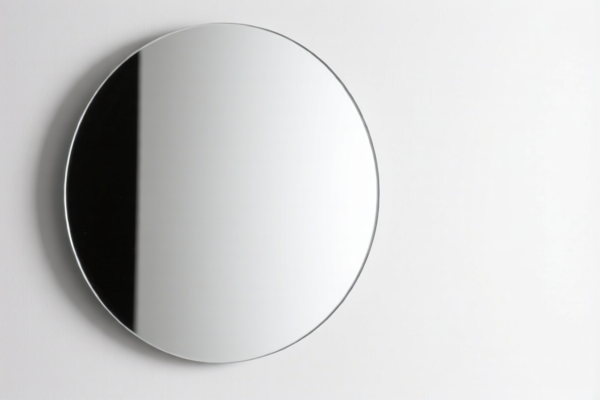

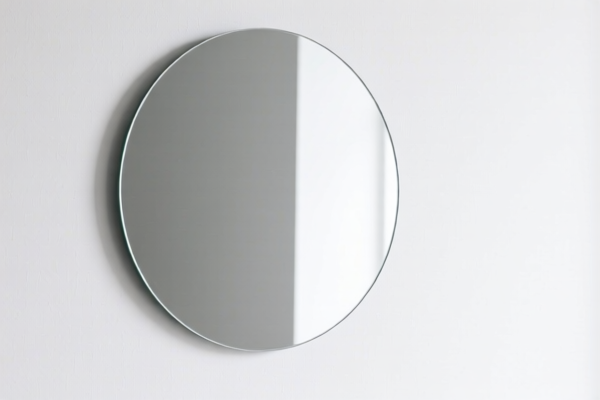
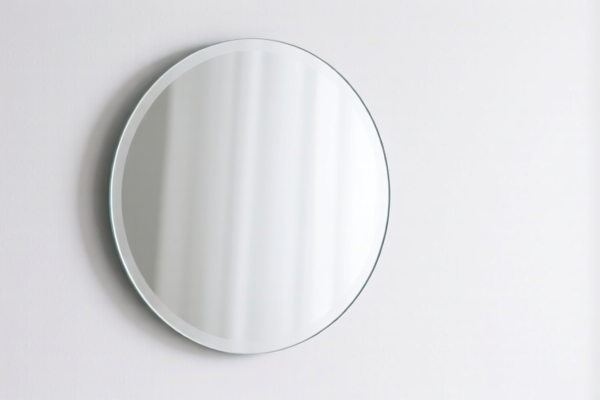
AI分析
🪞 Mirror / Mirror Cabinet (Glass Mirrors & Metal Furniture)
🌐 HS Code Reference & Customs Clearance Guide | 2026 Latest Tariff Analysis | Professional Compliance Strategy 📌 I. Product Definition: Are You Declaring a "Mirror" or a "Cabinet"?
In international trade, the term "Mirror" is ambiguous when it involves storage furniture. The classification depends entirely on the primary material and function.
Glass Mirrors (7009.91.10): Products where the primary value and function are the reflective glass surface, regardless of whether they are standalone or mounted on a frame. Metal Furniture/Cabinets (9403.20.00): Products where the primary value lies in the metal structure (steel, aluminum, copper) acting as a cabinet or storage unit, even if it contains a mirror.
⚠️ Key Distinction Point: - If the product is primarily a glass reflective surface with minimal framing →归入 7009.91.10.xxxx (Glass Mirror Category) - If the product is a metal cabinet/wardrobe with a mirror door → 归入 9403.20.00.xxxx (Metal Furniture Category)
📦 II. HS Code Classification Details (2026 Latest Tariff Authority对照)
Based on the provided data, here are the two distinct classification paths for "Mirror" products:
| HS Code | Product Description | Primary Attribute |
|---|---|---|
7009.91.10.10 |
Glass mirrors, framed or unframed, meeting glass material requirements | Glass Component |
7009.91.10.90 |
Other glass mirrors, including those with glass mirror components | Glass Component |
9403.20.00.86 |
Other metal furniture, specifically metal cabinets (e.g., Mirror Cabinets as storage) | Metal Structure |
9403.20.00.78 |
Other metal furniture parts/cabinets, fallback category for metal furniture | Metal Structure |
🔍 Critical Insight: - The "Mirror Cabinet" (镜柜) is the most contentious item. - Customs may view it as Glass (if the mirror is the main feature) or Metal Furniture (if the cabinet body is the main feature). - Risk: Misclassification leads to significant tariff differences (42.8% vs 85.0%).
💰 III. 2026 Latest Tariff Rate Breakdown (Including Surcharge & Policy Add-ons)
✅ Applicable Market: United States (US)
✅ Origin: China (CN)
✅ Note: Rates include Base Duty + Section 301 (25%) + Section 122 (10%) + Special Metal Surcharge (50%) where applicable.
🎯 1. 7009.91.10.10 & 7009.91.10.90 —— Glass Mirrors (The "Glass" Path)
| Item | Content |
|---|---|
| Base Duty | 7.8% |
| Section 301 Surcharge | +25.0% |
| Section 122 Surcharge | +10.0% |
| Special Metal Surcharge | ❌ N/A (Not classified as steel/aluminum/copper制品) |
| Total Effective Tax Rate | 42.8% |
| Calculation Basis | CIF Value × 42.8% |
| De Minimis Exemption | ❌ Not Applicable (High tariff rate usually blocks $800 de minimis) |
📌 Explanation: - This path assumes the product is classified primarily as Glass. - The total burden is 42.8%. - This is significantly cheaper than the metal furniture classification but requires proof that the glass component dominates the product's identity.
🎯 2. 9403.20.00.86 & 9403.20.00.78 —— Metal Cabinets/Furniture (The "Metal" Path)
| Item | Content |
|---|---|
| Base Duty | 0.0% |
| Section 301 Surcharge | +25.0% |
| Section 122 Surcharge | +10.0% |
| Special Metal Surcharge | +50.0% (Steel, Aluminum, Copper products) |
| Total Effective Tax Rate | 85.0% |
| Calculation Basis | CIF Value × 85.0% |
| De Minimis Exemption | ❌ Not Applicable |
📌 Explanation: - This path assumes the product is classified as Metal Furniture (e.g., a steel or aluminum mirror cabinet). - The "Steel, Aluminum, Copper products surcharge: 50%" is the killer. - Even though the base duty is 0%, the additional 50% + 25% + 10% drives the total to 85.0%. - This is a 42.2 percentage point difference compared to the Glass classification!
🛠️ IV. Customs Clearance Practical Advice (Combat Pitfalls)
✅ 1. Preparation Checklist (Do not miss any!)
| Material | Required? | Explanation |
|---|---|---|
| ✅ Product Photos | ✔️ | Show the ratio of Glass to Metal structure. Is it mostly glass surface or metal box? |
| ✅ Bill of Materials (BOM) | ✔️ | List cost proportion: Glass % vs. Metal Frame % vs. Other. |
| ✅ Structure Diagram | ✔️ | Highlight if the metal is structural (supporting the cabinet) or decorative (frame). |
| ✅ Commercial Invoice | ✔️ | Clearly state: "Mirror Cabinet, Metal Frame, Glass Mirror Door" |
| ✅ Packing List | ✔️ | Detail weights of glass vs. metal parts if possible. |
✅ 2. Declaration Strategy (Key Mantra)
🔥 "Metal Cabinet = 85%, Glass Mirror = 42.8%! Structure is King!"
| Scenario | Correct Classification | Wrong Classification | Consequence |
|---|---|---|---|
| Standard Mirror Cabinet (Metal box with glass door) | 9403.20.00.86/78 (85.0%) |
7009.91.10.10 (42.8%) |
Tax Evasion Risk (If metal is dominant) |
| Wall-mounted Glass Mirror (Minimal frame) | 7009.91.10.10/90 (42.8%) |
9403.20.00.86 (85.0%) |
Overpayment (If glass is dominant) |
| Freestanding Metal Wardrobe with Mirror | 9403.20.00.86 (85.0%) |
7009.91.10.10 (42.8%) |
High Penalty for Misclassification |
✅ 3. Special Case Handling
| Situation | Handling Advice |
|---|---|
| Mixed Materials | If the product is 60% metal structure and 40% glass, customs will likely favor Metal Furniture (9403). You pay 85%. |
| Small Frame Mirror | If the metal frame is <10% of value and merely holds the glass, argue for Glass (7009). You pay 42.8%. |
| OEM Customization | Provide design specs showing if the "cabinet" function is primary. If it holds clothes/toiletries, it’s Furniture. If it’s just for reflection, it’s Glass. |
🌍 V. Global Market Comparison (2026 Latest)
| Country/Region | Recommended HS Code | Total Tariff (China Origin) | Remarks |
|---|---|---|---|
| 🇺🇸 USA | 7009.91.10.10 |
42.8% | Optimal for Glass classification |
| 🇺🇸 USA | 9403.20.00.86 |
85.0% | Avoid if possible due to 50% metal surcharge |
| 🇪🇺 EU | 7009.91.00 |
~0-4% | No Section 301/122. Much lower risk. |
| 🇨🇳 China | 7009.91.10 |
~7.8% | Base rate applies, no US surcharges. |
📌 Conclusion: - In the US market, the difference between 42.8% and 85.0% is massive. - If your product is a standard bathroom mirror cabinet (metal box), you are likely stuck at 85.0%. - If your product is a wall mirror with a tiny metal frame, you can fight for 42.8%.
📌 VI. Common Errors & Pitfalls (Blood & Tears Lessons)
❌ Error 1: Declaring a Metal Mirror Cabinet as 7009.91.10.10 (Glass)
👉 Consequence: Customs audits find metal structure dominant. Back taxes + Penalties. You save nothing; you pay interest.
❌ Error 2: Declaring a Pure Glass Mirror as 9403.20.00.86 (Metal Furniture)
👉 Consequence: Overpayment of 42.2% (85% vs 42.8%). Profit margin destroyed.
❌ Error 3: Ignoring the "Steel, Aluminum, Copper 50% Surcharge" 👉 Consequence: Many importers forget this specific add-on for metal furniture under 9403. It is not just 301+122; it's +50% extra. Total 85%.
❌ Error 4: Using generic terms "Home Decor" or "Bathroom Accessory" on Invoice 👉 Consequence: Customs will inspect physically. If it looks like a cabinet, they classify it as furniture. Vague descriptions = High Scrutiny.
✅ Correct Approach:
"Mirror Cabinet, Metal Frame (Aluminum), Glass Mirror Door, Bathroom Storage, Model XYZ"
OR
"Wall-Mounted Glass Mirror, Metal Frame (Small Profile), for Reflection Only, Model ABC"
🎯 VII. Conclusion: Professional Classification Saves Millions
🎯 Remember the Mantra:
🔹 "Metal Cabinet = 85% (50% Surcharge!)"
🔹 "Glass Mirror = 42.8% (No Metal Surcharge)"
🔹 "Structure Dictates Tax!"🔹 "If it stores stuff, it's furniture (9403). If it just reflects, it's glass (7009)."
📌 Pro Tip: If your product is a Mirror Cabinet (predominantly metal), consider: 1. Design Optimization: Reduce metal volume/cost to shift balance to glass? (Hard for functional cabinets). 2. Pre-Ruling: Apply for a Customs Ruling from US CBP before shipping to get a binding classification. This protects you from audits. 3. Supply Chain: Check if components can be sourced from non-China countries to avoid Section 301/122/Metal surcharges.
📣 Immediate Action:
📞 Contact a Customs Broker with your product photos and BOM. 📄 Request a Pre-Ruling if the product is a "Mirror Cabinet" to confirm if it falls under 7009 or 9403. 🚀 Do NOT guess. The 42.2% difference is too high to leave to chance.
✨ Professional Clearance, Precision Starts with Classification! 💼 Every percentage point counts in the US Market!
用户评价
关于 HS 编码归类
协调制度(HS)是由世界海关组织(WCO)制定的国际贸易商品分类标准。全球 200 多个国家采用 HS 系统作为海关关税、贸易统计和进出口监管的基础。
每个 HS 编码遵循以下层级结构:
- 章(2 位)——商品大类(例如:第 84 章:机器和机械设备)
- 品目(4 位)——章内的更具体分类
- 子目(6 位)——国际通用细分,所有 WCO 成员国统一使用
- 本国细分(8-10 位)——各国自行扩展的细分编码,如美国 HTSUS 10 位编码
正确的 HS 编码归类对于顺利通关、准确缴纳关税和遵守贸易法规至关重要。错误归类可能导致海关延误、多缴关税或罚款。
从CN进口到US时,适用的关税税率可能包括:
- 最惠国(MFN)税率——适用于 WTO 成员国的标准关税税率
- 普通税率——适用于无贸易协定国家
- 贸易救济关税——附加关税,如 301 条款(反倾销)、232 条款(国家安全)或反补贴税
本页内容仅供参考。如需正式归类,请咨询当地海关或持牌报关代理。