Mixed Curing Agent for Casting Molds
CN → US| HS编码 | 关税税率 | 原产国 | 目的国 | 文档 |
|---|---|---|---|---|
| 2833115050 | 35.4% | CN | US | 官方文档 |
| 2833295190 | 38.7% | CN | US | 官方文档 |
| 3907300000 | 41.1% | CN | US | 官方文档 |
| 3907995050 | 41.5% | CN | US | 官方文档 |
| 3824100000 | 41.0% | CN | US | 官方文档 |
商品图片
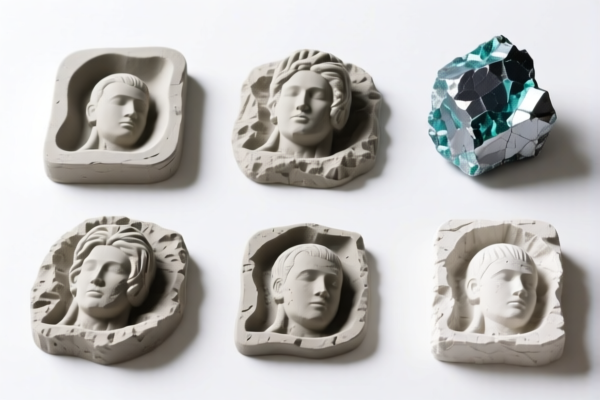
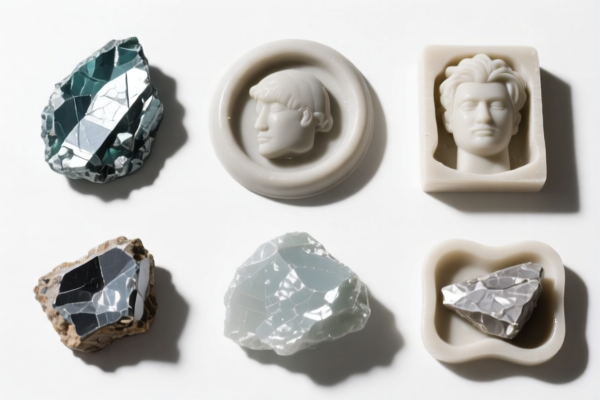
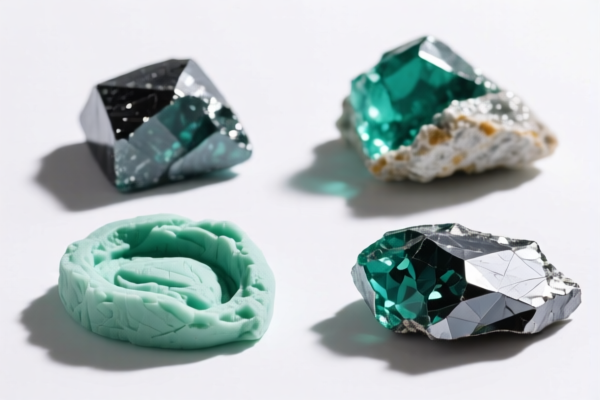

AI分析
🏭 Mixed Curing Agent for Casting Molds
🌐 HS Code Reference & Customs Clearance Guide | 2026 Latest Tariff Analysis | Professional Clearance Strategy
📌 I. Product Definition & Classification: Do You Really Understand "Mixed Curing Agents"?
A Mixed Curing Agent is a critical chemical additive used in the manufacturing of casting molds, primarily to harden or solidify resin-based materials (such as epoxy, polyester, or polyurethane resins). In international trade, its classification is complex because it can be interpreted differently depending on its chemical composition versus its final application.
The data provided highlights five potential classifications, ranging from inorganic sulfates to organic resins and chemical preparations. The correct classification depends heavily on the specific chemical formulation disclosed in the product's Safety Data Sheet (SDS).
⚠️ Key Distinction Point:
- If the agent is primarily an inorganic salt (e.g., Sodium Sulfate derivative) → It falls under Chapter 28 (Inorganic Chemicals).
- If it is primarily an organic resin or polymer (e.g., Epoxy/Polyester base) → It falls under Chapter 39 (Plastics/Resins).
- If it is a preparation/mixture with no single dominant component → It falls under Chapter 38 (Miscellaneous Chemical Products).
📦 II. HS Code Classification Details (2026 Latest Tariff Authority Comparison)
| HS Code | Product Description | Application Logic | Tax Rate (Total) |
|---|---|---|---|
2833.11.50.50 |
Sodium Sulfate & Its Derivatives; Other Salts of Inorganic Acids | Material Inference: The curing agent is inferred to be a chemical additive based on material, fitting the attribute of sodium sulfate derivatives as chemical raw materials. | 35.4% |
2833.29.51.90 |
Other Sulfates & Peroxysulfates (Inorganic) | Matching Basis: Inferring the chemical essence from the name as a sulfur-containing compound, belonging to the "Other Sulfates" category. | 38.7% |
3907.30.00.00 |
Epoxy Resins in Primary Forms | Material Inference: Curing agents are often components of epoxy resin systems, fitting the characteristics of the epoxy resin category. | 41.1% |
3907.99.50.50 |
Other Polyesters, Polycarbonates, etc. | Matching Basis: Based on the name "Curing Agent" and its chemical usage, it belongs to polyester or resin chemical raw materials. | 41.5% |
3824.10.00.00 |
Prepared Binders for Foundry Molds & Cores | Matching Basis: The term "Mixed Curing Agent" chemically belongs to the category of prepared binders, with consistent usage and classification. | 41.0% |
🔍 Key Reminder:
- Chapter 28 (Sulfates) is the lowest tax option (35.4% - 38.7%). If the chemical analysis confirms the product is largely inorganic sulfate-based, this is the preferred code.
- Chapter 38 (Prepared Binders) is the most practically accurate for casting applications, but carries a slightly higher base tax than Chapter 28.
- Chapter 39 (Resins) is generally for the resin itself, not the curing agent, unless the curing agent is the resin (e.g., polyamide curing agent for epoxy). Misclassification here leads to higher duties.
💰 III. 2026 Latest Tariff Rate Detailed Explanation (Including Surcharges & Policy Add-ons)
✅ Applicable Country: United States (US)
✅ Country of Origin: China (CN)
✅ Effective Date: From November 10, 2025 onwards (for subsequent imports)
🎯 1. 2833.11.50.50 —— Sodium Sulfate & Its Derivatives
| Item | Content |
|---|---|
| Base Tariff | 0.4% (ad valorem) |
| USITC Surcharge | +25.0% (Section 301 Tariffs) |
| IEEPA Surcharge | +10.0% (122 Clause: Targeting Chinese Products) |
| Total Rate | 35.4% |
| Tax Calculation | CIF Value × 35.4% |
| De Minimis Exemption | ❌ Not Eligible (deny_de_minimis) |
| Legal Basis Path | Base: 2833 → USITC: 25% → IEEPA: 10% |
📌 Explanation:
- This is the most cost-effective option if the chemical composition allows.
- The "122 Clause" is a specific trade restriction targeting certain Chinese chemical inputs, adding a flat 10% on top of the Section 301 tariffs.
🎯 2. 2833.29.51.90 —— Other Sulfates & Peroxysulfates (Inorganic)
| Item | Content |
|---|---|
| Base Tariff | 3.7% (ad valorem) |
| USITC Surcharge | +25.0% (Section 301 Tariffs) |
| IEEPA Surcharge | +10.0% (122 Clause) |
| Total Rate | 38.7% |
| Tax Calculation | CIF Value × 38.7% |
| De Minimis Exemption | ❌ Not Eligible |
| Legal Basis Path | Base: 2833 → USITC: 25% → IEEPA: 10% |
📌 Note:
- Slightly higher base rate than the previous code due to the specific sub-category of "Other Sulfates."
- Still significantly cheaper than resin-based classifications.
🎯 3. 3907.30.00.00 —— Epoxy Resins in Primary Forms
| Item | Content |
|---|---|
| Base Tariff | 6.1% (ad valorem) |
| USITC Surcharge | +25.0% (Section 301 Tariffs) |
| IEEPA Surcharge | +10.0% (122 Clause) |
| Total Rate | 41.1% |
| Tax Calculation | CIF Value × 41.1% |
| De Minimis Exemption | ❌ Not Eligible |
| Legal Basis Path | Base: 3907 → USITC: 25% → IEEPA: 10% |
📌 Risk Warning:
- Classifying a curing agent as "Epoxy Resin" is risky unless the curing agent is the epoxy resin itself.
- If the product is a separate hardener (e.g., amine-based), this classification may be challenged by customs as incorrect, leading to penalties.
🎯 4. 3907.99.50.50 —— Other Polyesters, Polycarbonates, etc.
| Item | Content |
|---|---|
| Base Tariff | 6.5% (ad valorem) |
| USITC Surcharge | +25.0% (Section 301 Tariffs) |
| IEEPA Surcharge | +10.0% (122 Clause) |
| Total Rate | 41.5% |
| Tax Calculation | CIF Value × 41.5% |
| De Minimis Exemption | ❌ Not Eligible |
| Legal Basis Path | Base: 3907 → USITC: 25% → IEEPA: 10% |
📌 Note:
- Highest base rate among all listed options.
- Only applicable if the curing agent is explicitly a polyester or polycarbonate derivative.
🎯 5. 3824.10.00.00 —— Prepared Binders for Foundry Molds & Cores
| Item | Content |
|---|---|
| Base Tariff | 6.0% (ad valorem) |
| USITC Surcharge | +25.0% (Section 301 Tariffs) |
| IEEPA Surcharge | +10.0% (122 Clause) |
| Total Rate | 41.0% |
| Tax Calculation | CIF Value × 41.0% |
| De Minimis Exemption | ❌ Not Eligible |
| Legal Basis Path | Base: 3824 → USITC: 25% → IEEPA: 10% |
📌 Strategic Insight:
- This is likely the most accurate classification for "Mixed Curing Agents for Casting Molds" from a functional perspective.
- However, it carries a 6.0% base tariff, which is higher than the inorganic sulfate options.
- Trade-off: Pay ~41% for accuracy and smoother clearance vs. ~35.4% for riskier classification.
🛠️ IV. Customs Clearance Practical Advice (实战避坑指南)
✅ 1. Preparation Checklist (Must-Have Documents)
| Document | Mandatory? | Explanation |
|---|---|---|
| ✅ Safety Data Sheet (SDS) | ✔️ Critical | Must explicitly list chemical composition. If it shows high sulfate content, fight for Chapter 28. If it shows resin/binder components, Chapter 38 is safer. |
| ✅ Technical Specification Sheet | ✔️ | Detail the "Mixed" components. Is it a powder, liquid, or paste? What is the ratio of resin to hardener? |
| ✅ Product Photos (Labeled) | ✔️ | Clear images of the container, label, and any warning symbols. |
| ✅ Commercial Invoice | ✔️ | Description should be precise: "Mixed Curing Agent for Casting Molds, Chemical Composition: [Details]." Avoid vague terms like "Glue." |
| ✅ Origin Certificate | ✔️ | Essential for verifying USITC/IEEPA applicability. |
✅ 2. Declaration Tips (Key Mnemonics)
🔥 "Know Your Chemistry: Sulfate Saves, Binder Staves!"
| Scenario | Correct HS Code | Risk Level |
|---|---|---|
| Product is Inorganic (Sulfate-based) | 2833.11.50.50 or 2833.29.51.90 |
✅ Low Tax Risk (35-38%) but requires strong chemical proof. |
| Product is Organic (Resin/Binder-based) | 3824.10.00.00 |
✅ High Accuracy Risk (41%) but smoother customs scrutiny. |
| Product is Mixed/Undefined | 3824.10.00.00 |
⚠️ Safe Harbor. If unsure, use Chapter 38 to avoid penalties for misclassification. |
| Misclassified as Epoxy Resin | 3907.30.00.00 |
❌ High Penalty Risk. If the agent is not the resin itself, customs will reject this. |
✅ 3. Special Case Handling
| Situation | Handling Advice |
|---|---|
| Chemical Composition is "Mixed" | If the product contains both sulfates and resins, the principal characteristic determines the code. If sulfates are >50% by weight, Chapter 28 is defensible. |
| OEM Custom Mix | Provide the exact formula to the broker. "One size fits all" declarations will fail. |
| Small Samples (De Minimis) | ❌ Do not use 80/86 Section 321. These codes are explicitly denied (deny_de_minimis). All shipments, regardless of value, are subject to full tariffs. |
| Re-export from Third Country | If shipped from Vietnam or Mexico, ensure no substantial transformation occurred in China. Otherwise, US Origin rules may still apply. |
🌍 V. Global Market Clearance Comparison (2026 Latest)
| Country/Region | Recommended HS Code | Tariff (China Origin) | Certification Requirements | Notes |
|---|---|---|---|---|
| 🇺🇸 United States | 3824.10.00.00 (Safety) / 2833.11.50.50 (Cost) |
35.4% - 41.5% | SDS, FCC (if electronic aid) | High scrutiny on chemical imports. |
| 🇨🇳 China (Import) | 3824.10.00.00 |
~6.0% | MSDS | No Section 301 tariffs. |
| 🇪🇺 European Union | 3824.10.00.00 |
0-6% (depending on specific subheading) | REACH, CLP Labeling | Strict chemical registration (REACH) required. |
| 🇯🇵 Japan | 3824.10.00.00 |
~6.0% | JIS Standard | Focus on purity and safety data. |
📌 Conclusion:
- The US market is the most complex due to the叠加 of Base Tariff, Section 301, and IEEPA (122 Clause).
- Cost Saving Strategy: If the chemical nature allows, arguing for Chapter 28 (Sulfates) saves ~5-6% in total duties compared to Chapter 38/39.
- Risk Management: If chemical proof is weak, Chapter 38 (Prepared Binders) is the safest route to avoid customs delays and penalties.
📌 VI. Common Errors & Pitfalls Guide (Blood & Tears Lessons)
❌ Error 1: Declaring "Curing Agent" as "Resin" (3907.30.00.00)
👉 Consequence: Customs may determine the product is a component of resin, not the resin itself. Penalty + Back Taxes!
❌ Error 2: Ignoring the "122 Clause" (IEEPA 10%)
👉 Consequence: Even if you get the base tariff right, forgetting the 10% surcharge leads to underpayment and seizure risks.
❌ Error 3: Using "De Minimis" (Section 321) for small shipments
👉 Consequence: Immediate Rejection. These chemical products are denied de minimis entry. Prepare for full formal entry.
❌ Error 4: Vague Description on Invoice ("Chemical A")
👉 Consequence: Customs will request additional info, causing delays of 2-4 weeks. Always use precise chemical names.
✅ Correct Practice:
"Mixed Curing Agent for Casting Molds, Type: Sulfate-Based, CAS No: [XXX-XXX-X], Net Weight: XX kg, Made in China"
🎯 VII. Conclusion: Professional Declaration, Save Time, Reduce Costs!
🎯 Remember the Mnemonic:
🔹 "Inorganic Sulfate Wins (35.4%), Binder is Safe (41.0%), No De Minimis Allowed!"
🔹 "SDS is King: Without it, you fly blind into 41% taxes!"
📌 Pro Tip:
If your product is a complex mixture and you are unsure of the classification, apply for an Advance Ruling (Ruling Letter) from US Customs and Border Protection (CBP). The cost is low compared to the risk of paying 41.5% instead of 35.4% or facing penalties.
📣 Immediate Action:
📞 Contact a licensed customs broker + Provide SDS + Request HS Code Pre-Ruling
🚀 Ensure your Mixed Curing Agent clears customs smoothly, legally, and profitably!
✨ Professional Clearance Starts with Precise Classification!
💼 Every Dollar of Duty is Worth Precise Calculation!
用户评价
关于 HS 编码归类
协调制度(HS)是由世界海关组织(WCO)制定的国际贸易商品分类标准。全球 200 多个国家采用 HS 系统作为海关关税、贸易统计和进出口监管的基础。
每个 HS 编码遵循以下层级结构:
- 章(2 位)——商品大类(例如:第 84 章:机器和机械设备)
- 品目(4 位)——章内的更具体分类
- 子目(6 位)——国际通用细分,所有 WCO 成员国统一使用
- 本国细分(8-10 位)——各国自行扩展的细分编码,如美国 HTSUS 10 位编码
正确的 HS 编码归类对于顺利通关、准确缴纳关税和遵守贸易法规至关重要。错误归类可能导致海关延误、多缴关税或罚款。
从CN进口到US时,适用的关税税率可能包括:
- 最惠国(MFN)税率——适用于 WTO 成员国的标准关税税率
- 普通税率——适用于无贸易协定国家
- 贸易救济关税——附加关税,如 301 条款(反倾销)、232 条款(国家安全)或反补贴税
本页内容仅供参考。如需正式归类,请咨询当地海关或持牌报关代理。