Mixed Waste Paperboard Sorted
CN → US| HS编码 | 关税税率 | 原产国 | 目的国 | 文档 |
|---|---|---|---|---|
| 4707100000 | 35.0% | CN | US | 官方文档 |
| 4707900000 | 35.0% | CN | US | 官方文档 |
| 4707900000 | 35.0% | CN | US | 官方文档 |
| 4707100000 | 35.0% | CN | US | 官方文档 |
| 4707900000 | 35.0% | CN | US | 官方文档 |
商品图片
AI分析
📜 Mixed Waste Paperboard (Sorted) – HS Code Classification & U.S. Customs Clearance Guide
🌐 HS Code Reference & Customs Strategy | 2026 Latest Tariff Analysis | Professional Clearance Protocol
📌 I. Product Definition & Classification: What Exactly is "Mixed Waste Paperboard (Sorted)"?
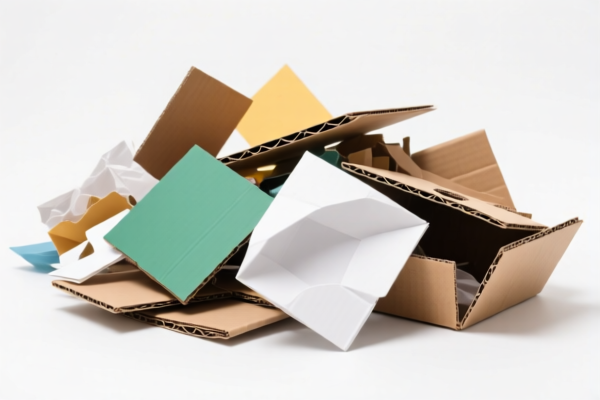
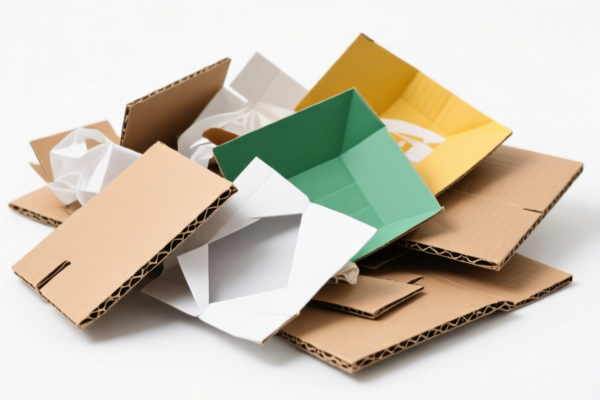
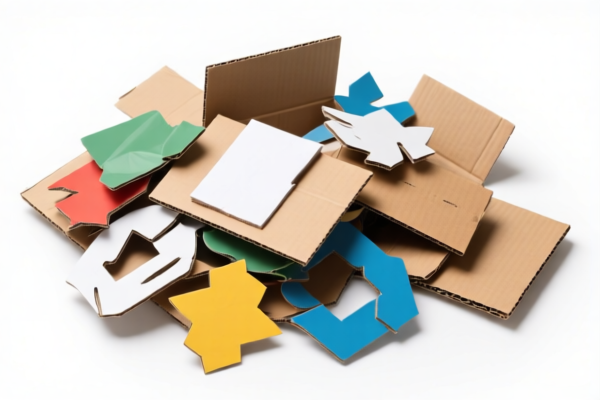
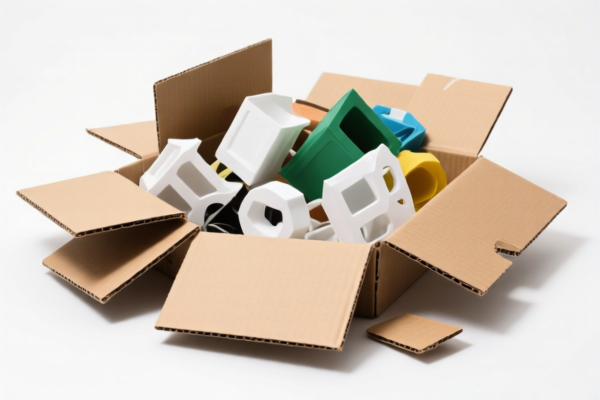
"Mixed Waste Paperboard (Sorted)" refers to recovered or recycled paperboard materials that have been collected from industrial, commercial, or post-consumer sources and pre-sorted to remove non-paper contaminants. These materials are intended for recycling into new paper products.
In international trade (specifically under U.S. Customs regulations), this product falls under Chapter 47: Pulp of Wood or of Other Fibrous Cellulosic Material; Recovered (Waste and Scrap) Paper or Paperboard.
⚠️ Key Distinction:
- If the material is primarily cardboard/paperboard (corrugated, boxboard, etc.) and has been sorted → It is classified as Waste and Scrap Paperboard.
- If the material contains a significant mix of other paper types (newsprint, mixed office paper) alongside paperboard, it may be classified as Other Waste and Scrap Paper.
- "Sorted" implies the material is clean and free of significant non-recyclable waste, but it is still considered "waste/scrap" for customs purposes, not "raw material."
📦 II. HS Code Classification Details (2026 U.S. Harmonized Tariff Schedule)
Based on the provided data, "Mixed Waste Paperboard (Sorted)" is primarily classified under two HS Codes, depending on the exact composition and sorting precision. All listed codes carry the same tax structure due to U.S.-China trade policies.
| HS Code | Product Description | Applicability | Key Characteristics |
|---|---|---|---|
4707.10.00.00 |
Mixed Waste Paperboard (Sorted) Material: Paperboard Form: Waste/Scrap |
Specifically for paperboard waste that has been sorted. Includes corrugated fibers, boxboard, and other paperboard waste. | ✅ Sorted ✅ Paperboard-dominant ✅ Recyclable scrap |
4707.90.00.00 |
Other Waste and Scrap Paper and Paperboard Material: Paper & Paperboard Form: Waste/Scrap |
Used for mixed paper waste that is not purely paperboard, or industrial-grade paperboard waste that doesn't fit the specific "mixed paperboard" definition. Includes mixed office paper, newsprint, etc. | ✅ Sorted ✅ Mixed paper types ✅ Industrial grade |
🔍 Critical Note:
- Both4707.10.00.00and4707.90.00.00are used for sorted waste paperboard/paper.
- The distinction often lies in the ratio of paperboard to other paper and the industrial vs. consumer origin.
- Do not confuse with "Waste Paper" (unsorted): Unsorted waste may have different classification nuances, but sorted waste is consistently placed in these subheadings for recycling purposes.
💰 III. 2026 Latest Tariff Rate Breakdown (Including Surcharges & Policy Add-ons)
✅ Applicable Country: United States (US)
✅ Country of Origin: China (CN) (Assumed based on tax details provided)
✅ Effective Date: Current as of 2025–2026 trade policies
🎯 1. 4707.10.00.00 – Mixed Waste Paperboard (Sorted)
| Item | Content |
|---|---|
| Base Duty Rate | 0.0% (ad valorem) |
| Section 301 Surcharge | +25.0% (U.S. Trade Act, Section 301) |
| Section 122 Tariff | +10.0% (Specific provision for certain waste/scrap materials) |
| Total Tax Rate | 35.0% |
| Tax Calculation | CIF Value × 35% |
| De Minimis Exemption | ❌ Not Eligible (Waste/scrap materials are excluded from de minimis treatment) |
| Legal Authority Path | Section 301: 9903.88.01 → Section 122: Specific Provision → USITC: 4707.10.00.00 |
📌 Explanation:
- Base Rate 0%: Standard duty for recycled paper waste to encourage recycling.
- Section 301 (25%): Applies to most Chinese-origin goods, including recyclable materials.
- Section 122 (10%): A specific tariff added for certain waste and scrap imports from China.
- Total 35%: This is a high effective rate for waste materials, reflecting trade tensions.
🎯 2. 4707.90.00.00 – Other Waste and Scrap Paper and Paperboard
| Item | Content |
|---|---|
| Base Duty Rate | 0.0% |
| Section 301 Surcharge | +25.0% |
| Section 122 Tariff | +10.0% |
| Total Tax Rate | 35.0% |
| Tax Calculation | CIF Value × 35% |
| De Minimis Exemption | ❌ Not Eligible |
| Legal Authority Path | Section 301: 9903.88.01 → Section 122: Specific Provision → USITC: 4707.90.00.00 |
📌 Note:
- The tax structure is identical to4707.10.00.00.
- Whether classified under4707.10or4707.90, the 35% total duty applies.
- This applies to industrial-grade and sorted mixed paperboard waste.
🛠️ IV. Customs Clearance Practical Advice (Avoiding Pitfalls)
✅ 1. Required Documentation Checklist (Mandatory)
| Document | Required | Notes |
|---|---|---|
| ✅ Commercial Invoice | ✔️ | Must clearly state: "Mixed Waste Paperboard (Sorted)" and HS Code. |
| ✅ Packing List | ✔️ | Detail bale weights, dimensions, and number of bales. |
| ✅ Certificate of Origin | ✔️ | Proves origin as China (triggers 35% duty). |
| ✅ Waste/Scrap Declaration | ✔️ | Statement confirming material is sorted and free of hazardous waste. |
| ✅ Phytosanitary Certificate | ✔️ | If organic contaminants (wood, leaves) are present. |
| ✅ Lab Test Report | ✔️ | May be required to confirm material is not hazardous or mixed with plastic/metal. |
✅ 2. Declaration Tips (Key Mantra)
🔥 "Sorted is Key, Waste is Waste, 35% Duty Awaits, Misclassification Fails!"
| Scenario | Correct Declaration | Incorrect Action |
|---|---|---|
| Sorted Paperboard Bales | 4707.10.00.00"Mixed Waste Paperboard, Sorted" |
Declare as "Recycled Paper Pulp" → Illegal |
| Mixed Paper + Paperboard | 4707.90.00.00"Other Waste and Scrap Paper" |
Declare as "New Paper" → Seizure + Fine |
| Unsorted Mixed Waste | Not covered in this list | May require different classification → High Risk |
| Small Quantity (< $800) | ❌ No De Minimis | Try to use de minimis → Seizure |
✅ 3. Special Cases & Handling
| Situation | Recommendation |
|---|---|
| Contaminated Bales | If bales contain >10% non-paper material (plastic, metal, wood), Customs may reject or reclassify → Ensure strict sorting. |
| Hazardous Waste | If the waste is deemed hazardous (e.g., chemical-soaked paper), it is prohibited under Basel Convention and U.S. EPA rules. |
| Pre-Approved Importer | Ensure your Importer Security Filing (ISF) is filed 24 hours before loading. |
| Bonded Warehouses | Consider using bonded warehouses if final destination is re-export, but duty is still assessed at entry. |
🌍 V. Global Market Comparison (2026)
| Country/Region | Recommended HS Code | Duty Rate (China Origin) | Notes |
|---|---|---|---|
| 🇺🇸 United States | 4707.10.00.00 / 4707.90.00.00 |
35% (0% Base + 25% Sec 301 + 10% Sec 122) | High duty, strict sorting requirements. |
| 🇨🇳 China | 4707.10.00.00 |
0% | Major importer of waste paper (prior to 2021 ban; now limited). |
| 🇪🇺 European Union | 4707.10.00.00 |
0% | Subject to strict EU waste shipment regulations. |
| 🇯🇵 Japan | 4707.10.00.00 |
0% | Requires high-quality sorted waste. |
| 🇮🇳 India | 4707.10.00.00 |
0–10% | Varies by state and quality. |
📌 Conclusion:
- The U.S. is unique in applying the 10% Section 122 tariff in addition to Section 301.
- China origin triggers the full 35%.
- Non-China origins (e.g., Vietnam, Thailand) may have 0%–10% duty, offering significant cost advantages.
📌 VI. Common Errors & Pitfalls (Lessons Learned)
❌ Error 1: Declaring "Recycled Paper" instead of "Waste Paperboard"
👉 Consequence: Customs may classify as "New Paper" (higher duty) or reject as illegal waste.
❌ Error 2: Ignoring the "Sorted" Status
👉 Consequence: If bales are found unsorted or contaminated, penalties apply for misdeclaration.
❌ Error 3: Assuming De Minimis Applies
👉 Consequence: Waste/scrap materials are explicitly excluded from the $800 de minimis exemption. All shipments are subject to duty.
❌ Error 4: Using Generic Terms like "Paper Waste"
👉 Consequence: Vague descriptions lead to customs holds, inspections, and delays.
✅ Correct Practice:
"Mixed Waste Paperboard, Sorted, Corrugated & Boxboard, Clean, Baled, HS Code: 4707.10.00.00, Origin: China"
🎯 VII. Conclusion: Precision in Clearance, Cost Control, and Compliance
🎯 Remember the Mantra:
🔹 "Sorted Waste, 35% Duty, No De Minimis, Documentation is Key!"
🔹 "HS Code 4707, Sec 301 & 122, Total 35%, Plan Accordingly!"
📌 Pro Tip:
If your waste paperboard originates from Vietnam, Malaysia, or India, you may benefit from 0%–10% duty rates. Consider supply chain diversification to reduce the 35% U.S. duty burden.
📞 Immediate Action:
📋 Engage a licensed U.S. Customs Broker
📄 Prepare detailed Sorting Certificates
🚀 Ensure Smooth Clearance, Avoid Seizures, Optimize Costs!
✨ Professional Customs Clearance Starts with Accurate Classification!
💼 Every Percent of Duty Saved is Pure Profit!
用户评价
关于 HS 编码归类
协调制度(HS)是由世界海关组织(WCO)制定的国际贸易商品分类标准。全球 200 多个国家采用 HS 系统作为海关关税、贸易统计和进出口监管的基础。
每个 HS 编码遵循以下层级结构:
- 章(2 位)——商品大类(例如:第 84 章:机器和机械设备)
- 品目(4 位)——章内的更具体分类
- 子目(6 位)——国际通用细分,所有 WCO 成员国统一使用
- 本国细分(8-10 位)——各国自行扩展的细分编码,如美国 HTSUS 10 位编码
正确的 HS 编码归类对于顺利通关、准确缴纳关税和遵守贸易法规至关重要。错误归类可能导致海关延误、多缴关税或罚款。
从CN进口到US时,适用的关税税率可能包括:
- 最惠国(MFN)税率——适用于 WTO 成员国的标准关税税率
- 普通税率——适用于无贸易协定国家
- 贸易救济关税——附加关税,如 301 条款(反倾销)、232 条款(国家安全)或反补贴税
本页内容仅供参考。如需正式归类,请咨询当地海关或持牌报关代理。