Mixing and Processing Equipment
CN → US| HS编码 | 关税税率 | 原产国 | 目的国 | 文档 |
|---|---|---|---|---|
| 8419899560 | 39.2% | CN | US | 官方文档 |
| 8479820040 | 35.0% | CN | US | 官方文档 |
| 8479820080 | 35.0% | CN | US | 官方文档 |
商品图片
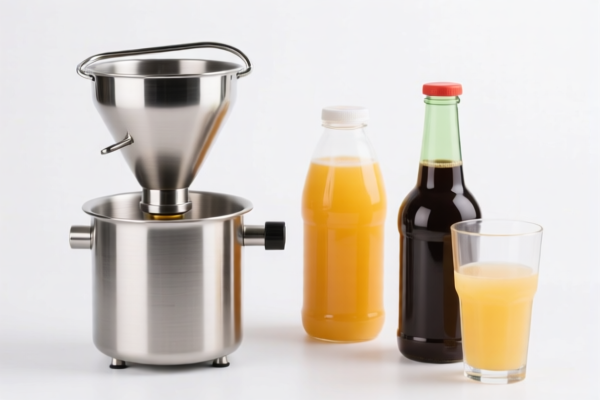
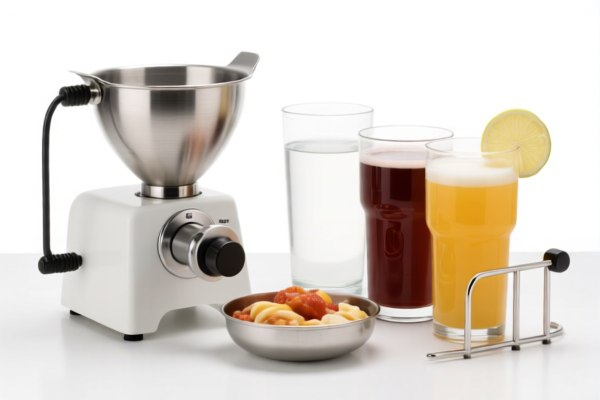
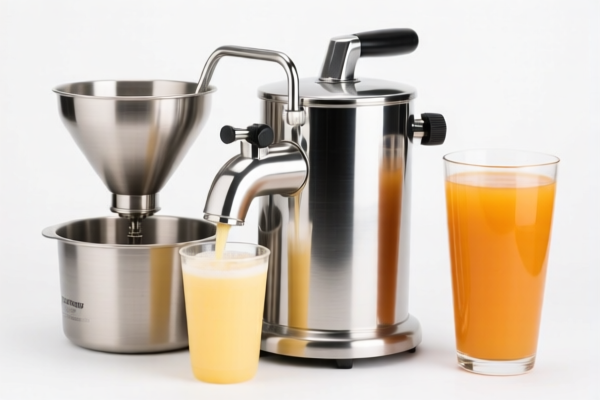
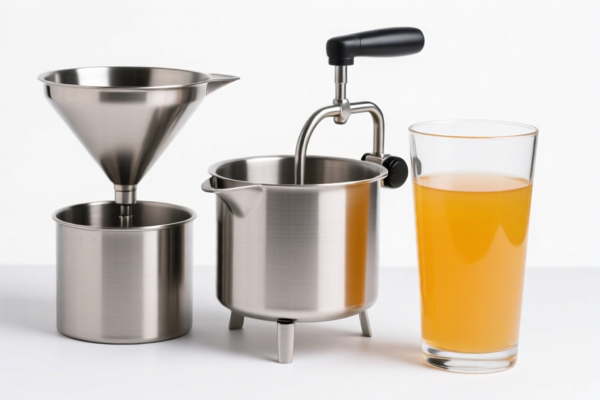
AI分析
🏭 Mixing and Processing Equipment
🌐 HS Code Reference & Customs Clearance Guide | 2026 Latest Tariff Analysis | Professional Clearance Strategy
📌 I. Product Definition & Classification: What is “Mixing and Processing Equipment”?
“Mixing and Processing Equipment” refers to industrial machinery designed for blending, kneading, crushing, grinding, or otherwise treating materials. These machines are essential in food processing, chemical manufacturing, pharmaceuticals, and material production. In international trade, classification depends heavily on the specific function and structure of the machine.
⚠️ Key Classification Criteria:
- If the primary function is mixing/kneading/blending, it likely falls under HS 8479.82;
- If it’s a general-purpose industrial machine/device not specifically listed elsewhere, it may fall under HS 8419.89 (“Other machinery”) as a residual category;
- Material of construction is NOT specified in the product name, so classification relies on functional compatibility and residual category principles.
📦 II. HS Code Classification Details (2026 Latest Tariff Authority Cross-Reference)
| HS Code | Product Description | Applicable Scenario | Key Functional Match |
|---|---|---|---|
8419.89.95.60 |
Other machinery, plant, or laboratory equipment, not specified elsewhere | General industrial processing equipment | ✅ Matches “mechanical equipment” residual category; no material conflict allows inference to food processing use |
8479.82.00.40 |
Other machinery with mixing, kneading, or stirring functions | Dedicated mixers, kneaders, blenders | ✅ Exact match for “mixing” function; no shape/material specified → functional equivalence applies |
8479.82.00.80 |
Other machinery with mixing, kneading, crushing, grinding functions | Multi-function processing units | ✅ Matches “mixing” + “processing” functions; residual category rule applies due to unspecified material |
🔍 Important Note:
- All three HS codes apply to Chinese-origin goods imported into the United States;
- The residual category principle (“other”) is applied when specific subheadings do not precisely match, provided there is no conflicting material specification;
- Functional priority overrides form when the product name only states “mixing and processing.”
💰 III. 2026 Latest Tariff Rate Breakdown (Including Surtaxes & Policy Surcharges)
✅ Applicable Country: United States (US)
✅ Origin: China (CN)
✅ Effective Date: November 10, 2025 onwards (including subsequent imports)
🎯 1. 8419.89.95.60 —— Other Industrial Machinery (Residual Category)
| Item | Content |
|---|---|
| Base Tariff Rate | 4.2% (ad valorem) |
| Section 301 Surcharge | +25% |
| IEEPA Surcharge (China) | +10% |
| Total Tax Rate | 39.2% |
| Tax Calculation | CIF Value × 39.2% |
| De Minimis Exemption Eligible | ❌ No (deny_de_minimis) |
| Legal Basis Path | USITC:8419.89.95.60 → FOOTNOTE:301.01 → IEEPA:9903.01.24 |
📌 Explanation:
- Base 4.2% comes from standard US tariff schedule for general industrial machinery;
- 25% Section 301 applies to all Chinese-made industrial equipment not otherwise exempt;
- 10% IEEPA surcharge specifically targets Chinese imports under emergency economic powers;
- Total 39.2% is high — requires careful cost planning.
🎯 2. 8479.82.00.40 —— Machinery with Mixing/Kneading Functions
| Item | Content |
|---|---|
| Base Tariff Rate | 0% |
| Section 301 Surcharge | +25% |
| IEEPA Surcharge (China) | +10% |
| Total Tax Rate | 35.0% |
| Tax Calculation | CIF Value × 35.0% |
| De Minimis Exemption Eligible | ❌ No |
| Legal Basis Path | USITC:8479.82.00.40 → FOOTNOTE:301.01 → IEEPA:9903.01.24 |
📌 Note:
- Base rate 0% reflects preferential treatment for certain industrial mixers;
- However, Section 301 + IEEPA still apply → total 35%;
- Functionally precise classification avoids higher residual category rates.
🎯 3. 8479.82.00.80 —— Multi-Function Processing Machinery (Mixing + Crushing/Grinding)
| Item | Content |
|---|---|
| Base Tariff Rate | 0% |
| Section 301 Surcharge | +25% |
| > IEEPA Surcharge (China) | +10% |
| Total Tax Rate | 35.0% |
| Tax Calculation | CIF Value × 35.0% |
| De Minimis Exemption Eligible | ❌ No |
| Legal Basis Path | USITC:8479.82.00.80 → FOOTNOTE:301.01 → IEEPA:9903.01.24 |
📌 Important:
- Identical tariff structure to8479.82.00.40;
- Applies when machine performs multiple processes (e.g., mix + grind);
- No material specification → residual rule allows inclusion under this heading.
🛠️ IV. Customs Clearance Practical Advice (Battle-Tested Pitfall Avoidance)
✅ 1. Required Documentation Checklist (All Mandatory)
| Document | Required? | Purpose |
|---|---|---|
| ✅ Product Specification Sheet | ✔️ | Details capacity, power, dimensions, function (mixing/kneading/crushing) |
| ✅ Circuit/Structural Diagram | ✔️ | Proves mechanical vs. electronic control; supports functional classification |
| ✅ Product Photos (with nameplate) | ✔️ | Shows model, brand, input/output specs, safety labels |
| ✅ Third-Party Test Reports | ✔️ | CE, UL, FDA (if food-contact), ISO certifications |
| ✅ Commercial Invoice | ✔️ | Must state “Mixing and Processing Equipment” — avoid vague terms |
| ✅ Certificate of Origin (CO) | ✔️ | For US-China trade; confirms Chinese origin |
| ✅ Packing List | ✔️ | Clarifies main unit vs. accessories; prevents split申报 errors |
✅ 2. Declaration Tips (Critical Mantra)
🔥 “Function First, Residual Last, Name Precise, Tariff Lowered!”
| Scenario | Correct Declaration | Wrong Practice |
|---|---|---|
| Pure mixer/kneader | 8479.82.00.40 |
Misclassify as general machinery → 39.2% |
| Multi-function unit (mix + grind) | 8479.82.00.80 |
Use vague term “processing machine” → risk 8419 |
| General industrial device (no specific function) | 8419.89.95.60 |
Over-specify function → misclassification penalty |
| Machine + accessories (hoses, nozzles) | Declare as single unit | Split into parts → each taxed separately → higher total |
✅ 3. Special Cases Handling
| Situation | Recommended Action |
|---|---|
| OEM Custom Mixer | Provide client PO + design drawings; prove functional specificity |
| Food-Safe Mixer | Add “FDA Compliant” on invoice; may support use-based inference under 8419 |
| Pharmaceutical Processing Unit | Include GMP certification; still classified under 8479 due to function |
| Machine with Digital Control Panel | Still mechanical function primary → remains 8479, not 8537 |
🌍 V. Global Market Clearance Comparison (2026 Update)
| Country/Region | Recommended HS Code | Tariff (China Origin) | Certification | Notes |
|---|---|---|---|---|
| 🇺🇸 USA | 8479.82.00.40/80 |
35% | CE/UL/FDA (if applicable) | 39.2% if misclassified under 8419 |
| 🇨🇳 China | 8479.82.00.40 |
5% | CCC | No surtaxes |
| 🇪🇺 EU | 8479.82.00 |
0% | CE + RoHS | No additional duties |
| 🇦🇺 Australia | 8479.82.00 |
5% | RCM | Free trade agreement benefits possible |
| 🇯🇵 Japan | 8479.82.00 |
0% | PSE | JIS standards may apply |
📌 Conclusion:
- USA imposes highest effective tariff (35–39.2%) due to Section 301 + IEEPA;
- China origin is critical — non-Chinese origin may qualify for exemptions;
- Functional precision is key — vague descriptions trigger residual categories with higher base rates.
📌 VI. Common Mistakes & Pitfalls (Lessons from Real Cases)
❌ Mistake 1: Declaring “mixer” as “industrial machine” → 8419
👉 Result: Base rate jumps from 0% to 4.2% → Total 39.2% vs 35% — unnecessary loss!
❌ Mistake 2: Omitting function details on invoice
👉 Result: Customs uses residual category → higher tax + possible audit
❌ Mistake 3: Claiming “de minimis” exemption for mixed equipment
👉 Result: Denied — industrial machinery > $800 not eligible under 321 provision
❌ Mistake 4: Using “food processor” for industrial-grade mixer
👉 Result: Misclassification — industrial units don’t fit consumer appliance codes
✅ Correct Declaration Example:
“Industrial Horizontal Ribbon Blender, 500L Capacity, 15kW Motor, SS316 Contact Parts, CE Certified, Model MB-500”
🎯 VII. Conclusion: Precise Classification Saves Thousands!
🎯 Remember This Mantra:
🔹 “Function dictates code, residual is last resort; name it right, save 4.2%!”
🔹 “35% for mixers, 39% for generics — one word changes your cost!”
📌 Pro Tip:
If your equipment is manufactured in Vietnam, Mexico, or Thailand, you may qualify for IEEPA exemption — reducing total tariff to 0–5%.
✅ Recommendation: Apply for Pre-Ruling (Advance Classification) from CBP before shipment to lock in lower rates.
📣 Immediate Action Required:
📞 Engage licensed customs broker + submit product specs + request HS Code pre-ruling
🚀 Ensure smooth clearance, avoid delays, protect margins!
✨ Precision Starts with Classification!
💼 Every percentage point impacts your bottom line — don’t leave it to chance!
用户评价
关于 HS 编码归类
协调制度(HS)是由世界海关组织(WCO)制定的国际贸易商品分类标准。全球 200 多个国家采用 HS 系统作为海关关税、贸易统计和进出口监管的基础。
每个 HS 编码遵循以下层级结构:
- 章(2 位)——商品大类(例如:第 84 章:机器和机械设备)
- 品目(4 位)——章内的更具体分类
- 子目(6 位)——国际通用细分,所有 WCO 成员国统一使用
- 本国细分(8-10 位)——各国自行扩展的细分编码,如美国 HTSUS 10 位编码
正确的 HS 编码归类对于顺利通关、准确缴纳关税和遵守贸易法规至关重要。错误归类可能导致海关延误、多缴关税或罚款。
从CN进口到US时,适用的关税税率可能包括:
- 最惠国(MFN)税率——适用于 WTO 成员国的标准关税税率
- 普通税率——适用于无贸易协定国家
- 贸易救济关税——附加关税,如 301 条款(反倾销)、232 条款(国家安全)或反补贴税
本页内容仅供参考。如需正式归类,请咨询当地海关或持牌报关代理。