Modified Aromatic Hydrocarbon Cleaner
CN → US| HS编码 | 关税税率 | 原产国 | 目的国 | 文档 |
|---|---|---|---|---|
| 3814001000 | 41.5% | CN | US | 官方文档 |
| 3824992900 | 41.5% | CN | US | 官方文档 |
| 3824994900 | 41.5% | CN | US | 官方文档 |
| 2902909000 | 35.0% | CN | US | 官方文档 |
| 2902903050 | 35.0% | CN | US | 官方文档 |
商品图片
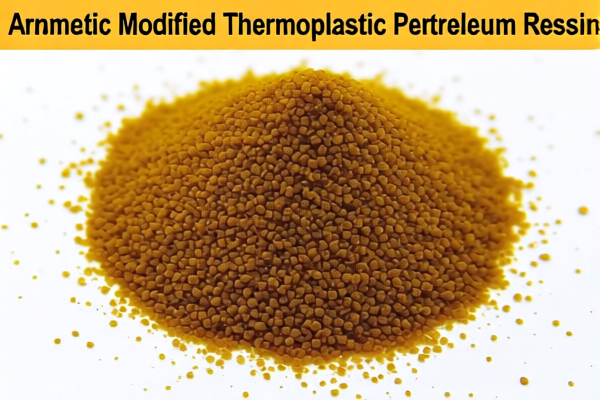
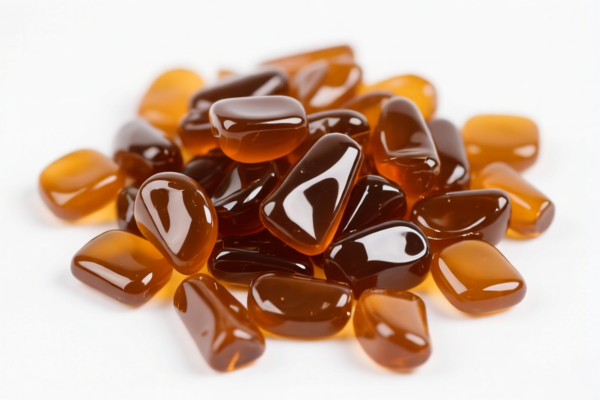
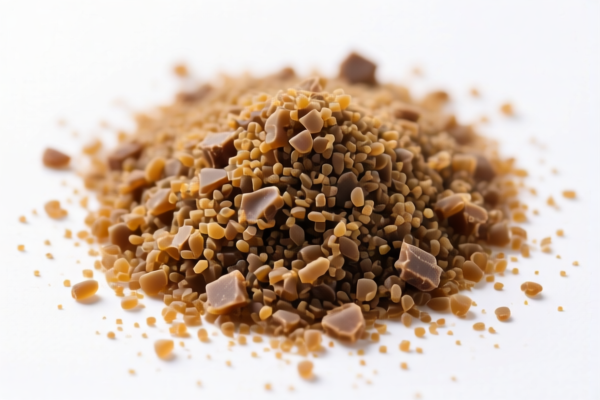
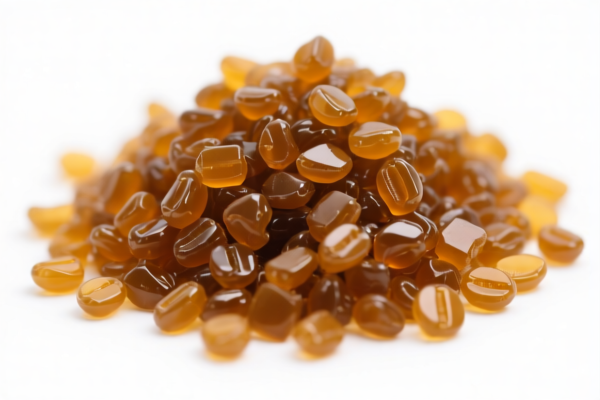
AI分析
🧪 Modified Aromatic Hydrocarbon Cleaner (Refined Solvent Blend)
🌐 HS Code Reference & Customs Clearance Guide | 2026 Tax Regime Analysis | Professional Entry Strategy
📌 I. Product Definition & Classification: What is "Modified Aromatic Hydrocarbon Cleaner"?
"Modified Aromatic Hydrocarbon Cleaner" refers to a complex mixture of solvents derived from or treated to enhance the properties of aromatic hydrocarbons. In international trade, this product is highly sensitive because its classification depends on chemical structure, source of raw materials, and specific application. It is not a single chemical entity but a composite solvent, leading to divergent HS Code classifications based on how customs authorities interpret its primary characteristics.
The core ambiguity lies in whether it is viewed as: 1. A Chemical Mixture/Preparation (Chapter 38): Focusing on its function as a cleaning agent or solvent blend. 2. A Specific Organic Chemical Compound (Chapter 29): Focusing on its dominant aromatic ring structure (e.g., alkylbenzenes).
⚠️ Key Distinction Point:
- If the product is primarily a blend/preparation for cleaning/degreasing, regardless of chemical purity, it leans towards Chapter 38 (3814 or 3824).
- If the product is chemically defined by its alkylbenzene structure or simple cyclic hydrocarbon composition, it may fall under Chapter 29 (2902).
- Note: The term "Modified" implies processing or mixing, which often pushes classification towards Chapter 38 unless the modification results in a distinct new chemical substance.
📦 II. HS Code Classification Details (2026 Latest Tariff Authority Mapping)
Based on the provided data, here are the five potential classifications for "Modified Aromatic Hydrocarbon Cleaner," ranging from chemical preparations to specific hydrocarbon structures.
| HS Code | Product Summary / Classification Logic | Applicable Scenario | Tax Rate |
|---|---|---|---|
| 3814.00.10.00 | Modified Aromatic Hydrocarbon Cleaner, matching aromatic or modified aromatic substances and compound solvent categories. | General industrial cleaning solvents; mixtures designed to dissolve aromatic resins or coatings. | 41.5% |
| 3824.99.29.00 | Modified Aromatic Hydrocarbon Cleaner, matching modified aromatic substances and uses as chemical products/preparations. | Specific chemical preparations not elsewhere specified; industrial chemical agents. | 41.5% |
| 3824.99.49.00 | Modified Aromatic Hydrocarbon Cleaner, matching substances derived from petroleum/hydrocarbons and uses as chemical products/preparations. | Petroleum-based solvent blends; general chemical preparations from hydrocarbon sources. | 41.5% |
| 2902.90.90.00 | Modified Aromatic Hydrocarbon Cleaner, matching cyclic hydrocarbon structural attributes and chemical form. | Pure or nearly pure cyclic hydrocarbons; classified by chemical structure rather than function. | 35.0% |
| 2902.90.30.50 | Modified Aromatic Hydrocarbon Cleaner, matching the chemical essence of alkylbenzenes and polyalkylbenzenes under the "Other" category. | Specifically identified as Alkylbenzenes or Polyalkylbenzenes; high purity aromatic compounds. | 35.0% |
🔍 Critical Analysis:
- Chapter 38 Codes (3814, 3824): These are Preparations/Mixtures. If your cleaner is a blend of different solvents (e.g., toluene, xylene, isomers) designed for a specific cleaning effect, these codes are most likely. The tax rate is uniform at 41.5%.
- Chapter 29 Codes (2902): These are Organic Chemicals. If the product is predominantly one type of aromatic hydrocarbon (like pure alkylbenzene) and "modified" refers to minor purification or isomerization, these codes apply. The tax rate is lower at 35.0%.
- Risk: Misclassifying a mixture as a pure chemical (2902) to save 6.5% can lead to severe penalties if customs performs chemical analysis.
💰 III. 2026 Latest Tariff Rate Breakdown (Including Surcharges & Policy Add-ons)
✅ Applicable Country: United States (US)
✅ Origin: China (CN)
✅ Effective Date: Post-November 2025 (Current 2026 Regime)
🎯 1. HS Code 3814.00.10.00 / 3824.99.29.00 / 3824.99.49.00 (Chapter 38 Group)
| Item | Detail |
|---|---|
| Base Tariff | 6.5% (Standard MFN Rate for Chemical Preparations) |
| Section 301 Surcharge | +25.0% (USITC Footnote for Chinese Origin Chemicals) |
| Section 122 Tariff | +10.0% (Specific policy surcharge for certain chemical imports) |
| Total Tax Rate | 41.5% |
| Tax Calculation | CIF Value × 41.5% |
| De Minimis Eligibility | ❌ NO (High-value chemical surcharges typically deny de minimis exemptions) |
| Legal Basis Path | USITC:3814.00.10.00 → Section 301: Footnote 9903.88 → Section 122: Policy Add-on |
📌 Explanation:
- The 6.5% is the standard duty for solvent preparations.
- The 25% is the substantial penalty under Section 301 for Chinese chemical imports.
- The 10% is an additional layer of trade policy cost (Section 122).
- Total Burden: 41.5% is a significant cost driver. This is a high-tariff category.
🎯 2. HS Code 2902.90.90.00 / 2902.90.30.50 (Chapter 29 Group)
| Item | Detail |
|---|---|
| Base Tariff | 0.0% (Standard MFN Rate for Certain Cyclic Hydrocarbons) |
| Section 301 Surcharge | +25.0% (USITC Footnote for Chinese Origin Chemicals) |
| Section 122 Tariff | +10.0% (Specific policy surcharge) |
| Total Tax Rate | 35.0% |
| Tax Calculation | CIF Value × 35.0% |
| De Minimis Eligibility | ❌ NO |
| Legal Basis Path | USITC:2902.90.30.50 → Section 301: Footnote 9903.88 → Section 122: Policy Add-on |
📌 Explanation:
- The 0.0% base rate is attractive, but you still pay the full 35% in surcharges.
- While cheaper than Chapter 38, the savings are only 6.5% (the base rate difference).
- Risk: If customs determines the product is a mixture rather than a single chemical entity, they will reclassify to Chapter 38, charging 41.5% + potential penalties.
🛠️ IV. Customs Clearance Practical Advice (Combat Guide)
✅ 1. Required Documentation Checklist (No Exceptions)
| Document | Mandatory? | Description |
|---|---|---|
| ✅ SDS (Safety Data Sheet) | ✔️ | Must specify composition, CAS numbers, and hazard class. Crucial for chemical identification. |
| ✅ Certificate of Analysis (COA) | ✔️ | Proves whether the product is a single substance (Chapter 29) or a mixture (Chapter 38). |
| ✅ Product Specification Sheet | ✔️ | Details: Boiling point, flash point, specific gravity, and primary active ingredients. |
| ✅ Commercial Invoice | ✔️ | Must accurately describe the product. Avoid vague terms like "Cleaner." Use "Modified Aromatic Hydrocarbon Solvent." |
| ✅ Bill of Lading (B/L) | ✔️ | Ensure container type and weight match declaration. |
| ✅ Origin Certificate | ✔️ | For China origin verification, to apply correct surcharges. |
✅ 2. Declaration Strategy (Key Mantra)
🔥 "Composition Defines Code, Mixture is 41.5%, Pure is 35%."
| Scenario | Recommended HS Code | Risk Level |
|---|---|---|
| Blended Solvent (e.g., Toluene + Xylene + Additives) | 3814.00.10.00 or 3824.99.49.00 | 🟢 Low (Accurate) |
| Chemical Preparation (Unclear structure, functional blend) | 3824.99.29.00 | 🟢 Low (Accurate) |
| Single Substance (Confirmed Alkylbenzene, >95% purity) | 2902.90.30.50 | 🟡 Medium (Requires strong COA proof) |
| Cyclic Hydrocarbon (Generic cyclic structure) | 2902.90.90.00 | 🟡 Medium (Requires strong COA proof) |
Warning: Do not arbitrarily choose Chapter 29 to save 6.5%. If the COA shows multiple components or unspecified additives, Chapter 38 is the only compliant choice.
✅ 3. Special Case Handling
| Case | Handling Suggestion |
|---|---|
| Customs Challenge on Classification | Provide a chemical structure diagram and COA. If it's a blend, admit it and use Chapter 38. |
| Hazardous Goods Declaration | Aromatic hydrocarbons are often flammable. Ensure proper Hazmat declaration (UN Number, Class 3). |
| Section 122 Specifics | Verify if the specific subtype of "Modified Aromatic" is exempt from Section 122 (unlikely, but check latest bulletins). |
| Valuation | Ensure CIF value includes all costs. Tariffs are calculated on CIF, so under-declaring value is risky. |
🌍 V. Global Market Clearance Comparison (2026 Latest)
| Country/Region | Recommended HS Code | Tariff (China Origin) | Key Certifications | Remarks |
|---|---|---|---|---|
| 🇺🇸 USA | 3814.00.10.00 / 3824.99.29.00 |
41.5% | EPA Registration, DOT Hazmat | Highest Duty. Section 301 + 122 applies. |
| 🇺🇸 USA | 2902.90.30.50 |
35.0% | EPA Registration, DOT Hazmat | Lower base rate, but still high surcharges. |
| 🇪🇺 EU | 3814.00.10 |
~6.5% | REACH Registration | No Section 301/122. REACH compliance is critical. |
| 🇨🇳 China | 3814.00.10 |
6.5% | - | Import duty only. No punitive surcharges. |
📌 Conclusion:
- The US market is the most expensive due to the 35% total surcharge package.
- Accuracy is paramount: Misclassification in the US can lead to seizures or heavy fines.
- Cost Optimization: There is no legal way to reduce the 35% surcharge for China-origin goods. Focus on supply chain efficiency and accurate declaration to avoid delays.
📌 VI. Common Errors & Pitfalls (Blood Lessons)
❌ Error 1: Classifying a multi-component solvent blend as 2902.90.30.50 (Alkylbenzene) to save tax.
👉 Consequence: Customs lab test shows multiple components → Reclassification to 3814 → Back taxes + Penalty (6.5% difference + interest + fine).
❌ Error 2: Ignoring Section 122 Tariff.
👉 Consequence: Declaration misses the 10% surcharge → Customs audit → Immediate demand for payment + seizure.
❌ Error 3: Vague Description "Cleaning Solvent."
👉 Consequence: Customs cannot determine if it’s Chapter 29 or 38 → Holds for inspection → Delayed shipment + Demurrage fees.
❌ Error 4: Forgetting Hazmat Documentation.
👉 Consequence: Flammable liquid without proper UN number declaration → Refusal of loading or Return to origin.
✅ Correct Practice:
"Modified Aromatic Hydrocarbon Solvent Blend (Based on Toluene/Xylene Isomers), Industrial Cleaning Grade, UN1269, Class 3 Flammable Liquid, SDS Attached, COA Available."
🎯 VII. Conclusion: Precise Classification Saves Money
🎯 Remember the Mantra:
🔹 "Mixture = 41.5%, Pure Chemical = 35%. Base Rate Doesn't Lie, Surcharges Kill the Profit!"
🔹 "Don't Guess Chapter 29, Prove Purity. Guess Wrong, Pay the Difference!"
📌 Pro Tip:
If your product is a custom blend, it is almost certainly Chapter 38. Use 3814.00.10.00 for general aromatic solvent blends.
If you are importing pure Alkylbenzene, use 2902.90.30.50.
Always prepare the Certificate of Analysis (COA) before shipping.
📣 Immediate Action:
📞 Consult with a licensed customs broker before shipment.
📄 Prepare SDS and COA in English.
🚀 Ensure accurate HS Code declaration to avoid 41.5% shocks!
✨ Professional Clearance Starts with Precise Classification!
💼 Your profit margin depends on getting this right!
用户评价
关于 HS 编码归类
协调制度(HS)是由世界海关组织(WCO)制定的国际贸易商品分类标准。全球 200 多个国家采用 HS 系统作为海关关税、贸易统计和进出口监管的基础。
每个 HS 编码遵循以下层级结构:
- 章(2 位)——商品大类(例如:第 84 章:机器和机械设备)
- 品目(4 位)——章内的更具体分类
- 子目(6 位)——国际通用细分,所有 WCO 成员国统一使用
- 本国细分(8-10 位)——各国自行扩展的细分编码,如美国 HTSUS 10 位编码
正确的 HS 编码归类对于顺利通关、准确缴纳关税和遵守贸易法规至关重要。错误归类可能导致海关延误、多缴关税或罚款。
从CN进口到US时,适用的关税税率可能包括:
- 最惠国(MFN)税率——适用于 WTO 成员国的标准关税税率
- 普通税率——适用于无贸易协定国家
- 贸易救济关税——附加关税,如 301 条款(反倾销)、232 条款(国家安全)或反补贴税
本页内容仅供参考。如需正式归类,请咨询当地海关或持牌报关代理。