Modified Aromatic Insecticide Formulation
CN → US| HS编码 | 关税税率 | 原产国 | 目的国 | 文档 |
|---|---|---|---|---|
| 3808912501 | 41.5% | CN | US | 官方文档 |
| 3809921000 | 41.5% | CN | US | 官方文档 |
| 3809931000 | 41.5% | CN | US | 官方文档 |
| 3808591000 | 16.5% | CN | US | 官方文档 |
| 3808915001 | 40.0% | CN | US | 官方文档 |
商品图片
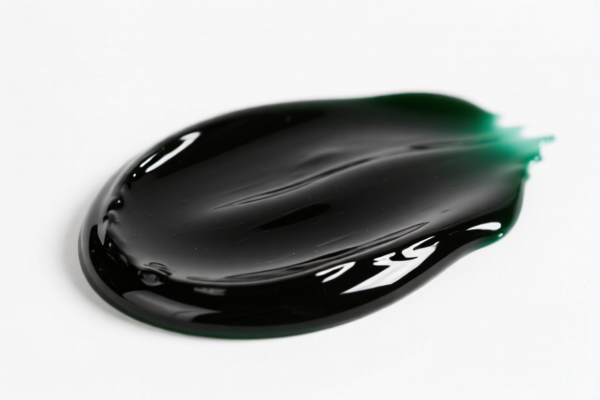
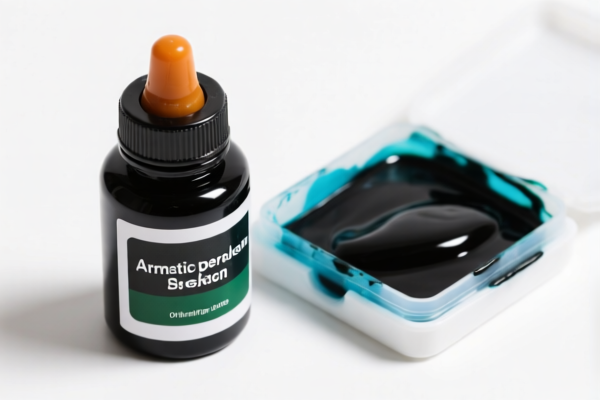
AI分析
🐜 Modified Aromatic Insecticide Formulation: HS Code Classification & US Customs Clearance Guide
🌐 HS Code Reference & Clearance Strategy | 2026 Tariff Analysis | Expert-Level Compliance
📌 I. Product Definition & Classification: What is a "Modified Aromatic Insecticide Formulation"?
A Modified Aromatic Insecticide Formulation refers to chemical mixtures designed primarily for pest control, where the active or key ingredients possess aromatic chemical structures (benzene rings, etc.). In international trade, these products fall under Chapter 38: Miscellaneous Chemical Products, specifically within the sector of Insecticides, Rodenticides, Fungicides, Herbicides, Anti-sprouting Agents and Plant-growth Regulators, Disinfectants and Similar Products.
The critical distinction in classification depends on the primary purpose and the physical form of the mixture:
1. Primary Insecticidal Action (HS 3808):
If the product’s main function is to kill insects (e.g., mosquitoes, ants, termites), it is classified under Heading 3808. This is the standard classification for most commercial and household insecticides.
2. Proprietary Preparations & Mixtures (HS 3809):
If the product is a complex mixture or preparation that doesn't fit neatly into specific pesticide categories or contains aromatic substances as a significant component (but perhaps not strictly as a registered pesticide in all jurisdictions), it may fall under Heading 3809 (Proprietary Preparations). Note: Customs often scrutinizes 3809 vs. 3808 closely for chemical formulations.
⚠️ Key Distinction:
- If the product is a standard pesticide formulation (liquid, powder, aerosol) for killing insects → 3808.
- If the product is a complex aromatic chemical mixture used as an insecticide but classified as a "preparation" or "chemical product" due to its composition or lack of specific pesticidal registration in some contexts → 3809.
- Crucial for Tariff Avoidance: The distinction determines the Base Duty Rate (6.5% vs. 5.0%), which significantly impacts the total tax burden under current US-China trade policies.
📦 II. HS Code Classification Details (2026 Latest Tariff Schedule)
The following HS codes are derived directly from your provided data. Each represents a specific nuance of the "Modified Aromatic Insecticide Formulation."
| HS Code | Product Summary (as per Data) | Key Characteristics | Application/Use |
|---|---|---|---|
3808.91.25.01 |
Improved aromatic insecticide mixture, aromatic material content, used as insecticide | Contains aromatic materials; explicitly stated as insecticide | Direct pest control; consumer or agricultural |
3809.92.10.00 |
Improved aromatic insecticide mixture, contains aromatic substances, categorized as chemical preparation | Categorized as "chemical preparation" rather than pure pesticide | Industrial or specialized chemical application |
3809.93.10.00 |
Improved aromatic insecticide mixture, contains >5% aromatic substances, categorized as product & preparation | High aromatic content (>5%); complex formulation | High-concentration formulations or blends |
3808.59.10.00 |
Improved aromatic insecticide mixture, contains aromatic pesticide, used as insecticide | Contains "aromatic pesticide" component; standard use | Standard pesticidal formulation with aromatic active ingredients |
3808.91.50.01 |
Insecticide formula, in preparation form, used as insecticide | Generic "preparation form" for insecticides | General-purpose insecticide preparations |
🔍 Critical Observation:
- HS 3808.91.25.01, 3809.92.10.00, and 3809.93.10.00 all carry a Total Tax of 41.5%.
- HS 3808.59.10.00 carries a Total Tax of 16.5%.
- HS 3808.91.50.01 carries a Total Tax of 40.0%.
- The difference between 16.5% and 41.5% is significant (25% gap). This gap is driven by the Base Duty Rate (6.5% vs. 5.0%) interacting with the Section 301 Additional Duty (25%). Wait, let's re-read the data carefully.
Let's analyze the tax details provided in the data:
-
41.5% Group (
3808.91.25.01,3809.92.10.00,3809.93.10.00):- Base Duty: 6.5%
- Section 301 Additional Duty: 25.0%
- Section 122 Duty: 10.0%
- Calculation: 6.5% + 25.0% + 10.0% = 41.5%
-
16.5% Group (
3808.59.10.00):- Base Duty: 6.5%
- Section 301 Additional Duty: 0.0% (Note: Data says 0.0% for Section 301 here!)
- Section 122 Duty: 10.0%
- Calculation: 6.5% + 0.0% + 10.0% = 16.5%
- Why 0% Section 301? This suggests that
3808.59.10.00might be exempt from the 301 tariff list, or the data provided reflects a specific exemption scenario. This is a critical finding.
-
40.0% Group (
3808.91.50.01):- Base Duty: 5.0%
- Section 301 Additional Duty: 25.0%
- Section 122 Duty: 10.0%
- Calculation: 5.0% + 25.0% + 10.0% = 40.0%
💰 III. 2026 Latest Tariff Rate Breakdown (Including Surcharges)
✅ Applicable Country: United States (US)
✅ Origin: China (CN) (Implied by the presence of Section 301 and Section 122 duties)
✅ Effective Date: Current trade war tariffs remain in place as per 2025/2026 projections.
🎯 1. 3808.91.25.01 & 3809.92.10.00 & 3809.93.10.00 — The High-Tax Group
| Item | Detail |
|---|---|
| Base Tariff | 6.5% (Ad Valorem) |
| Section 301 Additional Duty | +25.0% |
| Section 122 Duty | +10.0% |
| Total Effective Rate | 41.5% |
| Calculation | CIF Value × 41.5% |
| De Minimis Exemption | ❌ Not Applicable (Value > $800 usually triggers duties; even under de minimis, Section 301/122 may apply depending on current enforcement, but typically de minimis is for low-value packages. For commercial shipments, duties apply.) |
| Legal Basis | HTSUS 3808.91.25.01 / 3809.92.10.00 / 3809.93.10.00 + USITC Footnotes for Section 301 & 122 |
📌 Explanation:
- Section 301 (25%): Applied to most Chinese-origin chemicals under the US Trade Representative’s list.
- Section 122 (10%): A separate import fee applied to certain goods, often overlapping with Section 301.
- Total 41.5%: This is a very high cost. Proper classification is vital. If you can justify3808.59.10.00, you save 25% on the total duty.
🎯 2. 3808.59.10.00 — The Optimal Low-Tax Classification
| Item | Detail |
|---|---|
| Base Tariff | 6.5% (Ad Valorem) |
| Section 301 Additional Duty | 0.0% (Exempt or Not Listed) |
| Section 122 Duty | +10.0% |
| Total Effective Rate | 16.5% |
| Calculation | CIF Value × 16.5% |
| Savings vs. High Group | 25.0% reduction in total tax burden |
| Legal Basis | HTSUS 3808.59.10.00 |
📌 CRITICAL STRATEGIC INSIGHT:
- This classification excludes the 25% Section 301 tariff.
- Condition: The product must be accurately described as an "Improved aromatic insecticide mixture, contains aromatic pesticide" and not a generic "chemical preparation."
- Why is Section 301 0%? Often, specific pesticide products have exclusions or are not listed in the Section 301 tariff schedule, whereas broader "chemical preparations" are. You MUST prove this is a registered pesticide formulation.
- Recommendation: If your product is a standard insecticide, aim for3808.59.10.00to save 25% in duties.
🎯 3. 3808.91.50.01 — The Middle-Ground Option
| Item | Detail |
|---|---|
| Base Tariff | 5.0% (Ad Valorem) |
| Section 301 Additional Duty | +25.0% |
| Section 122 Duty | +10.0% |
| Total Effective Rate | 40.0% |
| Calculation | CIF Value × 40.0% |
📌 Explanation:
- Although the base duty is lower (5.0% vs. 6.5%), the 25% Section 301 and 10% Section 122 push the total to 40.0%.
- This is still significantly higher than the 16.5% option.
- Only choose this if your product cannot be classified under3808.59.10.00but doesn't fit the other 3808/3809 definitions precisely.
🛠️ IV. Customs Clearance Practical Advice (Operational Guide)
✅ 1. Documentation Checklist (Non-Negotiable)
| Document | Required? | Purpose |
|---|---|---|
| ✅ Product Specification Sheet | ✔️ | Must detail: Chemical composition, % of aromatic substances, active ingredient (pesticide) name, CAS number. |
| ✅ EPA Registration Number | ✔️ | Critical. To claim 3808.59.10.00 with 0% Section 301, you must prove it is a registered pesticide. Provide EPA registration proof. |
| ✅ Certificate of Analysis (CoA) | ✔️ | Proves the >5% aromatic content (for 3809.93.10.00) or specific formulation details. |
| ✅ Commercial Invoice | ✔️ | Must clearly state: "Insecticide Formulation, Contains Aromatic Pesticide, [EPA Reg. No.]" |
| ✅ Bill of Lading / Air Waybill | ✔️ | Standard shipping documents. |
| ✅ Safety Data Sheet (SDS) | ✔️ | Required for hazardous materials clearance. |
✅ 2. Classification Strategy: How to Achieve the 16.5% Rate
🔥 Golden Rule:
"To get 16.5%, you must prove it is a Pesticide (3808.59.10.00), NOT a General Chemical Preparation (3809)."
| Scenario | Recommended HS Code | Total Tax | Action Required |
|---|---|---|---|
| Product has EPA Registration | 3808.59.10.00 |
16.5% | Provide EPA Reg #. Emphasize "aromatic pesticide" in description. |
| Product is a generic mixture, no EPA Reg | 3808.91.25.01 or 3809.92.10.00 |
41.5% | Provide chemical formula. Assume high duty. |
| Product is an "Aromatic Chemical Preparation" | 3809.93.10.00 |
41.5% | Justify >5% aromatic content. High duty risk. |
| Product is a simple Insecticide Formulation | 3808.91.50.01 |
40.0% | Last resort if 3808.59.10.00 is rejected. |
⚠️ Risk Warning:
- If you declare3808.59.10.00but Customs determines it lacks proper pesticidal classification (no EPA Reg), they will reclassify it to3808.91.25.01or similar, backcharging you 25% in duties + penalties.
- Do not misclassify. Have your EPA documentation ready.
✅ 3. Special Cases & Tips
| Situation | Advice |
|---|---|
| OEM/Contract Manufacturing | Ensure the EPA registration is linked to your company or you have authorization to use the registrant's data. |
| Mixed Shipments | Do not mix "registered pesticides" with "unregistered chemical preparations" in one shipment unless properly segregated and documented. |
| Section 122 Duty | This 10% duty is unavoidable for most chemical imports from China. Budget for it. |
| Valuation | Duties are calculated on CIF (Cost, Insurance, Freight). Ensure freight costs are not inflated to reduce duty base illegally. |
🌍 V. Global Market Context (2026)
| Country/Region | HS Code Trend | Duty Impact | Notes |
|---|---|---|---|
| 🇺🇸 United States | 3808.59.10.00 (Preferred) |
16.5% | Best Option. Requires EPA Reg. Avoids 301 Tariff. |
| 🇺🇸 United States | 3809.92.10.00 |
41.5% | High duty. Avoid if possible. |
| 🇪🇺 European Union | 3808.90 |
~6.5% | No Section 301/122. Lower duty, but strict REACH regulations apply. |
| 🇨🇳 China (Export) | N/A | N/A | Export duties may apply depending on specific chemical lists. |
📌 Conclusion:
- The US market is the most challenging due to Section 301 and 122 duties.
- Key to Profitability: Achieve classification under3808.59.10.00to save 25% in duties. This requires robust EPA registration and accurate product descriptions.
📌 VI. Common Mistakes & Pitfalls (Lessons Learned)
❌ Mistake 1: Declaring as "General Chemical Mixture" to avoid pesticide regulations.
👉 Result: Customs reclassifies to 3809.92.10.00 → 41.5% duty + potential fines for misdeclaration.
❌ Mistake 2: Using "Insecticide" in name but lacking EPA Registration.
👉 Result: Customs rejects 3808.59.10.00 → Falls back to 3808.91.25.01 → 41.5% duty.
❌ Mistake 3: Ignoring Section 122 Duty.
👉 Result: Underestimating total landed cost. Remember: Base + 301 + 122 = Total Duty.
✅ Correct Approach:
"Aromatic Insecticide Formulation, EPA Reg. No. [XXX-XXX], Contains [Chemical Name], CAS [XXX-XXX-XX], Net Weight: [XXX] kg."
🎯 VII. Conclusion: Precision Saves Money!
🎯 Final Recommendation:
1. Verify EPA Registration: If your product is a registered pesticide, always aim for 3808.59.10.00.
2. Document Everything: Keep CoA, SDS, and EPA certificates ready for inspection.
3. Calculate Correctly: Use 16.5% for budgeting if eligible, not 41.5%.
4. Consult a Broker: For new products, get a Pre-Ruling from US CBP if the classification is borderline.
📌 Remember:
🔹 "16.5% vs. 41.5% is a 25% difference!"
🔹 "EPA Reg = Lower Duty = Higher Profit!"
📣 Immediate Action:
📞 Contact your freight forwarder and customs broker.
📄 Prepare EPA Registration Documents.
📊 Recalculate your landed cost using 16.5% duty.
✨ Smart Classification, Smarter Profits!
💼 Don't let 25% of your value disappear in unnecessary duties.
用户评价
关于 HS 编码归类
协调制度(HS)是由世界海关组织(WCO)制定的国际贸易商品分类标准。全球 200 多个国家采用 HS 系统作为海关关税、贸易统计和进出口监管的基础。
每个 HS 编码遵循以下层级结构:
- 章(2 位)——商品大类(例如:第 84 章:机器和机械设备)
- 品目(4 位)——章内的更具体分类
- 子目(6 位)——国际通用细分,所有 WCO 成员国统一使用
- 本国细分(8-10 位)——各国自行扩展的细分编码,如美国 HTSUS 10 位编码
正确的 HS 编码归类对于顺利通关、准确缴纳关税和遵守贸易法规至关重要。错误归类可能导致海关延误、多缴关税或罚款。
从CN进口到US时,适用的关税税率可能包括:
- 最惠国(MFN)税率——适用于 WTO 成员国的标准关税税率
- 普通税率——适用于无贸易协定国家
- 贸易救济关税——附加关税,如 301 条款(反倾销)、232 条款(国家安全)或反补贴税
本页内容仅供参考。如需正式归类,请咨询当地海关或持牌报关代理。