Modified Aromatic Sand Core Binder
CN → US| HS编码 | 关税税率 | 原产国 | 目的国 | 文档 |
|---|---|---|---|---|
| 3824401000 | 41.5% | CN | US | 官方文档 |
| 3824992100 | 35.0% | CN | US | 官方文档 |
| 3914006000 | 38.9% | CN | US | 官方文档 |
商品图片
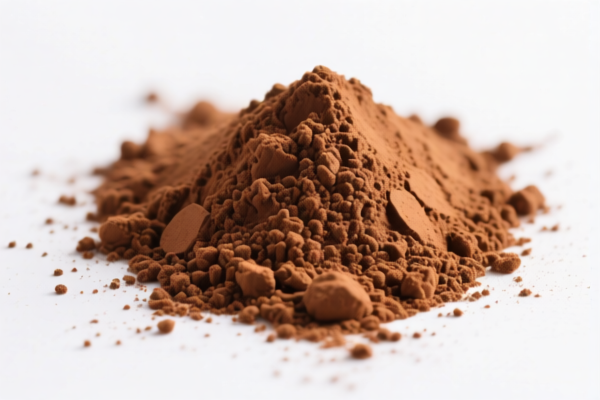

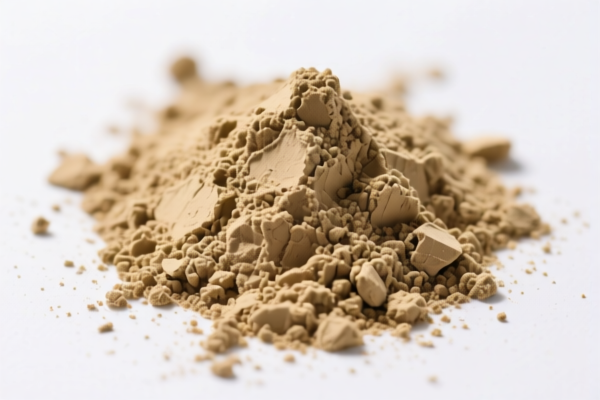
AI分析
🏭 Modified Aromatic Sand Core Binder (铸造砂芯粘结剂)
🌐 HS Code Reference & Customs Clearance Guide | 2026 Latest Tariff Analysis | Professional Tier 1/301 Strategy
📌 I. Product Definition & Classification: What Exactly is "Modified Aromatic Sand Core Binder"?
In the foundry industry, Sand Core Binders are chemical agents used to bind sand particles together to create hollow shapes (cores) or molds for metal casting.
"Modified Aromatic" refers to binders derived from aromatic hydrocarbons (like phenol, cresol, or furfural) that have been chemically altered to improve properties such as strength, curing speed, or thermal stability. These are critical for high-performance castings in automotive, aerospace, and heavy machinery sectors.
⚠️ Key Distinction Points:
- Pre-formed/Pre-fabricated: If the binder is sold as a solid rod, stick, or pre-mixed block ready to be melted or used directly in core making → HS 3824.40.10.00
- Liquid/Chemical Additive: If sold as a liquid resin, catalyst, or chemical additive to be mixed with sand on-site → HS 3824.99.21.00
- Polymer Resin (Unmodified/Primary Form): If it is a raw polymer in primary forms (pellets/granules) without specific "core binder" function defined → HS 3914.00.60.00
📦 II. HS Code Classification Details (2026 Latest Tariff Mapping)
Based on the provided data, here are the three potential classifications and their specific tax implications for imports from China (CN) to the USA (US).
| HS Code | Product Description | Application Scenario | Tax Rate (Total) | Key Tariff Components |
|---|---|---|---|---|
3824.40.10.00 |
Pre-formed Aromatic Core Binders Modified aromatic substances; pre-fabricated for molds/cores. |
Pre-cut binder rods, pre-mixed core blocks, solid forms. | 41.5% | Base: 6.5% +301/Section 122: 25% + 10% |
3824.99.21.00 |
Liquid/Chemical Aromatic Binders Modifying agents or chemical preparations for sand cores. |
Liquid resins, catalysts, or liquid mixtures poured/mixed with sand. | 35.0% | Base: 0.0% +301/Section 122: 25% + 10% |
3914.00.60.00 |
Aromatic Polymer Binders Polymers in primary forms; other chemical applications. |
Raw polymer pellets, granules, or bulk resins not yet defined as "core binder" finish. | 38.9% | Base: 3.9% +301/Section 122: 25% + 10% |
🔍 Critical Note:
- All three classifications attract Section 301 (25%) and Section 122 (10%) additional tariffs for Chinese origin goods.
- The Base Tariff varies significantly (0% to 6.5%), which determines the final difference in total tax burden.
-3824.99.21.00offers the lowest total tax (35.0%) if the product is a liquid/chemical preparation.
-3824.40.10.00is the highest total tax (41.5%) if classified as pre-formed binder.
-3914.00.60.00sits in the middle (38.9%) but is often misused; only use if the product is a raw polymer, not a finished "binder."
💰 III. 2026 Latest Tariff Rate Breakdown (Including Additional Duties & Policy Surcharges)
✅ Applicable Country: United States (US)
✅ Country of Origin: China (CN)
✅ Effective Date: 2025/2026 (Subject to current IEEPA & USITC rulings)
🎯 1. 3824.40.10.00 —— Pre-Formed Aromatic Core Binders (Highest Tax)
| Item | Details |
|---|---|
| Base Tariff | 6.5% |
| Section 301 Tariff | +25.0% (USITC Footnote 1, Chapter 38) |
| Section 122 Tariff | +10.0% (IEEPA Authority) |
| Total Effective Rate | 41.5% |
| Tax Calculation | CIF Value × 41.5% |
| De Minimis Exemption? | ❌ NO (deny_de_minimis) |
| Legal Path | USITC:3824.40.10.00 → Footnote: 301/122 |
📌 Explanation:
- This classification applies to binders that are pre-fabricated (e.g., rods, sticks, pre-mixed blocks).
- The high base duty (6.5%) makes this the most expensive option.
- Warning: Do not misdeclare liquid resins as "pre-formed" to avoid scrutiny, but be aware the tax impact is highest here.
🎯 2. 3824.99.21.00 —— Liquid/Chemical Aromatic Binders (Lowest Tax)
| Item | Details |
|---|---|
| Base Tariff | 0.0% |
| Section 301 Tariff | +25.0% |
| Section 122 Tariff | +10.0% |
| Total Effective Rate | 35.0% |
| Tax Calculation | CIF Value × 35.0% |
| De Minimis Exemption? | ❌ NO (deny_de_minimis) |
| Legal Path | USITC:3824.99.21.00 → Footnote: 301/122 |
📌 Explanation:
- This classification applies to liquid resins, catalysts, or chemical preparations used to modify sand cores.
- Base duty is 0%, saving 6.5% compared to HS 3824.40.10.00.
- Optimal Choice if the product is indeed a liquid or chemical additive.
- Ensure the product description clearly states "liquid," "resin," or "chemical preparation," not "solid rod" or "pre-formed."
🎯 3. 3914.00.60.00 —— Aromatic Polymer Binders (Mid-Range Tax)
| Item | Details |
|---|---|
| Base Tariff | 3.9% |
| Section 301 Tariff | +25.0% |
| Section 122 Tariff | +10.0% |
| Total Effective Rate | 38.9% |
| Tax Calculation | CIF Value × 38.9% |
| De Minimis Exemption? | ❌ NO (deny_de_minimis) |
| Legal Path | USITC:3914.00.60.00 → Footnote: 301/122 |
📌 Explanation:
- This classification is for polymers in primary forms (e.g., pellets, granules) used as binders.
- Use this only if the product is a raw polymer resin not yet processed into a specific "core binder" formulation.
- Risk: If CBP determines it is a finished "binder," they may reclassify to 3824.xxxx, leading to penalties.
- Mid-range tax (38.9%) is better than 41.5% but worse than 35.0%.
🛠️ IV. Customs Clearance Practical Advice (Avoid Pitfalls)
✅ 1. Required Documentation Checklist
| Document | Required? | Notes |
|---|---|---|
| ✅ Product Specification Sheet | ✔️ | Must clearly state: Physical Form (Liquid/Solid), Chemical Composition (Aromatic Resin/Polymer), Intended Use (Sand Core Binding). |
| ✅ Safety Data Sheet (SDS) | ✔️ | Critical for chemical classification. Verify Section 1 (Product Identification) and Section 3 (Composition). |
| ✅ Commercial Invoice | ✔️ | Describe accurately: e.g., "Liquid Aromatic Sand Core Binder, Resin Type, Model XYZ" vs. "Pre-formed Sand Core Rod." |
| ✅ Certificate of Origin (CO) | ✔️ | Proves China origin, triggering Section 301/122 tariffs. |
| ✅ Formulating Diagram | ✔️ | If claiming "chemical preparation" (HS 3824.99.21.00), show it is mixed with sand, not sold as a final core part. |
| ✅ MSDS/UN Number | ✔️ | For hazardous materials declaration. |
✅ 2. Declaration Strategy (Key Tips)
🔥 "Form Determines Fate, Description Dictates Duty!"
| Scenario | Correct HS Code | Incorrect HS Code | Tax Difference |
|---|---|---|---|
| Liquid Resin (mixed with sand) | 3824.99.21.00 |
3824.40.10.00 |
Save 6.5% |
| Solid Rod/Block (pre-formed) | 3824.40.10.00 |
3914.00.60.00 |
Higher Tax |
| Raw Polymer Pellets | 3914.00.60.00 |
3824.40.10.00 |
Save 2.6% (if truly raw) |
| Final Core Part (cast item) | N/A | Any of above | Wrong HS! (Should be 8401/8402) |
📌 Critical Advice:
- If your product is a liquid, strongly consider3824.99.21.00for the 0% base duty.
- If your product is solid rods, you must use3824.40.10.00. Do not try to force it into3914unless it is truly a raw polymer.
- Never misdeclare "liquid resin" as "polymer pellets" to save tax. CBP tests chemical composition.
✅ 3. Special Case Handling
| Situation | Recommendation |
|---|---|
| Custom Formulation | Provide a detailed formula showing it is a "chemical preparation" not a "pure polymer." |
| Blended with Additives | If mixed with fillers, catalysts, etc., it is likely a "preparation" (3824.99.21.00), not a pure polymer (3914.00). |
| Sample for Testing | Even samples are subject to duty. Declare accurately. |
| Returnable Containers | If resin is in reusable tanks, declare separately to avoid duty on containers. |
🌍 V. Global Market Comparison (2026)
| Market | Recommended HS Code | Total Tax (China Origin) | Notes |
|---|---|---|---|
| 🇺🇸 USA | 3824.99.21.00 |
35.0% | Includes 25% (301) + 10% (122). Lowest base duty. |
| 🇺🇸 USA | 3824.40.10.00 |
41.5% | Highest total tax due to 6.5% base duty. |
| 🇪🇺 EU | 3824.99 / 3914 | ~6-10% | No Section 301/122 equivalents. Much lower tax. |
| 🇨🇳 China | 3824 / 3914 | ~0-9% | Domestic trade or imports from non-China sources. |
📌 Conclusion:
- The USA imposes heavy additional tariffs on Chinese chemical products.
- Optimization Strategy: If your product is a liquid, ensure it is classified under3824.99.21.00to save 6.5% vs. solid binders.
- Consider supply chain diversification (e.g., produce in Vietnam/Mexico) if tariffs are too high, as these duties only apply to China-origin goods.
📌 VI. Common Mistakes & Pitfalls (Lessons Learned)
❌ Mistake 1: Declaring liquid resin as "Polymer" (HS 3914) to save base duty.
👉 Risk: CBP may classify it as a "preparation" (3824) if additives are present, leading to retroactive duties + penalties.
❌ Mistake 2: Using "Pre-formed" description for liquid products.
👉 Risk: Incorrect HS 3824.40.10.00 → Overpay 6.5%.
❌ Mistake 3: Ignoring Section 122 (10%).
👉 Risk: Many importers only factor in 301 (25%) and forget the additional 10% IEEPA tariff. Total is not 25%, but 35-41.5%.
❌ Mistake 4: Failing to provide SDS.
👉 Risk: CBP demands it for chemical classification. Delay in clearance, storage fees, or refusal.
✅ Correct Approach:
"Liquid Aromatic Sand Core Binder, Resin-Based, for Use in Foundry Sand Mixtures, Model XYZ, SDS Attached, HS 3824.99.21.00"
🎯 VII. Conclusion: Precision in Classification Saves Money
🎯 Key Takeaway:
🔹 "Liquid = 3824.99.21.00 (35%) | Solid Rod = 3824.40.10.00 (41.5%) | Raw Polymer = 3914.00.60.00 (38.9%)"
🔹 "Base Duty Matters: 0% vs 6.5% is a 6.5% Difference!"
🔹 "Always Account for 35-41.5% Total Tax for China-Origin Chemicals to the USA."
📌 Pro Tip:
- Apply for Advance Ruling from CBP if your product is a novel formulation.
- Keep SDS and Formulations updated and accessible for customs audits.
- Consider Supplier Diversification if margins are tight, as these tariffs are permanent for China-origin goods.
📣 Immediate Action:
📞 Contact a Customs Broker to review your SDS and product form.
📋 Request HS Code Pre-Ruling if unsure between 3824 and 3914.
🚀 Optimize Your Supply Chain to minimize tariff impact.
✨ Professional Customs Clearance Starts with Accurate Classification!
💼 Every Percentage Point Saved is Pure Profit!
用户评价
关于 HS 编码归类
协调制度(HS)是由世界海关组织(WCO)制定的国际贸易商品分类标准。全球 200 多个国家采用 HS 系统作为海关关税、贸易统计和进出口监管的基础。
每个 HS 编码遵循以下层级结构:
- 章(2 位)——商品大类(例如:第 84 章:机器和机械设备)
- 品目(4 位)——章内的更具体分类
- 子目(6 位)——国际通用细分,所有 WCO 成员国统一使用
- 本国细分(8-10 位)——各国自行扩展的细分编码,如美国 HTSUS 10 位编码
正确的 HS 编码归类对于顺利通关、准确缴纳关税和遵守贸易法规至关重要。错误归类可能导致海关延误、多缴关税或罚款。
从CN进口到US时,适用的关税税率可能包括:
- 最惠国(MFN)税率——适用于 WTO 成员国的标准关税税率
- 普通税率——适用于无贸易协定国家
- 贸易救济关税——附加关税,如 301 条款(反倾销)、232 条款(国家安全)或反补贴税
本页内容仅供参考。如需正式归类,请咨询当地海关或持牌报关代理。