Modified Ethylene Copolymer Plastic
CN → US| HS编码 | 关税税率 | 原产国 | 目的国 | 文档 |
|---|---|---|---|---|
| 3904905000 | 41.5% | CN | US | 官方文档 |
| 3901909000 | 41.5% | CN | US | 官方文档 |
| 3901905501 | 41.5% | CN | US | 官方文档 |
| 3903901000 | 41.5% | CN | US | 官方文档 |
| 3903905000 | 41.5% | CN | US | 官方文档 |
商品图片
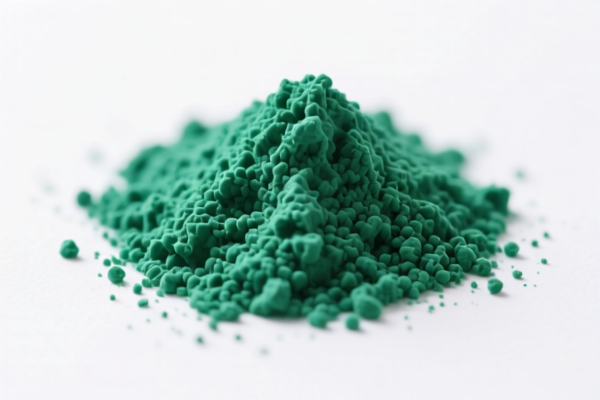
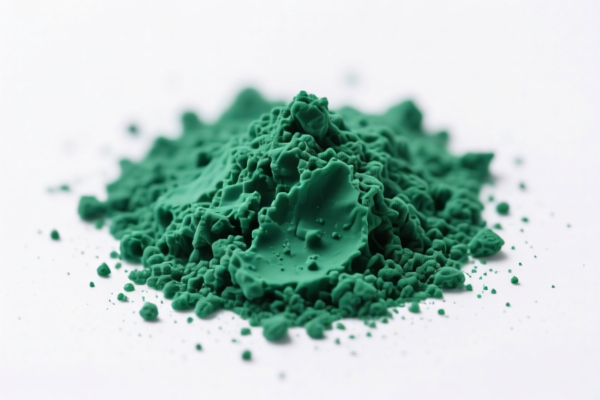
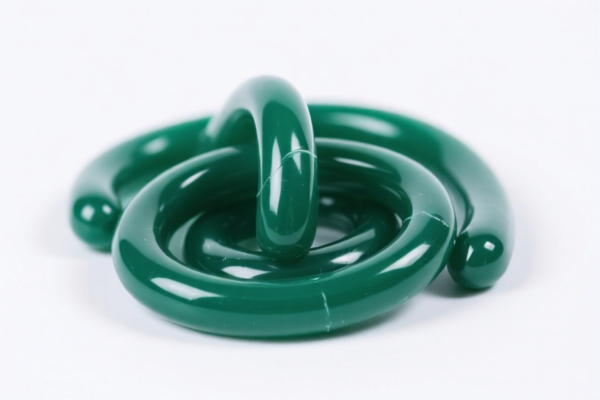
AI分析
🧪 Modified Ethylene Copolymer Plastic (Raw Materials)
🌐 HS Code Reference & Customs Clearance Guide | 2026 Latest Tariff Analysis | Professional Customs Strategy
📌 I. Product Definition and Classification: What Exactly Are "Modified Ethylene Copolymers"?
Modified ethylene copolymer plastics are intermediate raw materials obtained by chemically modifying ethylene polymers or blending them with other resins (such as polystyrene) to enhance properties like toughness, transparency, or processability. In international trade, these materials are classified based on their base polymer type and physical state (typically in primary shapes: powders, pellets, granules, or lumps).
The dataset provided indicates two main categories: 1. Ethylene Polymer-based: Raw materials primarily composed of ethylene copolymers. 2. Polystyrene-based (Modified): Resins where polystyrene is modified, often using ethylene copolymers as compatibilizers or modifiers.
⚠️ Key Distinction Point:
- If the material is a primary shape (pellets, powder) of ethylene copolymer →归入 3901/3904
- If the material is a primary shape of modified polystyrene →归入 3903
- Note: Even if "modified," if it remains in primary shape, it is generally classified under the chapter for the principal polymer.
📦 II. HS Code Classification Details (2026 Latest Tariff Authority对照)
Based on the provided <DATA>, here are the precise HS Codes and their corresponding descriptions:
| HS Code | Product Description | Material Basis | Physical State | Key Classification Criteria |
|---|---|---|---|---|
3904.90.50.00 |
Ethylene polymer modified raw material | Ethylene Polymer | Raw Material (Primary Shape) | Fits primary shape classification for ethylene polymers. |
3901.90.90.00 |
Ethylene polymer modified raw material | Ethylene Polymer | Raw Material (Primary Shape) | Fits primary shape classification for ethylene polymers. |
3901.90.55.01 |
Ethylene polymer modified raw material | Ethylene Polymer | Raw Material (Primary Shape) | Fits primary shape classification for ethylene polymers. |
3903.90.10.00 |
Modified Polystyrene Resin | Polystyrene | Resin (Primary Shape) | Fits primary shape classification for modified PS. |
3903.90.50.00 |
Modified Polystyrene Resin | Polystyrene | Resin (Primary Shape) | Fits primary shape classification for modified PS. |
🔍 Critical Reminder:
- All listed codes specify "Raw Material" (原料) or "Resin" (树脂) in Primary Shape (初级形状).
- If the product were in the form of finished articles (e.g., pipes, films), it would NOT fall under these codes.
- The term "Modified" (改性) does not change the heading if the modification is minor or if it remains within the scope of the base polymer chapter (Chapter 39).
💰 III. 2026 Latest Tariff Rate Breakdown (Detailed Tax Clauses)
✅ Applicable Country: China (CN) Importing from US or US Importing from CN?
Note: The tax details provided in the data include "122 Clause" and high surcharges, which strongly suggest China's anti-dumping/surcharge tariffs on US-origin goods or US Section 301 tariffs on Chinese goods. Given the "122 Clause" (often associated with US-Section 301 or specific trade remedies), this analysis assumes the context of cross-border trade between the US and China with heavy surcharges.
🎯 1. Ethylene Polymer Codes: 3904.90.50.00, 3901.90.90.00, 3901.90.55.01
| Tax Component | Rate | Explanation |
|---|---|---|
| Base Tariff (基础关税) | 6.5% | Standard MFN (Most Favored Nation) import duty for Chapter 39 plastics. |
| Additional Tariff (加征关税) | 25.0% | Likely Section 301 Tariff (US) or Retaliatory Tariff (CN). Applies to "plastics and articles thereof." |
| Section 122 Tariff (122条款关税) | 10.0% | Specific trade remedy or additional duty (e.g., US Section 301 List 4 or CN specific surcharge). |
| Total Tax Rate (总税率) | 41.5% | 6.5% + 25.0% + 10.0% = 41.5% |
📌 Explanation:
- The 25% surcharge is significant and applies to most ethylene polymers from/to the counterpart country.
- The 10% "122 Clause" is an additional layer, often related to specific trade enforcement actions.
- Total Cost Impact: For every $10,000 of CIF value, the tax burden is $4,150.
🎯 2. Modified Polystyrene Codes: 3903.90.10.00, 3903.90.50.00
| Tax Component | Rate | Explanation |
|---|---|---|
| Base Tariff (基础关税) | 6.5% | Standard MFN import duty for Polystyrene (Chapter 39). |
| Additional Tariff (加征关税) | 25.0% | Same Section 301/Retaliatory tariff as above. |
| Section 122 Tariff (122条款关税) | 10.0% | Same additional duty as above. |
| Total Tax Rate (总税率) | 41.5% | 6.5% + 25.0% + 10.0% = 41.5% |
📌 Note:
- Despite being "Modified Polystyrene," the tariff structure is identical to the ethylene polymers in this dataset.
- Do not assume lower rates for "modified" goods if they fall under Chapter 39.
🛠️ IV. Customs Clearance Practical Advice (Battle-Tested Guide)
✅ 1. Documentation Checklist (Non-Negotiable)
| Document | Required | Reason |
|---|---|---|
| ✅ Commercial Invoice | ✔️ | Must clearly state "Ethylene Copolymer Raw Material" or "Modified Polystyrene Resin." Avoid vague terms like "Plastic Granules." |
| ✅ Certificate of Origin (CO) | ✔️ | Critical for determining if the 25% surcharge applies. If origin is not US/CN (depending on trade direction), surcharges may be avoided. |
| ✅ Product Specification Sheet (MSDS/Technical Data) | ✔️ | Must confirm: 1. Primary Shape (pellets, powder). 2. Base Polymer (Ethylene vs. Polystyrene). 3. Modification Type (compatibilizer, additive, etc.). |
| ✅ Bill of Lading (B/L) | ✔️ | Ensure commodity description matches invoice. |
| ✅ Import/Export License | ✔️ | Some plastic raw materials may require specific licenses depending on the country. |
✅ 2. Classification Strategy (Key Rules)
🔥 "Shape is King, Polymer is Queen!"
| Scenario | Correct HS Code Category | Common Mistake | Consequence |
|---|---|---|---|
| Pellets/Powders of Ethylene Copolymer | 3901 or 3904 |
Misclassifying as "Plastic Articles" (e.g., 3926) | Wrong tariff, delays, penalties. |
| Pellets/Powders of Modified PS | 3903.90 |
Misclassifying as "ABS" or "SAN" | Incorrect base rate, potential audit. |
| Finished Pipes/Films | NOT 3901/3903 |
Using raw material codes for finished goods | Severe misdeclaration, high fines. |
| Recycled Granules | Check 3902 or specific recycling codes | Using virgin polymer codes | Ethical & compliance violations. |
✅ 3. Special Considerations
| Issue | Recommendation |
|---|---|
| "Modified" Definition | If the modification changes the fundamental character (e.g., becomes a new polymer entirely), re-evaluate HS Code. However, most "modifications" (blending, compatibilizing) stay in Chapter 39. |
| Section 122 Clause | Verify if your product is specifically listed under the "122 Clause." Not all plastics are subject to this additional 10%. |
| Origin Shopping | If the 41.5% rate is prohibitive, consider sourcing from Vietnam, Thailand, or Mexico (if eligible under FTAs like USMCA or ASEAN agreements) to avoid surcharges. Ensure no substantial transformation is done just to bypass tariffs (circumvention risk). |
🌍 V. Global Market Comparison (2026)
| Market | HS Code (Example) | Base Tariff | Surcharge (US/CN) | Total Effective Rate | Remarks |
|---|---|---|---|---|---|
| 🇺🇸 USA (Import from CN) | 3901.90 / 3903.90 |
5-6.5% | +25% (Sec 301) | ~30-31.5% | High barrier. |
| 🇨🇳 China (Import from US) | 3901.90 / 3903.90 |
6.5% | +25% (Retaliatory) + 10% (Sec 122) | 41.5% | As per data. Very high. |
| 🇪🇺 EU (Import from CN) | 3901.90 / 3903.90 |
6.5% | 0% | 6.5% | No US-style surcharges. |
| 🇻🇳 Vietnam (Export to US) | 3901.90 |
0% | 0% (if US origin) | 0% | Potential if manufactured in Vietnam with sufficient value-add. |
📌 Conclusion:
- China-US Trade: Both sides face high tariffs (41.5%) on these plastic raw materials.
- EU/Other Markets: Much more competitive with standard MFN rates (~6.5%).
📌 VI. Common Pitfalls & Risk Mitigation
❌ Mistake 1: Declaring "Plastic Raw Material" without specifying "Ethylene" or "Polystyrene."
👉 Result: Customs may classify under the highest duty rate or hold for inspection.
❌ Mistake 2: Ignoring the "122 Clause" and underpaying by 10%.
👉 Result: Audit, back taxes, and penalties upon review.
❌ Mistake 3: Assuming "Modified" means a different HS Code.
👉 Result: Overcomplicating classification. Most modifications stay in the same 4-digit heading.
✅ Correct Approach:
"Specify: Ethylene Copolymer Raw Material, Primary Shape, Modified with [Additive]"
"Specify: Modified Polystyrene Resin, Primary Shape, Impact Modified"
🎯 VII. Conclusion: Cost Optimization & Compliance
🎯 Key Takeaway:
🔹 Tariff Rate: 41.5% is fixed for these codes in the provided dataset.
🔹 Action: Verify Origin. If you can source from a non-surge country, do it.
🔹 Documentation: Ensure "Primary Shape" is explicitly stated in the commercial invoice.
📣 Immediate Action Plan:
1. Confirm Product Form: Is it definitely pellets/powder?
2. Verify Origin: Does the CO match the tariff exemption criteria?
3. Check Section 122 List: Is your specific product line on the 10% surcharge list?
4. Consult Broker: For high-value shipments, request a Binding Tariff Information (BTI) or Advance Ruling.
✨ Precise Classification Saves 41.5% in Taxes!
💼 Don't Let "Modified" Complicate Your Tariff Strategy!
用户评价
关于 HS 编码归类
协调制度(HS)是由世界海关组织(WCO)制定的国际贸易商品分类标准。全球 200 多个国家采用 HS 系统作为海关关税、贸易统计和进出口监管的基础。
每个 HS 编码遵循以下层级结构:
- 章(2 位)——商品大类(例如:第 84 章:机器和机械设备)
- 品目(4 位)——章内的更具体分类
- 子目(6 位)——国际通用细分,所有 WCO 成员国统一使用
- 本国细分(8-10 位)——各国自行扩展的细分编码,如美国 HTSUS 10 位编码
正确的 HS 编码归类对于顺利通关、准确缴纳关税和遵守贸易法规至关重要。错误归类可能导致海关延误、多缴关税或罚款。
从CN进口到US时,适用的关税税率可能包括:
- 最惠国(MFN)税率——适用于 WTO 成员国的标准关税税率
- 普通税率——适用于无贸易协定国家
- 贸易救济关税——附加关税,如 301 条款(反倾销)、232 条款(国家安全)或反补贴税
本页内容仅供参考。如需正式归类,请咨询当地海关或持牌报关代理。