Modified Hydrocarbon Adhesive
CN → US| HS编码 | 关税税率 | 原产国 | 目的国 | 文档 |
|---|---|---|---|---|
| 3824100000 | 41.0% | CN | US | 官方文档 |
| 3824994900 | 41.5% | CN | US | 官方文档 |
| 2902903050 | 35.0% | CN | US | 官方文档 |
| 2902909000 | 35.0% | CN | US | 官方文档 |
| 3907995050 | 41.5% | CN | US | 官方文档 |
商品图片


AI分析
🏭 Hydrocarbon Shell Molding Adhesive (Modified Hydrocarbon Adhesive)
🌐 HS Code Classification & US Customs Clearance Guide | 2024/2025 Tariff Update | Foundry Chemicals Strategy
📌 I. Product Definition & Chemical Nature: What Exactly Are You Shipping?
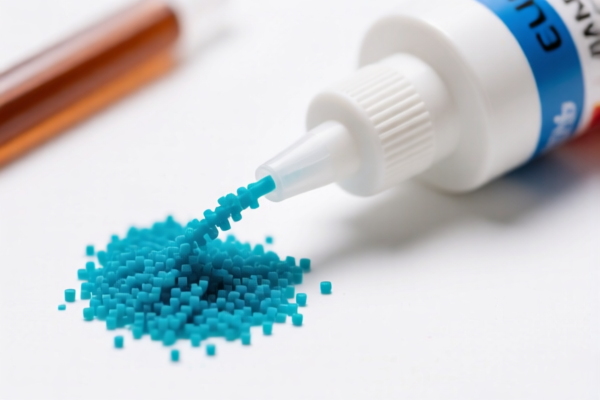
Hydrocarbon Shell Molding Adhesives are specialized chemical binders used in the foundry industry to create metal casting molds and cores. They are typically based on modified hydrocarbon resins (often phenolic novolac or polybutadiene modified with hydrocarbons) that provide: * High Green Strength: For handling molds before curing. * Good Flow Properties: To coat sand particles evenly. * Thermal Stability: To withstand molten metal temperatures.
In international trade, these adhesives do not have a single "universal" HS code. Their classification depends heavily on their chemical composition, physical state, and specific application. The following analysis covers the most common classifications for US import purposes, highlighting the significant tariff differences.
⚠️ Critical Distinction:
- Are they "Prepared Binders" specifically for molds? → Likely 3824.10.00.00 (Foundry Binders).
- Are they "Other Chemical Products" containing hydrocarbons but not specifically formulated as mold binders? → Likely 3824.99.49.00.
- Are they primarily "Other Aromatic Hydrocarbons" (chemical intermediates)? → Likely 2902.90.30.50 or 2902.90.90.00.
- Are they "Synthetic Polymers/Resins" (plastics raw materials)? → Likely 3907.99.50.50.
📦 II. HS Code Classification Matrix (2024/2025 Latest Tariff)
Based on the provided data, here are the five potential HS codes for Modified Hydrocarbon Adhesives, ordered by commonality and tariff impact.
| HS Code | Summary Description | Applicable Scenario | Primary Chemical Nature |
|---|---|---|---|
| 3824.10.00.00 | Hydrocarbon shell molding adhesive; matching prepared binders for molding or core-making | Most Common: Specifically formulated foundry binders sold as complete units for sand molding | Prepared Adhesive/Binder |
| 3824.99.49.00 | Hydrocarbon shell molding adhesive; matching hydrocarbon materials derived from petroleum & casting mold adhesives | Alternative: Binders based on petroleum hydrocarbons not strictly defined as "prepared binders" under 3824.10 | Petroleum-Derived Chemical |
| 2902.90.30.50 | Hydrocarbon shell molding adhesive; matching cyclic hydrocarbons & alkylbenzene chemical materials | Chemical Intermediate: If classified as a cyclic hydrocarbon or alkylbenzene precursor before final formulation | Aromatic Hydrocarbon |
| 2902.90.90.00 | Hydrocarbon shell molding adhesive; matching cyclic hydrocarbons/hydrocarbon materials & chemical intermediate forms | Raw Material: If sold as a chemical intermediate (e.g., unmodified hydrocarbon resin chunk) | Hydrocarbon Intermediate |
| 3907.99.50.50 | Hydrocarbon shell molding adhesive; matching organic hydrocarbon compounds & organic resin/polymer material attributes | Polymer/Resin: If classified as a synthetic organic polymer (e.g., phenolic resin base) before adding fillers | Synthetic Resin/Polymer |
🔍 Key Insight for Importers:
- 3824.10.00.00 is the most "correct" for finished foundry binders.
- 2902 and 3907 codes are often used if the product is considered a raw chemical or resin rather than a "prepared mixture" for casting.
- Misclassification Risk: Declaring a finished binder as a raw hydrocarbon (2902) to lower base duty can trigger audits if the chemical properties don't match the intermediate definition.
💰 III. Detailed Tariff Rate Analysis (US Imports from China)
✅ Applicable Country: United States (US)
✅ Origin: China (CN)
✅ Effective Date: Current trade war tariffs (Section 301 + IEEPA 122) are active.
🎯 1. 3824.10.00.00 — Foundry Binders (Most Likely for Finished Adhesives)
| Item | Detail |
|---|---|
| Base Duty (MFN) | 6.0% |
| Section 301 Duty (25%) | +25% (USITC Footnote 9903.88.01 / Trade Act 301) |
| IEEPA / Section 122 Duty | +10% (On certain Chinese chemical/industrial goods) |
| Total Tariff Rate | 41.0% |
| Calculation | (CIF Value × 6%) + (CIF Value × 25%) + (CIF Value × 10%) = 41% of CIF |
| De Minimis Exemption? | ❌ NO (Denied under Section 321 for Section 301 goods) |
| Legal Reference Path | HTSUS: 3824.10.00.00 → Section 301 List 3/4 → IEEPA: 122 Clause |
📌 Explanation:
- This is the standard classification for prepared binders.
- The 41% total rate is steep. Importers must budget for this high cost.
- No de minimis exemption: Even small shipments (e.g., < $800) are subject to these duties if properly declared.
🎯 2. 3824.99.49.00 — Other Prepared Chemical Products (Petroleum-Based)
| Item | Detail |
|---|---|
| Base Duty (MFN) | 6.5% |
| Section 301 Duty (25%) | +25% |
| IEEPA / Section 122 Duty | +10% |
| Total Tariff Rate | 41.5% |
| Calculation | CIF × 41.5% |
| De Minimis Exemption? | ❌ NO |
| Legal Reference Path | HTSUS: 3824.99.49.00 → Section 301 → IEEPA |
📌 Explanation:
- Slightly higher base duty (6.5% vs 6.0%) but same additive structure.
- Used if the product is not strictly a "mold binder" but a broader "hydrocarbon adhesive."
🎯 3. 2902.90.30.50 & 2902.90.90.00 — Cyclic Hydrocarbons (Chemical Intermediates)
| Item | Detail |
|---|---|
| Base Duty (MFN) | 0.0% |
| Section 301 Duty (25%) | +25% |
| IEEPA / Section 122 Duty | +10% |
| Total Tariff Rate | 35.0% |
| Calculation | CIF × 35.0% |
| De Minimis Exemption? | ❌ NO |
| Legal Reference Path | HTSUS: 2902.90 → Section 301 → IEEPA |
📌 Explanation:
- Lower Base Duty (0%) makes this attractive, resulting in a 35% total rate (vs. 41%).
- Risk: This classification implies the product is a raw chemical intermediate (e.g., cyclic hydrocarbon), not a "prepared adhesive" for direct use in molding.
- Customs Caution: If the product is already mixed with binders/additives for foundry use, customs may reclassify it to 3824 (41%) and penalize the importer. Only use this if the product is indeed a raw chemical stock.
🎯 4. 3907.99.50.50 — Other Synthetic Polymers/Resins
| Item | Detail |
|---|---|
| Base Duty (MFN) | 6.5% |
| Section 301 Duty (25%) | +25% |
| IEEPA / Section 122 Duty | +10% |
| Total Tariff Rate | 41.5% |
| Calculation | CIF × 41.5% |
| De Minimis Exemption? | ❌ NO |
| Legal Reference Path | HTSUS: 3907.99.50.50 → Section 301 → IEEPA |
📌 Explanation:
- Used if the hydrocarbon adhesive is primarily a phenolic or synthetic resin sold as a polymer raw material.
- Same high tariff as3824.99.49.00.
🛠️ IV. Customs Clearance Strategic Advice
✅ 1. Essential Documentation Checklist
| Document | Requirement | Purpose |
|---|---|---|
| Product Specification Sheet | ✅ Mandatory | Must detail: Chemical composition (% hydrocarbon, % resin, % additives), physical state (liquid/paste/powder), and intended use (foundry mold binding). |
| Formula/Composition Breakdown | ✅ Mandatory | To prove whether it is a "prepared binder" (3824) or a "raw chemical" (2902/3907). |
| Commercial Invoice | ✅ Mandatory | Must clearly state: "Hydrocarbon Shell Molding Adhesive" and HS Code. |
| Certificate of Origin | ✅ Mandatory | To confirm Chinese origin (subject to Section 301/IEEPA tariffs). |
| SDS (Safety Data Sheet) | ✅ Mandatory | For hazard communication and chemical classification verification. |
| Bill of Lading | ✅ Mandatory | Proof of shipment. |
✅ 2. Classification Strategy: How to Choose the Right HS Code?
🔥 Rule of Thumb:
- If it's a finished product for foundries: Use 3824.10.00.00 (41% duty). It’s the most accurate and defensible.
- If it's a raw hydrocarbon resin: Use 2902 or 3907 codes.
- Caution: Only use 2902 (35% duty) if you can prove it is a cyclic hydrocarbon and not a prepared binder. Customs may audit this aggressively.
- Use 3907 (41.5% duty) if it’s a synthetic polymer resin base.
| Scenario | Recommended HS Code | Total Duty | Risk Level |
|---|---|---|---|
| Finished binder in drums, labeled for foundry use | 3824.10.00.00 | 41.0% | 🟢 Low (Accurate) |
| Unlabeled chemical drum, high hydrocarbon content | 2902.90.30.50 | 35.0% | 🟡 Medium (Requires chemical proof) |
| Raw phenolic resin chunks/powder | 3907.99.50.50 | 41.5% | 🟢 Low (If clearly resin) |
| Ambiguous "adhesive" with petroleum base | 3824.99.49.00 | 41.5% | 🟡 Medium |
⚠️ Warning:
- Do not try to misdeclare a finished binder as a raw hydrocarbon (2902) to save 6%.
- If the product contains binders, resins, and additives mixed together for a specific use, it is a 3824 product by definition. Misclassification can lead to back duties, penalties, and shipment holds.
✅ 3. Special Cases & Mitigation
| Situation | Strategy |
|---|---|
| Is it a "Section 122" Good? | Confirm if the product falls under the 10% IEEPA additional duty. For chemical/adhesive goods, it often does. |
| Can I use De Minimis (<$800)? | ❌ NO. Section 301 and IEEPA duties apply to all shipments, regardless of value. |
| Can I get a Tariff Exclusion? | Check the USTR Exclusion List for HS codes 3824.10.00.00 or 2902.90. Prior exclusions have expired; new ones are rare. |
| What if I use a Third-Country Supplier? | If the adhesive is manufactured in Vietnam, Malaysia, or India (and not merely transshipped from China), it may be eligible for 0% Section 301 duty. However, strict Rules of Origin apply. |
🌍 V. Global Market Comparison (2024/2025)
| Country | HS Code (Typical) | Base Duty | Section 301/Trade War Impact | Notes |
|---|---|---|---|---|
| 🇺🇸 USA | 3824.10.00.00 | 6.0% | +35% (25% + 10%) | Total ~41%. High cost. |
| 🇨🇳 China | 3824.10.00.00 | 6.0% | N/A (Domestic) | No import duty for domestic trade. |
| 🇪🇺 EU | 3824.10.00 | 6.5% | None (EU does not have Section 301) | Total ~6.5%. Much cheaper than US. |
| 🇬🇧 UK | 3824.10.00 | 6.5% | None | Total ~6.5%. |
| 🇯🇵 Japan | 3824.10.00 | 6.0% | None | Total ~6.0%. |
| 🇮🇳 India | 3824.10.00 | 7.5% | None | Total ~7.5% + GST. |
📌 Conclusion:
- The US market is significantly more expensive for Chinese-origin hydrocarbon adhesives due to trade war tariffs.
- European, Japanese, and Indian markets offer much better margin opportunities (6-8% duty vs. 41%).
- Strategy: If exporting to the US, consider supply chain diversification (e.g., manufacturing in Southeast Asia) or absorbing the cost if you have strong pricing power.
📌 VI. Common Pitfalls & Best Practices
❌ Pitfall 1: Declaring "Adhesive" generically without chemical details.
👉 Result: Customs issues a Request for Information (RFI) or reclassifies to the highest applicable duty rate.
✅ Fix: Provide a detailed chemical composition and intended use statement.
❌ Pitfall 2: Assuming "Hydrocarbon" means lower duty.
👉 Result: Using HS 2902 for a prepared binder leads to penalties.
✅ Fix: If it’s a ready-to-use mold binder, use 3824.10.00.00.
❌ Pitfall 3: Ignoring the 10% IEEPA Duty.
👉 Result: Underpaying duties by 10%.
✅ Fix: Ensure your broker includes the 10% IEEPA surcharge for Chinese chemical goods.
🎯 VII. Final Recommendation for Importers
- For Finished Foundry Binders:
- HS Code:
3824.10.00.00 - Total Duty: 41%
-
Action: Budget for high costs. Ensure precise labeling as "Foundry Binder."
-
For Raw Chemical Resins/Hydrocarbons:
- HS Code:
2902.90.30.50(if cyclic hydrocarbon) or3907.99.50.50(if resin) - Total Duty: 35% or 41.5%
-
Action: Only use if you can substantiate the raw material nature. 2902 offers the best rate (35%) if applicable.
-
Supply Chain Strategy:
- If volume is high, consider contract manufacturing in Vietnam or India to avoid Section 301 tariffs.
- Always request a Binding Tariff Ruling (BTR) from US Customs (CBP) before large shipments to ensure correct classification.
📣 Immediate Action Items:
📞 Consult a Customs Broker: Verify the exact chemical composition against HTSUS definitions.
📄 Prepare SDS & Formula Sheets: Essential for classification defense.
💰 Calculate Landed Cost: Include 41% duty + freight + insurance. Is the product still profitable?
✨ Accurate Classification = Cost Savings + Compliance.
💼 Don’t let trade war tariffs eat your margins!
用户评价
关于 HS 编码归类
协调制度(HS)是由世界海关组织(WCO)制定的国际贸易商品分类标准。全球 200 多个国家采用 HS 系统作为海关关税、贸易统计和进出口监管的基础。
每个 HS 编码遵循以下层级结构:
- 章(2 位)——商品大类(例如:第 84 章:机器和机械设备)
- 品目(4 位)——章内的更具体分类
- 子目(6 位)——国际通用细分,所有 WCO 成员国统一使用
- 本国细分(8-10 位)——各国自行扩展的细分编码,如美国 HTSUS 10 位编码
正确的 HS 编码归类对于顺利通关、准确缴纳关税和遵守贸易法规至关重要。错误归类可能导致海关延误、多缴关税或罚款。
从CN进口到US时,适用的关税税率可能包括:
- 最惠国(MFN)税率——适用于 WTO 成员国的标准关税税率
- 普通税率——适用于无贸易协定国家
- 贸易救济关税——附加关税,如 301 条款(反倾销)、232 条款(国家安全)或反补贴税
本页内容仅供参考。如需正式归类,请咨询当地海关或持牌报关代理。