Modified Polyester Resin Raw Material
CN → US| HS编码 | 关税税率 | 原产国 | 目的国 | 文档 |
|---|---|---|---|---|
| 3907400000 | 40.8% | CN | US | 官方文档 |
| 3907995050 | 41.5% | CN | US | 官方文档 |
| 3903901000 | 41.5% | CN | US | 官方文档 |
| 3903905000 | 41.5% | CN | US | 官方文档 |
| 3902900050 | 41.5% | CN | US | 官方文档 |
商品图片

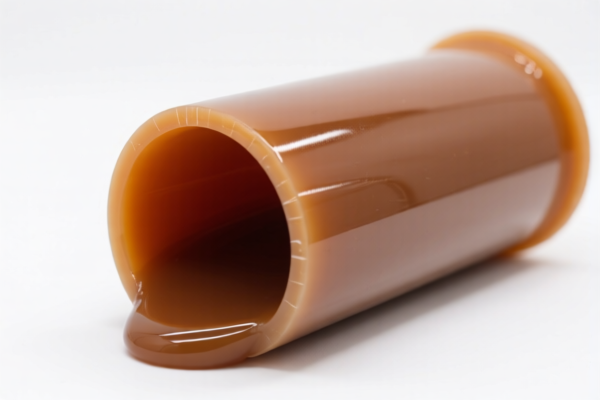
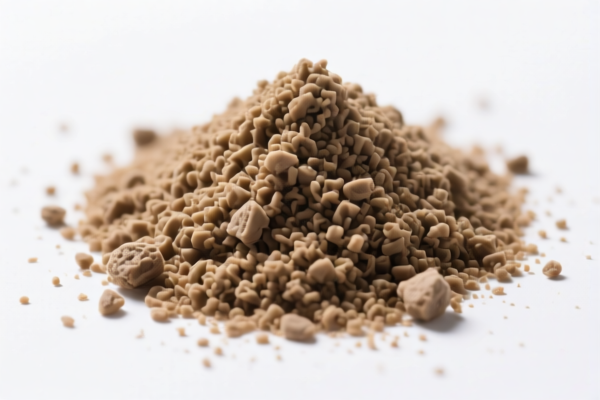

AI分析
🧪 Modified Polyester Resin Raw Materials
🌐 HS Code Reference & Customs Clearance Guide | 2026 Latest Tariff Analysis | Professional Clearance Strategy
📌 I. Product Definition and Classification: Do You Understand "Modified Polyester Resin"?
"Modified Polyester Resin" in international trade usually refers to polyesters that have undergone physical or chemical modifications (such as blending with other polymers, adding fillers, or chain extension) to improve properties like impact resistance, heat stability, or processability. In the context of your provided data, these materials are in their primary forms (resins, granules, powders) used as raw materials for downstream manufacturing (e.g., injection molding, extrusion).
⚠️ Key Distinction:
- Polyester (Unsaturated/Saturated): Typically falls under HS 3907.99 or 3907.60.
- Modified Polycarbonate (PC): Often mislabeled as "polyester" by traders, but chemically distinct. Falls under 3907.40 or 3907.99.
- Modified Polystyrene (PS): Often confused due to similar appearance. Falls under 3903.90.
- Modified Polyolefin (PO): Based on polyethylene/polypropylene. Falls under 3902.90.
Note: The provided DATA contains no entry for pure "Polyester." It lists Modified Polycarbonate, Modified Polystyrene, and Modified Polyolefin. Therefore, if your product is strictly "Polyester," it is not covered in the provided tax data. However, if your "Modified Polyester" is actually a blended/modified resin often confused with PC/PS/PO, we map it to the relevant codes below based on the actual chemical composition.
📦 II. HS Code Classification Details (Based on Provided DATA)
Since the provided data does not contain a specific entry for "Polyester" but includes related modified resins, we must classify based on the base polymer of the modification. Below are the four possible classifications from the provided data, depending on the actual base material:
| HS Code | Product Description | Base Material | Form | Total Tax Rate |
|---|---|---|---|---|
3907.40.00.00 |
Modified Polycarbonate Resin | Polycarbonate (PC) | Resin (Primary Form) | 40.8% |
3907.99.50.50 |
Modified Polycarbonate Resin (Other) | Polycarbonate (PC) | Resin (Primary Form) | 41.5% |
3903.90.10.00 |
Modified Polystyrene Resin | Polystyrene (PS) | Resin (Primary Form) | 41.5% |
3903.90.50.00 |
Modified Polystyrene Resin (Other) | Polystyrene (PS) | Resin (Primary Form) | 41.5% |
3902.90.00.50 |
Modified Polyolefin Resin | Acrylic/Olefin Polymer | Resin (Primary Form) | 41.5% |
🔍 Critical Clarification:
- If your material is Polycarbonate-based (e.g., PC/ABS, PC/PBT blends), use 3907.40.00.00 or 3907.99.50.50.
- If your material is Polystyrene-based (e.g., HIPS, ABS), use 3903.90.10.00 or 3903.90.50.00.
- If your material is Polyolefin-based (e.g., PP/PE blends), use 3902.90.00.50.
- Pure Polyester (e.g., PET/PTA) is NOT in the provided data. If you are importing true Polyester, you must consult HS 3907.60 or 3907.99 separately.
💰 III. 2026 Latest Tariff Rate Breakdown (Including Surtaxes)
✅ Applicable Country: United States (US)
✅ Country of Origin: China (CN)
✅ Effective Date: Post-November 10, 2025 (Section 301 & IEEPA Surcharges)
All items in the provided data share a similar surtax structure due to their classification as chemical plastics from China.
🎯 1. 3907.40.00.00 — Modified Polycarbonate Resin
| Item | Details |
|---|---|
| Basic Duty Rate | 5.8% |
| Section 301 Surcharge | 25.0% |
| Section 122 (IEEPA) Surcharge | 10.0% |
| Total Effective Rate | 40.8% |
| Calculation Basis | CIF Value × 40.8% |
| De Minimis Exemption | ❌ Not Eligible (Value > $800 is taxable; even < $800 may be flagged for chemical resins) |
| Legal Authority | Section 301 (Trade Act) + IEEPA Executive Order |
📌 Explanation:
- The 5.8% is the standard MFN (Most Favored Nation) duty for Polycarbonate resins.
- The 25% is the Section 301 tariff on Chinese chemical products.
- The 10% is the additional IEEPA surcharge targeting Chinese imports.
- Total: 40.8%. This is a high-cost item for importers.
🎯 2. 3907.99.50.50 — Other Modified Polycarbonate Resins
| Item | Details |
|---|---|
| Basic Duty Rate | 6.5% |
| Section 301 Surcharge | 25.0% |
| Section 122 (IEEPA) Surcharge | 10.0% |
| Total Effective Rate | 41.5% |
| Calculation Basis | CIF Value × 41.5% |
| De Minimis Exemption | ❌ Not Eligible |
| Legal Authority | Section 301 + IEEPA |
📌 Explanation:
- Slightly higher basic duty (6.5%) than the primary PC code (5.8%), leading to a 41.5% total.
- Applies to PC blends not specifically listed elsewhere (e.g., PC/PMMA).
🎯 3. 3903.90.10.00 & 3903.90.50.00 — Modified Polystyrene Resins
| Item | Details |
|---|---|
| Basic Duty Rate | 6.5% |
| Section 301 Surcharge | 25.0% |
| Section 122 (IEEPA) Surcharge | 10.0% |
| Total Effective Rate | 41.5% |
| Calculation Basis | CIF Value × 41.5% |
| De Minimis Exemption | ❌ Not Eligible |
📌 Explanation:
- PS and its modified forms (HIPS, ABS) are heavily taxed due to Section 301.
- Whether classified as 3903.90.10.00 (standard modified) or 3903.90.50.00 (other), the surtaxes are identical.
🎯 4. 3902.90.00.50 — Modified Polyolefin Resins
| Item | Details |
|---|---|
| Basic Duty Rate | 6.5% |
| Section 301 Surcharge | 25.0% |
| Section 122 (IEEPA) Surcharge | 10.0% |
| Total Effective Rate | 41.5% |
| Calculation Basis | CIF Value × 41.5% |
| De Minimis Exemption | ❌ Not Eligible |
📌 Explanation:
- Polyolefins (PP/PE) and their modified forms face the same high tariff structure.
- Commonly used in packaging and automotive parts.
🛠️ IV. Customs Clearance Practical Advice (Pitfall Avoidance Guide)
✅ 1. Essential Documentation Checklist
| Document | Required | Notes |
|---|---|---|
| ✅ Product Specification Sheet | ✔️ | Must state base polymer (PC, PS, PO), modification type, and chemical composition. |
| ✅ Certificate of Origin (CO) | ✔️ | Critical for proving Chinese origin to apply correct surtaxes. |
| ✅ Commercial Invoice | ✔️ | Must clearly describe as "Modified [Base Polymer] Resin, Primary Form." Avoid vague terms like "Plastic Material." |
| ✅ Safety Data Sheet (SDS) | ✔️ | Required for chemical classification verification. |
| ✅ HS Code Pre-Ruling | ✔️ | Highly Recommended due to high tax rates. Prevents misclassification penalties. |
✅ 2. Classification Strategy (Key Mantras)
🔥 "Base Polymer Dictates Code, Modification Doesn't Change HS!"
| Scenario | Correct Classification | Wrong Approach |
|---|---|---|
| PC blended with ABS | 3907.40.00.00 (PC is predominant) |
Misclassify as PS (3903) → Penalty |
| HIPS (High Impact PS) | 3903.90.10.00 |
Misclassify as pure PS (3903.11) → Lower tax but incorrect |
| PP Modified with Glass Fiber | 3902.90.00.50 |
Misclassify as 3902.10 (Unmodified PP) → Risk of audit |
| Pure PET Polyester | NOT IN DATA | Do NOT use PC/PS codes → Severe misclassification |
⚠️ Warning:
- If your product is 100% Polyester (PET/PTA), it is not covered in the provided data. You must use HS 3907.60 or 3907.99.
- The provided data only covers Polycarbonate, Polystyrene, and Polyolefin modifications.
- Do not force a "Polyester" product into3907.40unless it is actually Polycarbonate.
✅ 3. Special Cases
| Case | Handling Advice |
|---|---|
| Blended Resins | Classify based on the predominant base polymer by weight. If PC > 50%, use PC code. |
| Chemical Name vs. Trade Name | Use chemical names (e.g., "Modified Polycarbonate") in the invoice, not just brand names (e.g., "Lukon"). |
| Origin Marking | Ensure all pallets/packages are marked "Made in China" to avoid origin disputes. |
| Section 301 Exclusions | Check if your specific HS code had any exclusions (most chemical resins do NOT qualify). |
🌍 V. Global Market Comparison (2026)
| Country/Region | Recommended HS Code (if PC) | Total Tax (China Origin) | Certification | Notes |
|---|---|---|---|---|
| 🇺🇸 USA | 3907.40.00.00 |
40.8% | None specific | Highest due to Section 301 + IEEPA |
| 🇨🇳 China | 3907.40.00.00 |
5.8% | CCC (if applicable) | Low duty, no surtaxes |
| 🇪🇺 EU | 3907.40.00.00 |
5.3% | REACH | No Section 301 equivalent |
| 🇯🇵 Japan | 3907.40.00.00 |
6.0% | JIS | Moderate duty |
| 🇻🇳 Vietnam | 3907.40.00.00 |
0-5% (if local content) | None | Potential for tariff engineering |
📌 Conclusion:
- USA is the most expensive market due to 40.8-41.5% total tariffs.
- EU and Japan have significantly lower duties (~5-6%).
- Consider supply chain diversification if importing large volumes to the US.
📌 VI. Common Mistakes & Pitfalls (Lessons Learned)
❌ Mistake 1: Calling "Polycarbonate" "Polyester" in the invoice
👉 Consequence: Customs may reject the declaration or reclassify incorrectly → Delays + Penalties
❌ Mistake 2: Assuming "Modified" means lower tax
👉 Consequence: Surcharges apply to all modified resins from China → 40.8%+ tax
❌ Mistake 3: Using "Plastic Pellets" as the product description
👉 Consequence: Vague description leads to customs hold for further examination → Demurrage Fees
❌ Mistake 4: Ignoring IEEPA 10% surcharge
👉 Consequence: Under-declaring tax liability → Audits + Back Taxes + Interest
✅ Correct Practice:
"Modified Polycarbonate Resin, Primary Form, Unfilled, Grade XYZ, Made in China, HS 3907.40.00.00"
🎯 VII. Conclusion: Precision in Classification Saves Money
🎯 Key Takeaways:
🔹 "Base Polymer is King": Classify by PC, PS, or PO, not by trade name.
🔹 "Total Tax is High": Expect 40.8-41.5% for Chinese imports to the US.
🔹 "Polyester is Not Here": If you are importing true Polyester, consult HS 3907.60 separately.
🔹 "Documentation is Critical": Clear chemical descriptions prevent delays.
📌 Pro Tip:
For Modified Polycarbonate,
3907.40.00.00is the most common and slightly cheaper (40.8%) than3907.99.50.50(41.5%). Use the correct subheading to save 0.7% on high-volume shipments.
📣 Immediate Action:
📞 Verify Chemical Composition with your supplier.
📄 Apply for HS Code Pre-Ruling with CBP if unsure.
💰 Calculate Total Landed Cost including 40.8%+ tax before signing purchase orders.
✨ Professional Customs Clearance Starts with Accurate Classification!
💼 Every Percentage Point Counts in Global Trade!
用户评价
关于 HS 编码归类
协调制度(HS)是由世界海关组织(WCO)制定的国际贸易商品分类标准。全球 200 多个国家采用 HS 系统作为海关关税、贸易统计和进出口监管的基础。
每个 HS 编码遵循以下层级结构:
- 章(2 位)——商品大类(例如:第 84 章:机器和机械设备)
- 品目(4 位)——章内的更具体分类
- 子目(6 位)——国际通用细分,所有 WCO 成员国统一使用
- 本国细分(8-10 位)——各国自行扩展的细分编码,如美国 HTSUS 10 位编码
正确的 HS 编码归类对于顺利通关、准确缴纳关税和遵守贸易法规至关重要。错误归类可能导致海关延误、多缴关税或罚款。
从CN进口到US时,适用的关税税率可能包括:
- 最惠国(MFN)税率——适用于 WTO 成员国的标准关税税率
- 普通税率——适用于无贸易协定国家
- 贸易救济关税——附加关税,如 301 条款(反倾销)、232 条款(国家安全)或反补贴税
本页内容仅供参考。如需正式归类,请咨询当地海关或持牌报关代理。