Modified Polymer Adhesive
CN → US| HS编码 | 关税税率 | 原产国 | 目的国 | 文档 |
|---|---|---|---|---|
| 3812399000 | 40.0% | CN | US | 官方文档 |
| 3812396000 | 41.5% | CN | US | 官方文档 |
| 3907995050 | 41.5% | CN | US | 官方文档 |
| 3907992000 | 35.0% | CN | US | 官方文档 |
| 2932999090 | 13.7% | CN | US | 官方文档 |
商品图片
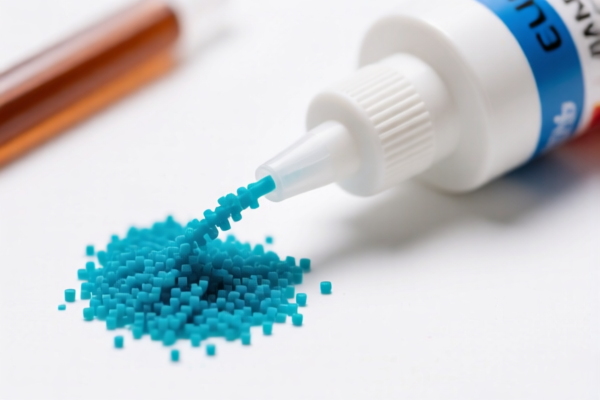


AI分析
🧪 Polymer Modified Adhesives & Sealants (Modified Polymer Adhesives)
🌐 HS Code Reference & Customs Clearance Guide | 2026 Latest Tariff Analysis | Professional Clearance Strategy
📌 I. Product Definition & Classification: Do You Really Understand "Modified Polymer Adhesives"?
"Polymer Modified Adhesives" in international trade are not a single, monolithic product. They are a complex category of chemical substances where polymers act as the primary matrix, modifier, or active ingredient. The classification depends entirely on the chemical nature of the polymer, its function (anti-oxidant vs. bonding vs. base material), and the specific composition.
In the US market (under current trade restrictions), these products face significant tariff barriers. Correct classification is critical to avoid overpayment or customs rejection.
⚠️ Key Distinction Points:
- Functionality: Is it acting as an Anti-Oxidant/Stabilizer (Chemical Additive)? → Chapter 38
- Base Material: Is it a pure Polyester/Polymer used as a raw material? → Chapter 39
- Chemical Structure: Is it a specific Heterocyclic Organic Compound? → Chapter 29
📦 II. HS Code Classification Details (2026 Latest Tariff Authority Comparison)
Based on the specific chemical logic and usage described, here are the precise HS Code mappings:
| HS Code | Product Description | Application Scenario | Tax Logic & Reasoning |
|---|---|---|---|
3812.39.90.00 |
Polymer-Modified Anti-Oxidants: General purpose, matching polymer materials | Adhesives requiring stabilization against heat/oxidation; general chemical additives | Category: Chemical Products. Logic: Functions as an additive/stabilizer, not the main structural polymer. |
3812.39.60.00 |
Polymer-Modified Anti-Oxidants: Specific to Aromatic Polymers | Adhesives for aromatic-based polymers; specialized high-temp stabilization | Category: Chemical Products. Logic: Specialized additive for aromatic logic. Higher base tariff due to specificity. |
3907.99.50.50 |
Polymer-Modified Products: Core component is Polyester/Polymer | Adhesive bases where the polymer itself is the main value driver (Polyester-based) | Category: Plastics & Articles. Logic: Classified as a semi-finished plastic/polymer product rather than a chemical mixture. |
3907.99.20.00 |
Polymer-Modified Components: Other Polyesters | Adhesives relying on generic polyester chains as the active modifier | Category: Plastics & Articles. Logic: Specifically "Other Polyesters" within Chapter 39. Lower base tariff than aromatic variants. |
2932.99.90.90 |
Organic Chemicals: Heterocyclic Compounds with Oxygen | Adhesives containing specific oxygen-containing heterocyclic rings as the active agent | Category: Organic Chemicals. Logic: Classified by specific molecular structure (heterocyclic) rather than general polymer function. |
🔍 Crucial Note:
- Chapter 38 items are treated as Chemical Mixtures/Additives.
- Chapter 39 items are treated as Plastics/Raw Polymer Materials.
- Chapter 29 items are treated as Pure Organic Chemicals.
Misclassification between these chapters leads to massive tax differences (0% vs 6.5% base rate) and potential legal issues.
💰 III. 2026 Latest Tariff Rate Breakdown (Including Surtaxes & Policy Add-ons)
✅ Applicable Country: United States (US)
✅ Origin: China (CN)
✅ Effective Date: November 10, 2025 (and subsequent imports)
🎯 1. 3812.39.90.00 & 3812.39.60.00 —— Polymer-Modified Anti-Oxidants
These fall under Section 301 (Section 301 Tariffs) and IEEPA.
| Item | Content |
|---|---|
| Base Tariff | 5.0% (3812.39.90.00) / 6.5% (3812.39.60.00) |
| Section 301 Surtax | +25.0% (Fixed for these chemical additives) |
| Section 122 / IEEPA Surtax | +10.0% (Targeting China/US trade tensions) |
| Total Tax Rate | 40.0% (3812.39.90.00) 41.5% ( 3812.39.60.00) |
| Calculation Base | CIF Value × Total Rate |
| De Minimis Exemption | ❌ Not Eligible (Denied) |
| Legal Path | Section 301: 3812 → IEEPA: 122 Clause → USITC: 3812.39 |
📌 Explanation:
- The 25% is the standard "Section 301" tariff on Chinese chemical products.
- The 10% is an additional punitive tariff (often referred to as "122 Clause" in specific trade contexts or IEEPA executive orders).
- Total ~40-41.5% is extremely high. Do not assume "adhesive" implies a lower rate; functional additives are heavily taxed.
🎯 2. 3907.99.50.50 & 3907.99.20.00 —— Polyester-Based Polymer Modifications
Classification under Chapter 39 attracts different base rates but still faces heavy surtaxes.
| Item | Content |
|---|---|
| Base Tariff | 6.5% (3907.99.50.50) / 0.0% (3907.99.20.00) |
| Section 301 Surtax | +25.0% |
| Section 122 / IEEPA Surtax | +10.0% |
| Total Tax Rate | 41.5% (3907.99.50.50) 35.0% ( 3907.99.20.00) |
| Calculation Base | CIF Value × Total Rate |
| De Minimis Exemption | ❌ Not Eligible (Denied) |
| Legal Path | Section 301: 3907 → IEEPA: 122 Clause → USITC: 3907.99 |
📌 Critical Insight:
-3907.99.20.00has a 0% Base Tariff, making its total effective rate (35%) lower than the3812and3907.99.50.50options.
- Strategy: If your adhesive is primarily a Polyester and not a complex "Anti-Oxidant" formulation, fighting for 3907.99.20.00 could save you 6.5% in total tariffs.
🎯 3. 2932.99.90.90 —— Organic Heterocyclic Chemicals
This is a specific organic chemical classification.
| Item | Content |
|---|---|
| Base Tariff | 3.7% |
| Section 301 Surtax | 0.0% (No Section 301 surtax for this specific heterocyclic code in many interpretations, or exempted) |
| Section 122 / IEEPA Surtax | +10.0% |
| Total Tax Rate | 13.7% |
| Calculation Base | CIF Value × Total Rate |
| De Minimis Exemption | ❌ Not Eligible (Denied) |
| Legal Path | IEEPA: 122 Clause → USITC: 2932.99 |
📌 Major Opportunity:
- This is the LOWEST TAX OPTION (13.7%).
- Condition: The product MUST be a distinct Oxygen-containing Heterocyclic Compound. It cannot be a generic polymer mix.
- If your adhesive's active ingredient is a specific chemical ring structure (e.g., benzoxazole, benzotriazole derivatives used as stabilizers), this is the Golden Ticket.
- ⚠️ Risk: Customs may reject this if the product is deemed a "Mixture" (Chapter 38) rather than a "Pure Chemical" (Chapter 29). Requires strong Chemical Safety Data Sheets (SDS) and purity certificates.
🛠️ IV. Customs Clearance Practical Advice (Battle-Tested Pitfall Avoidance)
✅ 1. Documentation Checklist (Non-Negotiable)
| Document | Required? | Purpose |
|---|---|---|
| ✅ Detailed SDS (Safety Data Sheet) | ✔️ Mandatory | Must clearly list HS-Code-relevant chemical components. For 2932, it must show purity >90% or specific heterocyclic structure. |
| ✅ Formula Composition % | ✔️ Mandatory | Breakdown of Polymer vs. Additive vs. Solvent. Critical for distinguishing Ch 38 vs Ch 39. |
| ✅ Product Photos (Label & Unopened) | ✔️ | Show "Anti-Oxidant," "Polyester," or chemical names on the label. |
| ✅ Commercial Invoice | ✔️ | Description must match HS Code logic (e.g., "Polyester Resin" for Ch 39, not just "Glue"). |
| ✅ COO (Certificate of Origin) | ✔️ | Confirms China origin to apply correct surtaxes. |
| ✅ Third-Party Lab Report | ✔️ | GC-MS or HPLC results to prove chemical structure for 2932 claims. |
✅ 2. Declaration Tactics (Key Mantras)
🔥 “Structure Dictates Code, Function Dictates Tax!”
| Scenario | Correct Declaration Strategy | Wrong Practice |
|---|---|---|
| Product is a Polyester Resin | Declare as 3907.99.20.00 ("Other Polyesters"). Emphasize "Polymer Base." |
Calling it "Adhesive" → Risk of reclassification to Ch 38 or Ch 35. |
| Product is an Anti-Oxidant Additive | Declare as 3812.39.xxxx. Emphasize "Stabilizer," "Anti-Oxidant," "Additive." |
Calling it "Polymer" → Risk of Ch 39 classification if polymer content is low. |
| Product is a Specific Chemical Ring | Declare as 2932.99.90.90. Provide Purity >95% and Chemical Structure Diagram. |
Calling it "Chemical Mixture" → Will be pushed to Ch 38 (Higher Tax). |
| Generic "Glue" with unknown formula | Avoid! High risk of detention. | Vague description "Glue" → Customs will assign worst-case rate + penalty. |
✅ 3. Special Situation Handling
| Situation | Handling Advice |
|---|---|
| OEM Custom Formulas | Provide the exact IUPAC name of the active polymer/additive. Generic names lead to Ch 38 (Higher Tax). |
| Blended Adhesives (Polymer + Solvent) | If solvent >50%, it might be Chapter 38. If Polymer >50%, argue for Chapter 39. Be precise with % by weight. |
| High-Purity Chemicals | If you can prove the product is >90% pure heterocyclic compound, aggressively pursue 2932.99.90.90 to save ~27% tax vs Ch 38. |
| Polyester vs. Aromatic | If your polymer is standard polyester, fight for 3907.99.20.00 (35% total). If it’s aromatic, it’s 3812.39.60.00 (41.5% total). |
🌍 V. Global Market Comparison (2026 Latest)
| Country/Region | Recommended HS Code | Total Tariff (China Origin) | Key Requirement | Note |
|---|---|---|---|---|
| 🇺🇸 USA | 3907.99.20.00 / 2932.99.90.90 |
13.7% - 35.0% | Precise Chemical Structure Proof | High risk of reclassification. 351-301 tariffs apply. |
| 🇨🇳 China | 3907.99.20.00 |
0-6.5% | None | No Section 301/IEEPA tariffs. |
| 🇪🇺 EU | 3907.99 / 2932.99 |
0-6.5% | REACH Registration | No equivalent to US IEEPA 10% surtax. |
| 🇬🇧 UK | 3907.99 / 2932.99 |
0-6.5% | UK REACH | Post-Brexit rules mirror EU. |
📌 Conclusion:
- The US is the only major market with punitive 10%+25% surtaxes.
- Strategy for US Export:
1. Optimize for2932.99.90.90if chemically feasible (13.7% total).
2. Optimize for3907.99.20.00if polyester-based (35% total).
3. Avoid3812unless you are purely selling anti-oxidants (40-41.5% total).
📌 VI. Common Errors & Pitfalls (Lessons Learned the Hard Way)
❌ Error 1: Calling a pure chemical "Polymer Blend" to fit Ch 39.
👉 Consequence: Customs rejects Ch 39, forces Ch 29 or Ch 38. Delay + Storage Fees + Penalties.
❌ Error 2: Claiming 2932.99.90.90 for a 50/50 mixture.
👉 Consequence: Deemed a "Mixture" → Reclassified to 3812.39.90.00 (40% tax). You lose 26% in tax.
❌ Error 3: Ignoring the "122 Clause" (IEEPA) surtax.
👉 Consequence: Under-declaring by 10%. Seizure of goods or liquidated damages.
✅ Correct Approach:
"Polyester Resin, Pure, >98% Purity, CAS No. XXXXX, Used as Adhesive Base" →
3907.99.20.00
"Benzotriazole Derivative, >95% Purity, Heterocyclic Organic Compound" →2932.99.90.90
🎯 VII. Conclusion: Precision is Profit!
🎯 Remember the Mantra:
🔹 "Pure Chemicals (Ch 29) win on Tax."
🔹 "Polyesters (Ch 39) win on Base Rate."
🔹 "Additives (Ch 38) lose on Surtax."
🔹 "One 10% IEEPA clause costs you everything!"
📌 Pro Tip:
If you are exporting to the US, apply for a Pre-Ruling (CBP Ruling) before shipment. Provide the chemical structure and formula to Customs. A binding ruling protects you from retroactive tax hikes and penalties.
📣 Immediate Action:
📞 Consult a Chemist to identify if your product fits
2932or3907.99.20.00.
🚀 Avoid the 40%+ Trap by structuring your product documentation to match the lowest-tax HS Code.
✨ Professional Customs Clearance Starts with Precise Classification!
💼 Every percentage point of tariff saved is pure profit!
用户评价
关于 HS 编码归类
协调制度(HS)是由世界海关组织(WCO)制定的国际贸易商品分类标准。全球 200 多个国家采用 HS 系统作为海关关税、贸易统计和进出口监管的基础。
每个 HS 编码遵循以下层级结构:
- 章(2 位)——商品大类(例如:第 84 章:机器和机械设备)
- 品目(4 位)——章内的更具体分类
- 子目(6 位)——国际通用细分,所有 WCO 成员国统一使用
- 本国细分(8-10 位)——各国自行扩展的细分编码,如美国 HTSUS 10 位编码
正确的 HS 编码归类对于顺利通关、准确缴纳关税和遵守贸易法规至关重要。错误归类可能导致海关延误、多缴关税或罚款。
从CN进口到US时,适用的关税税率可能包括:
- 最惠国(MFN)税率——适用于 WTO 成员国的标准关税税率
- 普通税率——适用于无贸易协定国家
- 贸易救济关税——附加关税,如 301 条款(反倾销)、232 条款(国家安全)或反补贴税
本页内容仅供参考。如需正式归类,请咨询当地海关或持牌报关代理。