Modified Polyterpene Resin
CN → US| HS编码 | 关税税率 | 原产国 | 目的国 | 文档 |
|---|---|---|---|---|
| 3902900050 | 41.5% | CN | US | 官方文档 |
| 3902300000 | 41.5% | CN | US | 官方文档 |
| 3901905501 | 41.5% | CN | US | 官方文档 |
| 3911901000 | 35.0% | CN | US | 官方文档 |
| 3911902500 | 41.1% | CN | US | 官方文档 |
商品图片


AI分析
🧪 Modified Polyterpene Resin (Modified Polyolefin Resin)
🌐 HS Code Reference & Customs Clearance Guide | 2026 Latest Tariff Analysis | Professional Clearance Strategy
📌 I. Product Definition & Classification: What is "Modified Polyterpene Resin"?
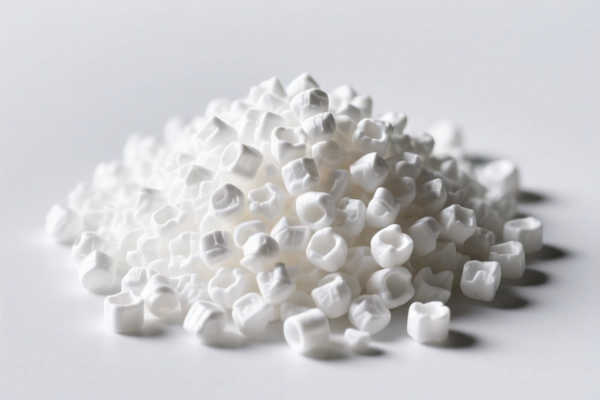
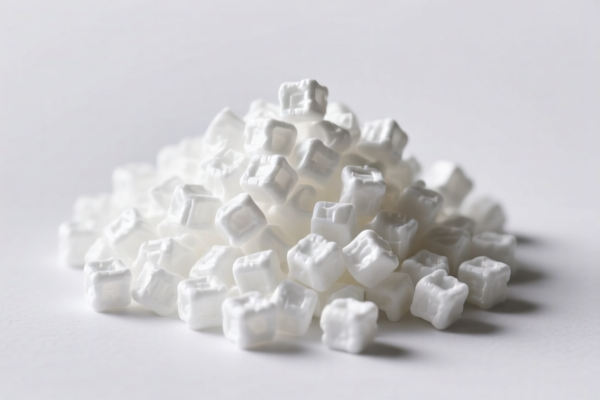
Modified Polyterpene Resin, often classified under the broader category of Modified Polyolefin Resins in trade data, refers to petroleum-based resin derivatives. These are thermoplastic polymers primarily composed of polyolefins (such as polypropylene or ethylene copolymers) that have been chemically modified to enhance properties like heat resistance, adhesion, or clarity.
In international trade, these raw materials are crucial for the manufacturing of plastics, adhesives, coatings, and packaging materials. The key classification depends on the base polymer type (Polypropylene vs. Polyethylene) and the state of the material (Primary Shape/Resin).
⚠️ Key Distinction:
- If the base material is primarily Polypropylene (PP) or other olefin copolymers → Look at Heading 3902.
- If the base material is primarily Polyethylene (PE) → Look at Heading 3901.
- If classified broadly as Petroleum Resins without specific olefin copolymer designation → Look at Heading 3911.
📦 II. HS Code Classification Details (2026 Latest Tariff Authority Comparison)
| HS Code | Product Description | Application Scenario | Base Polymer Type |
|---|---|---|---|
3902.90.00.50 |
Modified polyolefin resin, material is propylene or other olefin polymers, in primary form (resin/raw material) | General-purpose modified PP resins, high-impact polypropylene | ✅ Polypropylene/Olefin |
3902.30.00.00 |
Modified polyolefin resin, material is polyolefin, in original/primary product form, fitting the propylene copolymer category | Polypropylene copolymers, specialized modified PP resins | ✅ Polypropylene Copolymer |
3901.90.55.01 |
Modified polyolefin resin, material is ethylene polymer, in primary shape/raw material, fitting the ethylene copolymer category | Modified Polyethylene (PE) resins, PE copolymers | ✅ Polyethylene |
3911.90.10.00 |
Modified polyolefin resin, material is polyolefin, belonging to the category of petroleum resins/polymers, in resin form (primary shape) | Broadly classified petroleum resins, less specific olefin designation | ⚠️ General Petroleum Resin |
3911.90.25.00 |
Modified polyolefin resin, material is plastic resin, in resin (original) form, fitting the classification of petroleum resin and other thermoplastic resin in primary shape | Specific thermoplastic resins categorized under general petroleum resins | ⚠️ General Thermoplastic Resin |
🔍 Key Reminder:
- HS 3901 covers Polyethylene and its copolymers.
- HS 3902 covers Polypropylene and its copolymers.
- HS 3911 is a "catch-all" for petroleum resins not specified elsewhere, often resulting in different tax structures depending on specific national interpretations.
- Ensure your Technical Data Sheet (TDS) explicitly states the monomer unit (Propylene vs. Ethylene) to avoid misclassification.
💰 III. 2026 Latest Tariff Rate Breakdown (Including Surcharges & Policy Add-ons)
✅ Applicable Country: United States (US)
✅ Origin: China (CN)
✅ Effective Date: From 2025-11-10 onwards (including subsequent imports)
🎯 1. 3902.90.00.50 & 3902.30.00.00 — Modified Polypropylene Resins
| Item | Details |
|---|---|
| Base Tariff Rate | 6.5% (ad valorem) |
| Trade War Surcharge (Section 301) | +25.0% |
| 122 Provision Surcharge | +10.0% |
| Total Tariff Rate | 41.5% |
| Tax Calculation | CIF Value × 41.5% |
| De Minimis Eligibility | ❌ Not Eligible (deny_de_minimis) |
| Legal Basis Path | USITC:3902.90.00.50 → Footnote:301_Surcharges → 122_Provisions |
📌 Explanation:
- The 6.5% is the standard Most Favored Nation (MFN) duty for polypropylene resins.
- The 25% is the additional tariff imposed under Section 301 of the Trade Act of 1974 on Chinese goods.
- The 10% is an additional surcharge under the "122 Provision" (often related to specific enforcement or anti-circumvention rules).
- Total 41.5% is a high tariff, significantly impacting profit margins for US importers.
🎯 2. 3901.90.55.01 — Modified Polyethylene Resins
| Item | Details |
|---|---|
| Base Tariff Rate | 6.5% (ad valorem) |
| Trade War Surcharge (Section 301) | +25.0% |
| 122 Provision Surcharge | +10.0% |
| Total Tariff Rate | 41.5% |
| Tax Calculation | CIF Value × 41.5% |
| De Minimis Eligibility | ❌ Not Eligible (deny_de_minimis) |
| Legal Basis Path | USITC:3901.90.55.01 → Footnote:301_Surcharges → 122_Provisions |
📌 Note:
- Polyethylene resins carry the same tariff structure as Polypropylene resins in this dataset.
- Whether it is PE or PP, the base rate and surcharges are identical, leading to a 41.5% total duty.
🎯 3. 3911.90.10.00 — General Petroleum Resins (Low Base Rate)
| Item | Details |
|---|---|
| Base Tariff Rate | 0.0% (ad valorem) |
| Trade War Surcharge (Section 301) | +25.0% |
| 122 Provision Surcharge | +10.0% |
| Total Tariff Rate | 35.0% |
| Tax Calculation | CIF Value × 35.0% |
| De Minimis Eligibility | ❌ Not Eligible (deny_de_minimis) |
| Legal Basis Path | USITC:3911.90.10.00 → Footnote:301_Surcharges → 122_Provisions |
📌 Analysis:
- While the base tariff is 0%, the surcharges remain fixed.
- This results in a 35.0% total rate, which is 6.5 percentage points lower than the 3901/3902 classifications.
- Risk: Misclassifying PP/PE as "General Petroleum Resin" (3911) to save taxes is a high-risk audit target if the product is chemically a polyolefin. Customs may reassess to 41.5%.
🎯 4. 3911.90.25.00 — Specific Thermoplastic Resins
| Item | Details |
|---|---|
| Base Tariff Rate | 6.1% (ad valorem) |
| Trade War Surcharge (Section 301) | +25.0% |
| 122 Provision Surcharge | +10.0% |
| Total Tariff Rate | 41.1% |
| Tax Calculation | CIF Value × 41.1% |
| De Minimis Eligibility | ❌ Not Eligible (deny_de_minimis) |
| Legal Basis Path | USITC:3911.90.25.00 → Footnote:301_Surcharges → 122_Provisions |
📌 Note:
- This code is for specific thermoplastic resins not elsewhere specified.
- The total rate is 41.1%, slightly lower than the main olefin codes (41.5%), but still very high.
🛠️ IV. Customs Clearance Practical Advice (Battle-Tested Pitfall Avoidance)
✅ 1. Required Documentation Checklist (No Omissions)
| Document | Mandatory? | Details |
|---|---|---|
| ✅ Technical Data Sheet (TDS) | ✔️ | Must specify Monomer Type (Propylene vs. Ethylene), Molecular Weight, and "Modified" status. |
| ✅ MSDS (Material Safety Data Sheet) | ✔️ | Standard chemical safety document required for all resins. |
| ✅ Commercial Invoice | ✔️ | Must clearly state "Modified Polyolefin Resin" and HS Code. Avoid vague terms like "Plastic Pellets". |
| ✅ Certificate of Origin (CO) | ✔️ | Essential for verifying Chinese origin and applying correct surcharges. |
| ✅ Bill of Lading (B/L) | ✔️ | Ensure weight and package count match invoice exactly. |
| ✅ Import Security Filing (ISF) | ✔️ | Must be filed 24 hours before loading if shipping from China to US. |
✅ 2. Declaration Tactics (Key Mnemonics)
🔥 "Specify the Monomer, Avoid 'Resin' Ambiguity, Pay the 41.5%, No Surprises!"
| Scenario | Correct Declaration | Incorrect Practice |
|---|---|---|
| Polypropylene-based | "Modified Polypropylene Resin, Primary Form" | "Plastic Raw Material" → Risk of reclassification |
| Polyethylene-based | "Modified Polyethylene Copolymer, Primary Form" | "General Thermoplastic" → Risk of audit |
| Mixed/Unknown Base | Provide Chemical Structure Diagram | Vague description "Polyterpene Resin" → Delays |
| Bulk Import | Declare as "Loose Resin Pellets" | "Containers of Plastic" → Incomplete description |
📌 Critical Tip:
The term "Polyterpene" in your query might be a misnomer for "Polyolefin" in standard trade data.
- Terpenes are usually natural or hydrogenated terpene resins (often HS 3906 or 3911 depending on modification).
- Polyolefins (PP/PE) are synthetic and fall under 3901/3902.
- Action: Verify if your product is natural terpene-based or synthetic polyolefin-based. If it is synthetic PP/PE, use 3901/3902. If it is a true terpene resin modified with olefins, it may still fall under 3911, but you need strong chemical proof to justify the lower base rate.
✅ 3. Special Circumstances Handling
| Situation | Handling Advice |
|---|---|
| OEM Custom Resin | Provide contract and specifications showing custom modification. Do not claim "Generic" status. |
| Regrind/Recycled Resin | If the product contains recycled content, declare clearly. Some codes differ for "Regrind," but surcharges often remain. |
| Color Masterbatches | If the resin contains significant colorants, it may be classified differently. Ensure the "base resin" is dominant. |
| Hydrocarbon Resins | If the product is a pure hydrocarbon resin (not olefin copolymer), consider 3911.90.10.00 for the 35% rate, but provide IR/NMR spectra to prove composition. |
🌍 V. Global Main Market Clearance Comparison (2026 Latest)
| Country/Region | Recommended HS Code | Tariff (China Origin) | Certification Requirements | Notes |
|---|---|---|---|---|
| 🇺🇸 United States | 3902.90.00.50 / 3901.90.55.01 |
41.5% (Total) | None specific for raw resin | High tariff burden. Plan margin accordingly. |
| 🇨🇳 China | 3902.90.00.50 |
~5-6% | None | Low import duty for raw materials. |
| 🇪🇺 European Union | 3902.30.00 |
~0-6.5% | REACH Registration | REACH compliance is mandatory for any chemical import. |
| 🇬🇧 United Kingdom | 3902.30.00 |
~0-6.5% | UK REACH | Post-Brexit, UK REACH applies. |
| 🇯🇵 Japan | 3902.30.00 |
~0-6.5% | PSIA (if applicable) | Generally favorable for raw materials. |
📌 Conclusion:
- The US market is the most expensive for Chinese-made modified polyolefin resins due to the 41.5% total tariff.
- EU/UK/Japan have significantly lower tariffs (0-6.5%), but require strict chemical compliance (REACH).
- Strategy: If targeting the US, consider supply chain diversification (e.g., sourcing from Southeast Asia if rules of origin allow) to mitigate the 25%+10% surcharges.
📌 VI. Common Errors & Pitfall Guide (Blood & Tears Lessons)
❌ Error 1: Using "Polyterpene Resin" when the product is actually "Polypropylene Copolymer"
👉 Consequence: Customs may reject the 35% rate (3911) and reclassify to 41.5% (3902), demanding back taxes + penalties.
❌ Error 2: Failing to disclose "Modified" status
👉 Consequence: If the product is chemically distinct from standard homopolymers, misclassification leads to seizure or delay.
❌ Error 3: Ignoring the 122 Provision Surcharge
👉 Consequence: Underpaying by 10% is common. If audited, you will owe the difference plus interest.
❌ Error 4: Confusing "Resin" with "Plastic Articles"
👉 Consequence: If you ship finished plastic parts instead of raw resin, the HS code changes completely (e.g., to 3926), with different duties.
✅ Correct Practice:
"Modified Polypropylene Resin, Primary Shape, White Pellets, Melt Flow Index 10g/10min, Made in China"
🎯 VII. Conclusion: Professional Declaration, Cost Saving & Efficiency
🎯 Remember the Mnemonic:
🔹 "PP/PE is 41.5%, Petroleum Resin is 35%, but Prove It or Pay More!"
🔹 "Surcharge is 35% Flat (25+10), Base Rate Varies (0-6.5%)."
🔹 "REACH for EU, IEEPA/301 for US, Compliance is King!"
📌 Small Tip:
If your product is hydrogenated terpene resin (not polyolefin), it may qualify for a different HS code with different tariffs. However, based on the provided data, "Modified Polyolefin" dominates the 3901/3902 categories.
For US imports, the 35.0% rate for 3911.90.10.00 is the lowest legal option IF you can scientifically prove it is a general petroleum resin and not a specific polyolefin copolymer. Consult a chemical specialist to validate the chemical structure before declaring.
📣 Immediate Action:
📞 Contact a licensed customs broker + Provide Chemical Structure Diagram + Apply for Advance Ruling (CSPA) in the US
🚀 Minimize risk, ensure compliance, and optimize your landed cost!
✨ Professional Customs Clearance Starts with Accurate Classification!
💼 Every percent of duty counts in the resin trade!
用户评价
关于 HS 编码归类
协调制度(HS)是由世界海关组织(WCO)制定的国际贸易商品分类标准。全球 200 多个国家采用 HS 系统作为海关关税、贸易统计和进出口监管的基础。
每个 HS 编码遵循以下层级结构:
- 章(2 位)——商品大类(例如:第 84 章:机器和机械设备)
- 品目(4 位)——章内的更具体分类
- 子目(6 位)——国际通用细分,所有 WCO 成员国统一使用
- 本国细分(8-10 位)——各国自行扩展的细分编码,如美国 HTSUS 10 位编码
正确的 HS 编码归类对于顺利通关、准确缴纳关税和遵守贸易法规至关重要。错误归类可能导致海关延误、多缴关税或罚款。
从CN进口到US时,适用的关税税率可能包括:
- 最惠国(MFN)税率——适用于 WTO 成员国的标准关税税率
- 普通税率——适用于无贸易协定国家
- 贸易救济关税——附加关税,如 301 条款(反倾销)、232 条款(国家安全)或反补贴税
本页内容仅供参考。如需正式归类,请咨询当地海关或持牌报关代理。