Moisture Proof Storage Tank
CN → US| HS编码 | 关税税率 | 原产国 | 目的国 | 文档 |
|---|---|---|---|---|
| 3926901000 | 20.9% | CN | US | 官方文档 |
| 3926909989 | 22.8% | CN | US | 官方文档 |
| 4202999000 | 55.0% | CN | US | 官方文档 |
商品图片
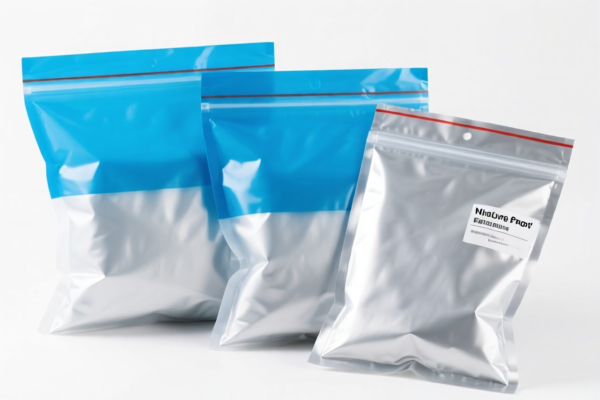
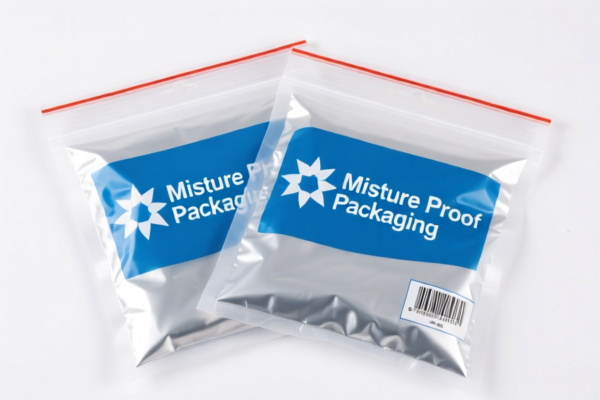
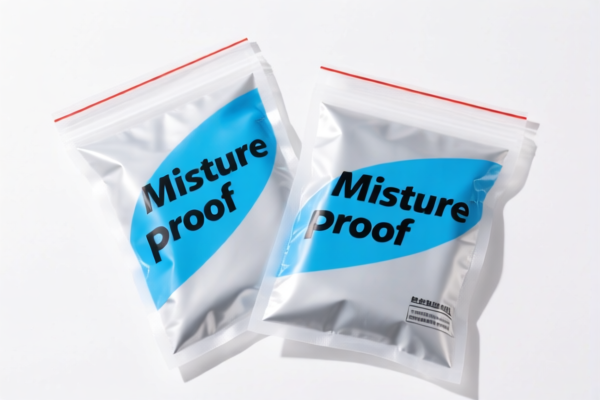
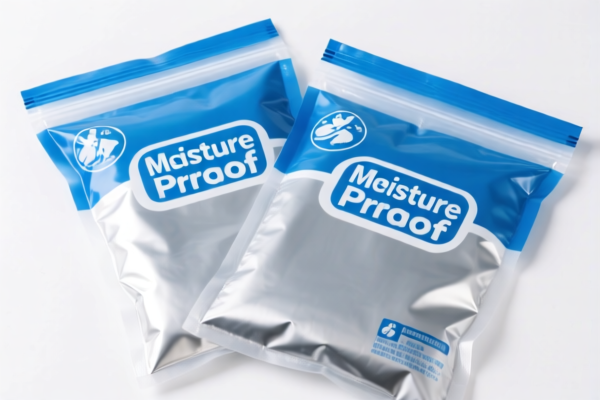
AI分析
🛡️ Moisture-Proof Storage Container (The "Tank" Misconception)
🌐 HS Code Reference & Customs Clearance Guide | 2026 Latest Tariff Analysis | Professional Logistics Strategy
📌 I. Product Definition & Classification: Is It a "Tank" or a "Container"?
The term "Moisture-proof Storage Tank" in international trade often leads to critical classification errors. In customs terminology, a "Tank" (e.g., 8708, 8411, 9031) typically refers to industrial pressure vessels, transport tanks (like fuel trucks), or specialized scientific apparatus.
However, a "Moisture-proof Storage Container" for general goods (plastic barrels, buckets, oil drums, household containers) falls under Plastics (Chapter 39) or Articles of Apparel/Accessories (Chapter 42), NOT "Tanks."
⚠️ Key Distinction Point:
- If it is a plastic bucket/barrel/drums → Classify under 3926.90
- If it is a fabric/metal composite bag or accessory-style container → Classify under 4202.99
- Never use "Tank" HS codes (like 8411 or 8708) for simple storage containers; this causes massive delays and audits.
📦 II. HS Code Classification Matrix (2026 Latest Tariff Authority)
Based on the inferred material and function, here are the three possible classifications. Choose based on your actual material:
| HS Code | Product Description | Material Inference | Classification Type |
|---|---|---|---|
3926.90.10.00 |
Moisture-proof storage container, specifically plastic buckets/oil drums/containers | Plastic | Specific Plastic Article |
3926.90.99.89 |
Moisture-proof storage container, plastic, falling under Other (catch-all for plastics) | Plastic (Non-bucket type) | Plastic Article (Fallback) |
4202.99.90.00 |
Moisture-proof storage container, material may be plastic, metal, or textile | Mixed/Multi-material | Other Articles (Catch-all) |
🔍 Critical Reminder:
- 3926.90.10.00 is the preferred classification if your product is clearly a plastic bucket or drum. It has the lowest tax burden.
- 4202.99.90.00 is the highest risk option. It is used when the material is ambiguous or mixed (e.g., a fabric bag with a plastic liner). It carries a punitive tax rate.
- Never guess. If it is plastic, stick to Chapter 39. If it’s mixed, you risk the higher tax.
💰 III. 2026 Latest Tariff Rate Breakdown (Including Surcharges & Policy Add-ons)
✅ Applicable Country: United States (US)
✅ Origin: China (CN)
✅ Effective Time: 2025+ (Current Trade Environment)
🎯 1. 3926.90.10.00 —— Plastic Storage Containers (Buckets/Drums) [RECOMMENDED]
| Item | Detail |
|---|---|
| Base Tariff | 3.4% (Ad Valorem) |
| Section 301 Surcharge | +7.5% (List 4B Products) |
| IEEPA Surcharge (122) | +10% (China-specific emergency powers) |
| Total Tariff Rate | 20.9% |
| Tax Calculation | CIF Value × 20.9% |
| De Minimis Exemption? | ❌ No (Denied for China-origin goods under these sections) |
| Legal Basis Path | USITC:3926.90.10.00 → 301:7.5% → IEEPA:122:10% |
📌 Explanation:
- This is the most cost-effective classification for plastic containers.
- Total tax is 20.9%, which is manageable for most goods.
- Ensure the product is exclusively plastic (or primarily plastic) to justify this code.
🎯 2. 3926.90.99.89 —— Other Plastic Articles (Fallback)
| Item | Detail |
|---|---|
| Base Tariff | 5.3% (Ad Valorem) |
| Section 301 Surcharge | +7.5% (List 4B Products) |
| IEEPA Surcharge (122) | +10% (China-specific emergency powers) |
| Total Tariff Rate | 22.8% |
| Tax Calculation | CIF Value × 22.8% |
| De Minimis Exemption? | ❌ No |
| Legal Basis Path | USITC:3926.90.99.89 → 301:7.5% → IEEPA:122:10% |
📌 Note:
- Only 1.9% higher than3926.90.10.00.
- Use this if your plastic container does not fit the specific "bucket/drums" description in .10.00.
- Still significantly cheaper than Chapter 42.
🎯 3. 4202.99.90.00 —— Other Articles of Plastic/Metal/Textile [HIGH RISK]
| Item | Detail |
|---|---|
| Base Tariff | 20.0% (Ad Valorem) |
| Section 301 Surcharge | +25.0% (List 4C Products) |
| IEEPA Surcharge (122) | +10% (China-specific emergency powers) |
| Total Tariff Rate | 55.0% |
| Tax Calculation | CIF Value × 55.0% |
| De Minimis Exemption? | ❌ No |
| Legal Basis Path | USITC:4202.99.90.00 → 301:25% → IEEPA:122:10% |
📌 Warning:
- 55% is a devastating tax rate.
- This code applies if the container is made of textile/fabric (e.g., a moisture-proof tote bag) or has metal parts that change its essential character.
- Avoid this code unless your product is genuinely a textile/fabric container. If it’s mostly plastic, argue for Chapter 39!
🛠️ IV. Customs Clearance Practical Advice (Pitfall Avoidance Guide)
✅ 1. Documentation Checklist (Non-Negotiable)
| Document | Required? | Purpose |
|---|---|---|
| ✅ Product Spec Sheet | ✔️ | Must state Material Composition (e.g., "100% HDPE Plastic") |
| ✅ Product Photos | ✔️ | Show shape: Is it a bucket/drums (Code .10) or other (Code .99)? |
| ✅ Commercial Invoice | ✔️ | Description: "Plastic Moisture-Proof Storage Container" (Avoid "Tank") |
| ✅ Bill of Lading | ✔️ | Match invoice description exactly |
| ✅ Origin Certificate | ✔️ | Proves China origin (triggers surcharges) |
⚠️ Key Tip: Do not use the word "Tank" in your commercial invoice or packing list. Use "Container," "Barrel," "Drum," or "Storage Box." "Tank" implies industrial pressure vessels, which will trigger an immediate audit and potential misclassification penalty.
✅ 2. Declaration Strategy (Key Mantra)
🔥 "Plastic Bucket = 3926.10, Not Tank! Tax 20.9%, Save 34.1%!"
| Scenario | Correct HS Code | Tax Rate | Why? |
|---|---|---|---|
| Plastic Drum/Bucket | 3926.90.10.00 |
20.9% | Specific plastic article, low base tax |
| Other Plastic Container | 3926.90.99.89 |
22.8% | Fallback for plastics, slightly higher base tax |
| Fabric/Textile Bag | 4202.99.90.00 |
55.0% | High base tax + high 301 surcharge |
| Mixed Material (Metal+Plastic) | 4202.99.90.00 |
55.0% | Risky; try to prove plastic is essential character for .39 |
✅ 3. Special Cases & Workarounds
| Situation | Advice |
|---|---|
| Product has a metal handle/lid | Still classify under 3926.90 if plastic is the main material. Provide photos showing plastic dominance. |
| Product is a "Jerrycan" or "Chemical Drum" | Definitely 3926.90.10.00. Explicitly describe as "Plastic Drum." |
| Product is a "Dry Bag" for outdoor use | Likely 4202.99.90.00 (Textile). Consider redesigning with 100% plastic coating to qualify for 3926. |
| Customs Questions Material | Submit a Material Test Report (e.g., SGS) proving >51% plastic content to support Chapter 39 classification. |
🌍 V. Global Market Comparison (2026)
| Market | Recommended HS Code | Total Tax (China Origin) | Key Certification |
|---|---|---|---|
| 🇺🇸 USA | 3926.90.10.00 |
20.9% | None specific, but accurate declaration is key |
| 🇨🇳 China | 3926.90.10.00 |
5.3% (Base only) | GB Standards (Food Grade if applicable) |
| 🇪🇺 EU | 3926.90.90 |
4.5% (Base + no 301/IEEPA) | REACH, RoHS |
| 🇬🇧 UK | 3926.90.90 |
4.5% | UKCA |
📌 Conclusion:
- USA is the hardest market due to Section 301 + IEEPA surcharges.
- Accuracy is critical: Misclassifying a plastic container as "4202" costs you 34.1% more. Misclassifying as "Tank" (8411) risks seizure.
- Stick to Chapter 39 for plastic containers to minimize costs.
📌 VI. Common Errors & Pitfalls (Blood Lessons)
❌ Error 1: Using "Storage Tank" in the description
👉 Consequence: Customs suspects industrial pressure vessel → Audit → Delay → Potential penalty.
❌ Error 2: Classifying plastic drum as 4202.99.90.00
👉 Consequence: Tax jumps from 20.9% to 55% → Loss of profit margin!
❌ Error 3: Claiming "Exempt" for de minimis
👉 Consequence: Denied. All China-origin goods under these codes are subject to surcharges.
❌ Error 4: Mixed material (Plastic + Metal) without proof
👉 Consequence: Customs defaults to 4202 (higher tax). Provide material breakdown!
✅ Correct Declaration Example:
"Plastic Moisture-Proof Storage Container, HDPE Material, Blue, 20L Capacity, Model XYZ, USA Origin: China"
🎯 VII. Conclusion: Precision Saves Money!
🎯 Remember the Mantra:
🔹 "Plastic Bucket = 3926, Not 4202!"
🔹 "20.9% vs 55%: Choose Wisely!"
🔹 "No 'Tank', Only 'Container'!"
📌 Pro Tip:
If your product is 100% plastic, fight for 3926.90.10.00.
If you have no choice but mixed materials, prepare material composition proofs early.
📣 Immediate Action:
📞 Consult your freight forwarder with photos and material specs.
🚀 Secure the 20.9% rate, avoid the 55% trap, and clear customs smoothly!
✨ Professional Classification, Maximized Profit!
💼 Your bottom line depends on the first digit!
用户评价
关于 HS 编码归类
协调制度(HS)是由世界海关组织(WCO)制定的国际贸易商品分类标准。全球 200 多个国家采用 HS 系统作为海关关税、贸易统计和进出口监管的基础。
每个 HS 编码遵循以下层级结构:
- 章(2 位)——商品大类(例如:第 84 章:机器和机械设备)
- 品目(4 位)——章内的更具体分类
- 子目(6 位)——国际通用细分,所有 WCO 成员国统一使用
- 本国细分(8-10 位)——各国自行扩展的细分编码,如美国 HTSUS 10 位编码
正确的 HS 编码归类对于顺利通关、准确缴纳关税和遵守贸易法规至关重要。错误归类可能导致海关延误、多缴关税或罚款。
从CN进口到US时,适用的关税税率可能包括:
- 最惠国(MFN)税率——适用于 WTO 成员国的标准关税税率
- 普通税率——适用于无贸易协定国家
- 贸易救济关税——附加关税,如 301 条款(反倾销)、232 条款(国家安全)或反补贴税
本页内容仅供参考。如需正式归类,请咨询当地海关或持牌报关代理。