Motor Vehicle Tires
CN → US| HS编码 | 关税税率 | 原产国 | 目的国 | 文档 |
|---|---|---|---|---|
| 4012118000 | 38.4% | CN | US | 官方文档 |
| 4012124035 | 39.0% | CN | US | 官方文档 |
| 4011201015 | 39.0% | CN | US | 官方文档 |
| 4011205010 | 38.4% | CN | US | 官方文档 |
| 4012124035 | 39.0% | CN | US | 官方文档 |
商品图片
AI分析
🚗 Motor Vehicle Tires: The Ultimate Import Guide for the US Market
🌐 HS Code Reference & Clearance Strategy | 2026 Latest Tariff Analysis | Professional Customs Clearance Strategy
📌 I. Product Definition & Classification: Do You Really Understand "Tires"?
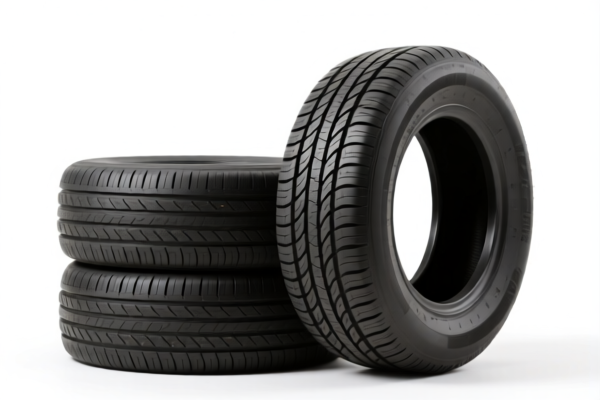
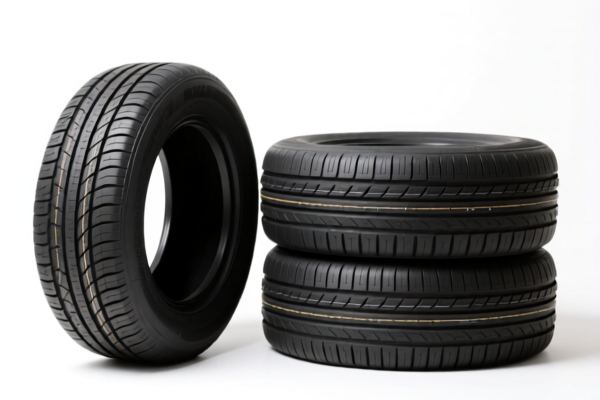
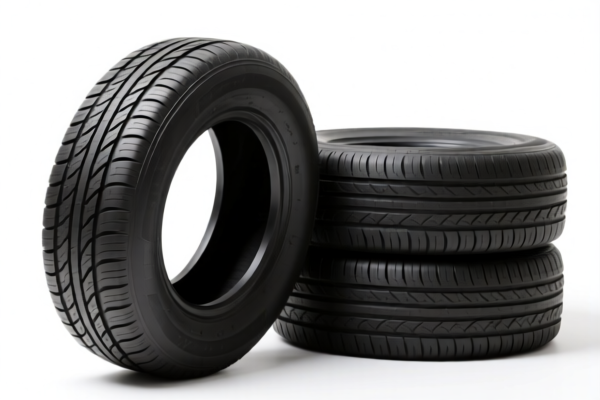
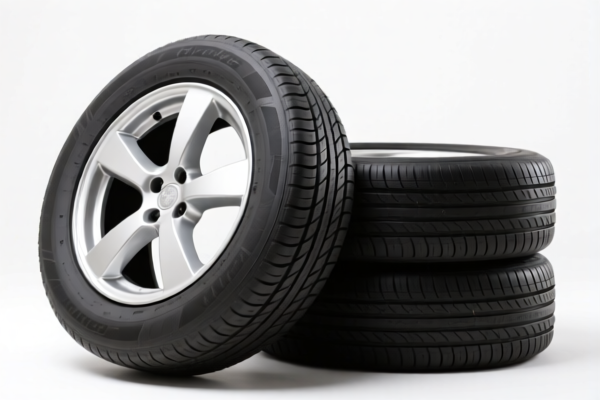
Motor vehicle tires are the critical contact point between vehicles and the road, classified primarily by rubber composition and vehicle type. In international trade, they are strictly divided based on their application and structural integrity.
Passenger Vehicle Tires: Designed for cars, SUVs, and light trucks. These are the most common consumer goods. Commercial Vehicle Tires: Designed for buses, heavy trucks, and industrial machinery. These require higher load-bearing ratings and specific rubber compounds.
⚠️ Key Distinction Point:
- If the tire is for passenger cars/light vehicles → Look at 4012 series.
- If the tire is for commercial vehicles (buses/trucks) → Look at 4011 series.
- Material Assumption: All entries below assume Rubber Material as per standard industry norms. If non-rubber materials are used, the HS Code changes entirely.
📦 II. HS Code Classification Details (2026 Latest Tariff Authority Comparison)
| HS Code | Product Description | Applicable Scenario | Vehicle Type |
|---|---|---|---|
4012.11.80.00 |
Rubber tires for passenger vehicles | Cars, SUVs, Light Trucks | ✅ Passenger |
4012.12.40.35 |
Other rubber tires (General/Other) | Generic rubber tires, non-specific categorization | ✅ Other/Light |
4011.20.10.15 |
Rubber tires for commercial vehicles (Buses/Trucks) | Heavy-duty transport, Public transit | ✅ Commercial |
4011.20.50.10 |
Rubber tires for commercial vehicles (Catch-all) | Other commercial tires not listed above | ✅ Commercial |
🔍 Critical Reminder:
- 4012 generally covers tires for passenger motor vehicles.
- 4011 generally covers tires for commercial vehicles (buses, trucks).
- Misclassification between these two can lead to severe penalties, as the base tariffs and sub-category rules differ slightly.
💰 III. 2026 Latest Tariff Rate Breakdown (Including Additional Taxes & Policy Surcharges)
✅ Applicable Country: United States (US)
✅ Country of Origin: China (CN)
✅ Effective Date: Ongoing (2025-2026 Policy Continuity)
✅ Product Category: Rubber Tires
🎯 1. 4012.11.80.00 & 4011.20.50.10 — Passenger & Commercial (Catch-all)
| Item | Content |
|---|---|
| Base Tariff Rate | 3.4% (ad valorem) |
| Section 301 Additional Tariff | +25.0% (USITC Footnote for Chinese Origin) |
| Section 122 Tariff | +10.0% (Specific to certain rubber/tire imports under US trade acts) |
| Total Effective Tax Rate | 38.4% |
| Tax Calculation Basis | CIF Value × 38.4% |
| De Minimis Exemption | ❌ Not Eligible (Deny De Minimis) |
| Legal Path | Base Tariff → Section 301: 25% → Section 122: 10% |
📌 Explanation:
- The 3.4% is the standard Most Favored Nation (MFN) base rate for rubber tires.
- The +25% is the standard Section 301 tariff applied to goods from China.
- The +10% is a specific "Section 122" tariff applied to these rubber products.
- Total: 38.4%. This is a high-cost import category. Price sensitivity must be extreme.
🎯 2. 4012.12.40.35 & 4011.20.10.15 — Other Rubber Tires & Specific Commercial
| Item | Content |
|---|---|
| Base Tariff Rate | 4.0% (ad valorem) |
| Section 301 Additional Tariff | +25.0% (USITC Footnote for Chinese Origin) |
| Section 122 Tariff | +10.0% (Specific to rubber/tire imports) |
| Total Effective Tax Rate | 39.0% |
| Tax Calculation Basis | CIF Value × 39.0% |
| De Minimis Exemption | ❌ Not Eligible (Deny De Minimis) |
| Legal Path | Base Tariff → Section 301: 25% → Section 122: 10% |
📌 Note:
- These codes have a slightly higher base rate (4.0%) compared to the 3.4% codes.
- The additional taxes remain the same (25% + 10%).
- Total: 39.0%. This is the highest tariff bracket in the provided data.
- Even a small difference in base classification (e.g., mistaking a bus tire for a passenger tire) can shift you between 38.4% and 39.0%, affecting large volume shipments significantly.
🛠️ IV. Customs Clearance Practical Advice (实战避坑指南)
✅ 1. Preparation Checklist (Non-Negotiable)
| Document | Required | Notes |
|---|---|---|
| ✅ Product Specification Sheet | ✔️ | Must specify: Rim size, Load Index, Speed Rating, Ply Rating. |
| ✅ Material Declaration | ✔️ | Confirm 100% Rubber or mixed composition. Non-rubber = Different HS. |
| ✅ Commercial Invoice | ✔️ | Clearly state "Motor Vehicle Tires", HS Code, and Country of Origin. |
| ✅ Packing List | ✔️ | Detail weight per tire and total pallet weight. |
| ✅ Originals/Certificates | ✔️ | If claiming any preferential treatment (unlikely for China), provide CO. |
| ✅ Photos | ✔️ | Clear shots of the sidewall showing DOT code, Brand, and Model. |
✅ 2. Declaration Strategy (Key Rules)
🔥 “Classify by Vehicle Type, Not Just Shape!”
| Scenario | Correct HS Code | Wrong Approach | Consequence |
|---|---|---|---|
| Car/SUV Tire | 4012.11.80.00 |
Report as Commercial Tire | Potential penalty for misclassification. |
| Bus/Truck Tire | 4011.20.10.15 |
Report as Passenger Tire | Higher Base Rate (4% vs 3.4%) + Compliance Risk. |
| Generic/Other Rubber Tire | 4012.12.40.35 |
Vague Description "Tire" | Customs may audit and assign higher rate. |
| Tire Repair Kits (Non-tire) | Different HS | Report as Tire | Severe fraud penalty. |
✅ 3. Special Situations & Mitigation
| Situation | Recommendation |
|---|---|
| OEM Custom Tires | Provide OEM contract and design specs to prove origin and specification. |
| Retreaded Tires | ⚠️ Warning: Retreaded tires have different HS codes (e.g., 4012.13) and higher duties (often 40%+). Ensure you are declaring New tires. |
| Mixed Containers | If shipping both passenger and commercial tires, split the entry or use precise sub-codes to avoid having the entire shipment taxed at the higher rate due to ambiguity. |
| Origin Marking | Ensure every tire is permanently marked "Made in China". Missing origin marks can lead to seizure or fines. |
🌍 V. Global Market Comparison (2026 Update)
| Country/Region | Recommended HS Code | Total Tax Rate (China Origin) | Key Certification | Notes |
|---|---|---|---|---|
| 🇺🇸 USA | 4012.xx / 4011.xx |
38.4% - 39.0% | DOT, FMVSS | Highest Cost. Section 301 + 122 apply. |
| 🇨🇳 China | 4012.xx / 4011.xx |
10% - 20% | CCC (if required) | Export market, lower duty for domestic sale. |
| 🇪🇺 EU | 4011.xx |
~4.5% | E-Mark, UN R30 | No Section 301. Much lower cost entry. |
| 🇲🇽 Mexico | 4011.xx |
5% - 10% | NOM | Potential for USMCA benefits if manufactured there. |
| 🇻🇳 Vietnam | 4011.xx |
0% - 5% | No additional tariffs | Strategic Alternative: Manufacture here to avoid US Section 301. |
📌 Conclusion:
- The US market is prohibitively expensive for Chinese-manufactured tires due to the 38.4% - 39.0% effective duty.
- Vietnam and Mexico are the primary alternatives for US-bound tires to mitigate these tariffs.
- Always verify if your supplier is truly "Chinese-made" or just "Chinese-owned" but manufactured elsewhere.
📌 VI. Common Mistakes & Pitfalls (Lessons Learned)
❌ Mistake 1: Declaring Retreaded Tires as New Tires.
👉 Consequence: Customs will detect the difference via inspection or label. Heavy fines + Seizure.
Retreads are classified under 4012.13, with different and often higher duties.
❌ Mistake 2: Using "Auto Parts" as the product name.
👉 Consequence: Too vague. Customs may delay cargo for 30+ days to request clarification.
Always use "Motor Vehicle Tire".
❌ Mistake 3: Ignoring the Section 122 Tariff.
👉 Consequence: If you calculate tax using only 301 (25%) + Base (3.4%), you will be underpaying by 10%.
Total is 38.4%, not 28.4%.
❌ Mistake 4: Misclassifying Commercial Tires as Passenger Tires.
👉 Consequence: While 4012 (3.4% base) is cheaper than 4011 (4.0% base), misclassification is fraud. If caught, you face penalties plus back-taxes.
Be accurate. The difference is small (0.6%), but honesty prevents audits.
✅ Correct Declaration Example:
"New Rubber Pneumatic Tires for Passenger Vehicles, Size 205/55R16, Brand XYZ, Country of Origin: China, HS: 4012.11.80.00"
🎯 VII. Conclusion: Professional Declaration Saves Money
🎯 Remember These Rules:
🔹 "Passenger = 4012, Commercial = 4011"
🔹 "China Origin = +35% Extra Tax (25% + 10%)"
🔹 "Total Rate = Base + 35%"
🔹 "No De Minimis. No Excuses."
📌 Pro Tip:
If you are importing large volumes, consider Advance Rulings from US Customs to get a binding opinion on your specific tire models. This prevents surprise audits and ensures your supply chain budget is accurate.
📣 Immediate Action:
📞 Consult a Licensed Customs Broker
📄 Verify Your HS Code with DOT/FMVSS Standards
🚀 Optimize Your Landed Cost by Accurate Classification
✨ Professional Clearance Starts with Accurate Classification!
💼 Every percentage point counts in the tire trade.
用户评价
关于 HS 编码归类
协调制度(HS)是由世界海关组织(WCO)制定的国际贸易商品分类标准。全球 200 多个国家采用 HS 系统作为海关关税、贸易统计和进出口监管的基础。
每个 HS 编码遵循以下层级结构:
- 章(2 位)——商品大类(例如:第 84 章:机器和机械设备)
- 品目(4 位)——章内的更具体分类
- 子目(6 位)——国际通用细分,所有 WCO 成员国统一使用
- 本国细分(8-10 位)——各国自行扩展的细分编码,如美国 HTSUS 10 位编码
正确的 HS 编码归类对于顺利通关、准确缴纳关税和遵守贸易法规至关重要。错误归类可能导致海关延误、多缴关税或罚款。
从CN进口到US时,适用的关税税率可能包括:
- 最惠国(MFN)税率——适用于 WTO 成员国的标准关税税率
- 普通税率——适用于无贸易协定国家
- 贸易救济关税——附加关税,如 301 条款(反倾销)、232 条款(国家安全)或反补贴税
本页内容仅供参考。如需正式归类,请咨询当地海关或持牌报关代理。