Nail Art and Nail Repair Machine
CN → US| HS编码 | 关税税率 | 原产国 | 目的国 | 文档 |
|---|---|---|---|---|
| 8479899599 | 87.5% | CN | US | 官方文档 |
| 8467210050 | 11.7% | CN | US | 官方文档 |
| 8467290090 | 17.5% | CN | US | 官方文档 |
| 8479896500 | 20.3% | CN | US | 官方文档 |
商品图片
AI分析
💅 Nail Art & Nail Repair Machines (Electric Nail Drills/Files)
🌐 HS Code Reference & Customs Clearance Guide | 2026 Latest Tariff Analysis | Professional Clearance Strategy
📌 Part 1: Product Definition & Classification: Do You Really Understand "Nail Art Machines"?
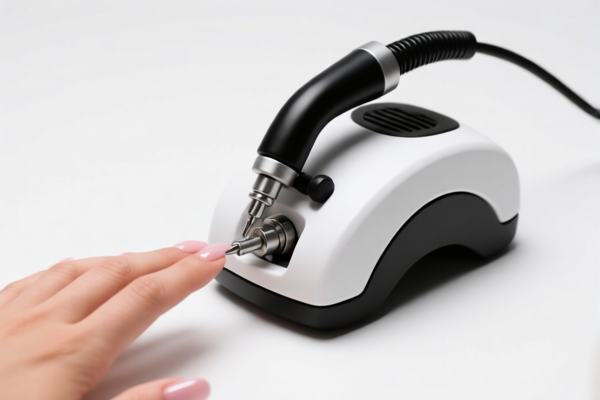
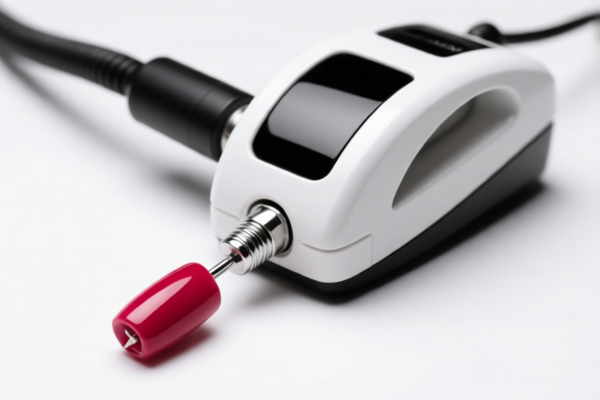
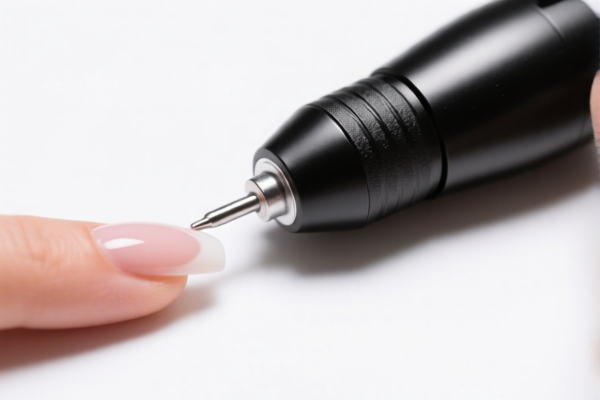
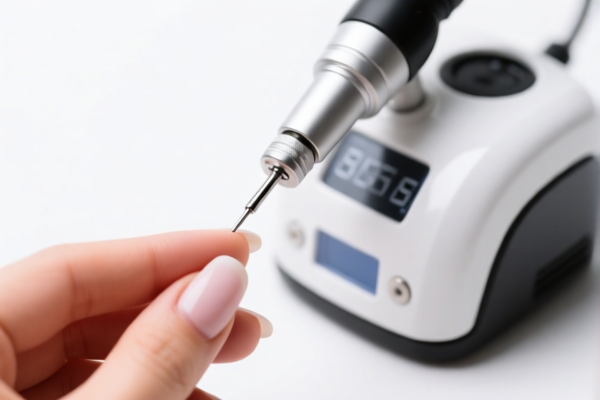
Nail art and repair machines (commonly known as electric nail drills, files, or e-files) are essential tools in the beauty industry. They are used for removing acrylics, gels, hard gels, polishing, and shaping natural nails. In international trade, classification depends heavily on function, structure, and specific motor integration.
⚠️ Key Distinction Logic:
- Is it a standalone machine with independent functions but no specific category? → 8479.89
- Is it a handheld power tool that rotates? → 8467.21
- Is it a handheld tool with its own motor, but not rotating (or generic handheld)? → 8467.29
- Is it a specific electrical appliance with an integrated motor under "Other machines"? → 8479.89.65
📦 Part 2: HS Code Classification Details (Based on Provided Data)
| HS Code | Product Description | Application Scenario | Key Feature |
|---|---|---|---|
8479.89.95.99 |
Machines and mechanical appliances with individual functions, not specified elsewhere | General nail art machine, standalone unit | Fallback category for machines with independent functions |
8467.21.00.50 |
Rotating handheld power tools | Handheld nail drills that rotate | Rotating handheld tool |
8467.29.00.90 |
Other handheld tools with self-contained electric motors | Other handheld nail tools for grinding/file | Other handheld tools with motor |
8479.89.65.00 |
Other electrical machines and appliances with self-contained electric motors | Nail machines classified as specific electrical appliances | Integrated motor in an electrical appliance |
🔍 Important Note:
- Classification depends on the physical form (handheld vs. standalone) and mechanical action (rotating vs. other).
- Always verify with customs if the device is considered a "tool" (Chapter 84/85 general rules) or a "machine" (Chapter 84 specific notes).
💰 Part 3: 2026 Latest Tariff Rate Analysis (Including Surtaxes)
✅ Applicable Country: USA (US)
✅ Origin: China (CN)
✅ Effective Date: As per current USITC and USTR rulings
🎯 1. 8479.89.95.99 —— Machines with Individual Functions (Fallback)
| Item | Content |
|---|---|
| Base Tariff | 2.5% (ad valorem) |
| Surtax (Section 301) | +25.0% |
| IEEPA Surtax | +10% (for China origin) |
| Section 232 Tariff | +50% (Steel/Aluminum/Copper components if applicable) |
| Total Tax Rate | 87.5% |
| Tax Calculation | CIF Value × 87.5% |
| De Minimis Exemption | ❌ Not Eligible (High tariff rates usually override de minimis) |
| Legal Basis Path | USITC:8479.89.95.99 → 301:25% → IEEPA:10% → 232:50% |
📌 Explanation:
- This is the highest tariff scenario due to the potential inclusion of Section 232 tariffs if metal components are significant.
- 87.5% is extremely high. This code is rarely recommended unless no other classification fits and metal content is low.
🎯 2. 8467.21.00.50 —— Rotating Handheld Power Tools
| Item | Content |
|---|---|
| Base Tariff | 1.7% (ad valorem) |
| Surtax (Section 301) | 0.0% (Note: Some rotating tools may be exempt or have different rates; data shows 0% here) |
| IEEPA Surtax | +10% (for China origin) |
| Total Tax Rate | 11.7% |
| Tax Calculation | CIF Value × 11.7% |
| De Minimis Exemption | ❌ Not Eligible (Typically > $800 threshold considerations apply, but high value items don't qualify) |
| Legal Basis Path | USITC:8467.21.00.50 → IEEPA:10% |
📌 Explanation:
- This is one of the most favorable rates if the tool is clearly a rotating handheld power tool.
- 11.7% is significantly lower than other options.
- Critical: Must be proven as a "rotating" tool (e.g., standard nail drill bits spin).
🎯 3. 8467.29.00.90 —— Other Handheld Tools with Self-Contained Motors
| Item | Content |
|---|---|
| Base Tariff | 0.0% (ad valorem) |
| Surtax (Section 301) | +7.5% |
| IEEPA Surtax | +10% (for China origin) |
| Total Tax Rate | 17.5% |
| Tax Calculation | CIF Value × 17.5% |
| De Minimis Exemption | ❌ Not Eligible |
| Legal Basis Path | USITC:8467.29.00.90 → 301:7.5% → IEEPA:10% |
📌 Explanation:
- If the tool is handheld but not strictly classified as "rotating" (e.g., certain oscillating files or if customs distinguishes "rotating" vs "other"), this applies.
- 17.5% is moderate. Lower than the fallback category but higher than rotating tools.
🎯 4. 8479.89.65.00 —— Other Electrical Machines with Self-Contained Motors
| Item | Content |
|---|---|
| Base Tariff | 2.8% (ad valorem) |
| Surtax (Section 301) | +7.5% |
| IEEPA Surtax | +10% (for China origin) |
| Total Tax Rate | 20.3% |
| Tax Calculation | CIF Value × 20.3% |
| De Minimis Exemption | ❌ Not Eligible |
| Legal Basis Path | USITC:8479.89.65.00 → 301:7.5% → IEEPA:10% |
📌 Explanation:
- This category is for electrical appliances that don't fit neatly into "handheld tools."
- 20.3% is slightly higher than the rotating tool option but lower than the fallback category.
🛠️ Part 4: Customs Clearance Practical Advice (Real-World Pitfall Avoidance)
✅ 1. Documentation Checklist (Essential)
| Document | Required | Description |
|---|---|---|
| ✅ Product Specification Sheet | ✔️ | Must state: Power, Voltage, Speed (RPM), Type (Rotating/Oscillating) |
| ✅ Product Photos | ✔️ | Clear images of the device, including motor housing, bit holder, and any branding |
| ✅ Commercial Invoice | ✔️ | Clearly state "Electric Nail Drill/File" and HS Code |
| ✅ Packing List | ✔️ | List all accessories (bits, stand, power adapter) |
| ✅ Origin Certificate | ✔️ | If applicable for preferential treatment (though limited for China-US trade currently) |
| ✅ Certifications | ✔️ | FCC (for electrical safety), UL/ETL (optional but recommended) |
✅ 2. Declaration Tips (Key Mnemonics)
🔥 “Rotating is Cheaper, Standalone is Expensive! Be Precise with ‘Handheld’!”
| Scenario | Correct Declaration | Wrong Practice |
|---|---|---|
| Handheld, spins bits | 8467.21.00.50 (11.7%) |
Declared as 8479.89 → 87.5% |
| Handheld, oscillating/generic | 8467.29.00.90 (17.5%) |
Declared as 8467.21 → Risk of misclassification |
| Standalone machine (e.g., dust collector + drill combo) | 8479.89.65.00 (20.3%) |
Declared as handheld tool → Rejected |
| Machine with significant metal parts | Check 8479.89.95.99 (87.5%) |
Ignore metal content → Section 232 risk |
✅ 3. Special Cases
| Situation | Handling Advice |
|---|---|
| OEM/White Label | Provide branding authorization or state "Unbranded" to avoid trademark issues |
| With Dust Extraction | If combined, may be classified as a machine (8479) rather than a tool (8467) |
| High Value Items | Consider splitting shipments if possible, but note that de minimis exemptions are often suspended for Chinese goods under IEEPA |
| Component Parts | If importing only motors or bits separately, classify bits as 8207 or 8208 and motors as 8501 |
🌍 Part 5: Global Market Comparison (2026 Latest)
| Country/Region | Recommended HS Code | Tariff Rate | Certification Requirements | Notes |
|---|---|---|---|---|
| 🇺🇸 USA | 8467.21.00.50 |
11.7% | FCC | Best rate for rotating tools |
| 🇨🇳 China | 8467.21.00.50 |
~10-12% | CCC | Lower tariffs, but focus on domestic market |
| 🇪🇺 EU | 8543.70.90 |
0-2.7% | CE + RoHS | Different classification system (often under electrical equipment) |
| 🇬🇧 UK | 8543.70.90 |
0-2.7% | UKCA + RoHS | Post-Brexit rules apply |
| 🇨🇦 Canada | 8467.21.00.00 |
0-3.5% | IC/CPSIA | Often lower tariffs due to USMCA if originating in North America |
📌 Conclusion:
- USA has the most complex tariff structure with IEEPA and Section 301 surcharges.
- EU/UK generally have lower tariffs but stricter CE/UKCA certification.
- Canada may offer lower rates if goods are originating in North America.
📌 Part 6: Common Errors & Pitfalls (Lessons Learned)
❌ Error 1: Classifying all nail machines under 8479.89.95.99
👉 Consequence: 87.5% tariff due to Section 232 and 301 surcharges. Avoid unless necessary.
❌ Error 2: Misdeclaring rotating tools as "other handheld tools"
👉 Consequence: Pay 17.5% instead of 11.7%. Small difference, but every penny counts.
❌ Error 3: Ignoring the IEEPA 10% surcharge
👉 Consequence: Underpayment of duties, leading to penalties and delays.
❌ Error 4: Failing to provide FCC certification
👉 Consequence: Cargo held at customs, potential destruction or return.
✅ Correct Approach:
"Electric Nail Drill, Handheld, Rotating, 35,000 RPM, 24V, with FCC Certification, Model XYZ, Made in China"
🎯 Part 7: Conclusion: Professional Declaration, Save Costs, Ensure Smooth Clearance!
🎯 Remember the Mantra:
🔹 "Rotating is Cheapest (11.7%), Standalone is Most Expensive (87.5%)!"
🔹 "Check Metal Content! Section 232 Can Kill Your Profit!"
🔹 "IEEPA 10% is Non-Negotiable for China Origin!"
📌 Pro Tip:
If your nail machines are originating from Vietnam, Thailand, or Malaysia, you may qualify for IEEPA exemptions or lower Section 301 rates.
Recommend Advance Ruling (Pre-classification) with US CBP to confirm the correct HS code and tariff rate.
📣 Immediate Action:
📞 Contact a licensed customs broker + Provide product specs + Request HS Code Advance Ruling
🚀 Ensure your nail machines clear customs smoothly, efficiently, and profitably!
✨ Professional clearance starts with accurate classification!
💼 Every cent saved is pure profit!
用户评价
关于 HS 编码归类
协调制度(HS)是由世界海关组织(WCO)制定的国际贸易商品分类标准。全球 200 多个国家采用 HS 系统作为海关关税、贸易统计和进出口监管的基础。
每个 HS 编码遵循以下层级结构:
- 章(2 位)——商品大类(例如:第 84 章:机器和机械设备)
- 品目(4 位)——章内的更具体分类
- 子目(6 位)——国际通用细分,所有 WCO 成员国统一使用
- 本国细分(8-10 位)——各国自行扩展的细分编码,如美国 HTSUS 10 位编码
正确的 HS 编码归类对于顺利通关、准确缴纳关税和遵守贸易法规至关重要。错误归类可能导致海关延误、多缴关税或罚款。
从CN进口到US时,适用的关税税率可能包括:
- 最惠国(MFN)税率——适用于 WTO 成员国的标准关税税率
- 普通税率——适用于无贸易协定国家
- 贸易救济关税——附加关税,如 301 条款(反倾销)、232 条款(国家安全)或反补贴税
本页内容仅供参考。如需正式归类,请咨询当地海关或持牌报关代理。