Narrow Microfilm
CN → US商品图片
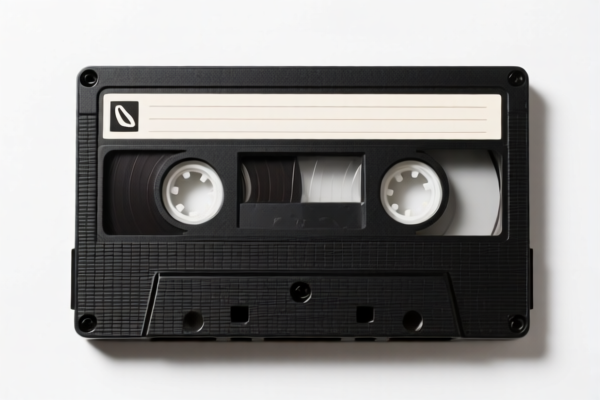
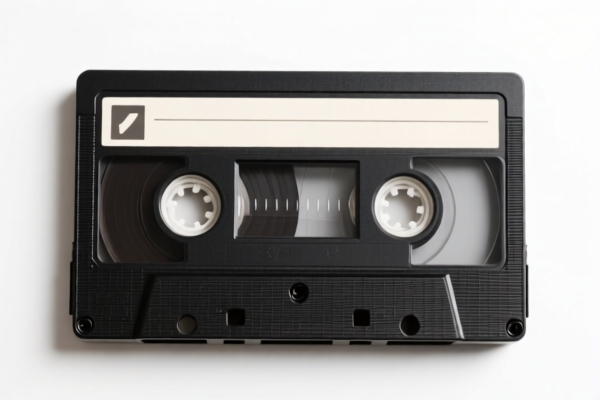
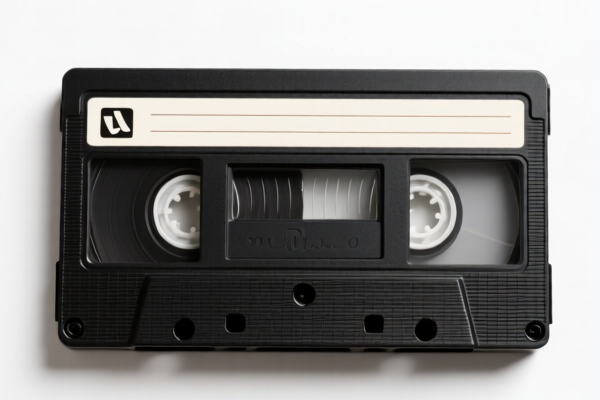
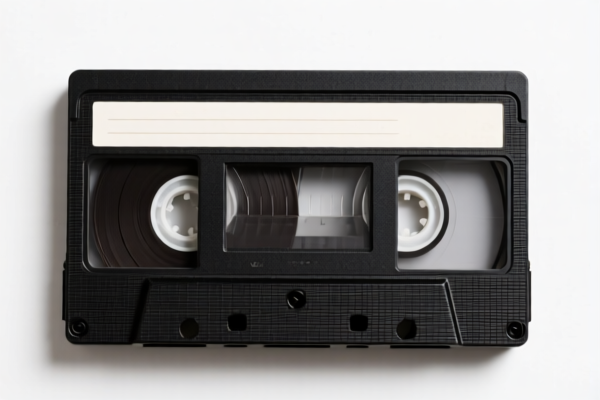
AI分析
🎞️ Narrow Microfilm (Narrow-Format Microfilm)
🌐 HS Code Reference & Customs Clearance Guide | 2026 Latest Tariff Analysis | Professional-Level Strategy
📌 I. Product Definition & Classification: Do You Truly Understand “Narrow Microfilm”?
Narrow Microfilm refers to photographic film strips, typically 16mm, 35mm, or similar narrow formats, used for archiving documents, images, or data. It is a physical medium for information storage, distinct from digital media or wide-format films. In international trade, it is primarily classified under Chapter 37 (Photographic or Cinematographic Goods) or Chapter 39 (Plastics and Articles Thereof) depending on the specific carrier and usage, but the most accurate and common classification for standard archival microfilm is under HS 3706 or 3707.
⚠️ Key Distinction:
- Microfilm (16mm/35mm): Strictly for visual information storage, not for projection of movies in theaters → HS 3706.10 or 3706.90.
- Photographic Film (Rolls): For still photography → HS 3702.
- Empty Magnetic Tape/Reels: Not microfilm → HS 8544 or 3920.
📦 II. HS Code Classification Details (2026 Latest Tariff Authority对照)
| HS Code | Product Description | Application Scenario | Material/Substance |
|---|---|---|---|
3706.10.00.00 |
Motion picture film, exposed and developed, of a width of 35 mm or less | Exposed archival microfilm reels (16mm/35mm) containing data/images | Cellulose nitrate/acetate/triacetate |
3706.90.00.00 |
Other motion picture film, exposed and developed | Uncommon formats, or specialized archival films not fitting 16/35mm | Cellulose derivatives |
3707.10.00.00 |
Chemical preparations for photographic uses (e.g., developers, fixers) | Not microfilm itself, but consumables | Chemicals |
3920.43.00.00 |
Plates, sheets, film, foil, and strip, of polymers of ethylene | Unexposed plastic film base (raw material) | Polyethylene |
3702.31.00.00 |
Photo paper and paperboard, sensitized, in rolls | Not microfilm, but related photographic media | Paper/Plastic |
🔍 Critical Reminder:
- Exposed Microfilm (containing actual records) falls under 3706.
- Unexposed Microfilm (empty rolls) may fall under 3707 (if prepared) or 3920 (if just plastic film base).
- Never classify as “Office Supplies” (HS 9609) or “Data Storage Devices” (HS 8523) unless it is a digital backup (e.g., microfilm digitized to SSD), which is a different product entirely.
💰 III. 2026 Latest Tariff Rate Breakdown (Including Surcharges & Policy Add-ons)
✅ Applicable Country: United States (US)
✅ Origin: China (CN)
✅ Effective Time: From November 10, 2025 (including subsequent imports)
🎯 1. 3706.10.00.00 —— Exposed Motion Picture Film, 35mm or Less (e.g., 16mm Microfilm)
| Item | Content |
|---|---|
| Base Rate | 0% (ad valorem) |
| USITC Surcharge | +25% (from USITC Footnote 9903.88.01) |
| IEEPA Surcharge | +10% (for China/HK products, from Nov 10, 2025) |
| Total Rate | 35% |
| Tax Calculation | CIF Value × 35% |
| De Minimis Eligibility | ❌ No (deny_de_minimis) |
| Legal Basis Path | IEEPA:9903.01.25 → IEEPA:9903.01.24 → USITC:3706.10.00.00 → FOOTNOTE:9903.88.01 |
📌 Explanation:
- The 25% USITC surcharge is part of the “Section 301” additional tariffs;
- The 10% IEEPA surcharge is the “International Emergency Economic Powers Act” additional tariff;
- Total 35% is considered a high tariff, requiring advance planning!
🎯 2. 3706.90.00.00 —— Other Exposed Motion Picture Film
| Item | Content |
|---|---|
| Base Rate | 0% |
| USITC Surcharge | +25% |
| IEEPA Surcharge | +10% |
| Total Rate | 35% |
| Tax Calculation | CIF × 35% |
| De Minimis Eligibility | ❌ No |
| Legal Basis Path | IEEPA:9901.25 → IEEPA:9903.01.24 → USITC:3706.90.00.00 → FOOTNOTE:9903.88.01 |
📌 Note:
- Same as above, applies to non-standard widths or specialized archival films;
- Even if used for “legal archives” or “hospital records,” the tariff rate remains the same.
🛠️ IV. Customs Clearance Practical Advice (实战避坑指南)
✅ 1. Required Document Checklist (No exceptions)
| Document | Must Provide | Description |
|---|---|---|
| ✅ Product Specification Sheet | ✔️ | Includes format (16mm/35mm), length, frame count, exposure status (exposed/unexposed) |
| ✅ Certificate of Non-Hazardous Materials | ✔️ | Microfilm base is flammable (cellulose nitrate) or stable (acetate); must declare flammability class |
| ✅ Commercial Invoice | ✔️ | Clearly state “Exposed Microfilm for Archival Purposes” |
| ✅ Packing List | ✔️ | Detail reel size, weight, and protective casing material |
| ✅ MSDS (Material Safety Data Sheet) | ✔️ | Required for transport due to flammability of film base |
| ✅ Import License (if applicable) | ✔️ | Some countries restrict imports of sensitive archival media |
✅ 2. Declaration Tips (Key Mnemonics)
🔥 “Exposed 3706, Unexposed 3707/3920, Flammable Declare Clearly, Tax 35% if China!”
| Scenario | Correct Declaration | Wrong Practice |
|---|---|---|
| Exposed 16mm Microfilm Reels | 3706.10.00.00 |
Misdeclare as “Data Media” (8523) → 20-40% + Penalties |
| Unexposed Empty Microfilm Rolls | 3707.10.00.00 or 3920.43.00.00 |
Misdeclare as “Exposed” → 35% vs lower rate |
| Microfilm Readers/Scanners | 8543.70.98.99 or 8528.42.00.00 |
Mix with film → Complex inspection |
| Digital Backups of Microfilm | 8523.51.00.00 (Flash Drives) |
Confuse physical with digital |
✅ 3. Special Situation Handling
| Situation | Handling Advice |
|---|---|
| Sensitive Archives (Gov/Defense) | Provide “End-Use Certificate” to avoid scrutiny; may require additional security clearance |
| Flammable Film Base (Cellulose Nitrate) | Must declare as “Dangerous Goods” (UN 2052); use DOT-compliant packaging |
| Sample Imports | Mark “NOT FOR SALE – SAMPLE ONLY”; still subject to 35% tariff if from China |
| Used/Second-Hand Microfilm | Still classified under 3706; no exemption for “used” status |
🌍 V. Global Market Customs Comparison (2026 Latest)
| Country/Region | Recommended HS Code | Tariff | Certification Requirement | Notes |
|---|---|---|---|---|
| 🇺🇸 USA | 3706.10.00.00 |
35% (CN Origin) | DOT Flammable Label | High tariff, strict security |
| 🇨🇳 China | 3706.10.00.00 |
5% | CCC (if electronic reader) | Low tariff, no surcharge |
| 🇪🇺 EU | 3706.10.00.00 |
0% | CE (if scanner) | No surcharge, easy clearance |
| 🇦🇺 Australia | 3706.10.00.00 |
5% | RCM | No surcharge |
| 🇯🇵 Japan | 3706.10.00.00 |
0% | PSE | No surcharge |
📌 Conclusion:
- USA is the only major market with high additional tariffs (35%) for microfilm from China;
- EU, Japan, Australia have 0-5% tariffs, making them more cost-effective for archival imports;
- Consider supply chain rerouting (e.g., via Vietnam or Thailand) if shipping to the US, to qualify for IEEPA exemptions.
📌 VI. Common Errors & Pitfalls (Blood & Tears Lessons)
❌ Error 1: Declaring “Microfilm” as “Data Storage Medium” (HS 8523)
👉 Consequence: Wrong classification → 100% penalty + retroactive tariff + seizure!
❌ Error 2: Not declaring flammability of cellulose nitrate film
👉 Consequence: Denied shipment by carrier or customs fine for dangerous goods misdeclaration.
❌ Error 3: Mixing exposed and unexposed film in one shipment
👉 Consequence: Inspection delay; customs may detain entire shipment for verification.
❌ Error 4: Using “Photographic Film” (HS 3702) for microfilm
👉 Consequence: Rejected by customs; microfilm is “motion picture film” (HS 3706) due to frame rate and usage.
✅ Correct Practice:
“16mm Exposed Microfilm Reels, for Legal Archival Purposes, Cellulose Triacetate Base, Flammable Class 4.1, Model MFL-16, Exposed, Not for Resale”
🎯 VII. Conclusion: Precise Classification Saves Time, Money, and Headaches!
🎯 Remember the Mnemonic:
🔹 “Exposed 3706, Unexposed 3707, Flammable Label, Tax 35% if CN!”
🔹 “HS Code decides fate, 35% tariff is heavy, wrong declaration means trouble!”
📌 Tips:
- If your microfilm is originating from Vietnam, Mexico, Thailand, or Malaysia, you may apply for IEEPA Exemption, with tariffs as low as 0-5%;
- Recommend Advance Ruling (Pre-classification) to avoid customs disputes;
- For bulk archival imports, consider bonded warehouses to defer tax payment.
📣 Immediate Action:
📞 Contact a licensed customs broker + Provide film specifications + Apply for Advance Ruling
🚀 Ensure your microfilm, clears customs smoothly, efficiently, and profitably!
✨ Professional Customs Clearance Starts with Accurate Classification!
💼 Every cent of your cost deserves to be precisely calculated!
用户评价
关于 HS 编码归类
协调制度(HS)是由世界海关组织(WCO)制定的国际贸易商品分类标准。全球 200 多个国家采用 HS 系统作为海关关税、贸易统计和进出口监管的基础。
每个 HS 编码遵循以下层级结构:
- 章(2 位)——商品大类(例如:第 84 章:机器和机械设备)
- 品目(4 位)——章内的更具体分类
- 子目(6 位)——国际通用细分,所有 WCO 成员国统一使用
- 本国细分(8-10 位)——各国自行扩展的细分编码,如美国 HTSUS 10 位编码
正确的 HS 编码归类对于顺利通关、准确缴纳关税和遵守贸易法规至关重要。错误归类可能导致海关延误、多缴关税或罚款。
从CN进口到US时,适用的关税税率可能包括:
- 最惠国(MFN)税率——适用于 WTO 成员国的标准关税税率
- 普通税率——适用于无贸易协定国家
- 贸易救济关税——附加关税,如 301 条款(反倾销)、232 条款(国家安全)或反补贴税
本页内容仅供参考。如需正式归类,请咨询当地海关或持牌报关代理。