Natural Cork Products
CN → US| HS编码 | 关税税率 | 原产国 | 目的国 | 文档 |
|---|---|---|---|---|
| 4503906000 | 49.0% | CN | US | 官方文档 |
| 4501904000 | 35.0% | CN | US | 官方文档 |
| 4501100000 | 35.0% | CN | US | 官方文档 |
| 4504900000 | 35.0% | CN | US | 官方文档 |
| 4503102000 | 35.0% | CN | US | 官方文档 |
| 4504104500 | 35.0% | CN | US | 官方文档 |
商品图片
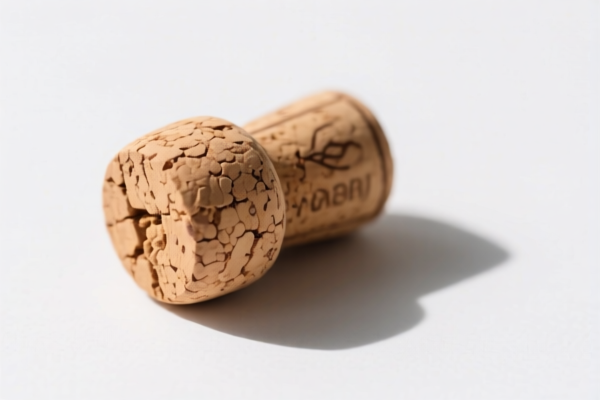

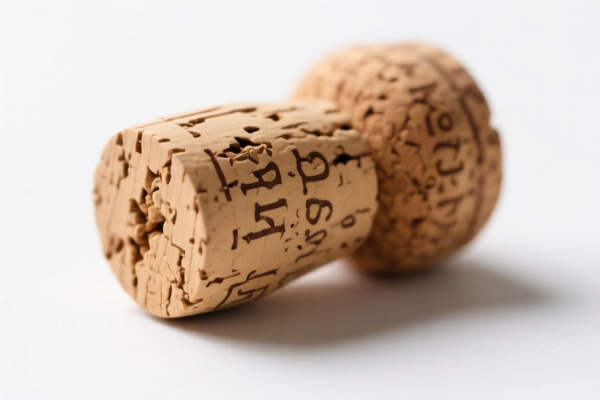
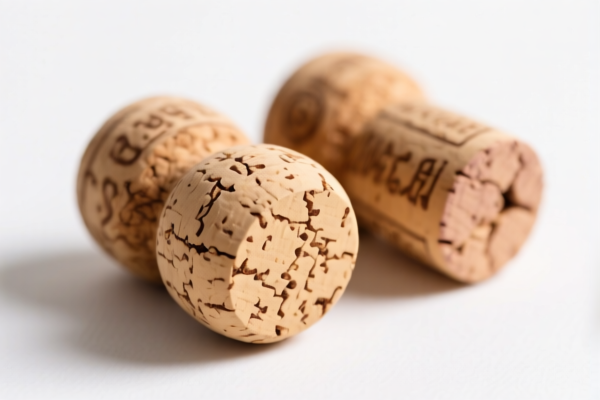
AI分析
🌿 Natural Cork Products (软木制品)
🌐 HS Code Reference & Clearance Guide | 2026 Latest Tariff Analysis | Professional Customs Strategy
📌 I. Product Definition & Classification: Do You Truly Understand "Cork"?
Cork, harvested from the bark of the Quercus suber (Cork Oak), is a unique natural material known for its elasticity, impermeability, and lightweight properties. In international trade, natural cork products are classified based on their degree of processing and physical form. Misclassification often leads to significant tariff differences due to the high "Section 301" and "Section 122"附加 tariffs applied to Chinese-origin goods.
Key Distinction: * Raw/Partially Processed (Chips, Granules, Powder): Subject to higher base tariffs if not fully refined, but heavily impacted by punitive tariffs. * Finished Goods (Stoppers, Articles): Often have 0% base tariff but face the same punitive附加 taxes. * Agglomerated Cork: Treated as "combined cork" or other cork articles, with specific HS codes distinct from natural cork.
⚠️ Critical Differentiation:
- If the product is raw, chips, granules, or powder (uncombined) → HS Codes 4501.90 or 4503.90
- If the product is natural cork articles (e.g., stoppers) → HS Code 4503.10
- If the product is agglomerated/bound cork → HS Code 4504.90
📦 II. HS Code Classification Details (2026 Latest Tariff Authority Reference)
| HS Code | Product Description | Application Scenario | Tax Detail Breakdown | Total Tax |
|---|---|---|---|---|
4503.90.60.00 |
Natural cork powder, in primary forms | Raw cork powder for industrial use, filtration, or composite materials | Base: 14.0%, Add: 25.0%, Sec 122: 10% | 49.0% |
4501.90.40.00 |
Crushed, granulated, or powdered cork | Cork chips, granules, or powder (non-natural articles) | Base: 0.0%, Add: 25.0%, Sec 122: 10% | 35.0% |
4501.10.00.00 |
Natural cork, raw or simply prepared, powdered | Raw natural cork in powder form (basic state) | Base: 0.0%, Add: 25.0%, Sec 122: 10% | 35.0% |
4504.90.00.00 |
Agglomerated cork, in primary forms | Agglomerated cork granules/powder, not yet made into finished goods | Base: 0.0%, Add: 25.0%, Sec 122: 10% | 35.0% |
4503.10.20.00 |
Articles of natural cork, corks | Wine stoppers, bottle caps, natural cork plugs | Base: 0.0%, Add: 25.0%, Sec 122: 10% | 35.0% |
🔍 Key Reminder:
-4503.90.60.00(Natural Cork Powder) is the highest taxed item at 49% due to a higher base tariff (14%) combined with punitive taxes.
-4501.10.00.00and4501.90.40.00differ in that4501.10is specifically natural cork in powder form, while4501.90.40covers crushed/granulated forms (including agglomerated or less refined).
-4503.10.20.00is for finished natural cork articles (like stoppers), which have 0% base tariff but still face 35% total punitive taxes.
💰 III. 2026 Latest Tariff Rate Details (Including Add-on Taxes & Policy Surcharges)
✅ Applicable Country: United States (US)
✅ Origin: China (CN)
✅ Effective Date: Ongoing under current Section 301 and Section 122 regulations
🎯 1. 4503.90.60.00 —— Natural Cork Powder, Primary Form
| Item | Content |
|---|---|
| Base Rate | 14% (ad valorem) |
| USITC Add-on Tax (Sec 301) | +25% (From USITC Footnote 9903.88.01) |
| IEEPA Add-on Tax (Sec 122) | +10% (Against Chinese/HK products, effective Nov 10, 2025) |
| Total Rate | 49.0% |
| Tax Calculation | CIF Value × 49% |
| De Minimis Eligibility | ❌ No (deny_de_minimis) |
| Legal Path | IEEPA:9903.01.25 → IEEPA:9903.01.24 → USITC:4503.90.60.00 → FOOTNOTE:9903.88.01 |
📌 Explanation:
- The 14% base tariff makes this the most expensive item among cork products.
- Combined with the 25% Section 301 and 10% Section 122 taxes, the total burden is 49%.
- This rate applies specifically to natural cork in powder form. If your powder is agglomerated or processed, it may fall under different codes.
🎯 2. 4501.90.40.00 —— Crushed, Granulated, or Powdered Cork
| Item | Content |
|---|---|
| Base Rate | 0% |
| USITC Add-on Tax (Sec 301) | +25% |
| IEEPA Add-on Tax (Sec 122) | +10% |
| Total Rate | 35.0% |
| Tax Calculation | CIF Value × 35% |
| De Minimis Eligibility | ❌ No |
| Legal Path | IEEPA:9901.25 → IEEPA:9903.01.24 → USITC:4501.90.40.00 → FOOTNOTE:9903.88.01 |
📌 Note:
- This code covers crushed, granulated, or powdered cork that is not classified as "natural cork powder" under4503.90.60.00.
- Often used for recycled cork, mixed cork, or less refined forms.
- Total tax is 35%, significantly lower than4503.90.60.00due to the 0% base rate.
🎯 3. 4501.10.00.00 —— Natural Cork, Raw or Simply Prepared, Powdered
| Item | Content |
|---|---|
| Base Rate | 0% |
| USITC Add-on Tax (Sec 301) | +25% |
| IEEPA Add-on Tax (Sec 122) | +10% |
| Total Rate | 35.0% |
| Tax Calculation | CIF Value × 35% |
| De Minimis Eligibility | ❌ No |
| Legal Path | IEEPA:9901.25 → IEEPA:9903.01.24 → USITC:4501.10.00.00 → FOOTNOTE:9903.88.01 |
📌 Note:
- Specifically for natural cork in powder form, raw or simply prepared.
- Different from4501.90.40.00in that it emphasizes "natural" origin and "powder" state.
- Total tax is 35%.
🎯 4. 4504.90.00.00 —— Agglomerated Cork, Primary Forms
| Item | Content |
|---|---|
| Base Rate | 0% |
| USITC Add-on Tax (Sec 301) | +25% |
| IEEPA Add-on Tax (Sec 122) | +10% |
| Total Rate | 35.0% |
| Tax Calculation | CIF Value × 35% |
| De Minimis Eligibility | ❌ No |
| Legal Path | IEEPA:9901.25 → IEEPA:9903.01.24 → USITC:4504.90.00.00 → FOOTNOTE:9903.88.01 |
📌 Note:
- Covers agglomerated cork (cork dust + binder) in primary forms (granules, powder, sheets).
- Not considered "natural cork" but "combined cork."
- Total tax is 35%.
🎯 5. 4503.10.20.00 —— Articles of Natural Cork, Corks
| Item | Content |
|---|---|
| Base Rate | 0% |
| USITC Add-on Tax (Sec 301) | +25% |
| IEEPA Add-on Tax (Sec 122) | +10% |
| Total Rate | 35.0% |
| Tax Calculation | CIF Value × 35% |
| De Minimis Eligibility | ❌ No |
| Legal Path | IEEPA:9901.25 → IEEPA:9903.01.24 → USITC:4503.10.20.00 → FOOTNOTE:9903.88.01 |
📌 Note:
- Specifically for natural cork articles, such as wine stoppers.
- Despite being finished goods, they are not exempt from punitive tariffs.
- Total tax is 35%.
🛠️ IV. Customs Clearance Practical Advice (Battle-Tested Pitfall Avoidance Guide)
✅ 1. Document Checklist (All Required)
| Document | Mandatory | Notes |
|---|---|---|
| ✅ Product Specification Sheet | ✔️ | Must clearly state: Material (Natural/Agglomerated), Form (Powder/Granule/Article), Use |
| ✅ Photos of Product & Packaging | ✔️ | Show texture, shape, and any branding. Powder vs. Granule must be visible. |
| ✅ Commercial Invoice | ✔️ | Must accurately describe product as per HS code (e.g., "Natural Cork Powder" vs. "Cork Agglomerate") |
| ✅ Packing List | ✔️ | Detail gross/net weight, number of packages |
| ✅ Certificate of Origin (CO) | ✔️ | Essential for determining origin and potential FTA benefits (though limited for US-China) |
| ✅ Third-Party Test Report | ❌ (Optional but Recommended) | If claiming "natural" vs. "agglomerated," test reports can prevent misclassification disputes |
✅ 2. Declaration Tips (Key Mnemonics)
🔥 "Form Defines Code, Natural vs. Agglomerated, Don't Mix Up!"
| Scenario | Correct Declaration | Wrong Declaration |
|---|---|---|
| Wine Stoppers | 4503.10.20.00 - "Natural Cork Articles, Corks" |
"Cork Granules" → 35% (but wrong code, may cause delay) |
| Cork Powder (Raw) | 4501.10.00.00 - "Natural Cork, Powdered" |
"Agglomerated Cork" → 35% (but wrong code) |
| Cork Powder (High Base) | 4503.90.60.00 - "Natural Cork Powder, Primary Form" |
"Cork Dust" → 49% (if correctly classified, but costly) |
| Agglomerated Cork Granules | 4504.90.00.00 - "Agglomerated Cork, Primary Form" |
"Natural Cork" → 35% (wrong code, potential penalty) |
| Mixed/Recycled Cork Powder | 4501.90.40.00 - "Crushed/Granulated Cork" |
"Natural Cork" → 35% (wrong code) |
✅ 3. Special Situation Handling
| Situation | Handling Advice |
|---|---|
| OEM Cork Stoppers | Provide customer order + design specs. Ensure description matches 4503.10.20.00. |
| Cork Dust for Composite Materials | If mixed with resin, it may be classified as "plastics articles" or "rubber articles." Consult HS code for composite goods. |
| "Natural" vs. "Agglomerated" | Crucial Distinction. Agglomerated cork uses binders. If binders are present, use 4504. If purely natural, use 4501 or 4503. |
| Powder vs. Granule | Both fall under 4501 or 4504 depending on origin. Ensure physical form matches HS description. |
🌍 V. Global Market Customs Comparison (2026 Latest)
| Country/Region | Recommended HS Code | Tariff Rate | Certification Requirements | Notes |
|---|---|---|---|---|
| 🇺🇸 USA | 4503.10.20.00 |
35% (China) | No specific FDA/CE required for cork | High punitive tariffs apply |
| 🇪🇺 EU | 4503.10.90 |
0% | No special certification | No additional tariffs |
| 🇨🇳 China | 4503.10.20.00 |
0% | No special certification | Domestic duty-free for some |
| 🇯🇵 Japan | 4503.10.00 |
5% | No special certification | Low tariff, stable |
| 🇬🇧 UK | 4503.10.00 |
5% | No special certification | Post-Brexit rules apply |
📌 Conclusion:
- USA is the most expensive market for cork products due to 35%–49% punitive tariffs.
- EU, UK, Japan offer low or zero tariffs, making them more attractive for export.
- China has 0% tariff for imports, but domestic policies may vary.
📌 VI. Common Errors & Pitfall Avoidance (Lessons Learned)
❌ Error 1: Declaring "Agglomerated Cork" as "Natural Cork"
👉 Consequence: Customs may reclassify, leading to delay, additional fees, or penalties.
✅ Fix: Clearly state "Agglomerated" or "Bound Cork" if binders are used.
❌ Error 2: Mixing "Powder" and "Granules" in one shipment without clear separation
👉 Consequence: Customs may apply the highest applicable rate (49%) to the entire shipment.
✅ Fix: Separate shipments or clearly label each type with correct HS codes.
❌ Error 3: Using vague terms like "Cork Material"
👉 Consequence: Customs request for clarification, causing shipment delays.
✅ Fix: Use precise terms: "Natural Cork Powder," "Agglomerated Cork Granules," "Natural Cork Stoppers."
❌ Error 4: Ignoring Section 122 (10%) tax
👉 Consequence: Underestimating total landed cost by 10%.
✅ Fix: Always include Section 301 (25%) + Section 122 (10%) in cost calculations for US-bound goods.
🎯 VII. Conclusion: Professional Declaration, Cost Savings, Efficiency!
🎯 Remember the Mnemonic:
🔹 "Natural Cork Stoppers: 35%, Powder: 35-49%, Agglomerated: 35%. Don't Mix Up Forms!"
🔹 "HS Code Determines Tax, 14% Base vs. 0% Base, Declaration Precision Saves Thousands!"
📌 Pro Tip:
If your cork products are originating from Vietnam, Mexico, or Thailand, you may qualify for IEEPA exemptions under USMCA or other trade agreements, reducing tariffs to 0%–5%.
Recommend Advance Ruling application to US Customs to avoid clearance risks.
📣 Immediate Action:
📞 Contact Professional Customs Broker + Provide Product Photos + Apply for HS Code Advance Ruling
🚀 Let your cork products clear customs smoothly, boost exports, and maximize profits!
✨ Professional Clearance, Starting with Precise Classification!
💼 Every Cent of Your Cost Deserves to Be Precisely Calculated!
用户评价
关于 HS 编码归类
协调制度(HS)是由世界海关组织(WCO)制定的国际贸易商品分类标准。全球 200 多个国家采用 HS 系统作为海关关税、贸易统计和进出口监管的基础。
每个 HS 编码遵循以下层级结构:
- 章(2 位)——商品大类(例如:第 84 章:机器和机械设备)
- 品目(4 位)——章内的更具体分类
- 子目(6 位)——国际通用细分,所有 WCO 成员国统一使用
- 本国细分(8-10 位)——各国自行扩展的细分编码,如美国 HTSUS 10 位编码
正确的 HS 编码归类对于顺利通关、准确缴纳关税和遵守贸易法规至关重要。错误归类可能导致海关延误、多缴关税或罚款。
从CN进口到US时,适用的关税税率可能包括:
- 最惠国(MFN)税率——适用于 WTO 成员国的标准关税税率
- 普通税率——适用于无贸易协定国家
- 贸易救济关税——附加关税,如 301 条款(反倾销)、232 条款(国家安全)或反补贴税
本页内容仅供参考。如需正式归类,请咨询当地海关或持牌报关代理。