Natural Plant Woven Travel Storage Bag
CN → US| HS编码 | 关税税率 | 原产国 | 目的国 | 文档 |
|---|---|---|---|---|
| 6307909891 | 24.5% | CN | US | 官方文档 |
| 6307908995 | 17.0% | CN | US | 官方文档 |
| 4602122300 | 44.0% | CN | US | 官方文档 |
| 4602192300 | 44.0% | CN | US | 官方文档 |
| 4202921500 | 41.3% | CN | US | 官方文档 |
商品图片
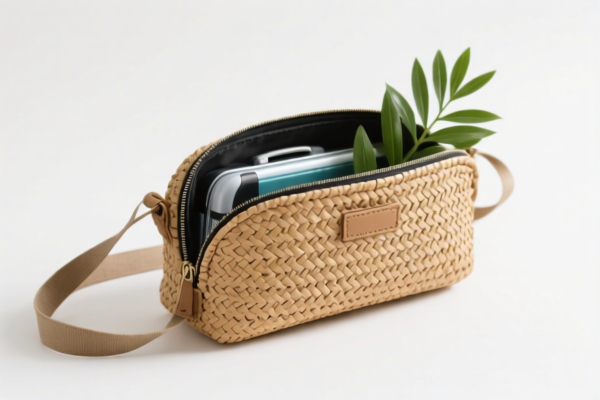
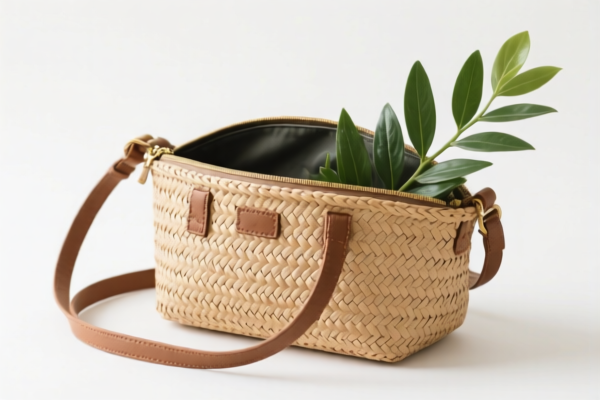
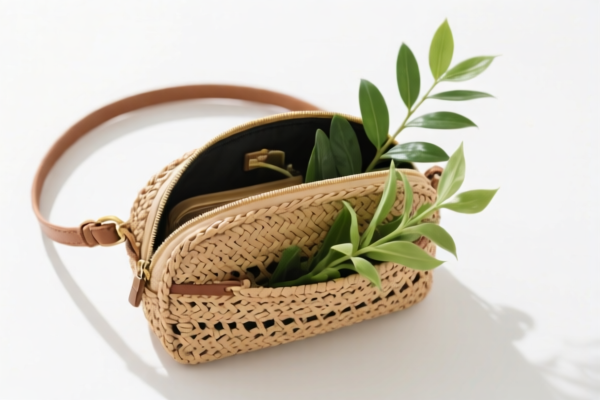
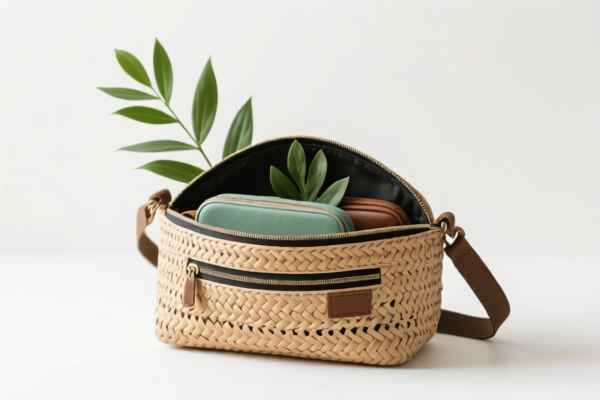
AI分析
🧳 Travel Storage Bags (Natural Plant Woven)
🌐 HS Code Reference & Customs Clearance Guide | 2026 Latest Tariff Analysis | Strategic Classification Strategy
📌 I. Product Definition & Classification: Do You Truly Understand "Woven Travel Bags"?
Natural plant-woven travel storage bags are eco-friendly storage solutions used for organizing luggage contents. In international trade, their classification is highly sensitive to material specificity and structural form. They are generally categorized into two distinct paths:
Path A: General Textile/Bagging (Sections 42 & 63)
Bags made from natural plant fibers that are considered "articles of textile materials" or "other made-up articles." These typically have lower tariffs if classified as general storage items.
Path B: Woven Vegetable Plaiting Materials (Section 46)
Bags explicitly made from braided, plaited, or woven natural plant materials (like rattan, reed, or bamboo strips) intended as手提包 (handbags) or flat articles. These attract significantly higher tariffs due to "Section 301" and "Section 122" trade restrictions.
⚠️ Key Distinction Point:
- If the item is a general fabric bag using plant fibers as a secondary material or is classified under "other textile articles" → Falls under 6307.90 or 4202.92 (Lower Tax).
- If the item is structurally woven/braided from plant materials (like a basket or rattan bag) → Falls under 4602.12 or 4602.19 (Higher Tax).
📦 II. HS Code Classification Details (2026 Latest Tariff Authority Comparison)
| HS Code | Product Description | Application Scenario | Tax Burden |
|---|---|---|---|
6307.90.98.91 |
Natural plant woven travel storage bag; form: storage bag; material: natural plant weaving; classified as other made-up articles. | General soft storage bags with woven texture/plants as material component. | 24.5% |
6307.90.89.95 |
Natural plant woven travel storage bag; form: storage bag; material: natural plant; classified as articles under other categories. | Similar to above, but potentially different sub-category nuance in "other" textile provisions. | 17.0% |
4602.12.23.00 |
Natural plant woven travel storage bag; material: natural plant (Rattan); form: woven article; use: handbag/flat article. | Rattan, bamboo, or reed bags that function as handbags or flat woven items. | 44.0% |
4602.19.23.00 |
Natural plant woven travel storage bag; material: plant material; form: handbag/flat item; use: woven article. | Other woven plant material bags not specifically rattan, functioning as handbags. | 44.0% |
4202.92.15.00 |
Natural plant woven travel storage bag; form: travel storage bag; material: cotton/plant fiber; use: travel-related. | Bags primarily constructed of cotton or mixed plant fibers, classified under travel goods. | 41.3% |
🔍 Critical Reminder:
- Section 301 (Add-on Tariff): Codes starting with 4602 and 4202 are subject to a 25% Add-on Tariff.
- Section 122 Tariff: Applies to most of these categories at 10%.
- Base Tariff: Varies from 6.3% to 9.0%.
- Misclassification Risk: Declaring a "Rattan Bag" as a "Cotton Bag" (4202) to save tax is a common audit red flag.
💰 III. 2026 Latest Tariff Rate Breakdown (Including Add-ons & Policy Surcharges)
✅ Applicable Country: United States (US)
✅ Country of Origin: China (CN)
✅ Effective Date: Includes imports post-2025/2026 (Current Policy)
🎯 1. 6307.90.98.91 —— Natural Plant Woven Storage Bag (Other Made-up Articles)
| Item | Content |
|---|---|
| Base Tariff | 7.0% |
| Section 301 Add-on | 7.5% |
| Section 122 Tariff | 10.0% |
| Total Rate | 24.5% |
| Tax Calculation | CIF Value × 24.5% |
| De Minimis Exemption | ❌ Not Applicable (Standard de minimis thresholds do not override Section 301/122 for high-risk categories) |
| Legal Basis Path | HTSUS:6307.90.98.91 → Section 301 → Section 122 |
📌 Explanation:
- This is the most cost-effective classification among the options, assuming the product can be justified as a "general article" rather than a "woven handbag."
- The 7.5% Section 301 is specific to this sub-category.
- Total 24.5% is moderate but significantly lower than the 44% options.
🎯 2. 6307.90.89.95 —— Other Articles of Textiles (Natural Plant Material)
| Item | Content |
|---|---|
| Base Tariff | 7.0% |
| Section 301 Add-on | 0.0% |
| Section 122 Tariff | 10.0% |
| Total Rate | 17.0% |
| Tax Calculation | CIF Value × 17.0% |
| De Minimis Exemption | ❌ Not Applicable |
| Legal Basis Path | HTSUS:6307.90.89.95 → Section 122 |
📌 Note:
- This is the LOWEST TAX OPTION (17%).
- However, it requires strong justification that the bag is a "general textile article" and not a "woven handbag."
- The 0% Section 301 makes this highly attractive, but customs scrutiny is high.
🎯 3. 4602.12.23.00 & 4602.19.23.00 —— Woven Vegetable Plaiting Materials (Handbags/Flat Articles)
| Item | Content |
|---|---|
| Base Tariff | 9.0% |
| Section 301 Add-on | 25.0% |
| Section 122 Tariff | 10.0% |
| Total Rate | 44.0% |
| Tax Calculation | CIF Value × 44.0% |
| De Minimis Exemption | ❌ Not Applicable |
| Legal Basis Path | HTSUS:4602.12/19 → Section 301 → Section 122 |
📌 Warning:
- These codes apply if your bag is visibly woven (like a basket) and functions as a handbag or flat article.
- The 25% Section 301 is the maximum penalty rate for many consumer goods.
- Total 44% is extremely high. Avoid this classification unless the product strictly matches the physical description of Section 46 woven goods.
🎯 4. 4202.92.15.00 —— Travel Bags (Cotton/Plant Fiber)
| Item | Content |
|---|---|
| Base Tariff | 6.3% |
| Section 301 Add-on | 25.0% |
| Section 122 Tariff | 10.0% |
| Total Rate | 41.3% |
| Tax Calculation | CIF Value × 41.3% |
| De Minimis Exemption | ❌ Not Applicable |
| Legal Basis Path | HTSUS:4202.92.15.00 → Section 301 → Section 122 |
📌 Analysis:
- Even if described as "Cotton/Plant Fiber," if classified under 4202 (Articles of bedding, travel goods), it attracts the full 25% Section 301.
- Total 41.3% is slightly better than 44% but still significantly worse than the 6307 options.
🛠️ IV. Customs Clearance Practical Advice (Battle-Tested Pitfall Guide)
✅ 1. Documentation Checklist (Non-Negotiable)
| Document | Required | Description |
|---|---|---|
| ✅ Product Specifications | ✔️ | Must detail materials (e.g., "Cotton blend with bamboo trim" vs. "100% Woven Rattan"). |
| ✅ Photos (Open & Closed) | ✔️ | Show interior lining, zippers, and handle construction. Crucial for distinguishing "Bag" vs. "Woven Article." |
| ✅ Commercial Invoice | ✔️ | Description must match HS Code logic. Use "Storage Bag" rather than "Woven Handbag" if using 6307. |
| ✅ Origin Certificate | ✔️ | Proof of Chinese origin triggers Section 301/122. |
| ✅ Material Composition Sheet | ✔️ | Percentages of natural plant fiber vs. other materials. |
✅ 2. Declaration Strategy (Key Mnemonic)
🔥 "Structure Determines Tariff: Woven Handbag = High Tax; Soft Storage = Low Tax!"
| Scenario | Correct Declaration | Wrong Approach | Consequence |
|---|---|---|---|
| Soft Bag with Woven Pattern | 6307.90.98.91 (24.5%) |
Misdeclare as 4602 |
Audit risk, but 24.5% is safer than 44% if ambiguous. |
| Soft Bag, No Woven Structure | 6307.90.89.95 (17.0%) |
Declare as 4202 |
Saves 24% vs. 41.3%. Best cost-saving strategy. |
| Rigid/Handbag-Style Woven Bag | 4602.12.23.00 (44.0%) |
Misdeclare as 6307 |
High Risk: Customs will detect "Handbag" form → Re-classification + Penalties. |
| Travel Pouch (Cotton/Plant) | 4202.92.15.00 (41.3%) |
Declare as 6307 |
If it's a structured travel case, 4202 is correct. Don't force 6307. |
✅ 3. Special Situation Handling
| Situation | Recommendation |
|---|---|
| Mixed Materials (e.g., Cotton + Bamboo Strips) | If bamboo is only decorative, argue for Textile Classification (6307). If bamboo forms the structure, it may be 4602. |
| "Storage Bag" vs. "Handbag" | Emphasize Function: "Travel Storage" (6307/4202) vs. "Accessories/Handbag" (4602). The latter triggers higher trade barriers. |
| De Minimis (Section 321) | ❌ Do Not Rely on De Minimis. Section 301 and 122 tariffs generally apply regardless of value for Chinese goods. |
🌍 V. Global Market Comparison (2026 Latest)
| Country/Region | Recommended HS Code | Tariff Rate | Certification | Notes |
|---|---|---|---|---|
| 🇺🇸 USA | 6307.90.89.95 |
17.0% | No specific | Lowest duty. Avoid 4602 (44%). |
| 🇪🇺 EU | 4602.12 |
~0-6% | CE | EU has different classification logic; often lower for woven goods. |
| 🇨🇳 China | 6307.90 |
7-10% | CCC | Domestic market taxes are lower; focus on export duty. |
| 🇯🇵 Japan | 4602.12 |
~0-5% | JIS | Japan has FTA benefits; check RCEP if applicable. |
📌 Conclusion:
- USA is the most punitive market for woven plant goods due to Section 301/122.
- Strategic Goal: Classify as6307.90.89.95(17%) or6307.90.98.91(24.5%) if product allows.
- Avoid4602(44%) unless the product is unmistakably a traditional woven handbag/basket.
📌 VI. Common Mistakes & Pitfalls (Lessons Learned)
❌ Mistake 1: Calling a "Rattan Handbag" a "Cotton Storage Bag"
👉 Result: Customs inspects, finds rigid woven structure → Re-classifies to 4602 → 44% Tax + Penalties.
❌ Mistake 2: Ignoring Section 122 Tariff
👉 Result: Even with 0% Section 301, the 10% Section 122 applies to most textile/plant goods from China. Total tax is never just the base rate.
❌ Mistake 3: Assuming "Natural Plant" = "Agricultural Product"
👉 Result: It is a Manufactured Good. It does not get agricultural preferential rates. It is subject to trade war tariffs.
✅ Correct Approach:
"Soft-sided Travel Organizer, Material: 80% Cotton, 20% Bamboo Fiber Trim, for Luggage Storage"
(Supports6307classification)
🎯 VII. Conclusion: Precision Classification Saves Costs!
🎯 Remember the Mnemonic:
🔹 "Structure is King: Soft & General = Low Tax (17-24%). Woven & Handbag = High Tax (41-44%).
🔹 "Section 301 is the Trap: Avoid4202and4602if you can justify6307.
🔹 "Section 122 is the Constant: Add 10% to almost everything.
📌 Pro Tip:
If your bag is soft, foldable, and used primarily for organization (not as a standalone handbag), aggressively argue for 6307.90.89.95 (17%). Provide photos showing it fits inside a suitcase or duffel bag.
📣 Immediate Action:
📞 Consult your broker before production.
🚀 Send sample photos for pre-classification review.
💡 Save 27% Tax by choosing the right HS Code (17%vs44%)!
✨ Professional Customs Clearance Starts with Accurate Classification!
💼 Every Percentage Point in Tariff is Pure Profit Loss!
用户评价
关于 HS 编码归类
协调制度(HS)是由世界海关组织(WCO)制定的国际贸易商品分类标准。全球 200 多个国家采用 HS 系统作为海关关税、贸易统计和进出口监管的基础。
每个 HS 编码遵循以下层级结构:
- 章(2 位)——商品大类(例如:第 84 章:机器和机械设备)
- 品目(4 位)——章内的更具体分类
- 子目(6 位)——国际通用细分,所有 WCO 成员国统一使用
- 本国细分(8-10 位)——各国自行扩展的细分编码,如美国 HTSUS 10 位编码
正确的 HS 编码归类对于顺利通关、准确缴纳关税和遵守贸易法规至关重要。错误归类可能导致海关延误、多缴关税或罚款。
从CN进口到US时,适用的关税税率可能包括:
- 最惠国(MFN)税率——适用于 WTO 成员国的标准关税税率
- 普通税率——适用于无贸易协定国家
- 贸易救济关税——附加关税,如 301 条款(反倾销)、232 条款(国家安全)或反补贴税
本页内容仅供参考。如需正式归类,请咨询当地海关或持牌报关代理。