Natural Polymer Chemically Modified Resin
CN → US| HS编码 | 关税税率 | 原产国 | 目的国 | 文档 |
|---|---|---|---|---|
| 3824100000 | 41.0% | CN | US | 官方文档 |
| 1302320020 | 17.5% | CN | US | 官方文档 |
| 1302390090 | 20.7% | CN | US | 官方文档 |
| 3824992100 | 35.0% | CN | US | 官方文档 |
| 3824992100 | 35.0% | CN | US | 官方文档 |
商品图片
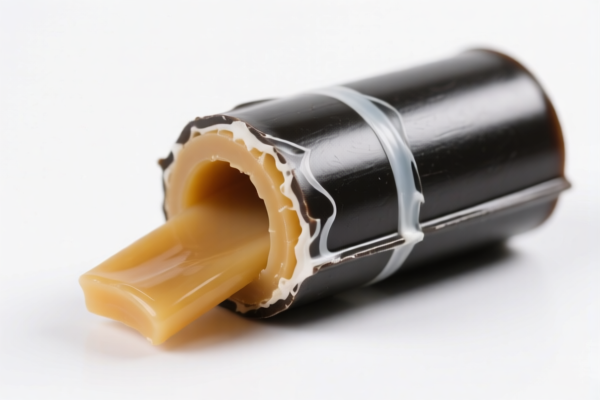

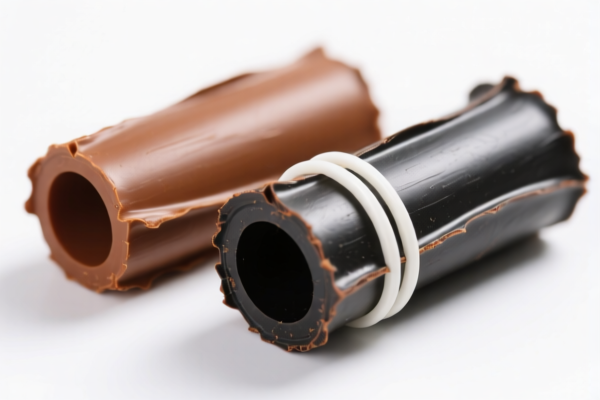

AI分析
🧪 Natural Polymer Chemically Modified Resin (改性天然聚合物树脂)
🌐 HS Code Reference & Customs Clearance Guide | 2026 Latest Tariff Analysis | Professional Clearance Strategy
"Natural Polymer Chemically Modified Resin" is a complex chemical substance often used as a binder, thickener, or precursor in adhesives and coatings. In international trade, its classification depends heavily on the degree of chemical modification and the form (powder, resin, extract).
Below is the precise breakdown based on the provided data, covering four distinct HS Code possibilities with varying tax implications.
📦 1. HS Code Classification Details
| HS Code | Product Description | Application Scenario | Key Classification Criteria |
|---|---|---|---|
3824.10.00.00 |
Modified natural polymer powder | Binder raw materials, industrial adhesives | Classified as "Prepared Binders" under HS 3824.10. The powder form and "preparation" status drive this classification. |
1302.32.00.20 |
Modified natural polymer powder | Plant-based adhesives, thickeners, food/pharma grades | Classified under Plant Mucilage/Thickeners. Assumes "primary form" and natural plant origin. |
1302.39.00.90 |
Plant-derived extract powder | Natural thickeners, hydrocolloids | Classified as Other Plant Extracts/Mucilages. Focuses on the "plant-source" and "mucilage" characteristics. |
3824.99.21.00 |
Chemically modified natural polymer resin | Chemical intermediates, synthetic blends | Classified as Other Chemical Products/Preparations. Applies if the product is a resin formed via chemical processes, blending natural polymers with aromatic/substances. |
3824.99.21.00 |
Chemically modified natural polymer resin | Blended natural products, modified aromatics | Same as above. Emphasizes the chemical modification process and mixture with other substances. |
🔍 Critical Distinction:
- If it is a powder acting as a binder, lean towards3824.10.00.00.
- If it is considered a plant extract/thickener in its primary form, lean towards1302.32.00.20or1302.39.00.90.
- If it is a resin resulting from chemical modification (blending/reaction), it falls under3824.99.21.00.
💰 2. Detailed Tariff Rate Analysis (2026)
✅ Applicable Country: United States (US)
✅ Country of Origin: China (CN)
✅ Effective Date: Post-November 10, 2025 (Subject to ongoing Section 301 & IEEPA rules)
🎯 A. HS Code 3824.10.00.00 – Prepared Binders (Powder)
| Item | Detail |
|---|---|
| Basic Duty | 6.0% |
| Section 301 (Add'l) | 25.0% |
| IEEPA (122 Clause) | 10.0% |
| Total Effective Rate | 41.0% |
| De Minimis Exemption | ❌ Not Eligible (deny_de_minimis) |
| Legal Basis | Base Tariff + USITC Footnote 9903.88.01 (25%) + IEEPA 9903.01.25 (10%) |
📌 Explanation:
- This category treats the product as a "prepared chemical."
- The 25% Section 301 tariff is applied because it is a chemical preparation from China.
- The 10% IEEPA tariff is an additional layer for Chinese-origin goods under the 122 clause.
- Total Cost Impact: High. At 41%, this significantly erodes profit margins for bulk powder shipments.
🎯 B. HS Code 1302.32.00.20 – Plant Mucilage/Thickener (Primary Form)
| Item | Detail |
|---|---|
| Basic Duty | 0.0% |
| Section 301 (Add'l) | 7.5% |
| IEEPA (122 Clause) | 10.0% |
| Total Effective Rate | 17.5% |
| De Minimis Exemption | ❌ Not Eligible (deny_de_minimis) |
| Legal Basis | Base Tariff (0%) + USITC Footnote 9903.88.01 (7.5%) + IEEPA 9903.01.25 (10%) |
📌 Explanation:
- This is the most tax-efficient option if the product can be legally classified as a "primary form" plant extract.
- The Section 301 rate is lower (7.5%) compared to chemical preparations (25%).
- Strategy: If your product is minimally processed and retains its natural plant characteristics, argue for this classification to save 23.5% in duties.
🎯 C. HS Code 1302.39.00.90 – Other Plant Extracts
| Item | Detail |
|---|---|
| Basic Duty | 3.2% |
| Section 301 (Add'l) | 7.5% |
| IEEPA (122 Clause) | 10.0% |
| Total Effective Rate | 20.7% |
| De Minimis Exemption | ❌ Not Eligible (deny_de_minimis) |
| Legal Basis | Base Tariff (3.2%) + USITC Footnote 9903.88.01 (7.5%) + IEEPA 9903.01.25 (10%) |
📌 Explanation:
- Slightly higher than1302.32.00.20due to the 3.2% base duty.
- Suitable if the product is a refined plant extract but doesn't fit the specific "mucilage/thickener" definition of 1302.32.
🎯 D. HS Code 3824.99.21.00 – Other Chemical Preparations (Resin)
| Item | Detail |
|---|---|
| Basic Duty | 0.0% |
| Section 301 (Add'l) | 25.0% |
| IEEPA (122 Clause) | 10.0% |
| Total Effective Rate | 35.0% |
| De Minimis Exemption | ❌ Not Eligible (deny_de_minimis) |
| Legal Basis | Base Tariff (0%) + USITC Footnote 9903.88.01 (25%) + IEEPA 9903.01.25 (10%) |
📌 Explanation:
- While the base duty is 0%, the 25% Section 301 tariff makes it expensive.
- This classification is used for chemically modified resins that do not fit into more specific chemical headings.
- Risk: If customs argues it is a "binder" (3824.10), the rate jumps to 41% (higher base + same additions).
🛠️ 3. Customs Clearance Recommendations (Action Plan)
✅ 1. Documentation Checklist (Mandatory)
| Document | Required | Purpose |
|---|---|---|
| Product Specification Sheet | ✔️ | Detail the chemical modification process. Is it physical mixing or chemical reaction? |
| Safety Data Sheet (SDS) | ✔️ | Proves chemical nature; helps avoid misclassification as "food" or "simple plant material." |
| Formula/Composition Breakdown | ✔️ | Critical for distinguishing between Plant Extract (1302) and Chemical Prep (3824). |
| Commercial Invoice | ✔️ | Must specify "Chemically Modified Natural Polymer Resin" or "Plant-Based Thickener" accurately. |
| Certificate of Origin (CO) | ✔️ | To prove CN origin and apply correct IEEPA/Section 301 rates. |
| Structure Diagram | ✔️ | For resin types, show if it's a blend or a reacted polymer. |
✅ 2. Classification Strategy (Key Tactics)
🔥 "Nature vs. Chemistry: Choose Your Battlefield"
| Scenario | Recommended HS Code | Strategy |
|---|---|---|
| Product is a Powder + Used as Binder | 3824.10.00.00 |
Accept 41% rate if functional use is clearly binding. |
| Product is Plant-Origin + Minimal Processing | 1302.32.00.20 |
Best Option. Argue for "Primary Form" to get 17.5% rate. Provide lab reports showing natural plant structure. |
| Product is Refined Plant Extract | 1302.39.00.90 |
Use if 1302.32 doesn't fit but 3824 is too risky/expensive. |
| Product is Chemically Synthesized/Blended Resin | 3824.99.21.00 |
Required if significant chemical alteration has occurred. Prepare for 35% rate. |
✅ 3. Avoid Common Pitfalls
❌ Pitfall 1: Mislabeling a "Chemically Modified Resin" as a "Simple Plant Extract"
👉 Risk: Customs may reclassify to 3824.10.00.00 or 3824.99.21.00, leading to back taxes + penalties.
👉 Fix: Provide chemical analysis proving the extent of modification.
❌ Pitfall 2: Ignoring IEEPA 122 Clause (10%)
👉 Risk: Underpayment by 10% on all categories.
👉 Fix: Always include IEEPA:9903.01.25 in tariff calculations.
❌ Pitfall 3: Assuming De Minimis Exemption Applies
👉 Risk: These items are deny_de_minimis. Do not use 86/87 shipments to avoid duties.
👉 Fix: Plan for full duty payment on all shipments.
🌍 4. Global Market Comparison (2026)
| Region | Preferred HS Code | Est. Total Duty | Notes |
|---|---|---|---|
| 🇺🇸 USA | 1302.32.00.20 |
17.5% | Best for plant-based powders. Avoid 3824 if possible. |
| 🇺🇸 USA | 3824.10.00.00 |
41.0% | High cost for binders. |
| 🇪🇺 EU | 3824.10.00 / 1302.32 |
0% - 6.5% | Lower duties generally. No Section 301/IEEPA equivalent. |
| 🇨🇳 China | 1302.32.00 / 3824.10 |
0% - 6.5% | Import duties vary. Check FTAs. |
| 🇯🇵 Japan | 1302.32.00 / 3824.10 |
0% - 4.5% | Generally favorable. |
📌 Conclusion:
- USA is the most complex market due to Section 301 and IEEPA.
- Maximize Savings: Aim for1302.32.00.20(17.5%) by proving plant origin and minimal chemical alteration.
- Avoid:3824.10.00.00(41%) unless functionally required as a binder.
📌 5. Final Advice
- Pre-Ruling Application: Submit an Advance Ruling Request to US CBP with chemical composition data to lock in the 17.5% rate if applicable.
- Labeling: Clearly state "Plant-Based Modified Polymer" or "Chemical Resin" on invoices to avoid ambiguity.
- Supply Chain: If duty avoidance is critical, consider if the modification step can be done outside China to bypass Section 301/IEEPA (though this may change country of origin rules).
🎯 Pro Tip:
💡 "If it's from a plant, argue '1302'. If it's a chemical mix, accept '3824'. Don't guess—prove it!"
📣 Ready to Ship?
📞 Consult a licensed customs broker with your SDS and Formula.
🚀 Accurate classification saves up to 23.5% in duties!
✨ Smart Classification. Zero Surprises.
💼 Your profit margin depends on the first 8 digits of your HS Code.
用户评价
关于 HS 编码归类
协调制度(HS)是由世界海关组织(WCO)制定的国际贸易商品分类标准。全球 200 多个国家采用 HS 系统作为海关关税、贸易统计和进出口监管的基础。
每个 HS 编码遵循以下层级结构:
- 章(2 位)——商品大类(例如:第 84 章:机器和机械设备)
- 品目(4 位)——章内的更具体分类
- 子目(6 位)——国际通用细分,所有 WCO 成员国统一使用
- 本国细分(8-10 位)——各国自行扩展的细分编码,如美国 HTSUS 10 位编码
正确的 HS 编码归类对于顺利通关、准确缴纳关税和遵守贸易法规至关重要。错误归类可能导致海关延误、多缴关税或罚款。
从CN进口到US时,适用的关税税率可能包括:
- 最惠国(MFN)税率——适用于 WTO 成员国的标准关税税率
- 普通税率——适用于无贸易协定国家
- 贸易救济关税——附加关税,如 301 条款(反倾销)、232 条款(国家安全)或反补贴税
本页内容仅供参考。如需正式归类,请咨询当地海关或持牌报关代理。