Natural Polymer Printing and Dyeing Additives
CN → US| HS编码 | 关税税率 | 原产国 | 目的国 | 文档 |
|---|---|---|---|---|
| 3809100000 | 0.0% | CN | US | 官方文档 |
| 3912390000 | 39.2% | CN | US | 官方文档 |
| 3913905000 | 41.5% | CN | US | 官方文档 |
| 3913902090 | 40.8% | CN | US | 官方文档 |
| 3809910000 | 41.0% | CN | US | 官方文档 |
商品图片
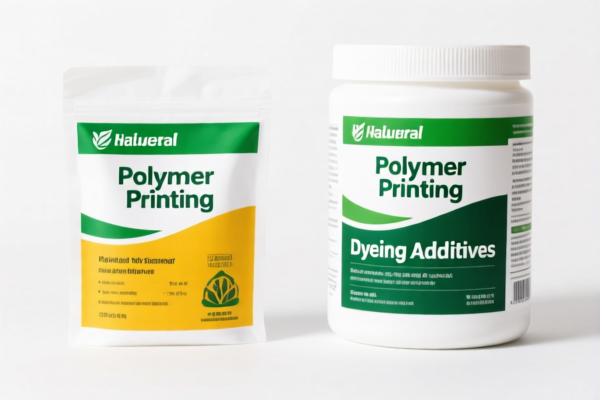
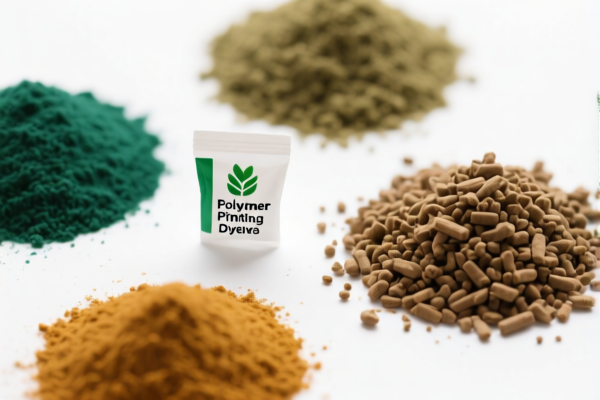
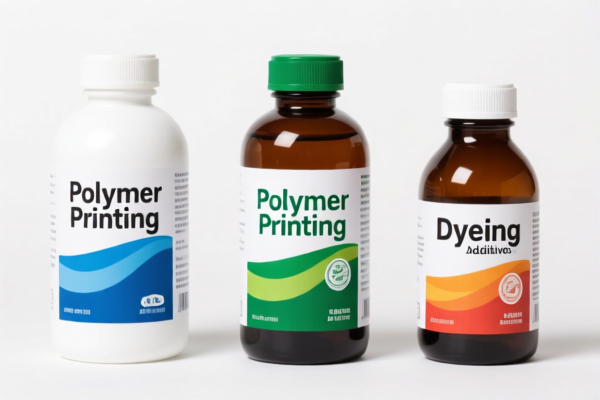
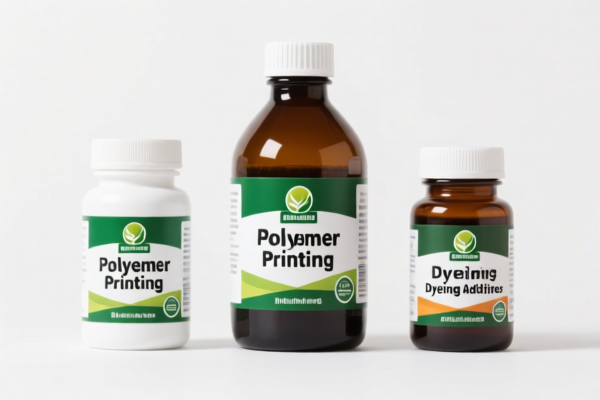
AI分析
🧪 Natural Polymer Printing and Dyeing Additives
🌐 HS Code Reference & Customs Clearance Guide | 2026 Latest Tariff Analysis | Professional Clearance Strategy
📌 I. Product Definition & Classification: Do You Really Understand "Natural Polymer Printing and Dyeing Additives"?
Natural polymer printing and dyeing additives are specialized chemical agents used in the textile and similar industries. They function as finishing agents, dye carriers, or other auxiliary formulations to enhance the printing and dyeing processes. These additives are derived from natural high-polymer sources, primarily cellulose and its chemical derivatives, as well as polysaccharides.
In international trade, they are broadly classified under Chapter 38 (Miscellaneous Chemical Products) or Chapter 39 (Plastics and Articles Thereof), depending on their specific chemical nature and primary function. The classification hinges on whether the product is viewed primarily as an industrial aid (Chapter 38) or as a modified natural polymer/chemical raw material (Chapter 39).
⚠️ Key Distinction Point:
- If the product is strictly a finishing agent or dye carrier for textile industries →归入 3809 (Chapter 38)
- If the product is primarily a chemical raw material, intermediate, or modified polymer (e.g., modified cellulose) →归入 3912/3913 (Chapter 39)
📦 II. HS Code Classification Details (2026 Latest Tariff Authoritative Comparison)
| HS Code | Product Description | Application Scenario | Tariff Classification Logic |
|---|---|---|---|
3809.10.00.00 |
Finishing agents, dye carriers, etc., for textile industries; natural polymer-based aids | Traditional textile dyeing auxiliaries, fabric finishing | ✅ Chemical Aid/Preparation |
3912.39.00.00 |
Cellulose and its chemical derivatives; inferred as natural polymer additive | Chemical raw materials, intermediates, modified cellulose | ✅ Chemical Raw Material/Intermediate |
3913.90.50.00 |
Natural polymers not elsewhere specified; chemical nature additives | General natural polymer additives, unspecified natural polymers | ✅ Natural Polymer/Chemical Additive |
3913.90.20.90 |
Polysaccharides and their derivatives; modified or processed for utility | Modified polysaccharides, processed for specific utility | ✅ Modified Polysaccharide |
3809.91.00.00 |
Other finishing agents, dye carriers for textile or similar industries | Textile auxiliaries outside specific 3809.10 categories | ✅ Other Textile Aids |
🔍 Key Reminder:
- Chapter 38 (3809) is generally preferred for products whose primary function is to assist in textile processing (dyeing, finishing), even if derived from natural polymers. - Chapter 39 (3912/3913) is used when the product is classified as a chemical raw material or intermediate, specifically modified cellulose or polysaccharides, rather than a finished aid. - Misclassification between Chapter 38 and 39 can lead to significant tariff differences (e.g., ~2-4% vs. ~40%).
💰 III. 2026 Latest Tariff Rate Details (Including Additional Taxes, Policy Surcharges)
✅ Applicable Country: United States (US)
✅ Country of Origin: China (CN)
✅ Effective Date: From November 10, 2025 (for subsequent imports)
🎯 1. 3809.10.00.00 — Finishing Agents, Dye Carriers, etc. (Natural Polymer Based)
| Item | Content |
|---|---|
| Base Tariff | 2.2¢/kg + 3% (Ad Valorem + Specific) |
| Section 301 Tariff | +7.5% (Additional) |
| Section 122 Tariff | +10% (China-specific) |
| Total Rate | ~3% + 2.2¢/kg + 17.5% (7.5% + 10%) |
| Tax Calculation | CIF Value × (3% + 17.5%) + (Weight × 2.2¢/kg) |
| De Minimis Exemption | ❌ Not Applicable (High tax rate prevents de minimis benefit) |
| Legal Basis Path | USITC:3809.10.00.00 → Section 301: Footnote 9903.88.01 → Section 122: 9903.01.24 |
📌 Explanation:
- This code has the lowest tariff burden among the options. - The "3%" is the base ad valorem duty, plus a specific duty of 2.2 cents per kg. - The additional 17.5% comes from Section 301 (7.5%) and Section 122 (10%). - Total effective rate is approximately 20.5% + specific duty, significantly lower than Chapter 39 codes.
🎯 2. 3912.39.00.00 — Cellulose and Chemical Derivatives
| Item | Content |
|---|---|
| Base Tariff | 4.2% |
| Section 301 Tariff | +25% |
| Section 122 Tariff | +10% |
| Total Rate | 39.2% |
| Tax Calculation | CIF Value × 39.2% |
| De Minimis Exemption | ❌ Not Applicable |
| Legal Basis Path | USITC:3912.39.00.00 → Section 301: Footnote 9903.88.01 → Section 122: 9903.01.24 |
📌 Note:
- High tariff due to classification as a chemical raw material. - Even though it is a "natural polymer derivative," it is taxed at the higher Chapter 39 rate with full Section 301 and 122 penalties.
🎯 3. 3913.90.50.00 — Other Natural Polymers
| Item | Content |
|---|---|
| Base Tariff | 6.5% |
| Section 301 Tariff | +25% |
| Section 122 Tariff | +10% |
| Total Rate | 41.5% |
| Tax Calculation | CIF Value × 41.5% |
| De Minimis Exemption | ❌ Not Applicable |
| Legal Basis Path | USITC:3913.90.50.00 → Section 301: Footnote 9903.88.01 → Section 122: 9903.01.24 |
📌 Note:
- Highest base tariff (6.5%) among all options. - Applies to natural polymers not elsewhere specified, with chemical additive properties.
🎯 4. 3913.90.20.90 — Polysaccharides and Derivatives
| Item | Content |
|---|---|
| Base Tariff | 5.8% |
| Section 301 Tariff | +25% |
| Section 122 Tariff | +10% |
| Total Rate | 40.8% |
| Tax Calculation | CIF Value × 40.8% |
| De Minimis Exemption | ❌ Not Applicable |
| Legal Basis Path | USITC:3913.90.20.90 → Section 301: Footnote 9903.88.01 → Section 122: 9903.01.24 |
📌 Note:
- Slightly lower than3913.90.50.00due to a lower base tariff (5.8% vs 6.5%). - Applies to modified or processed polysaccharides.
🎯 5. 3809.91.00.00 — Other Finishing Agents, Dye Carriers
| Item | Content |
|---|---|
| Base Tariff | 6.0% |
| Section 301 Tariff | +25% |
| Section 122 Tariff | +10% |
| Total Rate | 41.0% |
| Tax Calculation | CIF Value × 41.0% |
| De Minimis Exemption | ❌ Not Applicable |
| Legal Basis Path | USITC:3809.91.00.00 → Section 301: Footnote 9903.88.01 → Section 122: 9903.01.24 |
📌 Note:
- Falls under Chapter 38 but is not3809.10(which has specific low rates for natural polymer aids). - Classified as "other" finishing agents, thus subject to higher base tariff (6.0%) and standard Section 301/122 rates.
🛠️ IV. Customs Clearance Practical Advice (Real-World Pitfall Avoidance Guide)
✅ 1. Required Documentation Checklist (All Mandatory)
| Document | Must Provide | Description |
|---|---|---|
| ✅ Product Specification Sheet | ✔️ | Details composition, function (finishing agent vs. raw material), concentration |
| ✅ Formula/Composition List | ✔️ | Essential to prove "natural polymer" origin and chemical derivatives |
| ✅ Product Photos (including Label) | ✔️ | Clear brand, model, usage instructions |
| ✅ Third-Party Test Report | ✔️ | SDS (Safety Data Sheet), MSDS, composition analysis |
| ✅ Commercial Invoice | ✔️ | Clearly state "Printing and Dyeing Additive" or "Finishing Agent" |
| ✅ Certificate of Origin (CO) | ✔️ | Required for China origin verification |
| ✅ Packing List | ✔️ | Detail net/gross weight, dimensions |
✅ 2. Declaration Tips (Key Mantras)
🔥 "Function First, Origin Second, Name Precise, Tariff Down!"
| Scenario | Correct Declaration | Incorrect Practice |
|---|---|---|
| Primary use as dyeing aid | 3809.10.00.00 |
Misreport as 3912.39.00.00 → Tax jumps from ~20% to 39.2% |
| Modified cellulose as raw material | 3912.39.00.00 |
Misreport as 3809.10.00.00 → Risk of reclassification penalty |
| General natural polymer additive | 3913.90.50.00 |
Vague description → Customs delay or higher duty |
| Polysaccharide derivative | 3913.90.20.90 |
Generic "chemical additive" → Risk of misclassification |
✅ 3. Special Cases Handling
| Scenario | Handling Advice |
|---|---|
| OEM Custom Additives | Provide customer order + technical data sheet to prove specific textile application |
| Hybrid Products (Polymer + Chemical) | Emphasize primary function: if for dyeing/finishing, argue for 3809.10 |
| New Product Formulations | Request Pre-Ruling (Advance Ruling) from CBP to confirm HS Code before shipment |
| Exports to Multiple Markets | Check EU/UK tariffs separately; US has highest duties due to Section 301/122 |
🌍 V. Global Major Market Clearance Comparison (2026 Latest)
| Country/Region | Recommended HS Code | Tariff (China Origin) | Certification Requirements | Remarks |
|---|---|---|---|---|
| 🇺🇸 USA | 3809.10.00.00 |
~20.5% + 2.2¢/kg | SDS, TSCA Compliance | Highest scrutiny; Section 301/122 apply |
| 🇨🇳 China | 3809.10.00.00 |
2-3% | REACH-like compliance | Lower duty, easier clearance |
| 🇪🇺 EU | 3809.40.00 (Analog) |
6.5% | REACH Registration | No Section 301/122; lower base duty |
| 🇬🇧 UK | 3809.40.00 (Analog) |
6.5% | UK REACH | Post-Brexit rules apply |
| 🇯🇵 Japan | 3809.40.00 (Analog) |
6.0% | FSC Act Compliance | No additional punitive tariffs |
📌 Conclusion:
- USA imposes significantly higher duties on natural polymer additives due to Section 301 and 122 tariffs. - Classifying under3809.10.00.00offers the lowest tariff advantage (~20.5% vs. ~40% for Chapter 39 codes). - EU/UK/Japan have lower base tariffs but require strict chemical registration (REACH, UK REACH).
📌 VI. Common Errors & Pitfall Avoidance Guide (Lessons Learned)
❌ Error 1: Misclassifying "dyeing aids" as "chemical raw materials" (3912/3913)
👉 Consequence: Tariff increases from ~20% to ~40% → Extra cost of 20% on CIF value!
❌ Error 2: Failing to provide SDS or Composition Analysis
👉 Consequence: Customs cannot verify "natural polymer" status → Delay or reclassification to higher duty
❌ Error 3: Using vague terms like "Chemical Additive" without specifying function
👉 Consequence: CBP may assign higher duty code or request additional documentation → Clearance delay
❌ Error 4: Ignoring Section 122 and 301 impacts
👉 Consequence: Underestimating total landed cost → Profit margin erosion
✅ Correct Approach:
"Natural Polymer-Based Textile Dyeing Aid, Function: Finishing Agent, Composition: Cellulose Derivative, For Use in Fabric Dyeing Processes, Model XYZ, SDS Available"
🎯 VII. Conclusion: Precise Classification Saves Money!
🎯 Remember the Mantra:
🔹 "Function is Key, Chapter 38 is Cheaper, Chapter 39 is Costly!"
🔹 "HS Code Defines Tax, Misclassification Costs 20% More, Declare Precisely, Save Thousands!"
📌 Pro Tip:
If your natural polymer additive is essential for textile dyeing/finishing, strongly argue for
3809.10.00.00to benefit from the lowest possible tariff rate.
Always request a Customs Ruling (CBP) before shipping large volumes to the US to mitigate risk.
📣 Immediate Action:
📞 Consult a professional customs broker + Provide Product Formula + Apply for HS Code Pre-Ruling
🚀 Ensure smooth customs clearance, efficient overseas operations, and maximum profit margins!
✨ Professional Clearance Starts with Accurate Classification!
💼 Every penny of your cost deserves precise calculation!
用户评价
关于 HS 编码归类
协调制度(HS)是由世界海关组织(WCO)制定的国际贸易商品分类标准。全球 200 多个国家采用 HS 系统作为海关关税、贸易统计和进出口监管的基础。
每个 HS 编码遵循以下层级结构:
- 章(2 位)——商品大类(例如:第 84 章:机器和机械设备)
- 品目(4 位)——章内的更具体分类
- 子目(6 位)——国际通用细分,所有 WCO 成员国统一使用
- 本国细分(8-10 位)——各国自行扩展的细分编码,如美国 HTSUS 10 位编码
正确的 HS 编码归类对于顺利通关、准确缴纳关税和遵守贸易法规至关重要。错误归类可能导致海关延误、多缴关税或罚款。
从CN进口到US时,适用的关税税率可能包括:
- 最惠国(MFN)税率——适用于 WTO 成员国的标准关税税率
- 普通税率——适用于无贸易协定国家
- 贸易救济关税——附加关税,如 301 条款(反倾销)、232 条款(国家安全)或反补贴税
本页内容仅供参考。如需正式归类,请咨询当地海关或持牌报关代理。